Nothing ruins a cat’s breakfast quite like discovering that several hundred uninvited guests have arrived before the cat did. Ants are efficient, organized, and apparently unconcerned that the food bowl has someone else’s name on it.
Fortunately, keeping ants away from cat food usually does not require coating your kitchen in harsh chemicals. The most effective approach combines cleaner feeding habits, sealed food storage, physical barriers, entry-point repairs, and carefully placed ant bait when necessary. The goal is not merely to scatter the ants currently circling the bowl. It is to remove the reasons they keep coming back.
Why Ants Are Attracted to Cat Food
Cat food is practically a luxury buffet from an ant’s perspective. Wet food provides moisture, fats, protein, and a strong odor. Dry kibble produces tiny crumbs and oily residue that may remain on the floor even after the bowl looks empty. Some ant species prefer sweets, while others are drawn to grease, meat, oils, or protein-rich foods.
Once a worker ant finds the bowl, it can return toward the colony while leaving a chemical scent trail. Other workers follow that trail, reinforce it, and soon create the familiar moving highway between a crack in the wall and your cat’s dinner. Wiping away the visible ants without removing the trail or food residue may provide only temporary relief.
Wet Food Versus Dry Food
Wet food is often discovered quickly because of its aroma and moisture. However, dry food can create a longer-lasting problem when kibble is left out all day or stored in a loosely folded bag. Fire ants, in particular, may be attracted to greasy and oily foods, including pet food.
What to Do Immediately When Ants Reach the Bowl
When you find ants in your cat’s food, resist the temptation to spray insecticide in their general direction. That may kill the visible workers, but it can contaminate the feeding area and may do little to affect the colony.
- Move your cat away from the area. Prevent the cat from eating contaminated food or investigating any cleaning or pest-control product.
- Remove the bowl. Discard wet food containing ants. When dry food is heavily infested, replacing it is the safest and least complicated choice.
- Wash the bowl. Use hot water and ordinary dish soap, then rinse thoroughly.
- Vacuum or sweep the floor. Collect ants, crumbs, and kibble fragments beneath cabinets, appliances, or feeding mats.
- Wash the trail with soapy water. Clean the floor, baseboard, wall edge, and any other surface the ants crossed.
- Trace the route. Watch where new ants enter so that you can seal the opening later.
Soapy water helps physically remove ants and disrupt the scent trail they use for navigation. However, cleaning alone will not eliminate an established colony, so it should be combined with prevention and, when needed, properly managed baiting.
Use Scheduled Meals Instead of Leaving Food Out
One of the simplest ways to keep ants out of cat food is to reduce the amount of time food remains available. Offer a measured meal, allow your cat time to eat, and remove the bowl afterward. Wash the dish and clean any food scattered around it.
Many adult cats finish a meal within 20 to 30 minutes, although your cat’s needs may differ. Kittens, senior cats, underweight cats, and cats with medical conditions may require a special feeding schedule. Follow your veterinarian’s recommendations rather than forcing every cat into the same routine.
Limiting the time pet food remains exposed is a standard ant-prevention recommendation. The Environmental Protection Agency also advises against leaving pet food and water out overnight as part of an integrated pest-management approach.
What About Cats That Graze Throughout the Day?
Some cats prefer several small meals instead of two large ones. An automatic feeder can release small portions at scheduled times, reducing the quantity of exposed food. A microchip feeder may prevent other pets from stealing the meal, although it should not automatically be assumed to be ant-proof.
For habitual grazers, combine a feeder with an ant-resistant feeding platform, frequent cleaning, and tightly sealed food storage. Check beneath the feeder every day because one forgotten crumb can become the neighborhood’s hottest new restaurant.
Create a Physical Barrier Around the Cat Bowl
Try an Ant-Proof Cat Bowl
Commercial ant-proof bowls commonly use a raised base, hidden barrier, or water-filled channel that ants cannot easily cross. Look for a stable bowl that is easy to take apart and wash. A complicated design that traps old food may solve the ant problem while creating a hygiene problem, which is not a particularly exciting trade.
Make a Simple Water Moat
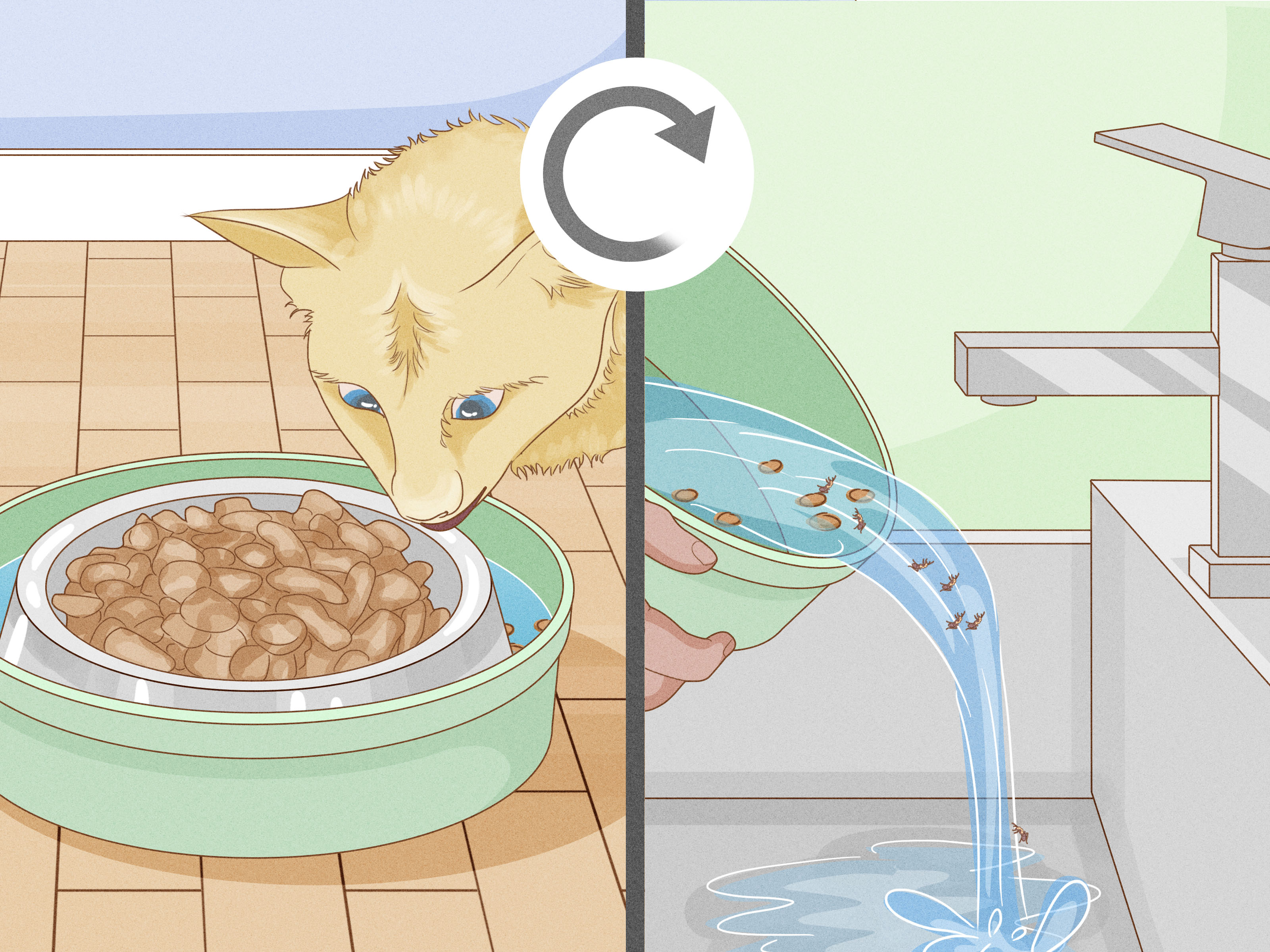
You can create a basic moat by placing the cat’s bowl inside a larger, shallow tray containing a small amount of water. The inner bowl must not touch the edge of the outer tray, or the contact point may become an ant bridge.
Use only enough water to block ants without making the setup unstable. Replace the water daily, wash the tray regularly, and wipe up splashes. This method works best with dry food because wet food may become messy if the bowl shifts.
Keep Nearby Objects From Forming Bridges
A moat cannot help when the bowl touches a wall, cabinet, food-storage bin, electrical cord, or hanging towel. Ants are tiny civil engineers. Position the feeding station several inches away from surrounding objects and check that nothing spans the barrier.
Use a Smooth, Washable Feeding Mat
A silicone or hard-plastic mat will not stop ants by itself, but it makes crumbs and greasy residue easier to see and remove. Choose a mat with raised edges to catch scattered kibble. Wash both sides, since food can collect underneath when a cat enthusiastically rearranges the dining room.
Clean the Entire Feeding Zone
Cleaning only the bowl is rarely enough. Kibble can roll under refrigerators, baseboards, rugs, cabinets, and storage containers. Wet-food droplets may dry into nearly invisible spots that still attract foraging insects.
A Practical Daily Cleaning Routine
- Wash wet-food bowls after every meal.
- Wash dry-food bowls at least daily.
- Wipe the feeding mat and surrounding floor.
- Pick up kibble that has traveled under nearby furniture.
- Rinse opened food cans before placing them in recycling.
- Use a covered trash can and empty it regularly.
- Clean food scoops rather than leaving them coated with dust and oils.
Good sanitation removes competing food sources and makes ant bait more effective when baiting becomes necessary. Extension and integrated pest-management programs consistently recommend cleaning spills, removing crumbs, managing garbage, and storing food in sealed containers.
Store Cat Food in a Hard, Sealed Container
An open or loosely clipped bag of kibble can attract ants before they ever reach the bowl. Store dry cat food in a clean, hard-sided container with a tight-fitting lid. Avoid relying on cardboard boxes, paper packaging, or thin bags as the only barrier.
Inspect the storage area for spilled kibble and food dust. Clean the outside and underside of the container, especially if the scoop is regularly rested on the lid. Keep unopened wet-food cans in a dry cabinet and refrigerate opened food according to the manufacturer’s directions.
Sealed food storage is a central part of indoor ant management and also helps discourage pantry pests that may infest dry pet food.
Move the Feeding Station Away From Ant Entry Points
A bowl beside a window, exterior door, pipe opening, baseboard crack, or appliance gap is easier for ants to locate. Move the feeding station toward an open, easy-to-clean area while you identify the route the ants are using.
Avoid placing food directly on carpet. Carpet fibers hide crumbs, absorb wet-food residue, and make ant trails harder to follow. A hard floor allows faster cleanup and makes new activity easier to spot.
Seal the Route After You Find It
Follow the trail toward its entry point. Seal appropriate cracks with caulk, install or repair door sweeps, and close gaps around utility lines. Ants can use more than one entrance, so continue monitoring after the obvious crack is repaired.
Outside, trim branches and vegetation that touch the building, address leaking faucets or air-conditioning drainage, and reduce heavy leaf litter or mulch against the foundation. These measures remove convenient travel routes, moisture, and sheltered nesting areas.
Use Ant Bait Safely Around Cats
When sanitation and exclusion do not solve the problem, ant bait is generally more useful for colony control than repeatedly spraying individual workers. A slow-acting bait allows foraging ants to carry the material back to the nest and share it with other colony members.
Baiting is not immediate. Depending on the species, product, weather, and colony size, improvement may take several days or longer. Killing every ant seen near the bait can prevent the workers from carrying it home.
Pet-Safe Placement Matters
- Choose a product specifically labeled for the location where it will be used.
- Follow every label instruction, including placement and quantity.
- Prefer enclosed, tamper-resistant bait stations where appropriate.
- Place bait where ants travel but where the cat cannot lick, chew, paw, or carry it.
- Keep bait away from food bowls, water bowls, cat toys, bedding, and food-preparation surfaces.
- Do not place loose homemade bait where a pet can reach it.
- Do not spray insecticide near a bait station, since sprays may repel or kill workers before they transport the bait.
Even enclosed stations should not be treated as completely pet-proof. The EPA and National Pesticide Information Center recommend keeping pesticide bait inaccessible to pets and removing food bowls, water bowls, bedding, and toys from treatment areas.
Ant Remedies to Avoid Around Cat Food
Essential Oils
Peppermint, tea tree, eucalyptus, citrus, cinnamon, clove, and other essential oils are frequently promoted as “natural” ant repellents. Natural does not automatically mean safe for cats. Concentrated oils may cause problems through ingestion, skin contact, or inhalation, and cats can be especially sensitive to some essential-oil compounds.
Do not apply essential oils to a cat bowl, feeding mat, floor, cat bed, fur, collar, or any surface your cat may lick. Consult a veterinarian before using an essential-oil product in a cat’s environment.
Loose Borax or Boric Acid Mixtures
Online recipes often combine borax or boric acid with sugar, syrup, or food. The sweet or fatty attractant can also interest pets, and incorrect concentrations may kill workers too quickly or fail to control the colony. Use registered products exactly as labeled rather than leaving an exposed homemade mixture near your cat.
Insecticide Sprays Near the Bowl
Do not spray the bowl, feeding mat, food-storage container, or nearby food-contact surfaces. Remove your cat and all pet items before any pesticide treatment, follow the reentry instructions on the label, and ventilate the area when directed.
Unproven Kitchen Deterrents
Coffee grounds, chalk lines, spices, cucumber peels, and similar tricks may temporarily alter an ant’s route, but they usually do not eliminate the colony. They can also create more debris around the feeding station. A clean bowl on an effective physical barrier is far more dependable than surrounding lunch with a mysterious ring of pantry ingredients.
A Seven-Step Ant Prevention Plan
| Step | Action | Why It Helps |
|---|---|---|
| 1 | Serve measured meals | Reduces the time food is exposed. |
| 2 | Remove leftovers promptly | Eliminates the ants’ reward. |
| 3 | Wash bowls and mats | Removes grease, crumbs, and odors. |
| 4 | Use a moat or ant-proof bowl | Creates a physical barrier. |
| 5 | Seal dry food | Protects the main food supply. |
| 6 | Erase trails and seal gaps | Disrupts navigation and entry. |
| 7 | Use inaccessible labeled bait if needed | Targets the colony instead of visible workers. |
When to Call a Pest-Control Professional
Professional help is sensible when ants continue appearing despite several weeks of sanitation, exclusion, and properly placed bait. It is also appropriate when ants emerge from walls, electrical outlets, ceilings, or several rooms at once.
Large carpenter ants may be associated with damp or damaged wood, especially around leaks. Fire ants require extra caution because they can sting pets and people. Ask the pest-control company about integrated pest management, targeted baiting, treatment locations, active ingredients, pet-removal instructions, and the required waiting period before your cat returns.
What to Do If Your Cat Contacts Ant Poison
Remove your cat from the area and prevent further exposure. Keep the product package or take a clear photograph of its label. Do not induce vomiting or attempt a home treatment unless a veterinarian or animal poison specialist specifically directs you to do so.
Contact your veterinarian, an emergency veterinary clinic, or an animal poison-control service promptly. Possible warning signs vary by product but may include drooling, vomiting, diarrhea, weakness, unusual behavior, difficulty walking, tremors, or breathing problems. Pesticides and insecticides are recognized household hazards for cats, and rapid veterinary guidance is important when exposure is suspected.
Frequently Asked Questions
Can I put the cat-food bowl inside a tray of water?
Yes. A shallow water moat can block many ants as long as the inner bowl does not touch the outer tray. Keep the setup stable, replace the water daily, and clean both containers regularly.
Will raising the food bowl stop ants?
Elevation alone is usually not enough because ants can climb most stands. A raised feeder works better when its legs incorporate a protected barrier or moat and do not touch walls or other objects.
Does vinegar kill the ant colony?
Vinegar-based cleaning may disrupt trails on some surfaces, but it is not a reliable colony treatment. Soap and water are sufficient for cleaning trails, while sanitation, exclusion, and correctly managed bait address the larger problem.
Can ants make my cat sick?
A few ordinary household ants in a bowl do not automatically mean a cat will become ill, but heavily infested food should be discarded. Some ants can bite or sting, and pesticides used against ants may present a greater danger than the insects themselves.
Why do ants return after I clean the bowl?
The colony may still have an established trail, another food source, or an accessible entry point. Clean a wider area, inspect beneath appliances and containers, seal observed gaps, and address the colony with inaccessible labeled bait when appropriate.
Experience-Based Lessons From Realistic Cat-Feeding Situations
The following are composite household scenarios based on common ant-control patterns rather than claims about one specific home or pet.
Experience 1: The Bowl Was Not the Main Problem
In one typical situation, a household washed the cat bowl every evening yet found a fresh ant trail by morning. The breakthrough came when the feeding cabinet was moved. Several pieces of kibble had rolled underneath it, and a dusty food scoop had been resting beside the storage bag. The ants were not surviving on the clean bowl; they were using the forgotten buffet behind it.
The useful lesson was to clean in expanding circles. Start with the dish, then inspect the mat, floor, baseboards, nearby furniture, trash can, food scoop, and storage container. Once the hidden kibble was removed and the floor was washed, the trail became noticeably smaller.
Experience 2: A Water Moat Failed Because of One Tiny Bridge
Another household placed a dry-food bowl inside a tray of water and expected victory. Ants still appeared in the kibble. The cause was almost comical: the inner bowl touched the tray’s rim at one point. That contact created a dry bridge wide enough for the ants to cross.
After the bowl was centered and moved away from the wall, the barrier worked much better. The experience showed that an ant moat should be checked from every angle. Electrical cords, towels, walls, cabinet edges, and even a long piece of kibble can defeat an otherwise excellent setup.
Experience 3: Free-Feeding Kept Restarting the Infestation
A cat accustomed to grazing had food available around the clock. Each cleanup removed the visible ants, but a full bowl returned immediately afterward. The ants therefore had a permanent food source and no reason to abandon the route.
The household gradually shifted to several smaller scheduled portions delivered throughout the day. An automatic feeder reduced how much food was exposed at one time, while the floor was cleaned after the evening meal. The cat still received multiple opportunities to eat, but the ants lost their 24-hour diner.
Experience 4: Repellent Spray Made Baiting Less Effective
In another common scenario, a homeowner placed ant bait near an entry point and then sprayed every worker approaching it. The bait appeared useless because few ants fed long enough to transport it back to the colony.
The revised strategy separated the feeding station from the treatment area, removed alternative food, and placed an enclosed station where the cat could not reach it. The workers were left undisturbed around the bait. Activity did not disappear immediately, but it declined over the following days. The key lesson was that bait is supposed to be carried away. Seeing ants at a bait station can mean the process is functioning, not failing.
Experience 5: “Natural” Was Mistaken for “Cat-Safe”
A well-intentioned cat owner considered spraying peppermint oil around the bowl because it was described online as a natural repellent. Checking veterinary poison guidance first prevented a risky experiment. The household chose a washable mat, sealed container, water moat, and crack repair instead.
This experience highlights an important rule: evaluate pest remedies from the cat’s perspective. Cats walk across treated floors, groom their paws, rub against baseboards, and investigate unfamiliar smells. A product does not need to be poured into the food bowl to reach the cat.
The Overall Lesson
The most successful solutions are usually ordinary rather than dramatic. Remove exposed food, clean beyond the visible mess, block access to the bowl, seal storage, repair entry points, and use pesticide products only as directed and beyond the cat’s reach. Ant control improves when several small weaknesses are corrected together.
Conclusion
To keep ants away from cat food, begin by making the feeding area unrewarding. Serve controlled portions, remove leftovers, wash bowls, collect stray kibble, seal the food supply, and erase active trails. Add an ant-proof bowl or water moat when ants are persistent, and move the feeding station away from walls and entry points.
For an established infestation, use integrated pest-management principles rather than launching a chemical attack beside your cat’s breakfast. Seal gaps, reduce outdoor access routes, and use labeled bait only where your cat cannot reach it. With a consistent routine, the ants can return to their natural role in the ecosystem instead of operating a tiny unauthorized catering business in your kitchen.