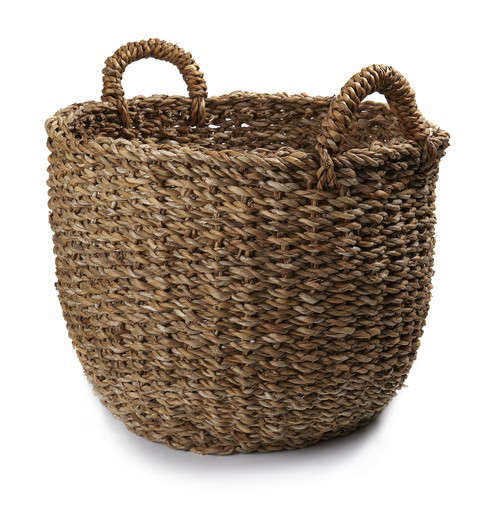
A Hogla storage basket is the rare organizer that can swallow blankets, toys, magazines, and the household’s unexplained collection of charging cables while still looking decorative. Its warm color and handwoven texture soften a room, while its open shape makes cleanup quick enough to happen even on a tired Tuesday night.
Unlike an industrial plastic tub, a natural woven basket can remain in plain sight beside a sofa, beneath a console, or on an open shelf. This guide explains what hogla is, why the material works for home storage, how to choose the right basket, where to use it, and how to care for it. A final experience-based section looks at what day-to-day ownership is really like after the product photo has stopped being perfectly staged.
What Is a Hogla Storage Basket?
Hogla is a Bangladeshi name commonly associated with Typha elephantina, a tall wetland plant related to cattails or reedmace. Retailers often call the dried material “local seagrass,” although it is more accurately a wetland leaf fiber than a true marine seagrass. Its leaves can be harvested, dried, bundled, braided, and woven into mats, bags, trays, and household baskets. Research in Bangladesh has documented hogla’s traditional uses and its role in rural cultivation and income-generating craft work.
Handwoven Character
A typical Hogla basket has a thick woven base and flexible but supportive walls. Some designs are round and handle-free; others are oval, rectangular, or fitted with integrated carrying handles. Because many are handmade, slight differences in shade, weave, and shape are normal. A perfectly identical pair may be hard to find, but that is part of the charm: the baskets look crafted, not manufactured by a robot with strong opinions about symmetry.
Maison Bengal describes hogla as a locally grown material used through fair-trade partnerships in Bangladesh. TOAST likewise sells a large Hogla basket woven by women artisans supported by fair-trade organizations. One current model measures roughly 13.4 inches high by 14.2 inches wide, but dimensions vary considerably by maker and should always be checked before ordering.
Why Hogla Works for Home Storage
It Hides Clutter Without Looking Heavy
Open shelves and living areas quickly look busy when packaging, toys, cables, and textiles are visible at once. A woven basket replaces those unrelated shapes with one calm form. Hogla’s tan color behaves like a neutral, while the braided surface adds depth beside smooth upholstery, painted furniture, glass, stone, and wood.
It Makes Cleanup Easy
An open basket reduces putting things away to one motion: pick up, drop in, celebrate modestly. That simplicity matters because an organization system only works when people actually use it. Professional organizers repeatedly recommend decluttering first, grouping similar belongings, measuring the intended space, and then buying containers that fit both the location and the contents. Otherwise, a basket merely turns visible clutter into expensive hidden clutter.
It Adds Texture Without Adding More Color
A room may need contrast but not another paint swatch. Hogla introduces texture through its weave and shadows while keeping the palette quiet. It warms up white interiors, softens dark cabinetry, and sits comfortably in Scandinavian, farmhouse, coastal, bohemian, modern, and traditional spaces.
Best Uses for a Hogla Storage Basket
Blankets and Pillows
Place a medium or large basket beside the sofa for throws, spare pillow covers, or lightweight floor cushions. Fold or roll textiles so they sit below the rim. Avoid cramming the basket until the sides bow outward; a little empty space makes contents easier to remove and return.
Toys and Family-Room Clutter
A wide basket can hold stuffed animals, dress-up clothes, wooden blocks, or larger toys. Inspect the interior for sharp fibers, and keep tiny pieces in separate pouches or boxes. That prevents cleanup from becoming an archaeological excavation conducted between the couch cushions.
Entryway Essentials
Use a Hogla basket for scarves, hats, reusable shopping bags, pet leashes, or dry indoor slippers. Give it one main category. A catchall with no rules eventually becomes a witness-protection program for lost mail.
Bedrooms, Closets, and Offices
In a bedroom, the basket can store extra bedding, handbags, off-season accessories, or clothes that are “not dirty enough to wash” but never return to a hanger. In an office or craft room, it can hide yarn, fabric, rolled paper, project folders, or camera accessories. Small labeled pouches help prevent tools and cables from disappearing into the weave.
Bathrooms and Kitchens
Hogla is suitable for dry towels, toilet paper, sealed pantry goods, table linens, or lightweight serving pieces in well-ventilated rooms. It is a poor choice beside a shower, beneath a leaking sink, or anywhere exposed to dampness, grease, or frequent spills. Plastic, coated wire, or washable fabric is more practical in wet and messy zones.
How to Choose the Right Hogla Basket
Define the Job First
Decide exactly what the basket will hold. Blankets need generous volume and a broad opening. Magazines need supportive walls. Toys require easy access. Shelf storage benefits from straighter sides and handles. Estimate the amount you plan to keep after decluttering, not the amount currently forming a small civilization on the floor.
Measure the Entire Storage Zone
Record width, depth, and height to the nearest quarter inch. Allow clearance above and beside a shelf basket so it slides out easily. For a floor basket, mark the footprint with painter’s tape or folded newspaper and walk around it for a day. This reveals whether the “perfect” basket blocks a door, crowds a chair, or becomes an elegant obstacle course.
Inspect the Weave
Choose a basket with a firm base, reasonably even walls, secure handles, and no major gaps or sharp ends. Handmade variation is expected; instability is not. When storing knits or delicate blankets, run a cotton cloth around the interior to test for snagging. A removable fabric liner adds protection and is easier to wash.
- Round: Best for blankets, toys, and decorative floor storage.
- Oval: Useful beside beds, sofas, and narrow furniture.
- Rectangular: Most efficient for shelves, closets, and cubbies.
- Tall: Good for rolled textiles, yoga mats, and dry umbrellas.
- Low: Convenient for books, craft projects, and daily essentials.
Hogla Versus Other Basket Materials
| Material | Strengths | Limitations | Best Areas |
|---|---|---|---|
| Hogla | Warm texture, lightweight structure, handmade appearance | Sensitive to prolonged moisture; may snag delicate fabrics | Living rooms, bedrooms, dry closets, offices |
| Plastic | Washable, stackable, often transparent | More utilitarian in appearance | Garages, bathrooms, kitchens, utility spaces |
| Metal wire | Durable, ventilated, contents remain visible | Does not conceal clutter; may scratch surfaces | Pantries, mudrooms, workshops |
| Cotton rope | Soft, flexible, child-friendly | Can collapse or lose shape | Nurseries, bedrooms, playrooms |
| Rattan or wicker | Classic look and rigid structure | May be heavier, more brittle, or pricier | Entryways and formal living spaces |
How to Style a Hogla Storage Basket
Repeat the natural tone elsewhere through wood frames, linen curtains, jute rugs, cane furniture, or warm leather accents. One or two woven pieces are usually enough; covering every surface in plant fiber can make the room resemble a very stylish picnic.
Use contrast so the basket remains visible. Place it beneath a dark console, beside a painted cabinet, or against a pale wall. Matching baskets create order on shelves, but each one should have a defined category and label. Open baskets look neatest with folded textiles or contained supplies; choose a liner or lid for less photogenic necessities.
Cleaning and Caring for Hogla
Dust Regularly
Use a soft clothes brush, clean paintbrush, or vacuum upholstery attachment on low suction. Work with the direction of the weave. TOAST specifically recommends brush cleaning for its Hogla basket.
Spot-Clean Carefully
Blot small marks with a barely damp white cloth and test an inconspicuous area first. Do not soak or submerge the basket. Excess moisture can soften plant fibers, distort the shape, and encourage mold. Let the basket air-dry completely in a ventilated place before refilling it.
Control Humidity and Sunlight
Never store wet shoes, damp towels, or freshly washed textiles inside. Keep the basket away from persistent steam, strong heat, and prolonged direct sunlight. Museum basket-care guidance recommends a stable indoor environment and warns that damp basements and extreme attic conditions can harm natural fibers.
Is a Hogla Basket a Sustainable Choice?
A durable plant-fiber basket can reduce reliance on short-lived synthetic organizers, especially when it is repaired and used for years. Still, “natural” does not automatically mean responsible. Farming, dyes, transportation, wages, and longevity all matter. Look for sellers that identify the material, production region, artisan partners, and labor standards rather than relying on a vague green-leaf icon.
Fair-trade partnerships may support training and income opportunities for rural artisans, many of whom are women. Maison Bengal and Prokritee both describe working with Bangladeshi artisan communities and using locally available or renewable materials.
Who Should Buy One?
A Hogla storage basket suits people who want organization to double as decoration. It performs best in dry indoor spaces and with bulky, lightweight belongings such as blankets, pillows, stuffed toys, yarn, and reusable bags. Choose another material for heavy books, sharp tools, wet laundry, leaking products, or rooms with persistent humidity.
Living With a Hogla Storage Basket: A Real-World Experience
Product photos usually show a Hogla basket holding three perfectly folded blankets in a room where nobody has ever lost a remote. Real homes are less ceremonial. A practical test begins by placing a medium-large basket beside the sofa and giving it one clear assignment: store throws and the small cushion that otherwise spends its life on the floor.
During the first week, the main improvement is convenience. Blankets stop migrating between the sofa arm, dining chair, and mysterious location behind the door. Because the basket is open, putting them away takes seconds. The room looks calmer even when the folding is merely “good enough.” That matters because organization systems survive when they tolerate ordinary human behavior.
The woven surface also changes the corner visually. Beside smooth upholstery and painted furniture, it adds warmth without introducing another strong color. The basket acts like a decorative accessory while carrying several pounds of fleece and one aggressively fluffy pillow. Guests may compliment it without realizing that it is doing the work of a small closet.
By the second week, practical lessons appear. Delicate knits benefit from a cotton liner because even a well-finished natural weave can catch loose yarn. The basket also works better when it is not packed to the rim. Leaving some breathing room makes blankets easier to return and reduces pressure on the walls.
Handles require common sense. Integrated woven handles are useful for shifting an empty or lightly loaded basket, but they should not be treated like luggage straps. Supporting the base while moving a full basket reduces stress on the weave. This advice becomes particularly relevant when children decide the basket is a boat, helmet, or apartment for stuffed animals.
After a month, unrelated objects begin appearing: a magazine, a charger, a toy dinosaur wearing a sock. This does not mean the basket has failed. It means open storage needs a boundary. A five-minute weekly reset keeps the original category intact. Return stray items, dust the weave, and refold blankets only as much as dignity requires.
Seasonal flexibility is another advantage. In winter, the basket holds thick throws. In summer, it can store picnic blankets, completely dry beach towels, or spare cushion covers kept indoors. Its neutral color works year-round, so the basket can take on a new assignment without being hidden away.
Moisture remains the biggest limitation. A Hogla basket in a dry living room is easy to maintain; the same basket in a steamy bathroom or damp basement demands constant attention. Lift it occasionally, dust underneath, and confirm that the base remains dry and flat. Slight color or shape changes may suit its handmade character, but softness, odor, or visible mold signals a moisture problem.
The overall experience is less about owning a fashionable object and more about improving a repeated daily action. A good Hogla storage basket makes cleanup faster, adds texture, and gives awkward loose belongings a dependable home. It cannot create more square footage or prevent clutter from reproducing at supernatural speed, but it makes existing space easier to useand does so with far more charm than a cardboard box labeled “miscellaneous.”
Conclusion
The Hogla storage basket succeeds because it combines practical organization with visual warmth. Its plant-fiber weave conceals clutter, softens a room, and reflects a long tradition of Bangladeshi craft. Measure before buying, match the shape to the contents, avoid damp locations, and protect delicate textiles with a liner. With sensible care, one basket can serve as a blanket holder, toy bin, closet organizer, entryway catchall, or craft container for years.