There are many signs that senior year has officially arrived: college application tabs multiply like rabbits, parents start saying “last first day” with suspiciously watery eyes, and suddenly everyone acts like owning a parking space is the same as owning beachfront property. But at high schools across the United States, one senior tradition has turned a simple slab of asphalt into a viral art gallery: students painting their assigned parking spots.
The trend exploded online when photos of high school seniors painting parking spots began circulating on Twitter, especially from schools such as West Orange High School in Florida and James Bowie High School in Texas. What might have been just another local back-to-school ritual quickly became internet candy: colorful, funny, surprisingly thoughtful, and extremely shareable. In a world where most school parking lots look like a gray pancake with white lines, these seniors brought personality, humor, pop culture, and a little controlled chaos to the pavement.
From album covers and sports logos to cartoon characters, inspirational quotes, beach scenes, college dreams, and jokes that only make sense if you are running on iced coffee and senioritis, painted senior parking spots have become a creative rite of passage. They are part art project, part school fundraiser, part memory-making machine, and part “please do not park in my spot, Brad, my name is literally painted on it.”
What Is the Senior Parking Spot Painting Tradition?
The senior parking spot painting tradition allows eligible high school seniors to reserve an assigned parking space and decorate it with a pre-approved design. Schools usually require students to buy a parking permit, submit a sketch, follow design rules, and paint only during approved times. In many cases, the activity also raises money for senior class events, student council, prom, graduation celebrations, or campus programs.
At its heart, the tradition is simple: take an ordinary parking lot and let the oldest students on campus leave a temporary mark. The designs are usually painted over at the end of the school year, which makes them feel even more special. They are not permanent murals; they are year-long signatures. Senior year already moves fast, and the parking spot becomes a colorful reminder that this chapter is happening right now.
How Painted Parking Spots Went Viral On Twitter
When photos of painted senior parking spots appeared on Twitter, the reaction was immediate. People loved the creativity, but they also loved the surprise. Most adults remember high school parking lots as places where you hoped your car started, avoided awkward eye contact, and maybe found a French fry under the seat. Seeing students transform those same spaces into mini murals felt fresh and wholesome.
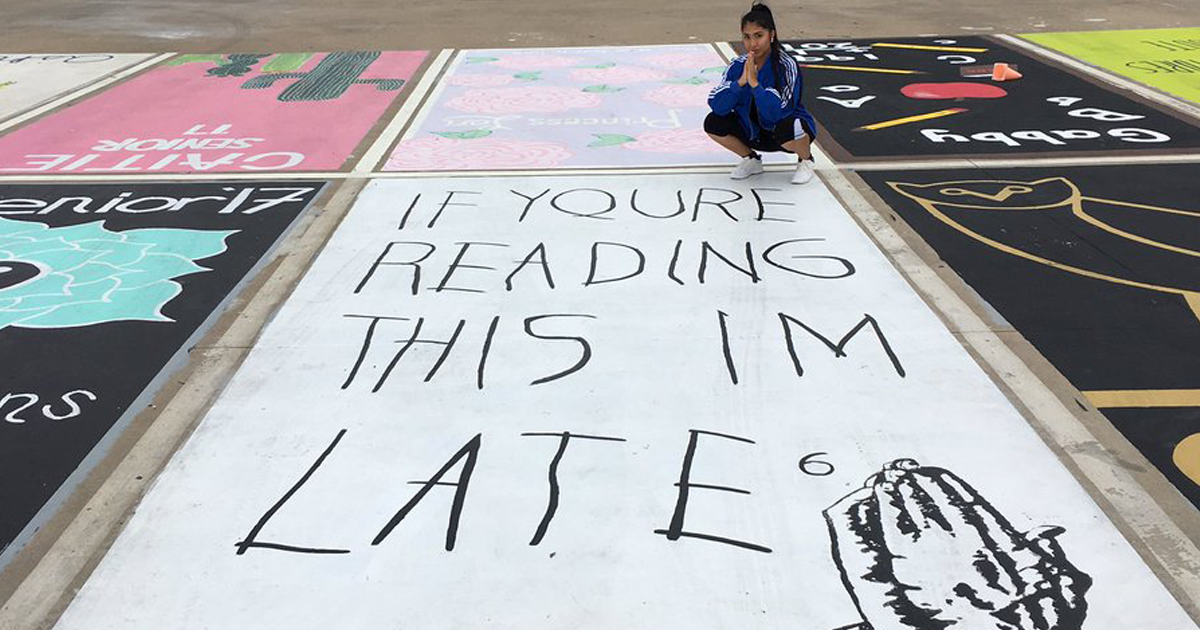
The viral photos showed a wide range of personalities. Some students painted their names in bold lettering. Others used movie references, favorite snacks, cartoon characters, college themes, Bible verses, sports imagery, flowers, sunsets, ocean waves, and clever one-liners. One student might create a dreamy sky full of clouds; the next might paint a joke about being late. Together, the lot looked less like school property and more like an outdoor yearbook.
That is why the trend worked so well on social media. It had everything the internet likes: bright colors, teenage creativity, low-stakes joy, and a charming “why didn’t my school do this?” factor. The images were easy to repost, easy to discuss, and easy to envy. Twitter helped turn a school tradition into a national conversation about creativity, school spirit, and the small rituals that make senior year memorable.
Why Students Love Painting Their Senior Parking Spots
For high school seniors, a painted parking spot is more than a place to leave a car. It is a small piece of territory during a year filled with change. Students are thinking about college, trade school, jobs, moving away, financial aid, final exams, and saying goodbye to friends they have known since the backpack-with-wheels era. A parking spot gives them a fun, visible way to say, “This is me. I was here.”
It Gives Seniors Ownership
Schools often describe the tradition as a way for seniors to “own” a piece of campus during their final year. That language matters. Teenagers spend years following bells, rules, schedules, and seating charts. A painted parking spot gives them one small space where their identity gets to lead. Even if the design must be approved, the final result belongs to the student.
It Turns School Spirit Into Something Visual
School spirit is usually measured in pep rallies, jerseys, banners, and possibly someone yelling into a microphone that does not need to be that loud. Painted parking spots add another layer. They beautify campus, bring students together, and make the senior lot feel like a celebration instead of a storage area for sedans.
It Creates A Shared Senior Memory
Many schools host painting days before classes begin or early in the school year. Students arrive with paint cans, rollers, brushes, tape, stencils, snacks, sunscreen, folding chairs, and family members who thought they were “just helping a little” but somehow end up painting clouds for six hours. The day becomes a bonding experience before senior year truly begins.
Popular Senior Parking Spot Ideas That Keep Showing Up
One reason the trend stays popular is that the design possibilities are almost endless. Some students create original artwork, while others build their designs around favorite movies, music, hobbies, or future plans. Here are some of the most common senior parking spot ideas that make people stop scrolling.
Pop Culture References
Students often paint designs inspired by movies, TV shows, music, cartoons, and internet jokes. A parking spot might borrow the look of a famous album cover, a beloved animated character, or a quote from a show that defined their high school years. Pop culture designs tend to go viral because viewers recognize them instantly.
Sports And Team Pride
Athletes frequently decorate their spaces with team colors, jersey numbers, balls, fields, courts, or motivational phrases. These designs become personal highlight reels. A water polo player might paint waves and a goal; a softball player might add bats, bases, or a diamond. It is like a locker room poster, except it gets rained on.
College And Future Plans
Some seniors use their parking spots to celebrate where they are going next. College colors, mascots, trade school themes, military references, or career goals can turn a parking space into a mini announcement. It is a proud moment, especially for students who have worked hard to reach the next step.
Funny Quotes And Senioritis Jokes
Humor may be the unofficial national language of senior parking spots. Students paint lines like “Sorry I’m late,” “Reserved for naps,” “Senior year, send help,” or “I came, I parked, I graduated.” The funniest designs work because they capture the senior mood: excited, exhausted, nostalgic, and lightly allergic to homework.
Nature, Travel, And Aesthetic Designs
Beach scenes, sunsets, mountains, flowers, clouds, stars, and road-trip themes are also popular. These designs are visually strong, photograph well, and feel timeless. They are perfect for students who want something pretty, personal, and less likely to embarrass them when they find the picture again in ten years.
How Schools Keep The Tradition Organized
As fun as painted parking spots look online, schools do not simply toss paint cans into the lot and say, “Good luck, future leaders.” Most districts set clear rules because asphalt art can quickly become messy, unsafe, controversial, or impossible to remove.
Common requirements include purchasing a parking permit, paying an additional painting fee, submitting a full-color design for approval, using only water-based exterior latex paint, avoiding spray paint, staying inside the parking lines, and painting only on designated days. Many schools prohibit offensive language, rude messages, gang-style tagging, illegal references, profanity, explicit images, political attacks, and anything that might be considered disruptive.
These rules may sound strict, but they help protect the tradition. A school wants creativity, not a parking lot version of a comment section at 2 a.m. Design approval also reduces conflict and makes it easier for administrators to explain expectations before anyone opens a paint can.
The Practical Side: Paint, Prep, And Patience
Painting a senior parking spot looks easy in photos. In real life, it is a workout disguised as art. Asphalt is rough, the sun is rude, and straight lines are harder than they look when you are kneeling on pavement with a foam brush and a dream.
Students usually start by cleaning the parking space with a broom or blower. Some sketch their design in chalk before painting. Painter’s tape helps create borders and sharp lines. Rollers cover large areas faster, while small brushes are better for lettering and details. Many students bring water buckets, paper towels, trash bags, extra tape, snacks, shade tents, sunscreen, and old clothes. The wise ones also bring patience. The very wise ones bring parents.
The best designs are not always the most complicated. A simple concept with clean lettering and strong colors often looks better than a crowded design with too many tiny details. Parking spaces are large, but they are viewed from far away. Bold shapes, clear contrast, and readable words usually win.
Why This Trend Matters Beyond The Viral Photos
It would be easy to dismiss painted senior parking spots as just another cute internet trend. But the tradition touches something deeper: students want to be seen. They want their school experience to include moments that feel personal, not just institutional. A painted space gives them a public canvas in a place they use every day.
It also gives schools a low-cost way to encourage student expression. Art programs are often under pressure, and not every student sees themselves as “artistic.” Parking spot painting lowers the barrier. You do not need to be a gallery-level painter to participate. You need an idea, a plan, and the ability to not spill blue paint on your shoes. Even students who claim they “cannot draw a stick figure” can use stencils, geometric shapes, simple lettering, or collaboration with friends.
The tradition can also strengthen community. Parents help. Teachers admire the results. Underclassmen get inspired for their own senior year. Alumni share photos and compare designs. The parking lot becomes a conversation starter, and a usually overlooked part of campus suddenly has personality.
The Free Speech Conversation Around Painted Parking Spots
Because painted parking spots are personal expression on school property, the tradition can sometimes lead to debate. Some students have pushed boundaries with political, religious, or social messages. In a few cases, schools have removed or rejected designs, leading to protests, legal challenges, and public discussion about student speech.
This is where the cheerful parking lot mural becomes more complicated. Schools must balance student expression with safety, order, neutrality, and community standards. Students, meanwhile, may see their paid parking spot as a place for identity and belief. The best policies are clear, viewpoint-neutral, and applied consistently. If a school allows personal messages, it should be careful not to approve some viewpoints while rejecting others simply because they are controversial.
For most students, however, the tradition remains lighthearted. The majority of painted spots focus on names, hobbies, jokes, sports, favorite characters, and future plans. Still, the broader conversation shows that student art can matter. Even a parking space can become a place where identity, rules, and rights meet.
Tips For Creating A Senior Parking Spot That Actually Looks Good
If you are a student planning your own senior parking spot, start early. Do not wait until the night before your design is due and then decide your theme is “panic but make it aesthetic.” Look at examples, sketch a few layouts, and choose a design that reflects you without requiring museum-level brush control.
Choose A Clear Theme
Pick one central idea. Maybe it is your sport, your favorite song, a beach sunset, your college, your name in bubble letters, or a funny phrase. A strong theme helps the whole design feel intentional.
Keep The Design Bold
Parking spots are big, but viewers often see them from a distance or in photos. Use large shapes, thick letters, and clear colors. Tiny details can disappear on asphalt.
Check Your School Rules First
Before falling in love with a design, read the guidelines. Some schools ban copyrighted logos, political statements, religious imagery, spray paint, glitter, or certain symbols. Others allow more freedom but require approval. Knowing the rules saves time and prevents the heartbreaking moment when your masterpiece becomes a black rectangle.
Bring The Right Supplies
Useful supplies include exterior latex paint, rollers, brushes, painter’s tape, chalk, stencils, trays, water, paper towels, trash bags, sunscreen, kneepads, and a broom. A pop-up tent can also save you from becoming one with the pavement.
Ask For Help
Many viral parking spots are team efforts. Friends and family can help fill backgrounds, tape lines, mix colors, and offer moral support when your letter “S” starts looking like a confused snake. Just make sure the final design still feels like yours.
Experiences Related To High School Seniors Painting Their Parking Spots
One of the best parts of the senior parking spot tradition is not the final photo. It is the experience of making the spot. Ask students who have participated, and many will tell you that painting day feels like a small festival in the school parking lot. Cars are pushed aside, music plays from portable speakers, families unload supplies, and students who normally only see each other in class suddenly become neighbors in a pop-up outdoor studio.
The day often begins with confidence. Everyone arrives with a design that looks flawless on paper. Then reality appears wearing flip-flops and carrying a paint roller. The pavement is hotter than expected. The first coat looks patchy. The tape refuses to stick. Someone forgets a brush. Someone else steps in wet paint and leaves a trail of blue footprints like a confused cartoon character. But slowly, the parking lot changes. Blank rectangles become waves, flowers, flags, names, jokes, and memories.
Parents often become surprise heroes of the tradition. A mom who said she would “just watch” ends up outlining letters with surgical precision. A dad who claimed not to be artistic becomes deeply invested in the correct angle of a lightning bolt. Younger siblings hold paint trays, take photos, and ask when lunch is happening approximately every four minutes. These family moments matter because senior year is full of lasts. Painting a parking spot can become one of those rare activities where everyone is present, laughing, sweating, and trying not to argue about whether the background should be teal or turquoise.
For students, the spot becomes part of their daily routine. Every morning, they pull into a space that reflects something about them. On stressful days, that little patch of color can feel like a friendly hello. During football season, homecoming week, exams, college decision season, and graduation countdowns, the painted spot stays there like a cheerful witness. It sees the rushed mornings, the after-school practices, the coffee cups, the backpack spills, and the emotional conversations that happen beside car doors.
There is also a social side. Friends visit each other’s spots. Students take photos for Instagram, TikTok, yearbook pages, and graduation slideshows. Underclassmen walk by and mentally plan their own designs years in advance. Teachers admire the creativity, and administrators get to see students express themselves in a positive way. The parking lot becomes a gallery without velvet ropes, admission fees, or anyone whispering too loudly near a painting.
Of course, not every experience is perfect. Some designs do not turn out exactly as planned. Rain can interrupt painting. Paint colors dry differently on asphalt. A design that looked easy online can suddenly feel like advanced geometry. But those imperfections often become part of the story. Years later, students may not remember every assignment from senior English, but they will remember kneeling in a parking lot with friends, laughing over crooked letters, and feeling the strange excitement of being almost done with high school.
That is why the viral senior parking spot trend has lasted. It is not just about pretty pavement. It is about identity, belonging, creativity, and the bittersweet joy of leaving a mark before moving on. The paint fades. The lot gets repainted. A new class arrives with new designs. But for one school year, each senior gets a tiny square of campus that says, “This was my place.”
Conclusion
High school seniors painting their parking spots may have started as a campus tradition, but Twitter helped turn it into a national celebration of student creativity. The trend works because it is visual, personal, funny, and deeply connected to the emotional energy of senior year. A painted parking spot can be a joke, a tribute, a dream board, a sports banner, a self-portrait, or simply a bright reminder that ordinary school spaces can become meaningful with a little paint and imagination.
For schools, the tradition offers a smart mix of school spirit, fundraising, and student engagement. For seniors, it offers ownership, expression, and one more memory before graduation. And for the internet, it offers exactly what the internet always wants: colorful proof that teenagers are far more creative than adults sometimes give them credit for. Also, let us be honest, many of these students have better design instincts than some professional parking lots have had in decades.
Note: This article is written as original, publication-ready HTML content based on real senior parking spot traditions, school guidelines, and widely reported examples from U.S. high schools. It contains no source placeholders or unnecessary citation markup.