Somewhere between the first “Hello, my pronouns are…” and the ten-thousandth furious comment typed in all caps, pronouns stopped being humble grammatical helpers and became ideological hand grenades.
One side sees pronoun use as basic respect. Another sees changing language rules, political pressure, or a demand to say something they do not believe. Meanwhile, millions of ordinary people are standing in the middle, quietly wondering whether asking a question will get them yelled at by both teams.
So, Pandas, let’s enter the pronoun warbut not with flaming keyboards. Let’s bring history, grammar, practical examples, a little empathy, and perhaps a snack. Every long debate is improved by snacks.
How Did Pronouns Become a Cultural Battlefield?
Pronouns are words used in place of nouns or names. “I,” “you,” “he,” “she,” “we,” and “they” prevent ordinary conversation from sounding like a legal document written by a malfunctioning robot.
Consider this sentence: “Jordan brought Jordan’s laptop because Jordan needed Jordan’s notes.” Technically understandable? Yes. Pleasant to read? Only if you enjoy verbal speed bumps. Pronouns make it smoother: “Jordan brought their laptop because they needed their notes.”
The controversy begins when pronouns become connected to gender identity. Some people use the pronouns traditionally associated with their sex. Others use pronouns that reflect a transgender or nonbinary identity. Some use multiple sets, such as “she/they” or “he/they.” A smaller number use neopronouns such as “xe/xem.”
For the person using those pronouns, the matter can feel deeply personal. For someone unfamiliar with the practice, it may feel like a sudden rewrite of rules learned decades ago. Add partisan politics, workplace policies, viral videos, school-board arguments, and social media algorithms that reward outrage, and the tiny pronoun becomes capable of starting a digital food fight before breakfast.
Singular “They” Is Not a Grammar Emergency
English Speakers Already Use It Constantly
Imagine finding a phone in a coffee shop. You might say, “Someone left their phone. I hope they come back for it.” You probably would not pause, stare dramatically into the distance, and announce, “Someone left his or her phone, and I hope he or she returns for his or her telecommunications device.”
English speakers have used forms of singular “they” for centuries when a person’s gender is unknown, irrelevant, or intentionally unspecified. Its use for a known nonbinary person is more recent, but it builds on a grammatical pattern that was already living comfortably in the language.
Major American style authorities now recognize singular “they.” The Associated Press expanded its guidance to represent people who use they/them pronouns, while the American Psychological Association endorses singular “they” in professional writing. Merriam-Webster also records both generic and nonbinary uses. Linguistic research has found that readers commonly interpret singular “they” as gender-neutral.
But Shouldn’t a Singular Pronoun Take a Singular Verb?
When singular “they” refers to one person, it still takes the familiar verb forms: “they are,” “they were,” and “they have.” We do something similar with “you.” Whether speaking to one person or an entire stadium, we say “you are,” not “you is.” English survived that arrangement, and it will probably survive this one too.
Writers can also rewrite awkward sentences. Instead of “Each employee should submit their form,” you might write, “Employees should submit their forms.” Rewriting is useful when clarity matters, but it should not become an elaborate escape tunnel constructed solely to avoid someone’s pronouns.
What Each Side Is Actually Worried About
The pronoun debate becomes less ridiculous when we stop treating every participant as a cartoon villain. People arrive with different concerns, and not every concern has the same motive.
Concern One: Respect and Recognition
For many transgender and nonbinary people, correct pronoun use signals that others recognize them as they understand themselves. Repeated misgendering can feel humiliating, alienating, or deliberately hostileespecially when it comes from relatives, teachers, coworkers, or authority figures.
This is not merely an argument about whether a sentence earns a gold star from the grammar teacher. Research involving transgender and nonbinary young people has repeatedly found an association between pronoun respect and better mental-health outcomes. A 2025 Trevor Project research brief reported lower rates of past-year suicide attempts among young people whose pronouns were respected. That does not mean pronouns alone determine mental health, but it does show that everyday social recognition can matter.
Concern Two: Habit, Clarity, and Fear of Mistakes
Some people are not trying to make an ideological statement. They are simply adjusting a language habit built over fifty years. Their brains see a familiar face, retrieve an old pronoun, and send it out before the quality-control department arrives.
Others worry that singular “they” can create ambiguity. In the sentence “Taylor told Morgan that they had won,” who won? Taylor, Morgan, or both? That is a legitimate writing problem, but the solution is usually more context, not a nationwide emergency broadcast. “Taylor told Morgan, ‘You won,’” clears things up without summoning a congressional hearing.
Concern Three: Compelled Speech and Institutional Power
Some critics are less concerned about private courtesy than about rules imposed by employers, schools, or government institutions. They worry that required language could punish sincere disagreement, accidental mistakes, or religious objections.
That policy discussion should not be dismissed as identical to playground bullying. At the same time, a debate about the limits of institutional authority should not become an excuse to target an individual employee or student. It is possible to discuss rules without turning a nearby nonbinary person into a public philosophy exam.
Concern Four: Distrust of Rapid Social Change
Language changes constantly, but people do not experience every change as neutral. New vocabulary can arrive packaged with political slogans, corporate training modules, and online scolding. Even people who might willingly use someone’s pronouns can become defensive when they believe they are being ordered to adopt an entire worldview.
Survey research reflects this division. Pew Research Center findings have shown that Americans remain split over their comfort with gender-neutral pronouns, with attitudes varying substantially by age and political affiliation. That split helps explain why online discussions feel less like grammar seminars and more like Thanksgiving dinner after someone mentions the election.
Pronoun Etiquette for People Who Want Less Drama
Ask Casually When It Is Relevant
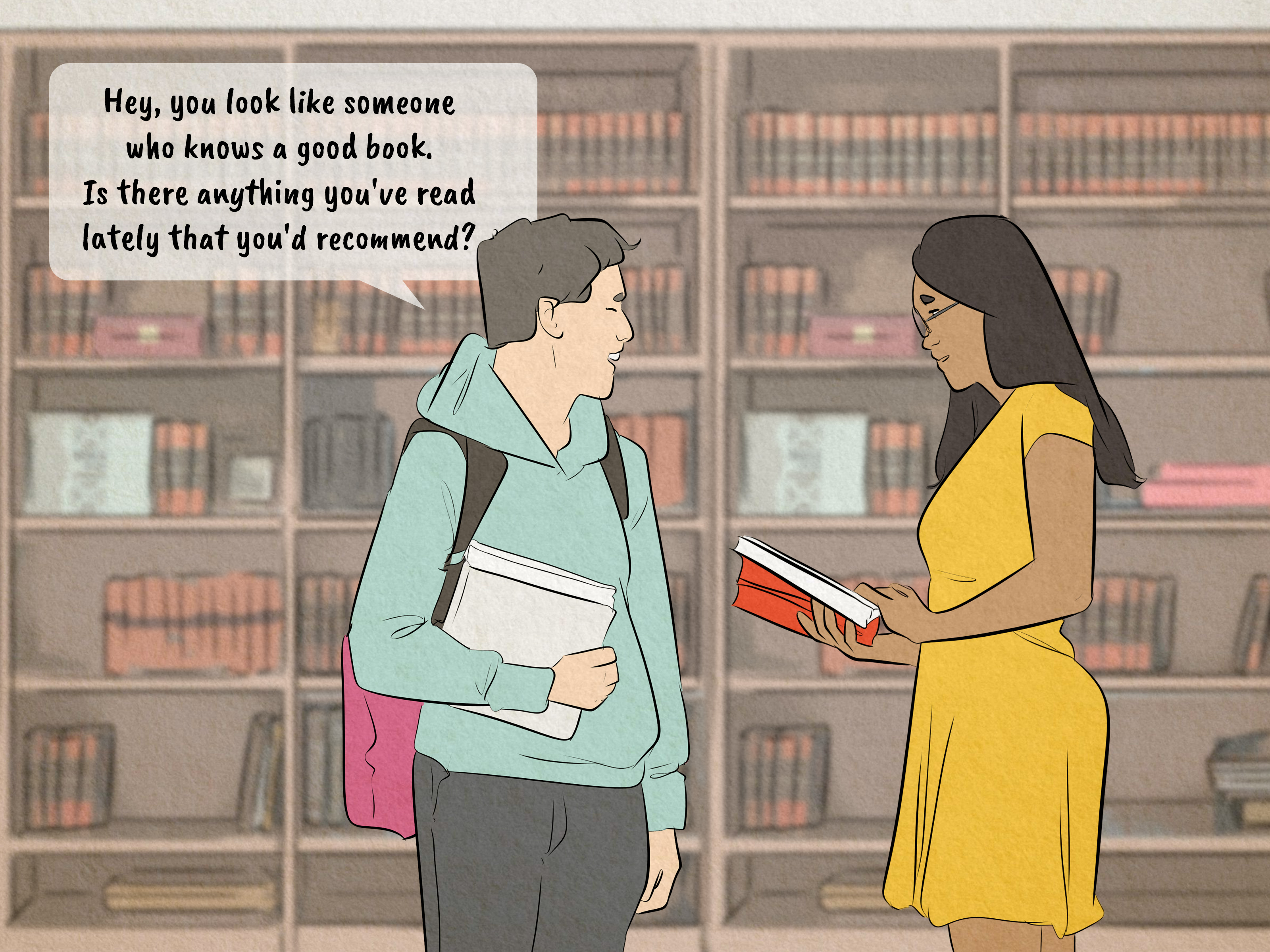
A simple introduction works: “I’m Maya, and I use she/her pronouns. How should I refer to you?” Offering your own pronouns first can make the question feel less like an interrogation under a desk lamp.
However, do not force everyone to disclose pronouns publicly. A person may be questioning their identity, not ready to come out, or uncomfortable discussing the subject. Encouragement is often more considerate than mandatory participation.
Professional guides generally recommend asking how people describe themselves and using the names and pronouns they provide. Workplace guidance also favors clear, casual communication rather than turning introductions into ceremonial declarations.
If You Make a Mistake, Correct It and Continue
Suppose you say, “He sent the reportsorry, they sent the report.” That is usually enough. You do not need to perform a seven-minute apology in which the misgendered person must comfort you, forgive your ancestors, and approve your application for moral citizenship.
A brief correction shows effort. Repeatedly announcing how difficult the pronoun is makes the person feel like a malfunctioning grammar puzzle. Practice privately by using the person’s name and pronouns in a few sentences. The brain learns through repetition, not through dramatic sighing.
Distinguish Mistakes From Deliberate Disrespect
Intent is not everything, but patterns matter. A person who slips once and immediately corrects themselves is behaving differently from someone who repeatedly uses the wrong pronoun while smirking, emphasizing the word, or recruiting an audience.
Respond proportionally. Gentle correction works for ordinary mistakes. Persistent, targeted behavior may require a private conversation, mediation, or an appropriate workplace or school process. Not every typo deserves a tribunal, and not every repeated insult should be waved away as a typo.
Use Names When You Truly Do Not Know
When information is unavailable, use the person’s name until you can ask appropriately. This is often safer than guessing based on clothing, voice, hairstyle, or whether someone ordered the lumberjack breakfast.
Names should not become a permanent loophole after someone has clearly shared their pronouns. If every other employee gets “he” or “she” while one person is referred to by name fifteen times per paragraph, readers will notice the linguistic gymnastics.
What About Neopronouns?
Neopronouns are newer or less common third-person pronouns, including forms such as “xe/xem,” “ze/hir,” or “ey/em.” Some have existed in various forms for decades, though most remain unfamiliar to the general public.
Supporters view neopronouns as tools for people who do not feel represented by “he,” “she,” or “they.” Critics argue that an unlimited number of individualized pronouns could make shared communication difficult. Both observations can contain truth: language can accommodate new terms, but uncommon terms require patience, explanation, and practice.
In everyday conversation, the practical response is straightforward. When someone tells you the pronouns they use, make a reasonable effort. You are not required to memorize a secret dictionary overnight. Write the forms down, ask politely how they work in a sentence, and improve with repetition.
Linguistic research suggests that singular “they” is more widely recognized and accepted than many neopronouns, which is unsurprising because familiarity strongly affects whether a form sounds natural. “Unfamiliar” does not automatically mean “impossible,” but it does explain why learning curves differ.
How to Debate Pronouns Without Becoming Unbearable
Stop Assuming the Worst Possible Motive
Not every mistake is hatred. Not every correction is tyranny. Not every question is a trap, and not every objection is an innocent grammar concern. Examine the actual behavior before assigning someone a costume in your personal morality play.
Discuss Specific Situations
“Should a coworker use the pronouns another coworker has requested?” is a more productive question than “Has civilization collapsed?” Specific cases allow discussion of context, intent, consequences, and reasonable expectations.
Do Not Use One Viral Clip as Evidence About Millions of People
The internet specializes in finding the most theatrical person from each group and promoting that person to unofficial spokesperson. One furious student, mocking comedian, aggressive activist, or rude customer does not represent everyone who shares a pronoun or political opinion.
Remember That Courtesy Is Not Total Agreement
People routinely use names, titles, and forms of address without endorsing every belief held by the person addressed. Using a requested pronoun in ordinary conversation can be understood as social cooperation rather than a signed manifesto.
Likewise, treating someone respectfully does not prohibit thoughtful discussion of language policy, institutional rules, or grammar. Courtesy and debate can coexist. They simply require participants to resist the addictive thrill of humiliating strangers.
Experiences From the Pronoun Front Lines
The following are composite scenarios based on commonly reported interactions. They are illustrative examples, not claims about specific identifiable individuals.
The Office Introduction That Was Almost Normal
During a team meeting, a new employee named Riley introduced themselves and said they used they/them pronouns. Most coworkers nodded and continued discussing deadlines. One colleague, Ben, looked visibly nervous. Later that afternoon, he accidentally referred to Riley as “she,” corrected himself, and moved on.
Riley did not summon lightning. Ben did not dissolve into a puddle of canceled employment. By the following week, he was using “they” naturally because he had practiced. The experience was memorable precisely because it was so ordinary. No ideological summit was requiredjust information, effort, and the human brain’s ability to learn a new habit.
The Family Dinner With Too Many Side Dishes
A college student told their relatives that they were nonbinary. An aunt tried hard but frequently made mistakes. A grandfather objected to singular “they” because his English teacher had forbidden it sometime during the invention of indoor plumbing.
The first dinner became tense. Every correction sounded like criticism; every mistake sounded intentional. At the next gathering, the student explained that perfection was not expected, but visible effort mattered. The aunt began correcting herself briefly. The grandfather agreed to use the student’s name while he adjusted, then gradually began using “they.”
Nobody changed every opinion. Nobody delivered a cinematic speech over the mashed potatoes. The family simply found a workable path that reduced unnecessary pain.
The Comment Section That Ate an Entire Afternoon
A social media user posted a harmless question about pronouns in email signatures. Within minutes, strangers were accusing one another of fascism, communism, narcissism, illiteracy, and possibly poor lawn maintenance.
The most useful comment came from someone who wrote, “I include mine so other people feel comfortable sharing theirs, but I do not think disclosure should be mandatory.” That sentence acknowledged inclusion and privacy at the same time. Naturally, it received fewer reactions than the comment comparing pronoun fields to the fall of Rome.
The lesson was painfully clear: online platforms reward certainty and conflict, while real life often requires nuance. The loudest answer is not necessarily the wisest. Sometimes it is merely the answer with the most exclamation points.
The Teacher Who Changed the Question
A teacher once asked students to announce their pronouns during the first class. One student froze because they were questioning their identity and were not ready to reveal anything. The teacher later changed the activity. Students could privately enter a name and pronouns on a form, leave the pronoun field blank, or update the information later.
That small redesign protected both inclusion and privacy. Transgender students had a clear way to communicate. Questioning students were not pushed into public disclosure. Other students learned that respect does not require turning personal information into a compulsory performance.
What These Experiences Have in Common
The best outcomes did not come from winning an abstract war. They came from reducing embarrassment, allowing learning, correcting proportionally, and remembering that a person is more important than a point scored during an argument.
People adjusted faster when they were not mocked for honest mistakes. Transgender and nonbinary people felt safer when their requests were treated seriously. Institutions made better decisions when they considered both recognition and privacy. In every scenario, curiosity worked better than combat.
Conclusion: Retire the War Metaphor
Calling the debate a “pronoun war” makes for an irresistible headline, but wars require enemies, victories, and casualties. Ordinary human communication requires something much less glamorous: listening, clarification, practice, and occasional forgiveness.
Pronouns matter because people matter. Grammar matters because clarity matters. Freedom of expression matters because open discussion matters. None of those principles automatically cancels the others.
Use the pronouns people tell you they use. Correct honest mistakes without creating a public spectacle. Challenge deliberate cruelty without assuming every confused person is cruel. Discuss institutional policies specifically rather than using individual people as political punching bags.
And when the comment section begins producing more heat than light, step away from the keyboard. Drink water. Look at a tree. Remind yourself that English has survived irregular verbs, silent letters, “flammable” meaning the same thing as “inflammable,” and people who write “could of.” It can probably survive singular “they.”
So, Pandas, what helped you understand the pronoun debate? Have you changed your mind, learned from a mistake, or found a respectful way through an awkward conversation? Share the experiencebut please leave the flamethrower at home.