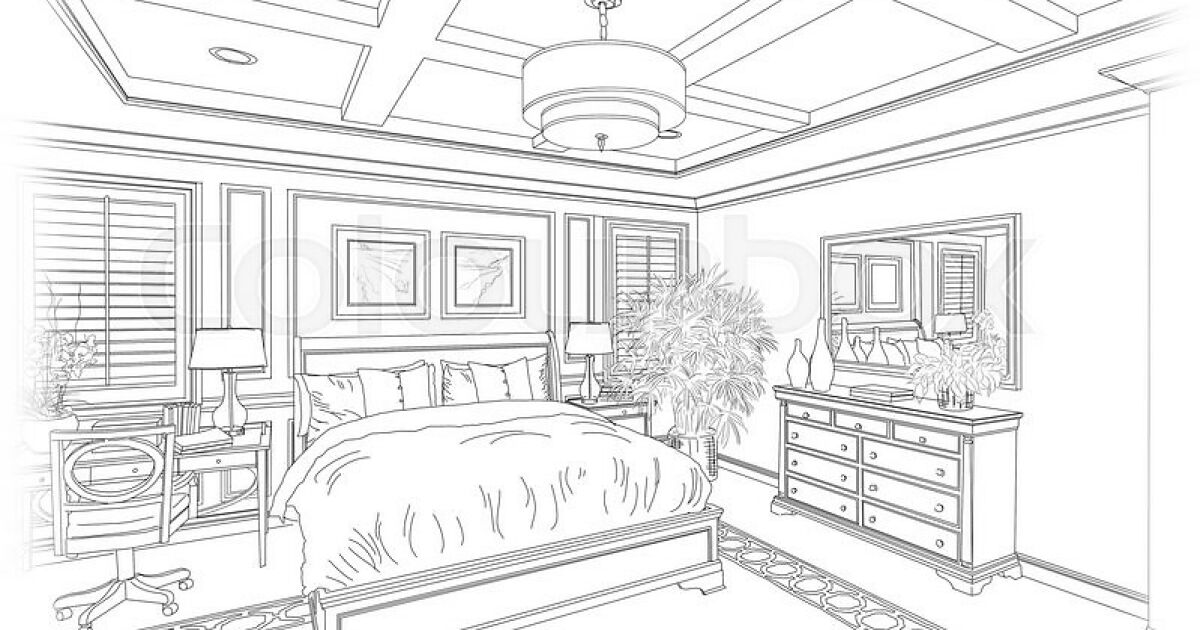
There is something delightfully sneaky about the prompt “Hey Pandas, Draw A Room.” At first glance, it sounds simple enough. A room? Easy. Four walls, a floor, maybe a ceiling if we are feeling ambitious, and a suspiciously square window that probably looks like it was installed by a nervous geometry teacher. But the moment someone actually starts drawing, the room becomes more than a box. It becomes a tiny biography.
A room can reveal what a person values, fears, dreams about, avoids cleaning, or secretly wants to become. A bedroom sketch might show a pile of books beside the bed, a plant clinging to life in the corner, or a gaming chair that looks more emotionally supported than its owner. A fantasy room might have floating lamps, mushroom furniture, or a reading nook guarded by a dragon with excellent taste in throw pillows. That is why this kind of community art prompt works so well: it gives everyone the same starting point, then lets imagination run wild in different directions.
The phrase “Hey Pandas” connects naturally with the playful, community-driven style of online creative challenges, where people respond to prompts with drawings, stories, photos, jokes, and personal interpretations. A room-drawing challenge is especially flexible because it welcomes beginners, casual doodlers, digital artists, interior design lovers, architecture nerds, cozy-aesthetic collectors, and anyone who has ever looked at a blank page and thought, “Well, this wall is judging me.”
Why “Draw A Room” Is A Surprisingly Great Art Prompt
A good drawing prompt should be open enough to invite creativity but specific enough to stop people from staring into space until their pencil files a missing-person report. “Draw a room” hits that sweet spot. It gives artists a clear subject, but it does not dictate the style, mood, perspective, furniture, time period, or realism level. One person may draw a clean Scandinavian living room with soft lighting and quiet luxury. Another may create a chaotic teenager’s bedroom where laundry has formed a small democratic republic. Both answers fit the prompt.
Rooms are also familiar. Everyone has experienced interior spaces: bedrooms, classrooms, kitchens, libraries, hospital waiting rooms, hotel rooms, studios, attics, basements, offices, and that one relative’s living room where every sofa is covered in plastic like it is about to testify in court. Because rooms are part of daily life, artists can begin from memory instead of needing a rare reference image or advanced anatomy skills.
At the same time, rooms are technically useful. Drawing a room introduces artists to perspective, proportion, scale, texture, lighting, object placement, storytelling, and composition. A chair needs to sit on the floor. A window needs to align with the wall. A rug should not look like it is floating unless the room is haunted or sponsored by magic. These little visual problems teach practical drawing skills without making the exercise feel like homework wearing a fake mustache.
The Secret Ingredient: Perspective
If a room drawing looks flat, confusing, or like the furniture is slowly sliding into another dimension, the culprit is often perspective. Perspective is the method artists use to create the illusion of depth on a flat surface. In room drawings, one-point perspective is a popular beginner-friendly approach because it uses a single vanishing point, usually placed somewhere on the back wall or horizon line.
In simple terms, one-point perspective means that lines moving away from the viewer appear to meet at one point in the distance. Imagine standing in a hallway and looking straight ahead. The edges of the walls, floor, and ceiling seem to narrow as they move away from you. That visual effect helps a flat drawing feel three-dimensional. For a room, the artist might start with a rectangle for the back wall, choose a vanishing point, then draw guidelines from the corners of the room toward that point. Suddenly, the page stops being a rectangle and starts becoming a space.
This is why room prompts are so popular in art education. They let beginners practice a concept that seems intimidating but becomes manageable when applied to familiar objects. Add a bed, desk, bookshelf, window, door, poster, lamp, and rug, and suddenly a technical lesson becomes a lived-in scene. The artist learns perspective while also deciding whether the room belongs to a wizard, a college student, a retired detective, or a raccoon with a podcast.
One-Point, Two-Point, Or “I Forgot The Rules” Perspective?
One-point perspective works best when the viewer is looking straight into a room, with the back wall facing them. Two-point perspective is useful when the viewer sees a corner or angled view, where lines recede toward two different vanishing points. Isometric drawing, often used in design and game art, keeps parallel lines consistent and gives the room a charming diagram-like look. Then there is the beloved beginner style known as “I followed my heart and now the dresser is levitating.” Honestly, that style has potential too.
The best choice depends on the mood. A one-point perspective bedroom can feel orderly, centered, and calm. A two-point perspective room can feel more dynamic, like the viewer is standing inside the scene. An isometric room can feel cute, organized, and game-like. A loose cartoon room can focus more on personality than realism. The challenge does not require perfection; it rewards interpretation.
What A Room Drawing Says About The Artist
Rooms are never just rooms. They are containers for personality. A minimalist room with a single bed, a framed print, and a plant may suggest calm and control. A maximalist room packed with posters, shelves, lights, pets, snacks, and mysterious cables may suggest creativity, nostalgia, or a person who owns seventeen hobbies and only three available outlets.
Artists often reveal themselves through the objects they choose to include. A sketch of a cozy reading room may feature overstuffed chairs, warm lamps, teacups, blankets, and books stacked like tiny architectural monuments. A music room might include guitars, keyboards, vinyl records, soundproof panels, and a microphone waiting dramatically in the corner. A gamer’s room might glow with monitors, LED strips, figurines, headphones, and the sacred half-empty water bottle of concentration.
Even imaginary rooms say something. A futuristic room with transparent walls and floating furniture can reflect curiosity about technology. A medieval room with candles, trunks, tapestries, and stone walls may reveal a love for fantasy worlds. A messy art studio with paint tubes, paper scraps, and brushes in jars might feel more honest than a perfectly staged space because creativity often looks like a tornado learned color theory.
How To Make A Room Drawing More Interesting
A room drawing becomes memorable when it has a point of view. That does not mean it needs a complicated story. It just needs a reason to exist. Instead of drawing “a bedroom,” draw the bedroom five minutes after someone left in a hurry. Instead of drawing “a kitchen,” draw the kitchen during a midnight snack mission. Instead of drawing “a classroom,” draw the classroom after the students have gone home and one lonely pencil remains on the floor like the final survivor of an academic battle.
Storytelling turns ordinary objects into clues. An open drawer, a tilted picture frame, a half-packed suitcase, a sleeping cat, a forgotten birthday balloon, or a glowing laptop can make viewers wonder what happened before and what will happen next. A room can feel peaceful, funny, spooky, luxurious, nostalgic, futuristic, or wonderfully strange depending on those choices.
Use Lighting Like A Tiny Drama Director
Lighting can change the entire mood of a room drawing. Morning light through a window makes a room feel fresh and hopeful. A desk lamp creates focus and intimacy. Neon lighting can make a gaming room or cyberpunk bedroom feel electric. Candlelight adds mystery, romance, or the strong possibility that someone forgot to pay the power bill. Shadows also help objects feel grounded, which is extremely helpful when the bed starts looking like it is preparing for takeoff.
Add Texture, Not Just Objects
Texture makes a room feel touchable. Wooden floors, fuzzy rugs, wrinkled blankets, brick walls, glass windows, metal bedframes, woven baskets, and paper posters all give the eye something to explore. Artists do not need to render every detail perfectly. A few smart lines can suggest grain, fabric, shine, or softness. The goal is not to draw every thread in the carpet unless the artist has unlimited time and possibly a grudge against themselves.
Room Ideas For The “Hey Pandas, Draw A Room” Challenge
If the blank page feels too blank, start with a theme. Themes make decisions easier and often lead to stronger drawings. Here are several ideas that fit the prompt beautifully:
1. The Cozy Room
Think soft blankets, warm lamps, books, plants, a sleepy pet, and a window with rain outside. Cozy rooms are popular because they create instant emotional comfort. They also let artists practice soft textures, warm lighting, and layered objects without needing dramatic action.
2. The Dream Bedroom
This can be realistic or wildly impossible. Add a skylight, a loft bed, a giant bookshelf wall, a secret door, a snack drawer, a floating desk, or a bed shaped like a cloud. A dream bedroom is not about resale value. It is about joy, imagination, and perhaps finally having enough storage for all those things we swear we will organize “this weekend.”
3. The Artist’s Studio
An art studio is naturally full of visual interest: canvases, easels, paint splatters, reference photos, sketchbooks, jars of brushes, and a chair buried under supplies. This idea is great for showing creative chaos. The mess should feel intentional, not like the drawing itself lost a fight with a craft store.
4. The Tiny Isometric Room
Isometric rooms are perfect for artists who like clean shapes and cute details. They often look like miniature dollhouse scenes or video game environments. A tiny isometric bedroom, café corner, library, or plant shop can be charming, readable, and highly shareable.
5. The Haunted Room
For a spooky twist, draw crooked frames, long shadows, antique furniture, torn curtains, dusty floors, and maybe one suspicious rocking chair. Keep it atmospheric rather than overly graphic. A good haunted room does not need to show anything scary. Sometimes the creepiest detail is a perfectly normal door that is slightly open.
6. The Memory Room
A memory room is based on a place from childhood, a former home, a classroom, a grandparent’s kitchen, or a vacation rental that somehow smelled like sunscreen and old board games. These drawings can feel especially meaningful because they combine observation with emotion.
Common Mistakes When Drawing A Room
The first common mistake is placing furniture without considering the floor plane. Objects need to share the same visual world. If the bed follows one perspective, the desk follows another, and the bookshelf has joined a third political party, the room becomes confusing. Light guidelines can help keep everything aligned.
The second mistake is making every object the same size or level of detail. In real spaces, some objects are closer, larger, darker, or more important. A strong composition uses variety. The viewer’s eye should move naturally through the room, not bounce around like a trapped fly.
The third mistake is forgetting negative space. A room does not need to be packed wall to wall. Empty areas can make the drawing feel believable and help important details stand out. Even maximalist rooms need breathing room, although they may only offer one square inch of it near the door.
The fourth mistake is worrying too much about perfection. Room drawings can be technically challenging, but charm matters. A slightly crooked lamp with personality may be more memorable than a mathematically flawless sofa with the emotional range of a filing cabinet.
Why Online Art Challenges Keep People Creating
Community prompts like “Hey Pandas, Draw A Room” work because they remove the hardest part of creativity: deciding where to begin. When many people respond to the same prompt, the results become a gallery of different minds. Some entries are polished. Some are funny. Some are simple. Some are weird in the best possible way. Together, they show that creativity is not one fixed skill level; it is a conversation.
These challenges also make art less lonely. Drawing is often a quiet activity, but sharing a prompt turns it into a group experience. Beginners can participate without needing to call themselves “real artists,” and experienced artists can experiment without the pressure of producing a masterpiece. The prompt becomes permission to play.
That playful spirit is important. Many people stop drawing because they believe they are not good enough. But a casual prompt says, “Just try.” Draw the room badly. Draw it quickly. Draw it with crayons, pixels, markers, ink, or a pencil you found in a backpack that may date back to the previous school year. The act of making something is already the win.
Of Experience: What Drawing A Room Actually Feels Like
The first time you try to draw a room, it can feel like the page is pretending to be simple while secretly hiding a final exam. You begin with confidence. A rectangle for the back wall. Nice. Lines to the corners. Excellent. A window. Beautiful. Then you add a bed, and suddenly the bed looks like it belongs to a giant toddler. The desk leans. The bookshelf has trust issues. The rug appears to be climbing the wall. At this point, many artists discover the ancient creative technique known as “staring at the paper and sighing.”
But that awkward stage is where the learning happens. Drawing a room teaches patience because every object has a relationship with every other object. The chair needs to match the table height. The door needs to reach a believable place on the wall. The picture frame should hang flat unless the house is sinking. Even a simple lamp has a base, a shade, a shadow, and a reason to exist. A room drawing forces the artist to notice details that real life usually lets us ignore.
One helpful experience is sketching an actual room before inventing one. Sit in a corner and draw what is really there. Do not clean it first. The mess is data. Shoes by the door, cables under the desk, blankets on the bed, cups on the nightstand, books stacked sidewaysthese details make the drawing feel lived in. A perfectly clean room can look nice, but a slightly messy room often feels more human. It says, “Someone was here,” which is much more interesting than “A furniture catalog has been left unsupervised.”
Another useful experience is drawing the same room more than once. The first version may be stiff. The second version usually has better proportions. The third version starts to show style. Maybe the artist exaggerates the window, simplifies the furniture, adds stronger shadows, or changes the viewpoint. Repetition turns confusion into confidence. It also proves that improvement is not a magical personality trait; it is often just the result of trying again after the first attempt looked like a cube wearing furniture.
Digital artists may enjoy building a room with layers: sketch lines, perspective grid, furniture shapes, color blocks, shadows, highlights, and final details. Traditional artists can do the same mentally or with light pencil construction. Either way, the process becomes less scary when broken into stages. Start with the big box. Add the large furniture. Place the smaller objects. Decide where the light comes from. Add texture last. Do not begin by drawing twenty tiny books on a shelf unless procrastination has taken the wheel.
The best part of the “Hey Pandas, Draw A Room” experience is seeing how different everyone’s rooms become. One person draws a peaceful bedroom with plants and sunlight. Another draws a chaotic art cave full of stickers and snacks. Someone else draws a fantasy room in a castle tower, a spaceship cabin, a cat’s luxury apartment, or a tiny frog living room with a thimble for a side table. The prompt is the same, but the rooms become personal worlds.
In the end, drawing a room is not only about walls, windows, and furniture. It is about learning how space tells a story. A room can be funny, cozy, dramatic, strange, nostalgic, or quietly emotional. It can show where a character lives, what they care about, and what kind of day they are having. And for the artist, it becomes a small but satisfying challenge: turn a blank page into a place someone might want to enter.
Conclusion
“Hey Pandas, Draw A Room” is a deceptively simple prompt with huge creative potential. It invites artists to practice perspective, composition, lighting, storytelling, and personal expression without locking them into one style. A room can be realistic, cartoonish, cozy, haunted, futuristic, messy, elegant, or completely unhinged in a charming way. That flexibility is exactly why the prompt works so well for online art communities.
For beginners, it is a friendly way to learn structure and depth. For experienced artists, it is a chance to show mood, design, and narrative. For everyone else, it is proof that a room is never just a room. It is a little stage where personality, memory, imagination, and maybe one suspiciously floating chair all come together.
Note: This article is original, publication-ready web content written in standard American English and based on real concepts from community art prompts, perspective drawing, interior sketching, and creative visual storytelling.