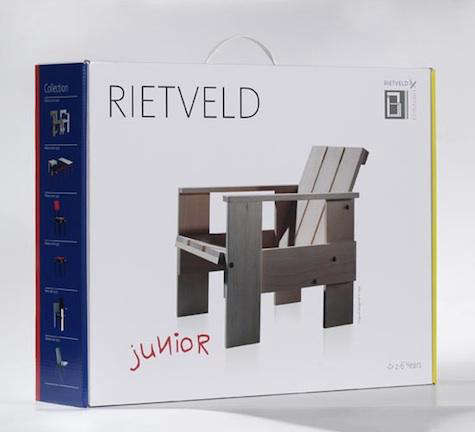
The Rietveld Crate Chair is proof that great furniture does not always arrive wearing velvet, brass, and a price tag that makes your wallet quietly leave the room. Sometimes, it shows up as a stack of humble pine boards, a few honest screws, and a designer with the nerve to ask, “What if a chair could be smart, affordable, modern, and still look like it belongs in a museum?”
Designed by Dutch architect and furniture maker Gerrit Thomas Rietveld in the 1930s, the Crate Chair belongs to the broader Crate furniture series, a collection associated with surplus wooden shipping crates and the practical spirit of Depression-era design. It is simple, geometric, direct, and slightly mischievous in the way only truly clever modern furniture can be. At first glance, it may look like a chair that escaped from a workshop before anyone had a chance to “finish” it. Look again, and you begin to see the genius: every board has a job, every gap creates lightness, and every angle turns thrift into architecture.
For design lovers, the Rietveld Crate Chair is not just seating. It is an idea with armrests. It says that beauty can be democratic, construction can be visible, and a good chair does not need to whisper “luxury” when it can confidently say “logic.”
Who Was Gerrit Rietveld?
Gerrit Rietveld was born in Utrecht, the Netherlands, in 1888 and trained early in his father’s furniture workshop. That background matters because Rietveld did not approach furniture as a decorator first. He understood wood, joints, proportions, and the stubborn reality of making things that have to stand up when people sit down.
Rietveld later became one of the most important figures connected to De Stijl, the Dutch modern art and design movement associated with clean lines, abstract forms, primary colors, and the search for universal order. His famous Red and Blue Chair and the Rietveld Schröder House helped transform modern design by turning flat, abstract art principles into three-dimensional objects and spaces.
But the Crate Chair shows another side of him. It is less polished than the Red and Blue Chair, less dramatic than the Zig-Zag Chair, and less architectural than the Schröder House. Yet it may be one of his most human designs because it deals with a basic question: how can useful furniture be made with modest materials for ordinary life?
What Is the Rietveld Crate Chair?
The Rietveld Crate Chair, often connected with the 1934 Crate furniture series, is a wooden chair made from simple pine boards arranged in a transparent, plank-based structure. The design is commonly described as having been inspired by or made from the kind of wood used for transport crates. That origin story gives the chair its name and its character.
Instead of hiding construction, the chair celebrates it. The seat, back, sides, and supports are not disguised beneath upholstery or carved ornament. They are openly assembled from straight boards. This gives the chair a casual, workshop-born confidence. It looks approachable, even a little improvised, but the proportions are controlled with Rietveld’s typical discipline.
The Crate Chair also exists in historical museum collections and modern authorized editions. Original and early examples are valued as modern design objects, while contemporary versions by Rietveld Originals and HAY have brought the Crate concept back into modern interiors and outdoor settings. That relaunch makes sense: today’s design world loves sustainability, visible construction, flat-pack logic, and furniture that looks good without pretending to be precious. Rietveld was there decades early, probably smirking politely.
The Historical Context: Design During Hard Times
The 1930s were not exactly a cheerful decade for experimental furniture. Economic pressure shaped how people built, bought, and lived. Expensive materials and labor-intensive craftsmanship were less realistic for many households. Designers had to think about economy, production, and accessibility.
Rietveld’s Crate furniture responded to that reality. By using simple pine and straightforward construction, the series pushed against the idea that modern design should be reserved for wealthy collectors or avant-garde salons. The Crate Chair belongs to a tradition of design that asks: can we reduce the object to its essentials without reducing its intelligence?
That is why the chair still feels relevant. In an age of rising furniture prices, disposable fast furniture, and environmental concerns, the Crate Chair looks less like a historical oddity and more like a message from the future written in pine.
Design Features That Make the Crate Chair Special
1. Honest Materials
The Rietveld Crate Chair is associated with pine, a softwood that is affordable, workable, and visually warm. Pine does not behave like marble or mahogany, and Rietveld did not ask it to. The material is allowed to be plain. That plainness is part of the charm.
In modern interiors, pine can look rustic, Scandinavian, minimal, or intentionally raw depending on the finish and surrounding décor. The Crate Chair uses that flexibility well. It can sit in a white-walled apartment, a creative studio, a reading corner, or a covered patio without sounding a design alarm.
2. Visible Construction
Many chairs try to hide how they are made. The Crate Chair does the opposite. Its boards, spacing, edges, and fasteners make the structure readable. You can almost understand the chair by looking at it for thirty seconds, which is refreshing in a world where some furniture appears to have been assembled by mysterious elves with access to industrial glue.
This visible construction gives the chair an educational quality. It teaches proportion, support, rhythm, and material economy. For DIY furniture fans, it is especially appealing because the design feels understandable, even if making a good version still requires care, accuracy, and respect for the original proportions.
3. Geometric Clarity
Rietveld loved geometry, but he did not use it as decoration. In the Crate Chair, straight lines and rectangular boards create a clear architectural form. The chair has mass, but the gaps between boards keep it visually light. It is both solid and airy, which is a neat trick for something that looks like it could have begun life near a shipping dock.
4. Democratic Spirit
The Crate Chair’s greatest feature may be philosophical. It was designed around the idea that furniture could be accessible, efficient, and modern. That democratic spirit links it to Rietveld’s broader interest in mass production and practical modern living.
Of course, the irony is delicious: a chair inspired by affordable crate wood is now collected, studied, and displayed by design institutions. Modern design history does enjoy a good plot twist.
Rietveld Crate Chair vs. Red and Blue Chair
Comparing the Crate Chair with Rietveld’s Red and Blue Chair is like comparing a jazz standard with an experimental manifesto. The Red and Blue Chair is iconic, colorful, and strongly tied to De Stijl abstraction. It is a famous museum piece because it turns lines, planes, and primary colors into furniture.
The Crate Chair is quieter. It does not rely on bold color to make its point. Instead, it uses plain boards, gaps, and repetition. The Red and Blue Chair feels like a painting exploded into space. The Crate Chair feels like a practical idea refined until it becomes beautiful.
Both designs share Rietveld’s interest in construction, clarity, and modern life. But the Crate Chair is easier to imagine in everyday use. It has a relaxed quality that makes it appealing for contemporary homes, especially for people who want modern furniture with warmth instead of museum-level seriousness.
Why the Crate Chair Still Works in Modern Interiors
The Rietveld Crate Chair fits surprisingly well into current furniture trends. Minimalist interiors love its clean lines. Scandinavian-inspired rooms appreciate its pine, openness, and functional honesty. Eco-conscious decorators enjoy its association with reuse and material economy. Design-history fans admire its connection to one of the 20th century’s most influential modernists.
It also plays well with contrast. Put it next to a soft wool rug, and it gains warmth. Pair it with a sleek metal floor lamp, and it looks architectural. Place it near plants, and the pine feels relaxed and natural. Add a cushion, and suddenly the chair stops looking like a design lecture and starts acting like a weekend reading spot.
The chair works best when it has room to breathe. Because its shape is strong and linear, it can look crowded if squeezed among too many heavy objects. Give it a little negative space and it becomes a sculptural accent. Think of it as the friend who does not talk too much at dinner but somehow makes the whole table more interesting.
How to Style a Rietveld Crate Chair
Use It as a Statement Lounge Chair
A Crate Chair can anchor a corner without overwhelming it. Place it beside a small side table, a floor lamp, and a stack of books. The result feels intentional but not fussy. It says, “I read design books,” without also saying, “Please remove your shoes and speak only in lowercase.”
Add a Cushion for Comfort
The original visual language of the chair is firm and architectural. For daily lounging, a cushion can make it more inviting. Choose a neutral cushion for a quiet look, or use a bold textile if you want to create contrast. The key is not to bury the chair’s structure. The frame is the star; the cushion is the supporting actor with excellent timing.
Pair It With Natural Materials
Wood, linen, wool, clay, and stone all work well with the Crate Chair. These materials echo the chair’s honesty. Avoid surrounding it only with glossy, overly polished surfaces unless you want a sharper gallery-like effect.
Let the Lines Show
Because the Crate Chair is built from repeating boards, its silhouette matters. Avoid hiding it under throws or pushing it against visual clutter. Let light pass through the gaps. That transparency is one of the design’s most attractive features.
Is the Rietveld Crate Chair Comfortable?
Comfort depends on expectations. If you expect a cloud, no. If you expect a thoughtfully angled wooden chair that can become quite pleasant with a cushion, yes. The Crate Chair was not designed to swallow you like an oversized recliner. It encourages a more upright, aware way of sitting.
That said, modern versions of the Crate Lounge Chair are often used with optional cushions, making them more suitable for relaxed use. The chair’s low, open structure can feel casual and easygoing, especially in lounge settings. It is furniture for people who appreciate the difference between comfort and collapse.
Originals, Reproductions, and Modern Relaunches
Collectors prize historical Rietveld pieces because they represent major moments in modern design. Museum examples of the Crate Chair show how the design moved from practical material experiment to recognized furniture history. However, not every chair described online as “Rietveld style” or “attributed to Rietveld” is automatically an original. Provenance matters.
For everyday buyers, authorized modern editions are usually the more realistic path. The Rietveld Originals x HAY collaboration has made the Crate series available to a wider audience, including lounge chairs, dining chairs, and side tables. These pieces preserve the spirit of the original while adapting production for contemporary homes.
If you are shopping for one, pay attention to dimensions, finish, indoor-outdoor suitability, cushion options, and whether the piece is an authorized edition. If the price seems suspiciously low and the listing uses twelve design buzzwords in one sentence, proceed with caution and possibly a raised eyebrow.
The Crate Chair and Sustainability
The Rietveld Crate Chair feels surprisingly modern because it aligns with many sustainability conversations happening today. It is associated with reuse, efficient material use, simple construction, and long-lasting design. Unlike disposable furniture that looks tired after one apartment move and a heroic encounter with a staircase, the Crate Chair has an enduring idea behind it.
Sustainability in furniture is not only about materials. It is also about whether an object remains useful, repairable, and desirable over time. A chair that people keep, restore, discuss, and reinterpret for nearly a century has already made a strong argument for itself.
Why Designers Still Love It
Designers love the Rietveld Crate Chair because it is simple but not boring. It has enough structure to study, enough history to respect, and enough practicality to use. It also demonstrates a rare kind of confidence: the confidence to leave things visible.
In product design, architecture, and interiors, visible logic is powerful. When users can understand how something works, they often trust it more. The Crate Chair turns that trust into style. It does not pretend to be effortless; it shows the effort clearly and makes that clarity beautiful.
Buying Tips for a Rietveld Crate Chair
Before buying a Crate Chair or Crate-inspired chair, decide whether you want a collectible, an authorized contemporary edition, or a casual homage. These are very different categories. A museum-worthy historical piece should come with documentation. A modern licensed version should provide clear manufacturer details. A DIY-inspired version should be judged by build quality, comfort, and honesty in description.
Check the wood quality, finish, joinery, and stability. Pine can dent, which is part of its natural personality, but the chair should still feel sturdy. Look closely at board alignment and screw placement. Rietveld’s design may appear simple, but simple furniture is unforgiving. When the proportions are wrong, the chair can quickly move from “modern classic” to “someone’s ambitious garage Saturday.”
Also consider where the chair will live. For outdoor use, confirm whether the finish is suitable for weather exposure. For indoor use, think about how the tone of the pine works with your flooring and other furniture. Natural pine can brighten a room, while painted or lacquered finishes can create a bolder statement.
Experience Section: Living With the Idea of the Rietveld Crate Chair
Spending time with a Rietveld Crate Chair, or even simply studying one closely, changes how you look at ordinary furniture. Most chairs try to make you forget their construction. They want to be smooth, padded, seamless, and polite. The Crate Chair is different. It is not rude, exactly, but it is refreshingly direct. It walks into the room with visible boards and says, “Yes, I am made of wood. Any questions?”
One of the most interesting experiences related to the Crate Chair is how it shifts your sense of value. At first, the design may look almost too plain. Someone unfamiliar with Rietveld might wonder why a chair made from simple planks deserves so much attention. But after a while, the simplicity becomes the point. You begin noticing the spacing between boards, the angle of the back, the rhythm of the frame, and the way the chair creates volume without becoming visually heavy.
In a real home, the Crate Chair can be surprisingly flexible. In a minimalist living room, it looks disciplined and architectural. In a warmer, eclectic room, it becomes a grounding object that keeps everything from drifting into decorative chaos. Put it beside a leafy plant and a textured cushion, and it feels relaxed. Place it against a white wall with a small modern side table, and it suddenly looks like a design-school professor’s favorite corner.
The chair also encourages a different kind of ownership. It is not the sort of piece you buy only because it matches the curtains. You buy it because it has a story. Guests may ask about it, especially if they are used to softer, more conventional lounge furniture. That opens the door to talking about Rietveld, De Stijl, modernism, reuse, and the idea that a chair can be both practical and philosophical. Not bad for pine boards.
Comfort-wise, the experience is honest. The Crate Chair does not pretend to be a marshmallow. Without a cushion, it feels firm and structured. With a well-chosen cushion, it becomes much more inviting while still preserving its crisp outline. That balance is important. Over-softening it would defeat the design. The goal is not to turn the Crate Chair into a recliner; the goal is to make it comfortable enough for reading, conversation, and the occasional dramatic pause with coffee.
For DIY-minded people, the Crate Chair is especially inspiring because it makes construction feel approachable. However, it also teaches humility. A simple-looking chair can be difficult to get right. Angles, measurements, board thickness, sanding, finishing, and stability all matter. The design reminds you that minimalism is not laziness. It is precision with fewer hiding places.
The best experience of the Rietveld Crate Chair is realizing that good design does not need to shout. It can be modest, useful, witty, and historically important at the same time. It can come from economic constraint and still feel creatively free. It can look almost primitive and still be deeply modern. That is the magic of the Crate Chair: it turns the ordinary crate into an extraordinary lesson in how to sit, see, and think.
Conclusion
The Rietveld Crate Chair remains one of the most fascinating pieces of modern furniture because it compresses so many ideas into such a simple form. It is practical but poetic, modest but memorable, historical but still fresh. Designed in the spirit of affordability and material efficiency, it continues to speak to today’s interest in sustainability, honest construction, and timeless modern interiors.
Gerrit Rietveld understood that furniture could be more than decoration. It could be a social idea, a structural experiment, and a daily-use object all at once. The Crate Chair proves that a few pine boards, arranged with intelligence, can become far more than a place to sit. They can become design history with armrests.
Note: This article is written as original, publication-ready web content based on verified design-history information about Gerrit Rietveld, the Crate furniture series, museum collection data, and contemporary authorized Crate Chair production.