America is familiar long before it is visited. People around the world grow up watching American movies, listening to American music, and recognizing everything from yellow school buses to red plastic party cups. Then they finally arrive in the United States and discover that the fictional background props are realand considerably larger than expected.
Foreign visitors often notice everyday American habits that locals barely register: drinks packed with enough ice to preserve a small mammoth, cashiers who ask about your day, restaurant bills that require tax calculations, and highways where “nearby” can mean another two hours of driving.
These observations are generalizations, of course. The United States is enormous, and daily life in Manhattan differs dramatically from life in rural Montana, suburban Texas, or coastal California. Still, certain American customs repeatedly surprise international visitors. Here are 30 of the funniest, strangest, and most revealing examples.
Food and Restaurant Customs That Confuse Foreign Visitors
1. Tipping Seems to Follow You Everywhere
For travelers from countries where service charges are included, American tipping culture can feel like an unexpected math examination. Restaurants, bars, taxis, salons, coffee counters, delivery apps, and even self-service kiosks may request a tip. Visitors often spend the first week wondering whether they are being generous, insulting, or financially mugged by a rotating touchscreen.
2. The Price Tag Is Not the Final Price
A souvenir marked $19.99 rarely costs exactly $19.99 at checkout because sales tax is commonly added at the register. Since rates can differ by state and locality, Americans accept this as normal. Foreign shoppers, meanwhile, approach the cashier with twenty dollars and leave feeling that the price tag has betrayed them personally.
3. Drinks Arrive With Mountains of Ice
Ask for water in many American restaurants and the glass may arrive filled primarily with ice, plus a modest supporting role played by water. Visitors from countries where beverages are served cool or at room temperature often wonder why every drink must be prepared for an emergency expedition across the Mojave Desert.
4. Free Refills Feel Like a Beverage Glitch
Unlimited refills on soda, iced tea, and sometimes coffee can seem astonishing to international guests. A server may replace a half-finished drink before the customer has even requested another. For Americans, this is attentive service. For a first-time visitor, it can feel like accidentally purchasing a lifetime subscription to cola.
5. A “Small” Drink Is Not Particularly Small
American cup sizes are famous for testing the limits of the human wrist. What one country calls “large” may appear on an American menu as “medium,” while the largest option resembles a decorative flower vase. Foreigners frequently hold up their drinks for photos, partly from amusement and partly because two hands are required.
6. Restaurant Portions Can Feed a Committee
Visitors regularly comment on the size of American restaurant meals. Burgers are tall, pancakes arrive in stacks, and a salad may occupy the same amount of table space as a laptop. Portions vary widely, but the overall expectation of abundance is unmistakable. Ordering an appetizer and an entrée can become an endurance event.
7. Taking Leftovers Home Is Completely Normal
Fortunately, large portions come with the American tradition of the takeout container, commonly called a to-go box or doggy bag. In some cultures, requesting leftovers may feel awkward. In the United States, refusing to rescue half a perfectly good lasagna might be considered the stranger decision.
8. Sweet and Savory Foods Share the Same Plate
Pancakes with syrup, bacon, eggs, and breakfast sausage can all appear together, allowing maple syrup to wander freely across the plate. Many Americans enjoy the combination. Some visitors require a quiet moment to process why dessert sauce is touching the meat before 9 a.m.
9. Peanut Butter and Jelly Is Treated as a Real Meal
To Americans, a peanut butter and jelly sandwich is childhood comfort food: quick, inexpensive, portable, and dependable. Foreigners unfamiliar with the combination may view it as an experimental dessert trapped between two slices of bread. The texture is particularly surprisingsticky peanut butter followed immediately by sticky jelly, with no escape route.
10. Ranch Dressing Has Extraordinary Authority
Ranch dressing appears with salads, wings, pizza, vegetables, fries, sandwiches, and occasionally foods that seemed perfectly happy without it. Visitors sometimes joke that ranch is less a condiment than an unofficial national resource. Americans may disagree, preferably while opening another bottle of ranch.
Transportation Habits That Feel Unmistakably American
11. People Drive Distances Others Would Walk
In many suburbs and smaller communities, destinations are separated by wide roads, large parking lots, or neighborhoods without continuous sidewalks. Driving half a mile may therefore be practical rather than lazy. A European visitor may announce plans to walk to a store, only to be warned that the journey includes six traffic lanes and no pedestrian crossing.
12. “Just Down the Road” Can Mean 45 Minutes
America’s geographic scale changes how distance is discussed. A two-hour drive may be considered a manageable day trip, and relatives who live 100 miles away can still be described as living “pretty close.” Foreigners from smaller countries sometimes plan ambitious itineraries before realizing that New York, Miami, and Los Angeles are not neighboring attractions.
13. Pickup Trucks Can Be Enormous
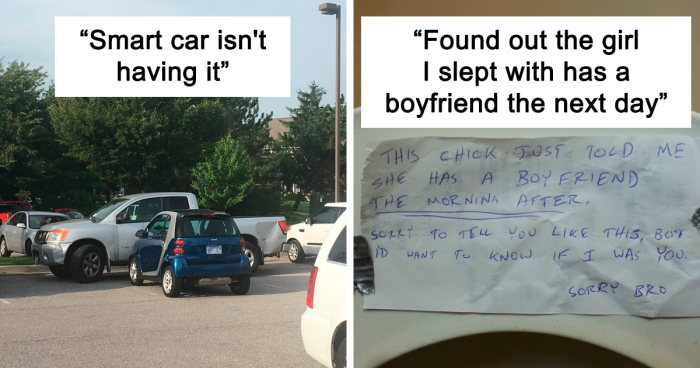
Large pickups and SUVs are a normal sight, even in places where their most demanding cargo appears to be groceries. Their tall hoods, wide bodies, and oversized tires can surprise visitors accustomed to compact cars and narrow streets. Parking beside one can make an ordinary sedan look like its nervous younger sibling.
14. Parking Lots Are Sometimes Larger Than Destinations
American shopping centers, stadiums, and big-box stores may be surrounded by oceans of asphalt. International visitors often photograph the parking lot before photographing the building. The ability to park close to an entrance is treated as a minor victory, especially when the alternative requires crossing a landscape visible from space.
15. Drive-Through Service Is Available for Almost Everything
Fast food is only the beginning. Depending on the community, customers may use drive-through lanes for coffee, banking, pharmacies, dry cleaning, liquor, and even weddings. The concept reflects both convenience and America’s deep relationship with automobiles: Why leave the car when the building can simply come to the window?
16. Yellow School Buses Are Real
Many foreigners assume the bright yellow school bus is a Hollywood symbol, like a visual shortcut that tells viewers, “This scene involves American children.” Then they visit and see fleets of them on actual roads. The standardized color and flashing stop signals make the vehicles instantly recognizableand delightfully cinematic to first-time visitors.
Social Behaviors Americans Rarely Question
17. Strangers Start Conversations
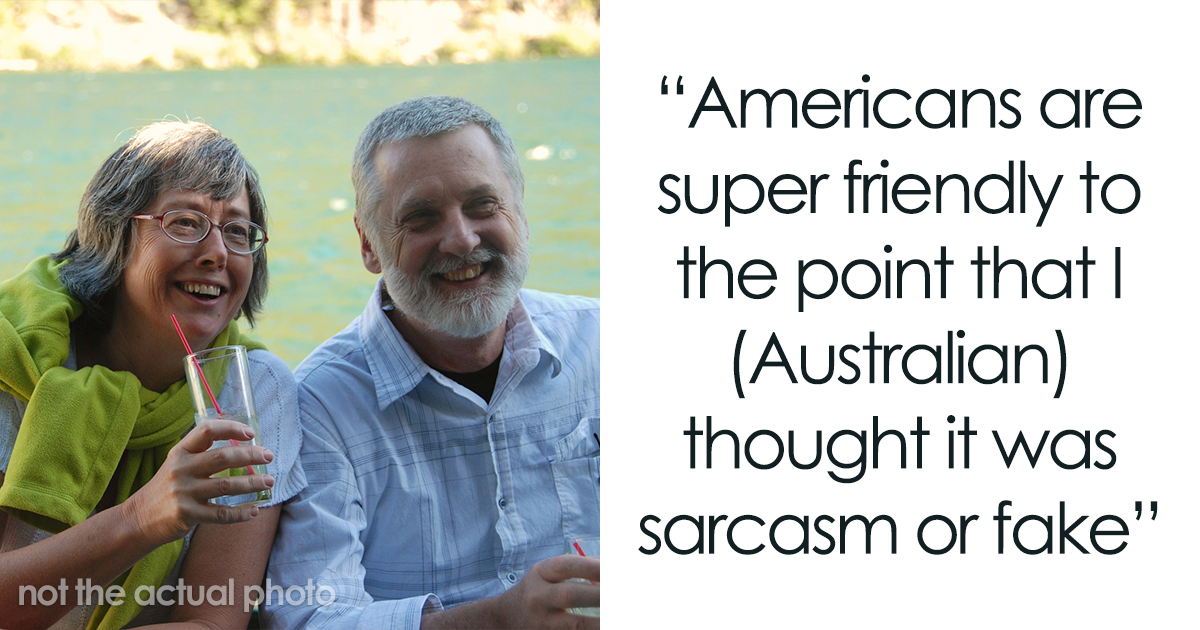
Americans may chat in elevators, grocery lines, airport gates, and coffee shops. A stranger can compliment your shoes, ask where you are from, and recommend three restaurants before the elevator reaches the fifth floor. Visitors from more reserved cultures sometimes wonder whether they have met an unusually friendly person. Usually, they have simply met an American.
18. “How Are You?” Is Often a Greeting
A cashier may ask, “How are you?” without expecting a detailed account of your health, finances, and family situation. The customary response is often “Good, how are you?” even when neither party is having a particularly good day. Foreigners who answer honestly may accidentally create a counseling session at the supermarket register.
19. Customer Service Can Feel Intensely Cheerful
Restaurant servers introduce themselves, retail employees offer assistance, and phone representatives may repeatedly use the customer’s first name. To Americans, this signals warmth and professionalism. To some visitors, it initially feels suspiciously enthusiastic, as though every employee has mistaken Tuesday afternoon for the final round of a game show.
20. Compliments From Strangers Are Common
“I love your jacket” may come from someone passing on the sidewalk and never seen again. These quick compliments generally carry no hidden invitation or obligation. They are tiny social gifts. Foreign visitors may spend several minutes wondering whether a new friendship has begun while the compliment-giver has already disappeared into a pharmacy.
21. People Share Personal Stories Quickly
A casual conversation can unexpectedly include career plans, divorce history, childhood memories, or the complicated behavior of someone’s cousin in Arizona. American openness varies by region and personality, but many visitors notice that emotional familiarity can develop quicklyeven if the two people never speak again.
Symbols and Traditions That Look Like Movie Props
22. American Flags Are Everywhere
Flags appear outside homes, schools, dealerships, restaurants, government buildings, gas stations, and construction sites. They are printed on clothing, cups, blankets, advertisements, and food packaging. Visitors from countries where national flags are mainly reserved for government sites or major holidays may find the everyday visibility remarkable.
23. The National Anthem Appears Before Many Sporting Events
International visitors may expect an anthem before an international match. Hearing it before a local high school game, college competition, or professional league event feels different. Americans have experienced the ritual for so long that standing, removing hats, and facing the flag often happens automatically.
24. College Sports Can Be Bigger Than Professional Sports
University football and basketball programs can attract enormous crowds, television audiences, marching bands, celebrity coaches, and generations of devoted fans. Foreigners sometimes struggle to understand why amateur teams connected to educational institutions inspire such intensity. Then game day arrives, and an entire college town begins behaving like a sovereign sports republic.
25. Red Plastic Cups Actually Exist Outside Movies
The red party cup has appeared in so many films that some visitors assume it is a fictional prop used to indicate “teenagers are making poor decisions.” It is, however, an ordinary disposable cup sold in supermarkets. Seeing one at a real barbecue can feel like discovering that movie clapperboards grow naturally in California.
Homes, Stores, and Daily Conveniences That Surprise Visitors
26. Air Conditioning Can Turn Summer Into Winter
Outside, the temperature may be 95 degrees. Inside a restaurant, office, or supermarket, visitors may wish they had brought a sweater. Aggressive air conditioning is especially noticeable to people from countries where cooling is less common or used more moderately. American summer fashion therefore includes the mysterious combination of shorts and emergency cardigan.
27. Pharmacies Sell Much More Than Medicine
An American drugstore may sell snacks, cosmetics, toys, greeting cards, household cleaners, seasonal decorations, photo services, and occasionally groceries. A visitor entering for headache medicine can leave with shampoo, batteries, frozen pizza, and a birthday balloon. The pharmacy counter may be the smallest department in the pharmacy.
28. Supermarkets Offer a Dizzying Number of Choices
The cereal aisle alone can resemble an international trade exhibition. Shoppers may choose among dozens of flavors, sizes, dietary variations, and limited editions of a single product. Foreign visitors often admire the abundance while also experiencing decision fatigue. Selecting toothpaste should not require a strategic planning meeting, yet somehow it does.
29. Garbage Disposals Live Inside Kitchen Sinks
Many international visitors have never encountered an electric food-waste grinder installed beneath a sink. The first demonstration can be alarming: Someone pushes scraps toward a dark drain and activates a machine that sounds capable of processing a bicycle. Americans casually call this useful appliance “the disposal,” which does little to make it sound friendlier.
30. Measurement and Date Systems Require Translation
Miles, feet, inches, pounds, ounces, gallons, and Fahrenheit create a constant conversion exercise for metric-system visitors. Dates introduce another puzzle because Americans commonly place the month before the day. A label reading 07/04 is July 4, not April 7a distinction that becomes important when booking flights or evaluating suspicious yogurt.
Why These American Habits Feel So Strange
Most cultural surprises develop from practical forces rather than collective eccentricity. Car-centered communities produced drive-through businesses and large parking lots. Local tax systems helped normalize prices that change at checkout. Competition encouraged bigger servings, faster service, longer store hours, and seemingly endless product choices.
History also matters. School-bus standards created a vehicle recognizable across the country. Patriotic rituals made flags and anthems part of ordinary public life. College athletics evolved into a major entertainment industry, while American informality encouraged first-name introductions, casual clothing, quick compliments, and conversations with strangers.
The funniest culture shocks occur when both sides believe their own custom is obviously logical. Americans find room-temperature soda unusual; visitors find a glass containing 70 percent ice unusual. Americans appreciate a server checking the table repeatedly; some foreign guests interpret it as a polite campaign to make them leave. Neither interpretation is universally correct. They simply reveal different expectations.
Experiences From Seeing the United States With Fresh Eyes
The most memorable experience for many first-time visitors begins before they leave the airport. The immigration process may feel formal, but the first conversation outside it can be startlingly casual. A shuttle driver asks where they are from, tells them about a cousin who once visited that country, recommends a barbecue restaurant, complains about traffic, and wishes them a wonderful vacationall before loading the second suitcase.
Then comes the first American restaurant. The visitor studies a menu featuring burgers with several layers, salads large enough to have regional governments, and breakfast plates combining eggs, bacon, pancakes, whipped cream, and fruit. The server introduces herself by name, asks several friendly questions, and returns every few minutes. Water arrives automatically. Ice cubes occupy most of the glass. Before the visitor finishes one soda, another appears.
The bill provides the evening’s final puzzle. The menu price was only the opening offer. Sales tax has been added, and a tip must now be calculated. Everyone at the table begins comparing percentages, local customs, service charges, and exchange rates. What Americans complete almost unconsciously becomes a small international accounting conference.
A trip to the supermarket creates another kind of wonder. The automatic doors open onto aisles that seem to continue toward the horizon. There are dozens of breakfast cereals, entire refrigerated walls devoted to flavored coffee creamers, and enough varieties of potato chips to represent every emotional stage of human existence. A “family-size” package appears capable of supporting an actual family through winter.
Driving reveals America’s scale more clearly than any map. Buildings spread apart, highways widen, and a destination described as close remains invisible after 20 minutes. Visitors begin to understand why cars, gas stations, roadside restaurants, and travel plazas occupy such an important place in American life. They also learn that a road trip of five hours may be discussed as casually as a train journey of 45 minutes elsewhere.
There are contradictions everywhere. Public places feel extremely informal, yet certain rituals are treated with great seriousness. People wear athletic clothes to restaurants but stand respectfully for the national anthem. A stranger may share personal information immediately but avoid discussing salary. Stores offer extraordinary convenience, while obtaining a final price can require mental arithmetic. Meals are enormous, but everyone is encouraged to take the leftovers home.
The greatest surprise, however, is often not a product or custom. It is the gap between America’s global image and the ordinary people encountered during a visit. News coverage tends to emphasize conflict, politics, crime, and national controversy. Daily interactions may instead involve a stranger giving directions, a neighbor offering food, or a cashier enthusiastically recommending a local attraction.
Recent international visitors have described this hospitality as one of the country’s most unexpected qualities. Americans may debate loudly, drive enormous vehicles, fill cups with excessive ice, and ask for tips in bewildering situations, but they are also remarkably willing to talk, assist, recommend, and welcome. That combinationbig, informal, complicated, generous, and slightly over-caffeinatedmay be the most American experience of all.
Conclusion
The weirdest things about the United States are rarely the famous landmarks. They are the tiny habits Americans stopped noticing years ago: the automatic ice water, the cheerful stranger, the yellow bus, the enormous parking lot, the sales tax surprise, and the restaurant meal that provides tomorrow’s lunch.
Seeing these details through foreign eyes turns ordinary American life into something fascinating. It also offers a useful reminder: Every culture has customs that seem perfectly reasonable from the inside and wonderfully bizarre from everywhere else.
SEO Information
Research grounding for recent foreign-visitor reactions, hospitality, large-scale retail, tipping, free refills, and other culture shocks:
Research grounding for American driving culture, vehicle dependence, drive-through development, and standardized yellow school buses:
Research grounding for the hybrid U.S. measurement system, vacation law, flag culture, social interaction, and college athletics:
Research grounding for American food traditions, peanut butter consumption, leftovers, and food-waste context: