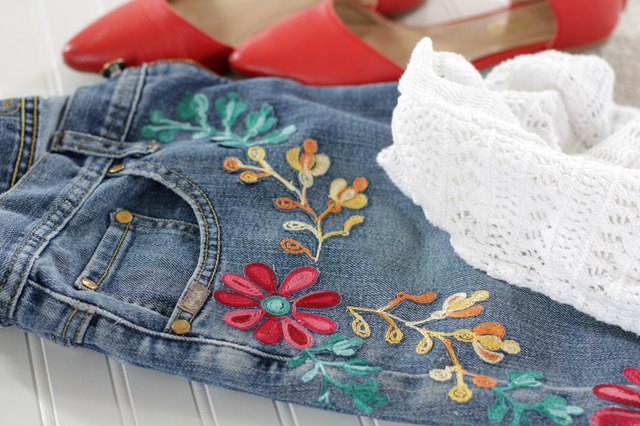
Jeans are already the unofficial uniform of errands, coffee runs, casual Fridays, and “I have nothing to wear” mornings. But add a few stitched flowers, curling vines, and tiny French-knot buds, and suddenly your denim has main-character energy. This floral embroidery for jeans tutorial will walk you through the entire process, from choosing the right pair of jeans to stitching petals that do not look like confused spaghetti.
The best part? You do not need to be an embroidery expert. If you can thread a needle, make small stitches, and resist the urge to pull your thread like you are starting a lawn mower, you can create beautiful embroidered jeans. Hand embroidery on denim is forgiving, durable, and wonderfully customizable. Whether you want a tiny daisy on a pocket, a rose vine climbing up the leg, or a meadow blooming near the hem, this guide gives you the steps, tips, and troubleshooting advice to make it happen.
Why Floral Embroidery Looks So Good on Jeans
Denim and flowers are a surprisingly perfect match. Denim is strong, textured, and casual, while floral embroidery adds softness, color, and personality. Together, they create a handmade look that feels stylish without trying too hard. Think “vintage boutique find,” not “craft project attacked by a thread tornado.”
Floral designs also work well because they are flexible. A petal can be slightly uneven and still look charming. A vine can curve around a pocket seam. A cluster of tiny blossoms can cover a stain, small hole, or mystery mark from lunch three Tuesdays ago. That makes DIY jeans embroidery both decorative and practical.
Supplies You Need for Floral Embroidery on Jeans
Before you start stitching, gather the right tools. Denim is thicker than cotton fabric, so the materials matter. The right needle and stabilizer can make the difference between smooth stitching and a dramatic wrestling match with your pants.
Basic Materials
- A pair of jeans, denim shorts, or a denim jacket
- Embroidery floss in floral colors
- Embroidery needles or sharp hand-sewing needles
- Small embroidery scissors
- Embroidery hoop, preferably 4 to 6 inches for tight areas
- Water-soluble fabric marker, chalk pencil, or transfer paper
- Stick-and-stitch stabilizer or lightweight embroidery stabilizer
- Thimble, especially for thick seams
- Iron-on backing or fusible interfacing for protecting finished stitches
Choosing the Best Jeans
Start with jeans that are clean, dry, and not too stretchy. Traditional cotton denim is easier to embroider than very stretchy skinny jeans because it holds its shape better. Stretch denim can still work, but avoid pulling it tight in the hoop. If the fabric is stretched while you stitch, the finished design may pucker once the jeans relax.
Medium-weight denim is ideal for beginners. Very thick denim, especially near side seams and waistbands, can be hard to pierce. Lightweight denim is easier to stitch but may need stabilizer to prevent distortion. If you are new to hand embroidery on denim, begin on a back pocket, front thigh, or lower legareas that are flatter and easier to hold.
Best Floral Embroidery Designs for Jeans
You can embroider almost any flower on jeans, but some designs are more beginner-friendly than others. Start simple, then build your floral empire one petal at a time.
Easy Beginner Floral Ideas
- Daisies: Use lazy daisy stitches for petals and French knots for centers.
- Lavender sprigs: Stitch a stem with small purple knots or detached chain stitches.
- Tiny wildflowers: Combine straight stitches, knots, and small leaves.
- Rosebuds: Use woven wheel stitches or short curved stitches.
- Leafy vines: Use stem stitch for vines and satin stitch for leaves.
For a subtle look, place a small design near a front pocket or ankle hem. For a bolder statement, create a floral vine that climbs up one leg. If you are embroidering jeans for the first time, avoid massive designs over knees or high-stretch areas. Those spots bend often, and your stitches may work harder than a barista on Monday morning.
How to Prepare Jeans for Embroidery
Preparation is not glamorous, but it saves your project from puckering, shifting, and other tiny disasters. Do not skip it.
Step 1: Wash and Dry the Jeans
Wash and dry the jeans before embroidering, especially if they are new. Denim can shrink slightly, and you want that to happen beforenot afteryou add your beautiful flowers. Skip fabric softener if possible because it can make markings or stabilizers less effective.
Step 2: Decide Where the Design Will Go
Put the jeans on and look in a mirror before marking the design. A flower that looks cute on a flat table may land in a strange place once the jeans are worn. Popular placement areas include the front pocket, back pocket, outer thigh, side seam, ankle, or hem.
Use pins or small pieces of painter’s tape to mark the general area. Sit, bend, and move around. If the design sits across a high-stress fold, move it slightly. Embroidery should decorate your jeans, not fight your knees for territory.
Step 3: Transfer the Pattern
Draw your floral pattern directly with a water-soluble marker, use dressmaker’s carbon paper, or print the design onto stick-and-stitch stabilizer. For dark denim, white chalk pencils or light transfer paper are easier to see. Keep the design simple and clear. Tiny details can disappear into denim’s twill texture.
Step 4: Add Stabilizer
Stabilizer supports the denim and helps keep stitches smooth. For hand embroidery, a stick-and-stitch stabilizer is especially helpful because you can draw or print the design on it, stick it to the jeans, stitch through it, and rinse it away later. If the jeans are stretchy, stabilizer is even more important because it reduces distortion.
Floral Embroidery for Jeans Tutorial: Step-by-Step
Now for the fun part: turning plain denim into wearable garden art. This tutorial uses a simple floral vine with daisies, leaves, and small buds. It is beginner-friendly but polished enough to look intentional.
Step 1: Thread the Needle
Cut a piece of embroidery floss about 18 inches long. Longer thread may seem efficient, but it tangles faster. Embroidery floss usually has six strands. For denim, use two or three strands for most details. Use all six only if you want a chunky, bold look.
Tie a small knot at the end or use a waste knot if you prefer a cleaner back. Since jeans are worn and washed, secure your stitches well. Fashion is fun, but loose threads flapping around like tiny party streamers are less fun.
Step 2: Stitch the Main Stem
Use a stem stitch or backstitch to create the vine. Bring the needle up from the back of the denim, make a short stitch forward, and continue along the curve. Keep the stitches small and even. A flowing vine looks more natural than a perfectly rigid line.
If you are stitching near a pocket, avoid sewing through the pocket opening unless you intentionally want to close it. Check the inside of the jeans often to make sure you are not accidentally stitching layers together. Many beginners learn this lesson after creating one very decorative but completely unusable pocket.
Step 3: Add Daisy Petals
Use lazy daisy stitch for simple flower petals. Bring the needle up at the base of the petal, insert it back near the same spot, and bring it up at the tip of the petal while keeping the thread loop under the needle. Pull gently to form a loop, then make a tiny stitch over the loop tip to hold it down.
Repeat five or six times around the flower center. Do not pull the loops too tightly. Petals should sit on the denim, not look like they are trying to escape into it.
Step 4: Fill the Flower Centers
Use French knots for the centers of daisies and tiny buds. Bring the needle up, wrap the thread around the needle once or twice, insert the needle close to the starting point, and pull through slowly. Hold the working thread gently as the knot forms.
French knots can be dramatic little divas at first. If your first few look uneven, keep going. A cluster of knots is forgiving, and real flower centers are not perfectly identical either.
Step 5: Stitch Leaves
For leaves, use satin stitch, fishbone stitch, or simple straight stitches. Small satin-stitch leaves are beginner-friendly. Outline the leaf shape, then fill it with parallel stitches from one side to the other. Keep the stitches close together without crowding them.
For a more textured look, use fishbone stitch. It creates a center vein and angled sides, making leaves look dimensional. This works especially well on vines around pockets and hems.
Step 6: Add Small Buds and Accent Flowers
Use French knots, seed stitches, or tiny straight stitches to add small buds around the main flowers. These little details make the design look fuller and more natural. Use two or three shades of the same color for depth. For example, mix pale pink, rose, and deep burgundy for a soft floral gradient.
Step 7: Secure the Back
When you finish a thread, weave it under nearby stitches on the back of the denim and trim the excess. Avoid bulky knots where the jeans rub against skin. For areas that get friction, such as thighs or pockets, add a piece of soft fusible backing over the finished stitches. This protects the thread and makes the jeans more comfortable to wear.
Step 8: Remove Markings or Stabilizer
If you used water-soluble marker, dab or rinse the marks according to the product directions. If you used wash-away stabilizer, rinse the embroidered area gently until the stabilizer dissolves. Let the jeans air-dry flat. Avoid twisting or wringing the embroidered section.
Best Stitches for Floral Embroidery on Denim
You do not need to learn every embroidery stitch ever invented. A small set of reliable stitches can create dozens of floral designs.
Stem Stitch
Use stem stitch for vines, flower stems, and curved outlines. It creates a slightly twisted line that looks natural and elegant.
Lazy Daisy Stitch
Lazy daisy stitch is perfect for petals and small leaves. It is one of the best stitches for beginner floral embroidery because it creates a complete petal in one loop.
Satin Stitch
Satin stitch fills petals and leaves with smooth color. Use short satin stitches on denim because long stitches can snag during wear.
French Knot
French knots make excellent flower centers, berries, pollen dots, and tiny buds. They add texture without requiring complicated shaping.
Backstitch
Backstitch is ideal for outlines, lettering, and simple stems. It is sturdy, easy to control, and great for beginners.
Color Ideas for Embroidered Jeans
Color can completely change the mood of your jeans. Soft pastels create a romantic, vintage feel. Bright colors look playful and modern. Earthy tones feel bohemian and understated.
- Classic garden: Pink, red, yellow, green, and white
- Wildflower palette: Lavender, mustard, coral, sage, and cream
- Minimalist look: White thread on medium or dark denim
- Moody floral: Burgundy, rust, olive, navy, and dusty rose
- Retro style: Orange, teal, golden yellow, and avocado green
For a cohesive design, choose three to five colors. Too many colors can make the embroidery look busy. Unless your goal is “exploding botanical confetti,” a limited palette usually looks more polished.
Common Mistakes and How to Fix Them
Pulling the Thread Too Tight
This causes puckering. Denim is sturdy, but it can still distort. Pull the thread until it rests smoothly on the fabric, then stop. The stitch should be secure, not strangled.
Using the Wrong Needle
A dull or thin needle can make stitching denim frustrating. Use a sharp embroidery needle with an eye large enough for your floss. If your fingers hurt, use a thimble.
Skipping Stabilizer
Stabilizer helps keep the design crisp, especially on stretch denim or lightweight jeans. If your fabric shifts while stitching, stabilizer can solve the problem.
Choosing a Design That Is Too Detailed
Fine details can get lost in denim. Use bold shapes, simple petals, and clear lines. Save delicate miniature roses for linen napkins, where they can live their tiny elegant lives in peace.
Stitching Through Pockets
Always check what is behind the area you are stitching. Slide your hand inside the jeans to separate layers. If needed, place a piece of cardboard inside the pocket or pant leg to prevent accidental stitching through the back layer.
How to Care for Floral Embroidered Jeans
Hand-embroidered jeans can be worn and washed, but they need a little care. Turn the jeans inside out before washing. Use cold water and a gentle cycle. Place the jeans in a mesh laundry bag if the embroidery is detailed or raised. Avoid bleach, harsh detergents, and high heat.
Air-drying is best because heat can weaken thread over time. If you use a dryer, choose low heat. Iron the jeans inside out and avoid pressing directly on raised stitches. With proper care, your floral embroidery can stay bright and secure through many wears.
Creative Floral Embroidery Placement Ideas
Not sure where to stitch? Try one of these placement ideas:
- Back pocket bouquet: A small cluster of daisies or roses near one corner.
- Ankle vine: A floral branch wrapping around the hem.
- Side seam garden: Leaves and flowers climbing vertically along the outer leg.
- Front pocket accent: Tiny blossoms peeking from the pocket edge.
- Knee patch cover-up: Embroider around a visible mending patch for a decorative repair.
- Scattered mini flowers: Small blooms placed randomly for a playful look.
If you are customizing thrifted jeans, floral embroidery is a wonderful way to hide wear, stains, or small repairs. It turns imperfections into design choices, which is basically the craft version of excellent public relations.
Beginner-Friendly Floral Pattern Example
Here is a simple pattern you can sketch directly onto jeans:
- Draw a curved vine about 5 inches long.
- Add three medium flowers along the vine.
- Place two leaves between each flower.
- Add five to seven small buds around the edges.
- Use green stem stitch for the vine.
- Use lazy daisy stitch for petals.
- Use French knots for centers and buds.
This design works beautifully on a back pocket, ankle, or upper thigh. Keep the flowers unevenly spaced for a more organic look. Nature rarely uses a ruler, and neither should your vine.
Advanced Tips for a More Professional Finish
Blend Thread Shades
Use two similar colors in one flower to create depth. For example, stitch outer petals in pale pink and inner petals in coral. This simple trick makes the flower look more dimensional.
Use Shorter Stitches in High-Wear Areas
Long stitches can snag, especially on jeans that get frequent use. Keep satin stitches short on thighs, knees, and pockets. For larger petals, divide the shape into smaller sections.
Protect the Back
Once finished, press a soft fusible backing over the inside of the embroidery. This helps protect knots and thread tails from rubbing, especially if the embroidery touches your skin.
Test on Scrap Denim First
If you have an old pair of jeans, practice on a scrap before stitching your favorite pair. Test your needle, thread thickness, and stabilizer. A five-minute test can prevent a two-hour regret spiral.
Experience Notes: What You Learn When You Actually Embroider Jeans
The first thing you learn when embroidering jeans is that denim has opinions. It is sturdy, stylish, and occasionally stubborn. Unlike soft cotton fabric, denim does not always welcome the needle with open arms. Some areas are easy to stitch, while seams and pockets may require a thimble, patience, and perhaps a motivational snack.
One of the most useful experiences is discovering that small designs often look better than oversized ones. A tiny floral cluster on a pocket can feel chic and intentional, while a huge flower covering half the leg may become heavy, stiff, or difficult to wash. Beginners often want to make a big statement immediately, but embroidery rewards thoughtful spacing. A few well-placed flowers can make jeans look custom without overwhelming the denim.
Another important lesson is that thread tension matters more than speed. When you are excited, it is tempting to stitch quickly and pull firmly after every stitch. That is how puckering happens. Smooth embroidery comes from gentle, consistent tension. The thread should lie flat, but the denim should not bunch. If the fabric starts to ripple, pause and loosen your next stitches. Your jeans are not bread dough; they do not need aggressive kneading.
You also learn that imperfect flowers are not failures. In fact, slightly irregular petals often look more natural. Real flowers are full of tiny differences. One petal leans left, another curls inward, and the center is rarely a perfect dot. Hand embroidery has charm because it shows the maker’s hand. If every stitch looked machine-perfect, it would lose some of its personality.
Placement becomes easier with practice. A design that looks centered on flat jeans may shift visually when worn. That is why trying the jeans on before stitching is so helpful. Mark the spot, look in a mirror, sit down, and check how the fabric bends. The best embroidery placement works with the body’s movement, not against it.
Care is another lesson learned quickly. Embroidered jeans can absolutely be part of a real wardrobe, not just admired from a chair like a museum artifact. However, turning them inside out before washing and avoiding high heat makes a big difference. If the embroidery has raised knots or dense flowers, a mesh laundry bag provides extra protection.
Finally, floral embroidery teaches creative problem-solving. A stain becomes a daisy. A worn pocket becomes a rose garden. A boring pair of jeans becomes something nobody else owns. That is the real magic of this project. It is not only about learning stitches; it is about seeing ordinary clothing as a canvas. Once you finish one pair, you may start eyeing every denim jacket, tote bag, and thrift-store find like it is waiting for a tiny bouquet. Fair warning: it probably is.
Conclusion
Floral embroidery is one of the prettiest and most practical ways to customize jeans. With a few basic supplies, beginner-friendly stitches, and a simple flower pattern, you can turn plain denim into a wearable piece of art. Start with an easy design, use stabilizer, keep your stitches relaxed, and protect the back when you are done. Whether you add a tiny daisy to a pocket or a full vine along the leg, this floral embroidery for jeans tutorial gives you a creative path to making denim feel personal, stylish, and completely your own.
Note: This article is written as original web-ready content and synthesizes practical embroidery guidance from reputable sewing, craft, denim, and embroidery education resources.