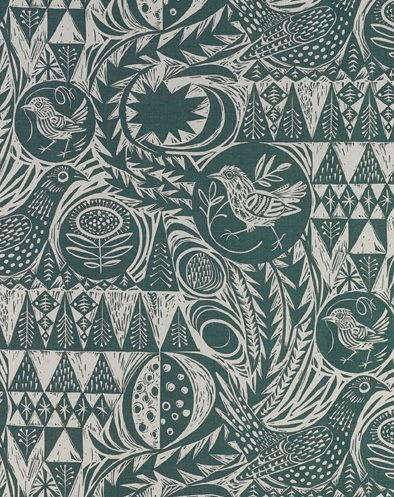
Some fabrics politely sit in a room. Others arrive like a flock of birds that has read the interior design brief, ignored half of it, and made everything more interesting. St. Jude’s Bird Garden fabrics by Mark Hearld belong firmly in the second category. This is not background fabric in the beige-and-behaving-itself sense. It is characterful, graphic, cheerful, and rooted in the countryside without looking like it has been trapped in a dusty cottage since 1937.
Designed by British artist and printmaker Mark Hearld for St. Jude’s, Bird Garden is a screen-printed fabric with a bold botanical-and-bird rhythm. It brings together linen texture, handmade-print energy, and a pattern that feels alive without becoming visually noisy. For homeowners, decorators, textile lovers, and anyone who has ever looked at a plain curtain and thought, “Surely we can do better than this,” Bird Garden offers a persuasive answer.
In this guide, we will explore what makes this fabric special, how it fits into modern interiors, where it works best, and how to use it without accidentally turning your living room into an aviary with opinions.
What Is St. Jude’s Bird Garden Fabric?
Bird Garden is a screen-printed fabric designed by Mark Hearld for St. Jude’s, a small design company known for artist-designed fabrics, wallpapers, cushion covers, and prints. St. Jude’s was founded by Simon and Angie Lewin and has built its reputation on collaborations with artists whose work sits beautifully between fine art and practical design.
The fabric is based on Hearld’s original linocut-style artwork. That matters because Bird Garden does not feel like a generic digital pattern assembled from clip-art leaves and a bird silhouette having a bad day. It has the irregular charm of printmaking: bold shapes, confident lines, and motifs that seem to have been cut, pressed, and brought to life by hand.
Current product information describes Bird Garden as a single-color design printed in the United Kingdom. It is available in colorways such as Cherry Red and Blue, with earlier references also mentioning charcoal and red versions. The printed width is approximately 137 centimeters, with a vertical repeat of about 64 centimeters and a horizontal repeat of about 45.6 centimeters. It uses a half-drop pattern match, which gives the design movement and keeps the repeat from feeling stiff or wallpaperishly predictable.
Who Is Mark Hearld?
Mark Hearld is a British artist, illustrator, printmaker, designer, and maker whose work often celebrates birds, animals, plants, and the lively disorder of the natural world. Born in 1974, he studied illustration at Glasgow School of Art and later completed an MA in Natural History Illustration at the Royal College of Art. His practice spans linocuts, lithographs, collage, painting, ceramics, textiles, and book illustration.
Hearld’s work is often associated with British flora and fauna, folk art, mid-century graphic design, and the joy of making things by hand. His birds are rarely polite little decorative accessories. They have posture. They have presence. One suspects they know exactly where the good biscuits are kept.
That spirit comes through strongly in Bird Garden. The design is not merely “bird fabric.” It is a lively surface full of movement, foliage, and personality. It looks designed by someone who has watched birds closely, drawn them often, and understood that the natural world is never as tidy as showroom styling would like it to be.
Why Bird Garden Works So Well as Fabric
It Has a Strong Graphic Identity
One of the reasons Bird Garden stands out is its confident graphic structure. The motifs are clear and readable from a distance, which makes the fabric especially effective for curtains, blinds, loose covers, cushions, and upholstery. Some delicate prints disappear once they are gathered, folded, or stretched over furniture. Bird Garden holds its own.
The single-color approach also helps. Instead of relying on a rainbow of shades, the pattern uses contrast, line, scale, and rhythm. This makes it easier to combine with other materials in a room. It can sit with plain linen, woven wool, painted wood, leather, rattan, stripes, checks, and even other nature-inspired prints, provided everyone at the design party behaves themselves.
It Balances Rustic and Modern
Bird Garden has countryside DNA, but it does not feel old-fashioned. The linen texture brings warmth and tactility, while the strong print keeps the look fresh. That balance is why it can work in a farmhouse kitchen, a city apartment, a reading nook, a cottage bedroom, or a modern living room that needs a little less showroom and a little more soul.
This is where Mark Hearld’s art background becomes important. The design does not mimic vintage fabric; it reinterprets traditional natural imagery through contemporary printmaking. The result is familiar but not fussy, charming but not sweet, decorative but not flimsy.
It Offers Personality Without Chaos
Pattern can be tricky. Too little, and a room feels flat. Too much, and the sofa starts visually shouting at the rug while the curtains file a noise complaint. Bird Garden sits in the sweet spot. It has enough movement to create life, but the limited palette keeps it grounded.
In a neutral room, it can become the hero fabric. In a more layered interior, it can act as one of several story-rich textiles. The key is to let it breathe. Give it plain companions, thoughtful spacing, and enough natural materials around it to make the print feel intentional rather than accidental.
Fabric Details That Matter
Bird Garden is not just pretty; it is designed for real interiors. The fabric is listed with a weight of around 250 gsm and an upholstery-grade rub rating of approximately 20,000 to 25,000 cycles, depending on the specific listing. In practical terms, that makes it suitable for many domestic uses, including curtains, blinds, cushions, loose covers, and lighter upholstery projects.
For upholstery, context is everything. A decorative chair in a bedroom? Lovely. A cushion-covered reading chair used by one civilized person and a cat who respects boundaries? Excellent. A family-room sofa where children, pets, snacks, and mysterious sticky substances gather nightly? You may want to consider usage, protection, and professional advice before committing.
The linen or linen-union base is part of the appeal. Linen brings natural texture, a relaxed hand, and subtle irregularity. It does crease, because linen believes in honesty. That is not a flaw; it is part of the fabric’s character. If you want a surface that looks permanently ironed by robots, linen may not be your emotional soulmate.
Best Ways to Use Bird Garden in the Home
1. Curtains That Actually Do Something
Bird Garden is a natural choice for curtains because the scale of the design allows it to be seen even when the fabric is hanging in folds. A pair of Bird Garden curtains can transform a plain room, especially when paired with simple walls and natural flooring.
For a calm look, use the blue colorway with off-white walls, soft gray upholstery, oak furniture, and simple woven rugs. For a warmer and bolder scheme, Cherry Red works beautifully with cream, warm wood, terracotta, olive green, or deep navy. The result feels collected rather than decorated in a single afternoon after too much coffee.
2. Roman Blinds With Character
Because Bird Garden has a strong repeat, it can be excellent for Roman blinds. A blind gives the fabric a flat surface when lowered, allowing the pattern to read almost like artwork. This is especially effective in kitchens, breakfast rooms, craft rooms, and small bedrooms where full curtains might feel too heavy.
When using a large-scale print for blinds, pattern placement matters. Work with a maker who understands repeats and can center the most attractive portion of the design. Otherwise, you may end up with one heroic bird perfectly framed and another looking as if it has been abruptly edited by the window frame.
3. Cushions as a Low-Commitment Love Affair
Cushions are the easiest way to introduce Bird Garden without redesigning an entire room. A cushion in this fabric can wake up a plain sofa, add wit to a window seat, or make a guest bed look thoughtfully styled rather than “we found these pillows in the closet.”
Try pairing Bird Garden cushions with plain linen, ticking stripes, small checks, or wool throws. The contrast between graphic print and simple texture is what makes the arrangement feel layered. Avoid using too many competing large prints nearby unless your goal is “country house after the wallpaper had a dramatic meeting with the upholstery.”
4. Accent Upholstery
Bird Garden can be striking on an occasional chair, footstool, bench seat, or dining chair pad. The print has enough personality to make a single piece feel special. A small chair covered in Bird Garden can become the thing guests notice first, followed by, “Where did you get that?” which is interior design’s version of applause.
For upholstery, consider the scale of the furniture. On a small seat pad, only part of the motif may appear. On a larger chair back, the pattern has more room to sing. Always order a sample and, where possible, view the fabric at the actual size before making decisions.
How to Style Bird Garden With Other Colors
The charm of Bird Garden is that it can lean traditional, modern, rustic, or eclectic depending on its surroundings. The blue version works beautifully with chalky whites, slate gray, soft green, natural wood, and inky accents. It can feel coastal without seashell clichés, which is a public service.
Cherry Red is warmer and more spirited. It pairs well with oatmeal linen, cream walls, brick tones, aged leather, mustard, olive, and dark wood. Used carefully, it can make a room feel joyful and handcrafted rather than loud.
If you want a restrained scheme, let Bird Garden be the only busy fabric in the room. If you prefer a more layered English-country look, combine it with small-scale checks, woven plains, ticking stripes, and perhaps one additional botanical print in a quieter scale. The secret is variation: large with small, graphic with soft, printed with woven.
Care and Maintenance Tips
Because Bird Garden is a printed natural-fiber fabric, care should be practical and gentle. Always follow the supplier’s care guidance for the specific fabric and finish. For curtains and blinds, regular light vacuuming with an upholstery attachment helps prevent dust from settling into the weave. For cushions and upholstery, rotate pieces where possible and keep them out of harsh direct sunlight to reduce fading.
Spot cleaning should be handled carefully. Blot; do not scrub. Scrubbing a printed fabric is like arguing with a cat: emotionally satisfying for three seconds, then immediately regrettable. For valuable or fitted pieces, professional cleaning is usually the safest route.
If you are using Bird Garden for upholstery, consider where it will live. A chair beside a sunny window may need lining, interlining, or careful positioning. A dining bench may need stain protection or removable covers. Beautiful fabric deserves a realistic plan, not blind optimism and a house full of pasta sauce.
Why Bird Garden Still Feels Relevant
Trends come and go, but artist-designed textiles have staying power because they carry a human mark. Bird Garden is not trying to chase minimalism, maximalism, cottagecore, grandmillennial style, or whatever the algorithm is flirting with this month. It simply offers good design: observation, rhythm, craft, and a strong sense of place.
It also reflects a wider appreciation for natural motifs in interiors. Birds, foliage, garden imagery, and handmade-looking prints bring warmth to rooms that might otherwise feel too hard-edged or impersonal. After years of gray walls and furniture that looked afraid of color, fabrics like Bird Garden feel refreshingly alive.
Buying Advice: What to Check Before Ordering
Before buying Bird Garden fabric, order a swatch. This is non-negotiable. Screens lie. Lighting lies. Even your memory of color lies, especially after midnight shopping. A swatch lets you see the real ground cloth, print color, texture, and scale in your own room.
Next, check the current fabric composition, colorway, width, repeat, and suitability for your project. If you are making curtains, calculate fullness and pattern matching. If you are upholstering, ask your upholsterer how the repeat will fall across the piece. If you are ordering cushions, remember that large repeats mean each cushion may show a different part of the design. That variation can be part of the charm.
Finally, buy enough fabric. Running short on a patterned textile is a special kind of domestic tragedy. Pattern repeats, trimming, seams, hems, and matching all require extra yardage. Measure twice, ask a professional once, and avoid future you saying words unsuitable for a family decorating blog.
Personal Experience: Living With a Fabric Like Bird Garden
Using a fabric like St. Jude’s Bird Garden is less like choosing a neutral linen and more like inviting a small piece of artwork into daily life. The first thing you notice is how much energy a single textile can bring to a room. A plain armchair becomes a destination. A window becomes a framed print. A cushion suddenly looks like it has a backstory, possibly involving hedgerows, sketchbooks, and a bird with excellent comic timing.
In real homes, the most successful use of Bird Garden-style fabric usually comes from restraint. One strong textile can do the work of three weaker ones. For example, imagine a small reading corner with white walls, a wooden floor, a rush-seated chair, and a Roman blind in Bird Garden. Nothing complicated is happening, yet the corner feels designed. The fabric supplies movement, pattern, color, and warmth. Add a lamp, a stack of books, and a cup of tea, and suddenly you have a place where emails fear to enter.
Another rewarding approach is to use Bird Garden on cushions in a room that already has good bones but lacks spark. A neutral sofa, a vintage wooden coffee table, and simple curtains can feel perfectly pleasant but slightly sleepy. Two Bird Garden cushions can shift the mood from “rental-safe beige” to “thoughtful, collected, and quietly creative.” The room still feels calm, but now it has a pulse.
There is also something emotionally satisfying about artist-designed fabric. You are not just buying pattern by the yard; you are bringing in evidence of a hand, an eye, and a process. Mark Hearld’s design language has the feeling of sketchbooks and print blocks behind it. That makes the fabric more engaging over time. You keep noticing details: the direction of a bird, the balance of leaves, the way the repeat moves across the cloth.
One practical lesson: scale must be respected. Bird Garden is not a tiny ditsy print that behaves the same on every object. On cushions, each piece may show a different slice of the pattern. On blinds, the centered placement can make or break the effect. On upholstery, curves and seams can interrupt motifs. None of this is a problem, but it does mean planning matters. The fabric rewards people who slow down, order samples, and think about placement before cutting.
Another experience worth noting is how well this kind of fabric works with imperfection. It does not demand a pristine, showroom-perfect environment. In fact, it often looks better with lived-in materials: a slightly worn wooden table, a handmade ceramic vase, a wool blanket, a stack of magazines, or a chair with a few honest scuffs. Bird Garden has enough artistic confidence to make ordinary domestic life look charming rather than messy. That is a rare gift in a fabric.
For anyone hesitant about pattern, start small. A cushion, lampshade, or single blind can provide the pleasure without the panic. Once you see how the design changes the room, you may become braver. This is how fabric obsession begins: first a cushion, then curtains, then suddenly you are explaining half-drop repeats at dinner while your family nods politely.
Ultimately, Bird Garden succeeds because it feels joyful but not childish, rustic but not dusty, decorative but not disposable. It is a fabric for people who like rooms with stories, texture, and a bit of wit. It reminds us that interiors do not need to be perfect to be beautiful. Sometimes they just need one excellent bird.
Conclusion
St. Jude’s Bird Garden fabrics by Mark Hearld are a wonderful example of how art, printmaking, and interior design can meet on a practical textile. With its screen-printed character, linen texture, natural imagery, and strong graphic rhythm, Bird Garden works beautifully for curtains, blinds, cushions, loose covers, and carefully chosen upholstery.
Its appeal lies in balance. It feels handmade but polished, traditional but fresh, playful but grown-up. Whether used as a single accent or as the main pattern in a room, Bird Garden brings warmth, movement, and personality. It is not the fabric for someone who wants the room to whisper in beige. It is for the person who wants the room to smile, flutter a little, and perhaps chirp approvingly from the window seat.