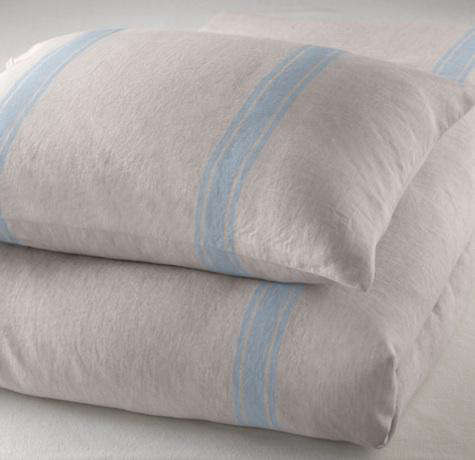
Some children’s bedding announces itself with cartoon rockets, dancing dinosaurs, or enough primary colors to power a small amusement park. The Belgian Linen Provence Stripe collection from Restoration Hardware Baby & Child takes a quieter route. Its appeal comes from natural linen texture, understated stripes, and the relaxed elegance associated with country homes in southern France.
RH describes the Belgian Linen Provence Stripe duvet cover as naturally soft bedding inspired by classic linens from the south of France. The fabric is made from 100% Belgian flax, while the stripes are yarn-dyed rather than printed onto the finished surface. That combination creates a textile that feels casual, refined, and pleasantly free of nursery-theme expiration dates. A child may outgrow stuffed giraffes surprisingly quickly, but a handsome stripe can survive well into the “please stop calling my room cute” years.
This article examines what makes the collection distinctive, how Belgian flax differs from generic linen, where the Provence stripe works best, how to care for it, and what families should consider before using premium linen in a baby’s or child’s room.
What Is Belgian Linen Provence Stripe?
Belgian Linen Provence Stripe is best understood as a combination of three design ideas: natural flax fiber, traditional European striping, and RH Baby & Child’s restrained approach to children’s interiors.
Belgian Flax as the Foundation
Linen is woven from fibers extracted from the stalk of the flax plant. These fibers are naturally strong, absorbent, quick-drying, and breathable. Compared with many perfectly smooth synthetic fabrics, linen has visible slubs and minor irregularities. Those are not defects. They are part of the textile’s character and help create its softly weathered appearance.
There is an important distinction between the terms Belgian flax and Belgian Linen. A product made with Belgian flax uses flax associated with Belgium, but that wording alone does not prove that the fabric was woven and finished in Belgium. The protected Belgian Linen quality label has more specific requirements, including Belgian weaving, European-origin flax, and a fabric composition containing at least 85% flax by weight. RH’s product description identifies the Provence Stripe bedding as woven from 100% Belgian flax, so shoppers should rely on the exact specifications and labeling supplied with the individual item rather than assuming a separate textile certification.
A Stripe Inspired by Provence
Provence-inspired textiles tend to feel sun-faded, informal, and practical rather than glossy or ceremonial. Stripes have long been at home in French country interiors because they coordinate easily with checks, florals, ticking patterns, natural wood, and solid-colored linen.
The Provence Stripe design uses yarn-dyed stripes, meaning the yarn is colored before weaving. Instead of placing a printed pattern on top of the cloth, the weaving process builds the stripe into the fabric. This generally gives the pattern a more integrated appearance and allows the color to retain the softly dimensional quality that suits linen.
Striped bedding is also unusually adaptable. It can add structure to a neutral bedroom without making the space busy, and it can introduce color while still looking more tailored than a novelty print. Interior design publications repeatedly return to stripes because they can appear playful, coastal, traditional, rustic, or modern depending on their width, spacing, and palette.
Why Linen Works in a Child’s Bedroom
It Adds Texture Without Visual Clutter
A room decorated mainly in cream, white, pale gray, blush, lilac, or muted blue can look peaceful, but it can also become flatter than a pancake under a stack of cookbooks. Linen solves that problem through texture.
The natural variations in the weave catch light differently across the surface. Even when the colors are subtle, the fabric gives the bed depth and softness. A Provence stripe adds another layer of interest without overwhelming artwork, rugs, toys, or furniture.
This is especially useful in smaller bedrooms. Large, high-contrast patterns can dominate limited space, while narrow or gently colored stripes create order. They give the eye something to follow without making the room feel crowded.
It Can Grow With the Child
Many baby-room purchases have brief careers. A highly specific nursery theme may look adorable for two years and mysteriously “for babies” on the child’s third birthday. Belgian Linen Provence Stripe is less age-specific.
In a nursery, it can support a soft French country look. In a preschooler’s room, it can be paired with brighter quilts, animal pillows, or colorful artwork. Later, it can move into a more mature bedroom with solid shams, a wool throw, and simple wood furniture.
Designing with individual pieces that can remain useful as furniture and tastes change is a practical strategy for children’s rooms. Classic linen curtains, understated wallpaper, natural furniture, and striped bedding can continue working even after the crib is replaced by a larger bed.
It Feels Relaxed Rather Than Precious
Premium linen may sound formal, but its appearance is surprisingly forgiving. Linen wrinkles. It creases. It develops a softened, lived-in surface. In other words, it already looks as though a human being has interacted with it, which is convenient in a household containing small humans.
That natural rumpling is part of linen’s charm. A perfectly pressed bed can look beautiful, but a lightly creased Provence Stripe duvet often looks more authentic. The result is polished without resembling a showroom where everyone is afraid to sit down.
How the Provence Stripe Changes a Room
French Country Nursery
For a French country nursery, combine muted striped fabric with warm white walls, an oak or weathered-wood dresser, woven baskets, and a softly patterned rug. Add one or two vintage-inspired details, such as botanical artwork or a ceramic lamp, rather than filling every surface with rustic accessories.
Lavender, dusty rose, faded blue, oatmeal, and flax-colored neutrals all complement this style. The goal is not to recreate an entire farmhouse in Provence. One rooster-shaped lamp is charming; twelve may begin to look like an agricultural meeting.
Coastal Child’s Room
Blue or gray stripes naturally suit coastal rooms, but they do not require anchors, sailboats, and framed maps of the Atlantic. Pair the duvet with white-painted furniture, pale wood, a jute rug, and a few ocean-toned accents.
The natural linen texture keeps the room from becoming a crisp nautical costume. It creates the feeling of a breezy seaside home rather than a themed restaurant that serves fish in plastic baskets.
Modern Neutral Bedroom
In a modern room, let the striped duvet provide the main pattern. Use clean-lined furniture, a simple upholstered headboard, and solid curtains. Black, charcoal, or bronze accents can add definition, while natural wood prevents the palette from feeling cold.
Neutral bedrooms benefit from layered textures. Linen bedding, woven storage, wood grain, wool rugs, and matte-painted walls can create warmth even when the color scheme is restrained.
Colorful Transitional Room
A Provence stripe does not have to live exclusively with beige. Because the pattern is orderly, it can anchor stronger colors elsewhere in the room. Try it with mustard yellow, forest green, coral, terracotta, or deep navy.
For a cohesive result, repeat the stripe’s color in two or three small places, such as a lampshade, framed print, storage bin, or rug border. Repetition makes the room feel intentional without requiring every object to match like members of a very organized marching band.
Practical Advantages of Belgian Flax Bedding
Breathability and Moisture Management
Linen is widely valued for its breathable, quick-drying feel. Air moves through the woven structure, while the flax fibers can absorb moisture without immediately feeling clammy. These properties help explain why linen bedding is popular in warm climates and during summer.
Breathability does not mean a linen duvet cover controls room temperature by itself. Comfort still depends on the duvet insert, pajamas, ventilation, humidity, and season. A heavy down insert inside a linen cover remains a heavy down insert; linen is talented, but it is not a tiny air conditioner.
Durability
Flax produces strong natural fibers, and well-made linen can withstand years of appropriate use. Linen often feels crisp when new and becomes more supple through washing and handling. This evolving texture is one reason families sometimes treat quality linen as an investment rather than a disposable decorating purchase.
Durability still depends on construction. Seams, closures, fabric weight, laundering methods, and daily friction all affect longevity. Before buying a discontinued or secondhand Provence Stripe item, inspect the corners, buttonholes, ties, and areas where the sleeper’s feet would normally rub.
A Naturally Casual Finish
Families who dislike ironing may find linen unexpectedly liberating. While it can be pressed for a smoother finish, many owners prefer its relaxed wrinkles. Bedding experts frequently describe those natural creases as part of linen’s visual appeal rather than a flaw requiring immediate correction.
Important Safe-Sleep Considerations
The words “Baby & Child” in a product name do not mean every item is appropriate for an infant’s crib. A duvet cover, comforter, decorative pillow, sham, or loose blanket should not be placed in an infant sleep space.
The American Academy of Pediatrics and the U.S. Consumer Product Safety Commission recommend a firm, flat infant sleep surface covered by a properly fitted sheet, with no pillows, quilts, comforters, loose blankets, bumpers, or other soft objects. Loose bedding can create suffocation, entrapment, and strangulation hazards.
In an infant nursery, Provence Stripe bedding can be stored for later, displayed outside the crib, or used elsewhere in the room where it cannot fall into the sleep space. A duvet belongs on an age-appropriate child’s bed, following current pediatric guidance and the product manufacturer’s instructions.
Parents should also confirm that fitted sheets match the mattress dimensions closely. A beautiful textile is not a substitute for a secure fit, and a loose sheet has no business improvising inside a crib.
How to Care for Belgian Linen Provence Stripe
Read the Original Care Label
Always prioritize the instructions attached to the RH product. Linen treatments, dyes, closures, linings, and decorative details can change what is safe for a specific item. General linen advice is useful, but the manufacturer’s care label gets the final vote.
Use Cool Water and a Gentle Cycle
For washable linen, cool or lukewarm water and a gentle machine cycle are commonly recommended. A mild detergent helps protect both the flax fibers and the yarn-dyed stripes. Avoid overcrowding the washer, since compressed bedding cannot rinse properly and may develop deeper creases.
Wash the duvet cover separately from abrasive items such as jeans, towels, or garments with exposed zippers. Close buttons or other fasteners before laundering, and turn the cover inside out when permitted by the care instructions.
Avoid Harsh Bleach
Strong bleaching agents can weaken natural fibers and alter colored stripes. Treat stains promptly using a gentle method suitable for dyed linen. Test any unfamiliar stain treatment on an inconspicuous area first.
Children are remarkably creative stain engineers. Milk, markers, mysterious sticky substances, and one grape that apparently exploded on impact all deserve calm treatment rather than chemical warfare.
Dry With Low Heat or Airflow
Excessive heat can encourage shrinkage and set wrinkles. Air-drying in shade is often the gentlest choice. When machine drying is allowed, use a low setting and remove the cover while it is still slightly damp. Smooth the seams and panels by hand before hanging or laying it flat to finish drying.
Textile-care experts generally recommend mild detergent, restrained temperatures, low agitation, and avoiding over-drying to preserve linen’s feel and structure.
Iron Only When the Look Requires It
For a crisp, tailored room, iron the cover while it is slightly damp, using the temperature specified on its label. For a relaxed Provence look, skip the iron and smooth the duvet by hand after placing the insert inside.
There is no medal for removing every linen wrinkle. Even if there were, it would probably need ironing.
What to Check Before Buying
Size and Insert Compatibility
Confirm the exact dimensions rather than relying only on labels such as twin, full, or queen. Bedding measurements can vary among collections and production years. The cover should accommodate the insert without leaving large empty corners or compressing it into an overstuffed lump.
Condition of Secondhand Pieces
If the desired color or size is no longer available directly from RH, resale marketplaces may be the next option. Ask for clear photographs in natural light. Look for fading, shrinkage, repairs, thinning, stains, missing buttons, and uneven discoloration.
Request measurements after laundering, since a used linen cover may no longer match its original dimensions. Confirm whether the seller has used bleach, fabric softener, fragrance boosters, or aggressive stain treatments.
Color Expectations
Muted linen colors can look different under warm bulbs, daylight, and phone-camera processing. Lilac may appear dusty purple in one image and cool gray in another. Whenever possible, compare the item with paint, rug, and curtain samples inside the actual room.
Your Household’s Laundry Habits
Premium linen is a good match for families comfortable with gentle washing, natural wrinkles, and gradual softening. It may be less satisfying for someone who expects bedding to emerge from a high-heat dryer perfectly smooth and identical to the day it was purchased.
The best textile is not simply the most luxurious one. It is the one whose appearance, care requirements, and price make sense in daily life.
Real-Life Experience: What Living With Provence Stripe Style Feels Like
Imagine making the bed for the first time after bringing home a Belgian Linen Provence Stripe duvet cover. At a distance, the design looks tailored and balanced. Up close, the flax weave becomes more noticeable: tiny variations, softened threads, and a surface that does not reflect light as evenly as sateen or synthetic microfiber. The room immediately feels less shiny and more settled.
During the first few days, new linen may feel crisper than expected. Anyone anticipating slippery hotel bedding could be surprised. Linen offers a drier, more substantial hand, especially before it has been washed several times. After ordinary use and careful laundering, the fibers usually begin to relax. The duvet drapes more naturally, the wrinkles look softer, and the textile starts feeling less like a new purchase and more like part of the home.
The stripe proves useful during routine decorating changes. A pale version can sit quietly beneath colorful holiday pillows, then return to a simple look when those accessories are removed. Add a mustard throw in fall, a navy quilt in winter, or a light cotton blanket in spring, and the underlying pattern continues to work. This flexibility is particularly valuable in a child’s room, where favorite colors may change faster than anyone can repaint the walls.
Morning bed-making is relatively forgiving. The duvet does not need to be pulled drum-tight. A quick shake, a little smoothing at the corners, and a casual fold near the pillows are usually enough to make linen look intentional. In fact, trying too hard can work against the style. Provence-inspired bedding looks most convincing when it appears comfortable rather than inspected by a drill sergeant.
Laundry day requires more attention. The cover should not be stuffed into an already crowded washer with bath towels and tiny socks plotting their escape. Giving it room helps the detergent and rinse water move through the fabric. After a low-spin cycle, the linen may emerge looking deeply creased, but much of that improves when the panels are shaken out, seams are straightened, and the cover is dried gently.
Replacing the duvet insert can be the least glamorous part of ownership. Turning the cover inside out, securing the upper corners, and rolling or shaking the insert into position works better than climbing halfway inside and reconsidering every decision that led to this moment. Corner ties, when present, are genuinely helpful rather than decorative optimism.
In a busy household, the biggest practical question is whether the room is used by an infant, a young child, or an older child. For an infant, the duvet remains outside the crib and waits for a later stage. For an older child, it becomes part of the daily bed and will inevitably encounter books, crackers, blanket forts, and at least one object nobody remembers purchasing.
Over time, small signs of use can actually complement the textile. Linen does not depend on remaining factory-perfect to look attractive. Gentle fading and soft creases can strengthen its relaxed European character. Damage, neglected stains, and excessive shrinkage are different matters, but ordinary wear often feels less visually disruptive than it would on a glossy, formal fabric.
The overall experience is therefore not one of flawless luxury. It is practical luxury: breathable natural fiber, enduring pattern, visible texture, and a design that becomes more personal as it is used. Provence Stripe works best for families who enjoy materials with character and do not mind a bed that looks inviting before it looks immaculate.
Final Verdict
Belgian Linen Provence Stripe at Restoration Hardware Baby & Child combines the tactile appeal of flax with a classic yarn-dyed pattern that can adapt to many decorating styles. Its greatest strength is longevity. The stripe feels appropriate in a nursery, a child’s bedroom, a guest room, or even a relaxed adult space, provided the item’s size and condition remain suitable.
The collection is especially appealing for families who value natural texture, quiet color, and designs that can mature with a room. It requires gentler care than basic synthetic bedding, and its wrinkles are a feature rather than an emergency. Buyers should verify product specifications, dimensions, condition, and care instructions, particularly when purchasing older or secondhand pieces.
Most importantly, duvets and other loose bedding should remain outside an infant’s sleep space. Style can wait beside the crib; safety cannot.
Note: Product colors, sizes, construction details, pricing, and availability may vary by production period and sales region. Review the item’s original RH label and current pediatric safe-sleep recommendations before use.