Every classroom is a tiny universe. One student learns best by sketching ideas in the margin. Another needs captions, visuals, and a little extra time to process. Someone else has already read three books on the topic and is politely waiting for the rest of humanity to catch up. Meanwhile, the teacher is trying to make one lesson work for everyone without cloning themselves, bending time, or surviving entirely on cold coffee.
That is exactly where Universal Design for Learning, often called UDL, becomes more than an educational buzzword. UDL is a practical framework for designing instruction that welcomes learner variability from the beginning. Instead of waiting until students struggle and then scrambling to retrofit support, teachers plan lessons with flexible pathways for access, engagement, and expression.
Inclusive instruction does not mean lowering expectations. It means removing unnecessary barriers so diverse learners can reach meaningful, challenging goals. In a UDL classroom, the learning target stays firm, but the route to that target becomes flexible. Think of it like giving students several doors into the same building instead of making everyone squeeze through one tiny window labeled “traditional worksheet.”
What Is Universal Design for Learning?
Universal Design for Learning is an instructional design framework developed to improve teaching and learning for all students. It is based on the idea that learner differences are normal, predictable, and valuable. Students vary in language background, reading level, attention, physical ability, executive function, culture, motivation, technology access, prior knowledge, and confidence. UDL asks educators to plan for that variability before the lesson begins.
The framework is commonly organized around three major principles: providing multiple means of engagement, multiple means of representation, and multiple means of action and expression. In simpler terms, teachers ask three powerful questions: How will students become interested and stay motivated? How will they access and understand the information? How will they show what they know?
This approach supports students with disabilities, multilingual learners, gifted students, students with anxiety, students who need movement, students who need structure, and students who simply had a rough morning because their cereal betrayed them by getting soggy too fast. UDL is not a special education strategy only. It is a general education framework that makes learning more accessible and more human.
Why Inclusive Instruction Matters for Diverse Learners
Inclusive instruction matters because students do not arrive in classrooms as identical factory settings. They bring different strengths, needs, identities, experiences, and ways of making meaning. When instruction assumes that every learner should read the same text, sit still for the same length of time, respond in the same format, and process at the same speed, some students are excluded before they even begin.
UDL helps teachers shift from the question “What is wrong with this student?” to “What barrier in the lesson is getting in the way?” That shift is small in wording but huge in practice. A student who does not complete a written response may understand the concept but struggle with handwriting, organization, language production, or anxiety. A student who seems disengaged may need a more relevant choice, a clearer goal, or a different way to participate.
Inclusive teaching also improves classroom culture. When students see that there are many valid ways to learn and demonstrate understanding, difference becomes normal instead of embarrassing. A student using text-to-speech is not “getting special treatment.” A student recording an oral explanation is not “taking the easy way out.” These are simply tools and pathways that help learners reach the same academic destination.
The Three Core UDL Principles
1. Multiple Means of Engagement: The “Why” of Learning
Engagement is about motivation, relevance, persistence, and emotional connection. Students are more likely to participate when they understand why the learning matters and when they have some control over how they engage. That does not mean every lesson needs fireworks, costumes, and a dramatic soundtrack. It means students need clear purpose, meaningful choices, and support for staying with challenging tasks.
For example, in a lesson on persuasive writing, a teacher might let students choose whether to write about school lunches, screen time, environmental issues, or a community problem. The academic goal remains the same: students must develop a claim, support it with evidence, and address counterarguments. The choice simply gives students a reason to care.
Teachers can also support engagement by offering collaboration options, building in reflection, using real-world problems, and teaching students how to set goals. Some learners thrive in groups; others need quiet independent time before sharing. A UDL approach makes room for both instead of treating one participation style as the “correct” personality.
2. Multiple Means of Representation: The “What” of Learning
Representation focuses on how information is presented. If the only way to access content is through a dense textbook chapter, students who struggle with reading, language, attention, or background knowledge may hit a wall. UDL encourages teachers to present key concepts in multiple formats so students can build understanding from more than one angle.
A science teacher introducing ecosystems might use a short reading, a labeled diagram, a video clip with captions, vocabulary cards, a class discussion, and a hands-on food web activity. The goal is not to decorate the lesson with random extras. The goal is to make essential information clear, accessible, and connected.
Multiple means of representation can include captions, visuals, audio, graphic organizers, bilingual supports, definitions of key vocabulary, examples and nonexamples, demonstrations, models, and chunked instructions. When teachers design this way, they reduce confusion and make the lesson stronger for everyone.
3. Multiple Means of Action and Expression: The “How” of Learning
Action and expression focus on how students interact with materials and demonstrate learning. Traditional classrooms often rely heavily on written tests and essays. Those formats have value, but they should not be the only doorway to showing understanding. A student may be able to explain a math strategy orally, build a model, create a slide presentation, record a video, or annotate a diagram with more accuracy than they can produce on a timed written test.
For example, after studying the causes of the American Revolution, students might choose from several final products: a written essay, a podcast episode, a debate, a timeline with explanations, or a visual presentation. The teacher uses the same rubric for core understanding, evidence, accuracy, and reasoning. The format changes, but the standard does not disappear.
This is one of the most misunderstood parts of UDL. Choice does not mean chaos. It means structured flexibility. Teachers still define expectations, deadlines, quality criteria, and learning goals. Students simply get more than one appropriate way to express mastery.
How to Design Inclusive Lessons With UDL
Start With a Clear Learning Goal
UDL begins with clarity. Before choosing activities or tools, teachers need to identify what students must know or be able to do. A strong goal focuses on the learning outcome, not the activity. “Students will create a poster” is an activity. “Students will explain how energy moves through an ecosystem” is a learning goal.
Clear goals help teachers separate the essential skill from the method. If the goal is to analyze character development, students may not all need to write the same five-paragraph essay. If the goal is to practice formal essay structure, then writing the essay is part of the goal. UDL works best when teachers know which parts are flexible and which parts are nonnegotiable.
Identify Barriers Before Students Hit Them
After setting the goal, teachers can ask, “What might prevent students from reaching this goal?” Barriers may include difficult vocabulary, unclear directions, lack of background knowledge, inaccessible materials, limited attention span, weak fine motor skills, fear of public speaking, or not understanding the purpose of the task.
Once barriers are identified, teachers can design supports. If vocabulary may block understanding, preteach key terms. If long directions may overwhelm students, provide a checklist. If students may struggle to begin, offer sentence starters or models. If a video is used, turn on captions. These supports are not shortcuts; they are ramps.
Offer Meaningful Choice
Choice is a powerful UDL strategy when it is purposeful. Students do not need unlimited options. In fact, too many options can turn a simple task into a buffet of panic. A better approach is to offer two or three meaningful choices aligned to the same goal.
For instance, students might choose between reading an article independently, listening to an audio version while following along, or reading with a partner. During practice, they might choose between solving odd-numbered problems, completing a challenge set, or explaining three sample problems in writing. For assessment, they might choose between a written response, a recorded explanation, or a visual model.
Use Flexible Grouping
Inclusive instruction benefits from flexible grouping. Sometimes students need teacher-led small groups. Sometimes they need peer collaboration. Sometimes they need independent practice. UDL encourages teachers to vary grouping based on purpose rather than habit.
A teacher might begin with whole-class instruction, move students into small groups for guided practice, and then allow independent reflection. Students who need reteaching can receive targeted support while others extend their learning. The classroom becomes less like a single marching band and more like a well-conducted orchestra, minus the tuba drama.
Specific UDL Examples by Subject Area
Reading and Language Arts
In an English language arts classroom, UDL might include audio versions of texts, vocabulary previews, visual character maps, discussion protocols, and options for written or oral responses. When teaching theme, a teacher could model with a short story, show a visual anchor chart, provide sentence frames, and let students demonstrate understanding through a paragraph, a one-pager, or a short recorded explanation.
Math
In math, UDL can reduce barriers by combining concrete models, visual representations, verbal explanations, and symbolic notation. Students learning fractions might use fraction strips, number lines, drawings, real-world cooking examples, and digital manipulatives. Assessment might include solving problems, explaining reasoning, correcting an error, or creating a visual model.
Science
Science instruction becomes more inclusive when students can observe, manipulate, discuss, draw, read, and explain concepts. A lesson on states of matter could include a demonstration, a simulation, a vocabulary chart, a lab station, and a reflection prompt. Students might show understanding through a diagram, a claim-evidence-reasoning response, or a short presentation.
Social Studies
Social studies often involves complex texts and abstract ideas. UDL supports might include timelines, maps, primary source excerpts at varied reading levels, audio supports, role-play, debate, and graphic organizers. When studying civic participation, students might write a letter, design an infographic, record a public service announcement, or participate in a structured discussion.
UDL and Technology: Helpful Tool, Not Magic Wand
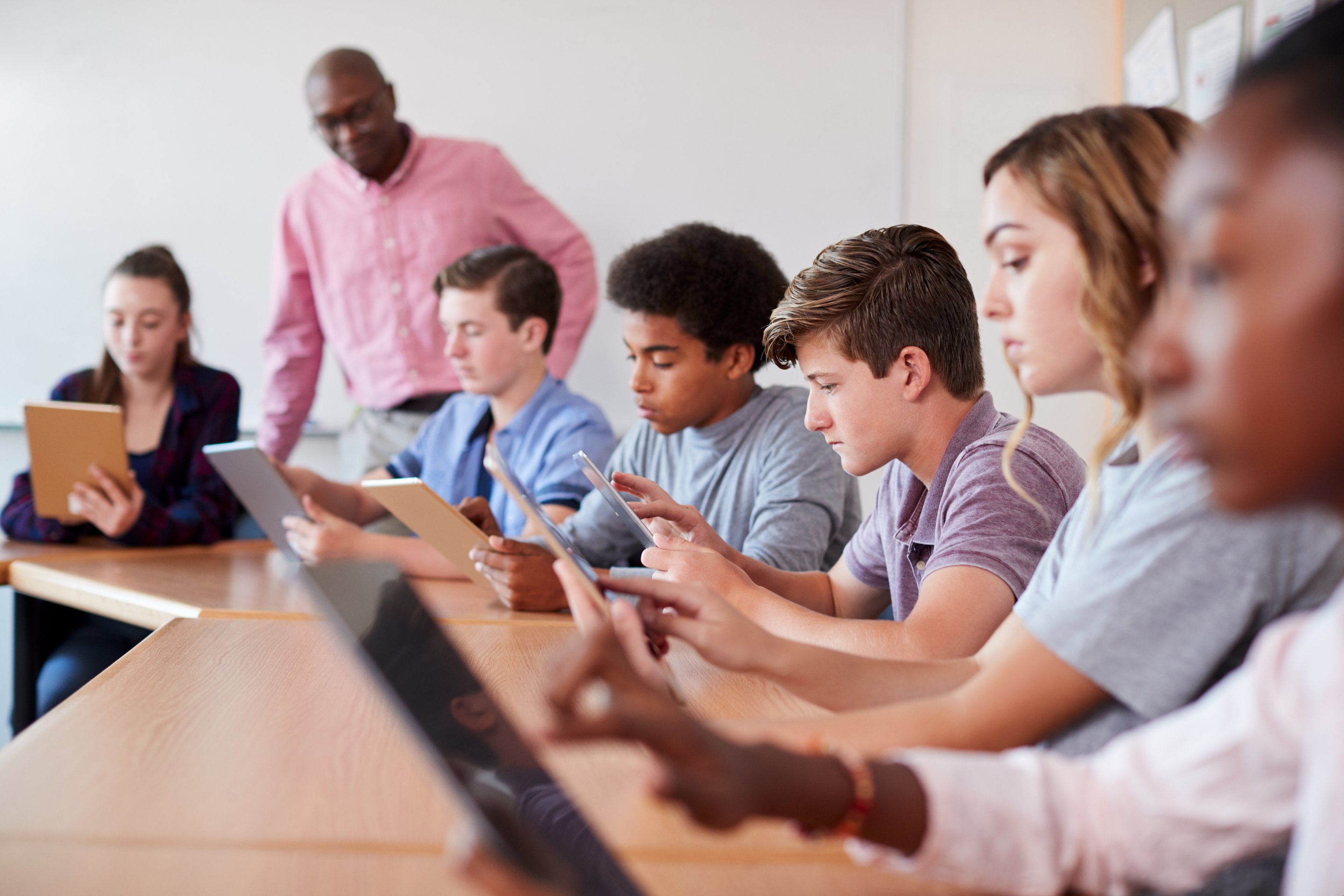
Technology can make UDL easier, but it is not the same as UDL. A classroom full of tablets can still be inaccessible if every student is doing the same poorly designed digital worksheet. The power of technology comes from how it expands access, options, feedback, and expression.
Useful tools may include text-to-speech, speech-to-text, captions, translation supports, digital graphic organizers, interactive simulations, screen readers, adjustable font sizes, collaborative documents, and learning management systems that organize materials clearly. These tools can help students access content and express ideas in ways that match their strengths.
However, teachers should choose technology with intention. The question is not “What shiny tool can I use today?” The better question is “What barrier does this tool remove?” If the tool helps students understand, participate, create, or reflect, it belongs in the lesson. If it only adds confusion and twelve new passwords, it may deserve a peaceful retirement.
UDL Does Not Mean Doing More of Everything
One common fear is that UDL requires teachers to build three separate lessons for every class period. Thankfully, no. UDL is not about tripling the workload. It is about designing smarter from the start. Small changes can have a big impact.
For example, posting the lesson goal, reading directions aloud, providing a visual model, allowing students to choose from two response formats, and using a quick exit ticket are all manageable UDL moves. Over time, teachers can build a library of reusable supports such as rubrics, templates, checklists, anchor charts, and choice boards.
The best UDL implementation is sustainable. Teachers do not need perfection. They need progress, reflection, and a willingness to notice where students are getting stuck. Inclusive instruction grows through practice, not through one heroic weekend of color-coded planning that ends with a printer jam and a dramatic sigh.
Assessment Through a UDL Lens
Inclusive assessment asks whether students are being evaluated on the intended learning goal or accidentally punished for unrelated barriers. For example, if the goal is to understand the water cycle, a student’s spelling should not dominate the grade unless spelling is part of the standard being assessed. If the goal is oral presentation skills, then speaking clearly to an audience matters. If the goal is content knowledge, other formats may be appropriate.
UDL-aligned assessment often includes clear rubrics, models of success, practice opportunities, feedback cycles, and flexible ways to demonstrate learning. Students should know what quality work looks like before they are graded. This transparency helps all learners, especially students who struggle with executive function or hidden expectations.
Teachers can also use formative assessment to adjust instruction before the final grade. Exit tickets, quick polls, student reflections, mini-conferences, and practice responses reveal who needs reteaching, extension, or a different representation of the concept. In a UDL classroom, assessment is not just a finish line. It is a dashboard.
Creating a Classroom Culture of Belonging
UDL works best when paired with a classroom culture that treats students as capable contributors. Students need to feel safe asking questions, using supports, making mistakes, and learning differently from their peers. A student who feels embarrassed to use accommodations may avoid the very tools that help them succeed.
Teachers can normalize support by making options available to everyone. Graphic organizers, captions, checklists, quiet workspaces, and audio supports do not need to be locked behind labels. When tools are part of the classroom routine, students are more likely to use them without feeling singled out.
Language matters too. Instead of saying, “This is the easy version,” teachers can say, “Choose the resource that helps you do your best thinking.” Instead of “You have to do it this way,” try “Here are the expectations, and here are your options for meeting them.” These small shifts build learner agency and dignity.
Common Mistakes to Avoid
One mistake is confusing UDL with simply offering fun choices. Choice must connect to the learning goal. Letting students choose between making a poster, baking cookies, or performing a puppet show may be memorable, but if only one option actually demonstrates the standard, the design needs tightening.
Another mistake is using UDL as a replacement for individualized supports. UDL reduces barriers for many students, but it does not erase the need for IEPs, 504 plans, language services, interventions, or specialized instruction. Inclusive design and individualized support should work together.
A third mistake is waiting for the perfect lesson plan. Teachers can begin with one UDL question: “Where are students likely to struggle, and what option or support can I add before they do?” That single question can transform a lesson from rigid to responsive.
Practical Experience: What UDL Looks Like in Real Classrooms
In real classrooms, UDL often begins with a teacher noticing a pattern. Maybe several students do poorly on written quizzes even though they can explain ideas during discussion. Maybe multilingual learners understand the concept but stumble over academic vocabulary. Maybe advanced students finish early and spend ten minutes perfecting the ancient art of pencil tapping. These moments are not failures. They are design clues.
One practical experience many teachers describe is the power of posting a clear agenda and learning target. This seems almost too simple, like educational toast. But for students who struggle with anxiety, attention, transitions, or executive function, knowing what will happen and why it matters can lower stress and increase participation. A visible agenda helps students mentally prepare. A clear target helps them understand the purpose of each activity.
Another valuable experience is using choice boards. A teacher might create a board with nine options for practicing vocabulary: draw a visual, write a sentence, create an analogy, sort examples, record a definition, use the word in a short story, find a real-world connection, teach the word to a partner, or build a mini concept map. Students still work with the same vocabulary, but they engage through different strengths. The classroom becomes more active, and the teacher gets richer evidence of understanding.
Teachers also learn quickly that modeling is a UDL superpower. Many students do not need easier work; they need to see what successful work looks like. Showing an example, thinking aloud through the first problem, or comparing a strong response with a weak one can remove mystery. Students who previously stared at a blank page like it owed them money often begin writing once the invisible expectations become visible.
Flexible assessment is another classroom-tested UDL practice. For example, after a unit on ecosystems, one student might write a traditional explanation, another might create a labeled food web, and another might record a three-minute explanation using key vocabulary. With a shared rubric, the teacher can assess the same essential understanding across different formats. Students often produce stronger work because the format no longer blocks the thinking.
UDL also improves classroom relationships. When teachers offer options without making students beg for them, students feel trusted. A learner who needs audio support can use it quietly. A student who needs to stand while working can do so without turning it into a courtroom case. A student who needs a checklist can grab one and move forward. These routines communicate, “Your needs belong here.”
Of course, UDL is not always smooth. Sometimes students choose an option that does not fit them well. Sometimes a choice board needs revision. Sometimes technology fails at the exact moment an administrator walks in, because apparently devices have a flair for theater. The key is reflection. Teachers can ask students which supports helped, which options were confusing, and what would make the next lesson more accessible.
Over time, teachers often discover that UDL benefits them too. Lessons become clearer. Directions improve. Assessments align better with goals. Students rely less on repeated explanations because supports are already built in. The classroom does not become effortless, but it becomes more intentional. And in education, intentional design is worth its weight in freshly sharpened pencils.
Conclusion: Inclusive Instruction Is Good Instruction
Ensuring that instruction is inclusive for diverse learners with Universal Design for Learning is not about chasing the latest educational trend. It is about accepting a simple truth: students learn differently, and good teaching plans for that reality. UDL helps educators design lessons that reduce barriers, increase access, strengthen engagement, and give students meaningful ways to show what they know.
When teachers use multiple means of engagement, representation, and action and expression, they create classrooms where more students can participate with confidence. The goal is not to make learning easy. The goal is to make learning reachable, challenging, and worthwhile.
Inclusive instruction is not a bonus feature. It is the heart of effective teaching. And when students are given flexible pathways to success, the classroom becomes what it was always meant to be: a place where every learner has a real chance to grow.