Fitting a FASTag in a car is one of those small jobs that looks so simple you may be tempted to do it while holding a coffee, answering a phone call, and arguing with Google Maps. Please do not. A FASTag may be tiny, but it has one big responsibility: helping your vehicle move through toll plazas with electronic toll collection instead of stopping for cash payments. When it is placed properly, it works quietly in the background. When it is stuck in the wrong place, held in the hand, taped like a school project, or reused after peeling, it can turn a smooth highway drive into a toll-booth comedy show.
This guide explains how to fit a FASTag in a car in 8 easy steps, where to place it on the windshield, what mistakes to avoid, and how to make sure it works before your next road trip. The process is not complicated, but accuracy matters. FASTag uses RFID technology, and the scanner at a toll plaza must be able to read the tag clearly. That is why the best location is usually the upper center area of the front windshield, behind the inside rear-view mirror, pasted from inside the vehicle with the adhesive side facing outward.
Whether you just bought a new car, received a replacement FASTag, or finally decided to stop keeping the sticker in the glove box “for later,” this article will walk you through the practical steps. Think of it as windshield surgery, except the patient is your car and the doctor is armed with a microfiber cloth.
What Is a FASTag and Why Does Placement Matter?
A FASTag is a small RFID-based sticker linked to a prepaid, savings, or current account, depending on the issuer. When your car passes through a FASTag-enabled toll lane, the scanner reads the tag and deducts the toll amount electronically. The idea is simple: less stopping, less fumbling for cash, fewer long lines, and fewer moments where everyone in the car suddenly remembers they have no change.
Placement matters because the tag is not just a decorative sticker. It contains an RFID chip and antenna that must remain flat, undamaged, and visible to the toll reader. If you place it too low, too far to the side, behind a metallic strip, on a wet surface, or outside the recommended area, the scanner may not read it properly. A loose FASTag or a tag that is not fixed on the front windshield can also lead to problems at toll plazas, including delays and possible penalties. In short: stick it once, stick it right, and let it do its job.
Things You Need Before Fitting FASTag
Before you begin, gather a few basic items. You do not need a toolbox, a mechanic, or your cousin who claims to understand “all car electronics.” You only need the FASTag sticker, a clean microfiber cloth, a little water or glass-safe cleaner, and a dry surface. If your windshield is dusty, oily, foggy, or still damp after washing, wait until it is completely dry. A clean and dry glass surface gives the adhesive the best chance to bond properly.
Also make sure the FASTag is assigned to the same vehicle. FASTag is vehicle-specific, which means it should not be shifted from one car to another. If the tag is damaged, incorrectly issued, or linked to the wrong vehicle number, contact the issuing bank or FASTag provider instead of trying a homemade fix. A FASTag is not a fridge magnet. It is not supposed to travel between vehicles based on your weekend plans.
Easy Ways to Fit a FASTag in a Car: 8 Steps
Step 1: Confirm That the FASTag Belongs to Your Car
Before peeling anything, check that the FASTag is registered to your vehicle number. This is especially important if you ordered it online, bought it through a bank, received it from a dealer, or replaced an older tag. Look at the vehicle registration number linked to the tag in your issuer’s app, website, SMS, or welcome kit.
If the FASTag is not linked to your car, do not install it. A wrongly linked tag can cause failed transactions, incorrect toll charges, or account issues. For new FASTags issued for cars, jeeps, and vans, vehicle validation is now handled more strongly before activation, but the owner should still verify the details. A two-minute check here can save you from the kind of toll-lane drama that makes everyone behind you practice deep breathing.
Step 2: Choose the Correct Position on the Windshield
The ideal FASTag position in most cars is on the inside of the front windshield, at the top center, just behind the inside rear-view mirror. This location keeps the tag in the reader’s line of sight while keeping it out of the driver’s direct view. It also helps protect the tag from weather, dust, rain, and accidental scraping.
If your car has a large sensor housing, dashcam mount, tinted sun strip, or mirror assembly blocking that exact spot, place the tag slightly toward the passenger side near the upper center area. The goal is simple: keep it high, flat, visible, and away from metallic obstruction. Avoid sticking it near the edge of the windshield, on the dashboard, on a side window, or behind dark tint. The scanner is looking for a clean read, not a treasure hunt.
Step 3: Clean the Inside of the Windshield
Once you know where the FASTag will go, clean that area from the inside of the car. Use a microfiber cloth and a little water or glass-safe cleaner. Remove dust, oil, fingerprints, and old adhesive marks. If you recently had the windshield polished, tinted, replaced, or treated with a film, be extra careful and follow the glass or film manufacturer’s care instructions.
After cleaning, let the surface dry completely. Adhesive does not love moisture. It also does not love dust, sunscreen, perfume mist, dashboard polish, or the mysterious film that builds up on car glass after months of air conditioning. A dry, clean surface helps the FASTag stay firmly attached and reduces the risk of peeling later.
Step 4: Hold the FASTag Without Bending It
Take the FASTag out of its packet carefully. Hold it by the edges and avoid bending, folding, scratching, or pressing hard on the chip area. Do not test the adhesive with your finger. Do not fold the sticker to “see how flexible it is.” It is not a yoga mat.
The RFID components inside the tag can be affected by rough handling. If the tag looks torn, creased, water-damaged, or tampered with, contact your issuer for a replacement. Installing a damaged FASTag is like wearing sunglasses with one lens missing: technically something is there, but performance may be questionable.
Step 5: Peel Off the Adhesive Liner
Most FASTag stickers come with a white release liner protecting the adhesive. Peel this liner slowly and carefully. Once the adhesive is exposed, try not to touch it. Oils from your fingers can reduce adhesion, and if dust sticks to the glue, the tag may not bond well to the glass.
Before removing the liner, do one final “dry run” by holding the tag near the chosen spot from inside the car. Check that it will sit straight and not block your view. When you are confident about the position, peel the liner and prepare to paste the tag. This is the moment of truth. The FASTag is basically saying, “Choose wisely, because I am not a reusable sticker.”
Step 6: Paste the FASTag From Inside the Car
Stick the FASTag on the inside of the windshield at the selected location. The adhesive side should face outward toward the glass, and the printed side should face inward toward the cabin. Align it neatly, then place it flat against the glass in one smooth motion.
Do not paste it outside the windshield. External placement exposes the tag to rain, dust, heat, wiper movement, and theft. Interior placement protects the tag and improves durability. Also, do not place it over heating lines, metal-coated areas, or accessories that could interfere with scanning. The best FASTag installation is boring: flat, centered, clean, and uneventful. In toll technology, boring is beautiful.
Step 7: Press Gently Around the Edges
After placing the FASTag, press it gently around the edges and across the surface so the adhesive makes full contact with the glass. Use light, even pressure. Do not punch it, rub it aggressively, or use a hard object to flatten it. If the tag has air bubbles, smooth them gently toward the edges without creasing the sticker.
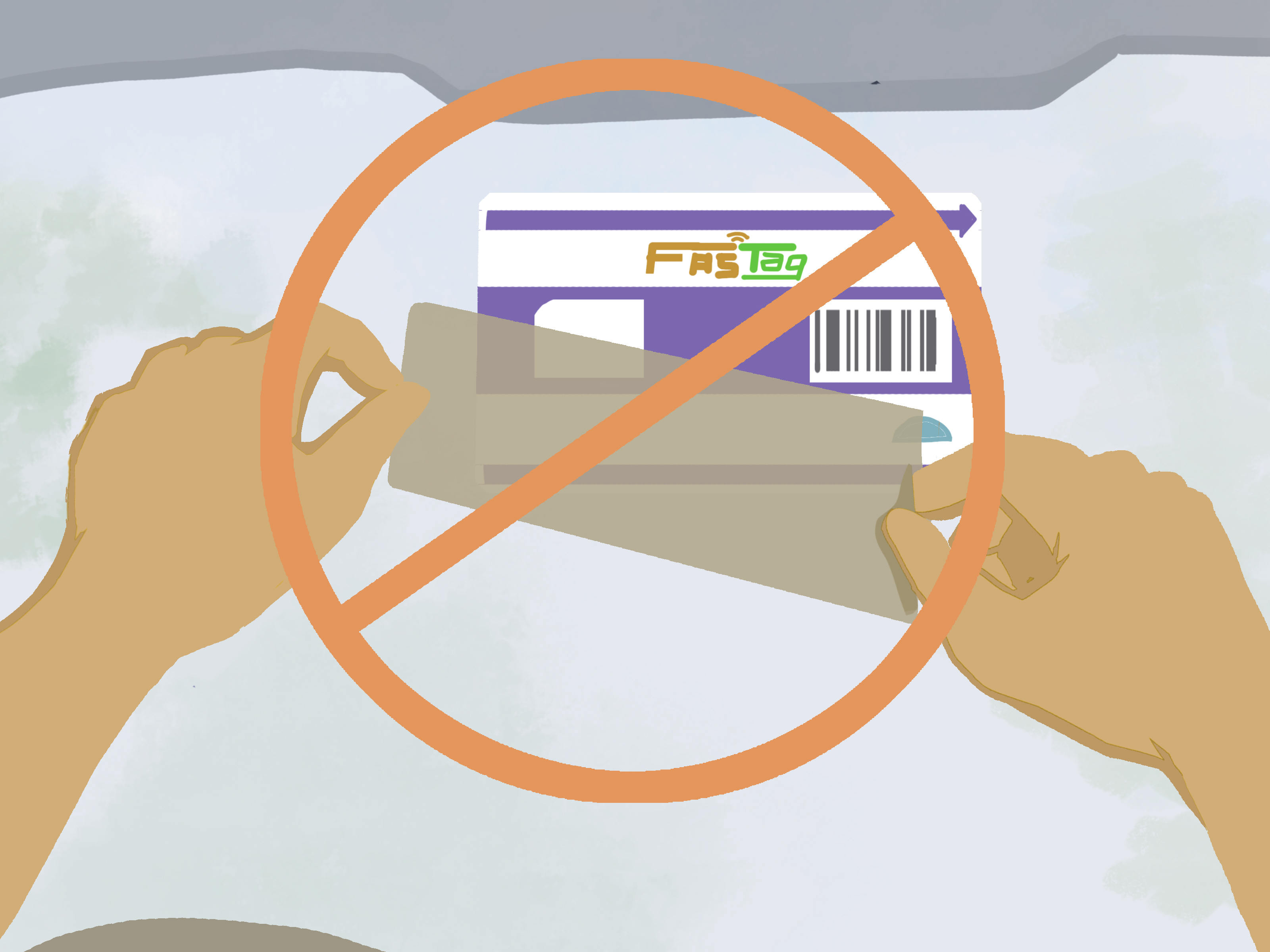
A properly pasted FASTag should sit flat against the windshield with no loose corners. Loose corners may collect dust and eventually peel. Once the tag is fixed, leave it alone. Do not peel it off to make it straighter, shift it a few inches, or “improve” it with transparent tape. Repositioning can damage the adhesive and may affect the RFID circuit.
Step 8: Check Activation, Balance, and First Toll Use
After installation, confirm that the FASTag is active and has enough balance. Use your issuer’s app, website, UPI recharge option, bank portal, or customer support channel. A beautifully fitted FASTag with zero balance is like a sports car with an empty fuel tank: impressive, but not going anywhere smoothly.
On your first toll crossing, approach the FASTag lane slowly and maintain a safe distance from the vehicle ahead. Do not tailgate. The scanner needs time to read each tag and match it to the correct vehicle. If the transaction fails, do not panic. Ask the toll staff for guidance, then check the tag status, vehicle linkage, balance, and placement. Most issues come from low balance, inactive tags, poor placement, blacklisting, or damaged stickers.
Common FASTag Installation Mistakes to Avoid
Keeping the FASTag Loose
A loose FASTag held in the hand, kept on the dashboard, or waved near the windshield is a bad idea. It can delay scanning, create confusion, and may violate toll-lane rules. FASTag is meant to be affixed to the vehicle’s front windshield from the inside.
Using Tape or Extra Glue
If the original adhesive is weak, do not rescue it with cello tape, super glue, double-sided tape, or office-stationery heroics. Contact the issuer for help or replacement. Extra adhesives can damage the tag or interfere with readability.
Placing It on a Dirty or Wet Windshield
This is one of the most common mistakes. A wet or dusty surface prevents proper bonding. Clean the glass, dry it fully, and then paste the tag. The extra minute you spend cleaning may save you from weeks of peeling corners.
Trying to Reuse an Old FASTag
FASTag is vehicle-specific and should not be transferred to another car. Once removed, it may not function correctly. If you sell the car, replace the windshield, or need a new tag, contact your issuer and follow the correct closure or replacement process.
Blocking the Driver’s View
Never place the FASTag in a spot that distracts the driver or blocks visibility. The upper center area behind the rear-view mirror is recommended partly because it stays out of the normal driving line of sight.
FASTag After Windshield Replacement
If your windshield is replaced, your old FASTag will usually not survive the move in proper working condition. Since peeling can damage the sticker or RFID components, it is better to request a replacement from the issuing bank or FASTag provider. Keep your vehicle registration certificate, identity details, and issuer account information ready. Once the new tag is issued, repeat the same installation process on the new windshield.
Do not ask the glass technician to “somehow save” the old sticker unless your issuer specifically allows it. Even if it looks fine after removal, the internal antenna or adhesive may be compromised. With FASTag, looking fine and working fine are not always the same thing.
How to Maintain FASTag After Installation
Once your FASTag is fitted, maintenance is easy. Do not scratch it, cover it, peel it, or clean it with harsh chemicals. When cleaning the inside of the windshield, wipe around the tag gently. Avoid spraying glass cleaner directly on the sticker. If you use a sunshade, dashcam, toll pass holder, or mirror accessory, make sure it does not press against the FASTag.
Also keep your FASTag account funded. Many failed toll experiences happen not because the sticker is wrong, but because the account has insufficient balance or has been hotlisted. Set recharge reminders before long highway trips. If your issuer supports auto-recharge or low-balance alerts, enable them. A good FASTag setup is part sticker placement, part account discipline, and part remembering that road trips always cost slightly more than planned.
Why Proper FASTag Fitment Saves Time
Correct FASTag placement helps the toll reader identify your vehicle quickly. This means fewer failed reads, fewer manual checks, shorter queues, and less honking from people who believe their horn has magical traffic-solving powers. A properly installed tag also helps reduce unnecessary disputes about whether the tag is valid, visible, or assigned to the correct vehicle.
For frequent highway drivers, small delays add up. Even if a poor FASTag placement costs only a minute or two at each toll plaza, that becomes frustrating during long journeys with multiple toll points. Good installation is a one-time task that can make every future trip easier.
Practical Experience: What Drivers Learn After Using FASTag
After fitting a FASTag and using it for a few months, most drivers realize that the installation step is only the beginning of a smoother toll experience. The real trick is building a small routine around it. Before a long drive, experienced drivers usually check three things: tag balance, tag status, and windshield condition. It sounds basic, but these three checks can prevent most toll-lane surprises.
One common experience is discovering that placement really does matter. A FASTag stuck too low on the windshield may work at one toll plaza and fail at another because scanner angles and lane equipment can vary. That is why the upper center position behind the rear-view mirror is so helpful. It gives the tag a better chance of being read consistently. Drivers who place the sticker neatly the first time often forget about it afterward, which is exactly how the system should feel. The best toll technology is the kind you do not have to think about.
Another lesson is that balance alerts are your friend. Many people recharge only when they receive a low-balance message, but messages can be missed during travel, especially when the phone is on silent, roaming, or buried under snack packets. A smart habit is to check the balance the night before a highway trip. Add enough money for the full route, plus a little cushion. Tolls, detours, and unexpected return trips have a way of laughing at exact calculations.
Drivers also learn not to panic after one failed scan. Sometimes the issue is not the FASTag at all. The vehicle ahead may be too close, the lane sensor may take an extra second, or the toll system may need manual assistance. Keep distance, move slowly, and follow staff instructions. If failures happen repeatedly, then investigate the tag placement, account status, or possible damage.
People who replace windshields often learn the hard way that a FASTag is not designed for graceful relocation. It may peel off in pieces, lose adhesive strength, or stop reading reliably. The better approach is to request a replacement tag and install it correctly on the new glass. It may feel annoying at the time, but it is less annoying than arguing at a toll booth on a hot afternoon while your passengers silently judge your life choices.
Another practical tip is to avoid adding accessories near the tag. Dashcams, religious hangings, toll cards, parking stickers, metallic films, and phone mounts can create clutter around the mirror area. The windshield can quickly become a dashboard museum. Keep the FASTag area clear. A clean zone around the tag improves readability and keeps the driver’s view tidy.
Finally, FASTag teaches a simple rule: small preparation creates big convenience. The sticker itself takes only a few minutes to fit, but proper installation supports faster toll crossings for months or years. Clean the glass, choose the right spot, paste it once, press gently, keep the account active, and leave the tag alone. That is the entire magic trick. No tools, no drama, no secret engineering degree required.
Conclusion
Learning how to fit a FASTag in a car is easy, but doing it correctly makes all the difference. The best method is to confirm the tag belongs to your vehicle, clean and dry the inside of the windshield, choose the upper center position behind the rear-view mirror, peel the liner carefully, paste the tag from inside the car, press it gently, and then check activation and balance before driving through toll plazas.
A FASTag should be fixed firmly, kept flat, and never treated like a portable pass. Do not hold it in your hand, tape it to the glass, shift it between vehicles, or peel and reuse it. Install it properly once, and it can quietly handle toll payments while you focus on the road, the playlist, and the eternal debate over whether the next stop should be for fuel, coffee, or samosas.