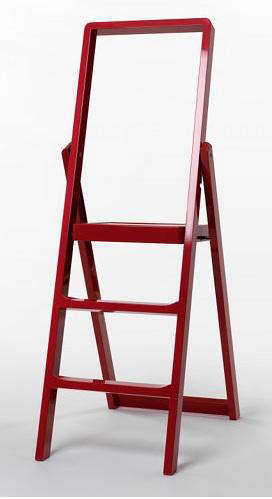
Some household objects seem born to live in the garage, covered in dust, quietly judging us next to a half-empty paint can. A step ladder is usually one of them. Useful? Absolutely. Beautiful? Not often. But the Design House Stockholm Step Ladder, designed by Swedish industrial designer Karl Malmvall, has a very different personality. It is the kind of object that looks at the utility closet and says, “No, thank you. I belong on the wall.”
That is the domestic science of this clever piece: it solves a real home problem while refusing to look like a problem. The Step Ladder is practical enough for reaching high kitchen shelves, changing bulbs, retrieving books, and watering that ambitious plant you placed just beyond human arm length. Yet it also behaves like a slim piece of Scandinavian furniture. It folds flat, hangs on a dedicated wall hook, and turns everyday utility into something closer to decor.
In a world where homes are getting smaller, storage is getting smarter, and every object must justify its existence, the Design House Stockholm Step Ladder makes a persuasive case for beauty with a job description.
What Is the Design House Stockholm Step Ladder?
The Design House Stockholm Step Ladder is a foldable wooden stepladder created by Karl Malmvall and introduced in 2009. It is commonly known simply as “Step,” which is charmingly direct. No mysterious product name. No Nordic word that requires three pronunciation videos. Just Step.
The ladder is made in versions such as oak, dark oak, light oak, black, white, and red, depending on retailer availability. Materials vary slightly by finish, but the design is generally associated with solid oak or solid beech construction, lacquered surfaces, and a platform made with oak veneer or MDF depending on the model. It is designed to fold extremely flat, allowing it to hang vertically on the wall using the included hook.
Open, it functions like a real step ladder. Closed, it becomes a narrow, sculptural line. That transformation is the heart of its appeal. Instead of hiding the ladder after use, you can display it in the kitchen, hallway, pantry, laundry room, closet, or studio. In other words, it solves the eternal domestic question: “Where do I put this useful thing so I don’t hate looking at it?”
The Design Philosophy: Utility That Earns Wall Space
Scandinavian design is often described as clean, functional, minimal, and human-centered. Those words get thrown around so often they can start to sound like furniture-store wallpaper. But the Step Ladder gives them real meaning. This is not minimalism for the sake of looking expensive in a silent room. It is minimalism with a screwdriver in its pocket.
The ladder’s genius lies in its honesty. It does not pretend to be a chair, sculpture, or mysterious art object. It is clearly a ladder. The rungs, side rails, hinges, and platform are all visible. But every line has been refined so the object feels intentional rather than temporary. The proportions are slim. The frame is neat. The silhouette is graphic enough to work on a wall like a piece of functional line art.
Why Wall-Hanging Matters
Most homes have at least one “awkward object” category: vacuum cleaners, ironing boards, folding chairs, mops, and step ladders. These things are necessary, but they do not always fit gracefully into daily life. Step addresses that friction by giving the ladder a designed storage ritual. Use it, fold it, hang it.
That small wall hook changes the entire relationship between owner and object. The ladder is no longer something you drag from a closet, bump against a doorway, and swear at softly. It is available. Visible. Ready. For a small apartment, a compact kitchen, or a home where every square foot must work hard, that makes a real difference.
Karl Malmvall: A Designer Who Understands Practical Details
Karl Malmvall comes from a strong furniture-design background and has worked extensively with industrial production. That experience shows in Step. This ladder is not just a pretty concept sketched on a napkin during a very tasteful Swedish lunch. It is designed with the kind of practical thinking that comes from understanding how people actually use furniture.
The folding profile is especially important. A ladder that folds but remains bulky is still a storage problem wearing hinges. Step folds down to a very slim depth, often described by retailers as about two inches. That makes it suitable for tight walls, narrow closets, behind-door spaces, and kitchen corners where a thicker utility ladder would feel intrusive.
Malmvall’s design also shows restraint. There are no unnecessary flourishes, no decorative cutouts, no “look at me” gimmicks. The ladder’s beauty comes from proportion, finish, and usefulness. It is the furniture equivalent of a well-tailored white shirt: simple, but not accidental.
Materials, Dimensions, and Everyday Function
The Step Ladder is typically listed with dimensions around 49 to 52 inches high, 18 inches wide, and about 31 inches deep when open, depending on the retailer and measurement system. Its highest step is commonly around 26 inches high, making it appropriate for indoor household tasks rather than exterior work or roof access. When folded, its depth becomes exceptionally narrow, which is why it can hang so elegantly.
Wood is central to the design’s appeal. Oak versions feel warm and architectural, while lacquered black, white, and red versions bring a more graphic, modern presence. The colored versions can add personality to a kitchen or entryway. The oak models blend more naturally into Scandinavian, Japandi, modern farmhouse, and warm minimalist interiors.
Where It Works Best
In the kitchen, the Step Ladder is ideal for upper cabinets, open shelving, appliance storage, and those ceremonial moments when someone decides the holiday platter must live above the refrigerator. In a library or living room, it helps with tall bookcases while looking more refined than a hardware-store ladder. In a dressing room or closet, it makes overhead storage usable without requiring a daily acrobatic routine.
It is also useful in creative spaces. Artists, stylists, photographers, and home-office users often need extra reach for shelves, props, storage boxes, and lighting adjustments. Step’s clean look means it can remain in the room without making the space feel unfinished.
Why This Step Ladder Became a Design Favorite
The Design House Stockholm Step Ladder has been recognized by design-focused retailers and publications because it solves a familiar problem in an unusually elegant way. It received attention after being named a best furniture piece by design magazines in 2011, and it has been carried by respected design retailers and museum shops. That matters because museum-store products usually have to do more than look good in a product photo. They need a design story, a functional reason to exist, and enough originality to stand apart from ordinary household goods.
Step’s popularity also reflects a larger shift in how people think about home tools. For decades, utility items were expected to disappear after use. Now, as open-plan living, smaller homes, and curated interiors become more common, everyday tools are being judged by a higher standard. If something must be visible, it should contribute to the room rather than apologize for being there.
This ladder fits that new standard beautifully. It is not cheap, and it is not trying to be. It belongs in the category of design objects that turn daily use into a small pleasure. You are paying for materials, form, brand, design authorship, and the convenience of not hiding an ugly ladder behind the coats.
Design House Stockholm and the “Publishing House” Approach
Design House Stockholm is known for working with independent designers and developing products with a clear concept. The company’s approach is often compared to publishing: ideas are selected, refined, produced, and shared under a broader design identity. This helps explain why Step feels so focused. It is not just another item in a generic home catalog. It is a specific idea made physical.
That idea is simple: a step ladder can be part of the room. Once you accept that, the whole object changes. Its folded profile becomes important. The wall hook becomes important. The finish becomes important. Even the way the ladder rests visually against a wall becomes part of the design.
How to Style the Step Ladder at Home
The easiest way to style the Step Ladder is to treat it like a narrow vertical accent. In an oak finish, it pairs beautifully with white walls, stone countertops, pale wood floors, linen textures, and matte ceramics. In black, it becomes sharper and more architectural, especially in a modern kitchen with black hardware or dark-framed windows. In white, it nearly disappears into a light interior, which is ideal for small rooms that need visual calm.
Kitchen Styling
Mount the ladder near tall cabinetry or open shelving. This makes the most functional sense and gives the object a natural reason to be there. A wooden Step Ladder beside a pantry wall can make the kitchen feel more custom, almost like a compact library ladder without the rolling hardware.
Hallway Styling
In an entryway, the ladder can hang near utility hooks, a bench, or a coat rail. This works especially well if the hallway has other vertical elements such as framed prints or narrow shelving. The ladder adds rhythm and practicality without eating floor space.
Studio Styling
In a home office or creative studio, Step can live beside storage cabinets or wall-mounted shelves. It looks intentional, not improvised. That matters when your workspace is also visible during video calls, client visits, or the occasional “I swear this mess is creative energy” moment.
Safety Still Matters: Pretty Does Not Mean Magical
A beautiful ladder is still a ladder, and ladders deserve respect. Before using any stepladder, place it on a firm, level surface and make sure it is fully opened according to the manufacturer’s instructions. Keep your body centered, face the ladder while climbing, and avoid reaching too far to the side. The classic three-point-contact rule is still a good habit: keep two feet and one hand, or two hands and one foot, connected while climbing or descending.
The Step Ladder is best understood as an indoor household ladder for everyday reach tasks. It is not a construction ladder, outdoor extension ladder, or substitute for professional equipment. Do not use it on uneven ground, slippery flooring, or near electrical hazards. Also, do not let its good looks tempt you into using it as a display shelf for heavy plants unless the manufacturer specifically says that is appropriate. Design may be clever, but gravity remains undefeated.
Who Should Buy the Design House Stockholm Step Ladder?
This ladder is best for people who care about both function and appearance. If you live in a small apartment, it is especially appealing because it reduces the storage penalty of owning a ladder. If you have tall kitchen cabinets or bookcases, it can become part of your daily routine. If you love Scandinavian design, it is a practical way to bring that philosophy into your home without buying yet another chair you promise is “an investment.”
It may not be the right choice for everyone. If you need a ladder mainly for painting walls, outdoor repairs, garage work, or heavy-duty projects, a standard utility ladder may be more appropriate. If price is your top concern, there are less expensive step ladders available. But if you want a household tool that earns its place in the room, Step is hard to beat.
Pros and Cons
Pros
The Step Ladder is slim, attractive, wall-mountable, and genuinely useful for indoor reach tasks. It works well in compact spaces and offers a rare combination of storage efficiency and design credibility. The material choices feel more furniture-like than most household ladders, and the folded silhouette makes it easy to keep close at hand.
Cons
The biggest drawback is price. This is a premium design object, not a bargain-bin utility ladder. It also has a specific use case: indoor household reach. People who need heavy-duty performance, outdoor versatility, or extra height should look elsewhere. The wall-mounted display concept also works best when you have suitable wall space and are comfortable making the ladder visible.
Experience Notes: Living With a Ladder That Refuses to Hide
The first thing you notice about a well-designed step ladder is not how often you use it, but how often you stop avoiding tasks because it is nearby. That sounds dramatic for a ladder, but domestic life is built from tiny frictions. The cereal bowls are too high. The extra coffee filters are above the pantry shelf. The smoke detector chirps from a height that feels personally insulting. When the ladder is buried behind luggage, winter coats, and a mysterious box labeled “miscellaneous,” every small task becomes a negotiation.
A wall-hung step ladder changes that. You see it, grab it, use it, and return it. There is no excavation project. No closet avalanche. No pretending you can reach the top shelf by standing on a dining chair, which is the kind of decision that makes future-you shake their head in disappointment. The Design House Stockholm Step Ladder turns the practical act of reaching into a smoother routine.
In a kitchen, the experience is especially satisfying. Many modern kitchens are designed with tall cabinets because storage is precious. Unfortunately, human arms did not receive the same upgrade. A slim ladder near the cabinets makes upper storage realistic. You can keep seasonal platters, vases, small appliances, or bulk pantry items above eye level without treating them like museum artifacts. The ladder gives those spaces back to daily life.
There is also a psychological benefit. Tools that look good tend to be cared for better. A plastic step stool shoved under a sink might collect dust, scratches, and mystery stickiness. A beautiful wooden ladder hanging on the wall invites a little more respect. You wipe it down. You fold it properly. You put it back where it belongs. That sounds small, but good design often works by making better habits feel natural.
The Step Ladder also changes how a room feels. Instead of adding visual clutter, it can add a vertical line that makes a wall feel more finished. In oak, it brings warmth. In black, it adds contrast. In white, it blends into a calm interior. The ladder becomes part of the room’s vocabulary. It says: this is a home where useful things are allowed to be beautiful.
Of course, the charm does not erase common sense. You still need to open it fully, place it on a stable surface, and climb with attention. But when used properly, it offers a rare pleasure: a household object that does its job, stores neatly, and looks good while waiting for its next assignment. That is domestic science at its bestnot flashy, not overcomplicated, just smarter living one step at a time.
Conclusion
The Design House Stockholm Step Ladder is a reminder that everyday objects do not have to be visually punished for being useful. Designed by Karl Malmvall, it brings together Scandinavian restraint, smart storage, solid materials, and a sense of quiet wit. It folds flat, hangs on the wall, and performs the humble work of helping people reach things without turning the room into a utility closet.
For design lovers, small-space dwellers, and anyone tired of hiding ugly household tools, Step is more than a ladder. It is a case study in how domestic design can improve daily life. It proves that practicality and beauty are not rivals. Sometimes, they just need a good hinge and a wall hook.