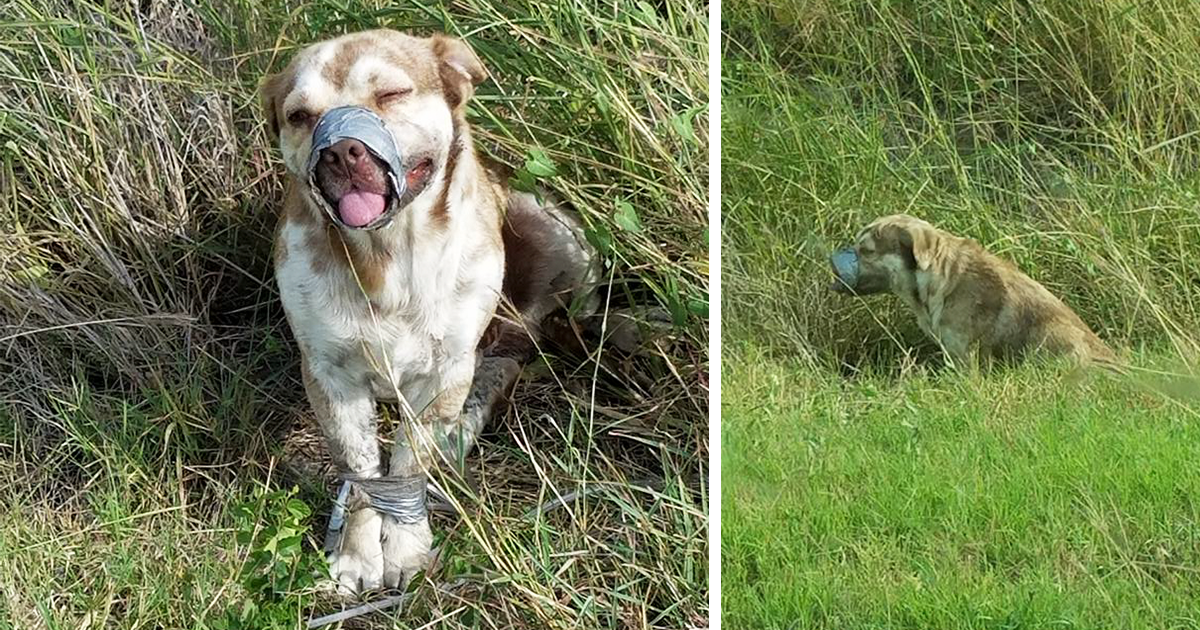
Some workdays start with coffee, traffic, and the quiet hope that nobody asks for “just one quick favor” five minutes before closing. For two plumbers in Robstown, Texas, an ordinary morning turned into something far more important: a roadside rescue that likely saved a dog’s life. The dog had been found in a ditch, his mouth sealed with duct tape and his legs bound with tubing. It was the kind of discovery that makes your stomach drop and your faith in humanity pack a tiny suitcase.
But then humanity unpacked. Plumber Carlos Carrillo and his colleague from Shoreline Plumbing stopped, turned back, and took a closer look at what they first thought was just a strange shape near the road. Instead, they found a living, frightened dog who had been abandoned in a cruel and dangerous condition. They cut him free, loaded him into their vehicle, and brought him to Peewee’s Pet Adoption, a nearby no-kill shelter. Soon after, shelter staff shared the detail that made this rescue story travel so far: despite what he had endured, the dog could not stop wagging his tail.
This is not just a story about animal cruelty. It is a story about attention, quick action, rescue, recovery, and the incredible emotional resilience dogs can show when humans finally choose kindness. It also reminds us that animal rescue does not always begin with a uniform, a camera crew, or a dramatic soundtrack. Sometimes it begins with two plumbers on the way to a job who decide that being late is better than leaving a helpless animal behind.
The Morning Rescue That Changed Everything
According to reports about the rescue, Carrillo and his coworker were driving to work when they noticed something unusual in a ditch along a country road. At first, they could not tell what it was. That small moment matters. Many people might have kept driving, assuming it was trash, debris, or someone else’s problem. These two did the opposite. They reversed the vehicle and checked.
What they found was heartbreaking. The dog’s mouth had been taped shut, and his legs were restrained with tubing. He had been left alone in a vulnerable place, unable to call for help, move freely, find water, or protect himself. The situation could have become fatal quickly, especially in warm weather or if predators, vehicles, dehydration, or shock had entered the picture. The plumbers did not wait around for a committee meeting. They freed him.
One of the most striking parts of the story is that the dog was reportedly gentle and affectionate after being released. Carrillo described him as loving and receptive to attention. Anyone who has ever met a dog knows how remarkable that is. Dogs can be confused, defensive, or shut down after trauma. This dog, however, seemed to understand that the people kneeling beside him were not there to harm him. His tail had not received the memo that the day was supposed to be tragic.
Why the Tail Wag Mattered So Much
The image of a rescued dog wagging his tail is powerful because it gives the story emotional oxygen. It tells readers, “He made it. He is still here.” But dog body language is more complex than a greeting-card version of happiness. A wagging tail can signal excitement, emotional arousal, uncertainty, friendliness, stress, or relief depending on the dog’s whole body. In this case, shelter staff described him as sweet, affectionate, and happy to receive attention, which gives the wagging tail a hopeful meaning.
That is why this rescue captured so many hearts. The dog had every reason to distrust people. Instead, once safe, he appeared eager for kindness. His tail became the tiny metronome of a second chance. No violin section required, although let’s be honest, the internet probably heard one anyway.
The Role of Everyday Heroes in Animal Rescue
Animal rescue stories often focus on shelters, veterinarians, police officers, and animal control teams. They absolutely deserve credit. Yet this story highlights another essential group: ordinary people who notice something wrong and act responsibly. Carrillo and his colleague were not on an official animal rescue mission. They were simply present, alert, and compassionate.
That combination saves lives. Many abandoned or injured animals are first spotted by delivery drivers, utility workers, construction crews, joggers, sanitation workers, farmers, and commuters. People who spend time on roads, in neighborhoods, and around job sites often become the first line of defense for animals in danger. In this case, the rescuers happened to be plumbers, which feels almost poetic. They spend their days fixing leaks, and that morning they helped fix a leak in the universe’s kindness supply.
What Happened After the Dog Was Freed?
After cutting the dog loose, the plumbers brought him to Peewee’s Pet Adoption, where he could be examined and cared for. Reports indicated that he was in generally good condition considering the ordeal, though he tested positive for heartworms and needed treatment. Heartworm disease is a serious condition in dogs, spread by mosquitoes, and treatment can be lengthy and medically supervised. The good news is that with veterinary care, many dogs can recover and go on to live happy lives.
The dog’s future depended not only on the rescue itself but also on the network that came afterward: shelter staff, medical care, potential adopters, and community support. That is the part many viral stories skip. A rescue does not end when the tape is removed. It continues through exams, medications, feeding, hydration, behavior observation, paperwork, foster or shelter placement, and the patient search for a permanent home.
Animal Abandonment Is Not “Letting Nature Take Over”
One of the most dangerous myths about abandoning a pet is the idea that an animal will simply “figure it out.” Dogs are domesticated companions, not tiny survival experts wearing invisible camping gear. A dog left tied, trapped, injured, sick, or without access to water is not being given freedom. He is being placed in danger.
In Texas and many other states, animal abandonment can fall under animal cruelty laws. The legal details vary by location, but the moral principle is not complicated: if someone can no longer care for a pet, the responsible choice is to seek help from a shelter, rescue group, veterinarian, animal control agency, or trusted community organization. Dumping an animal is not a solution. It is a crisis transferred onto the animal and the people who must later rescue it.
How Shelters Turn Emergency Rescues Into Real Second Chances
No-kill shelters and rescue groups play a vital role in cases like this one. They provide immediate safety and then begin the slower work of rebuilding a dog’s health and trust. That can mean parasite treatment, vaccines, spay or neuter surgery, microchip scanning, behavioral support, foster placement, and adoption screening.
Across the United States, shelters handle millions of dogs and cats each year. Adoption saves lives, but shelters often face limited space, tight budgets, staffing shortages, and rising medical needs among animals entering care. A single rescued dog may require weeks or months of attention before he is ready for adoption. That is why community involvement matters so much. Fostering, volunteering, donating supplies, sharing adoption posts, and choosing adoption over impulse buying can all reduce pressure on shelters.
For a dog like the one rescued by the plumbers, shelter care is the bridge between survival and belonging. The ditch was not the end of his story because people built that bridge quickly.
Why Heartworm Treatment Is Part of the Bigger Story
The rescued dog’s heartworm diagnosis is a reminder that many abandoned animals arrive with medical needs that are not visible at first glance. Heartworm disease is caused by parasitic worms transmitted through mosquito bites. It can damage a dog’s heart, lungs, and blood vessels if untreated. Prevention is much easier than treatment, and veterinarians often recommend year-round prevention based on a dog’s health, age, and local risk.
When a rescued dog tests positive, treatment must be handled carefully. Dogs may need activity restriction, medication, monitoring, and follow-up care. For shelters, this means cost and time. For adopters, it means patience. For the dog, it means a chance to heal from something that may have been neglected long before the rescue happened.
This is one reason responsible pet ownership includes regular veterinary care. Food and love are essential, yes, but so are prevention, vaccines, parasite control, identification, safe housing, and planning for emergencies. A dog is not a decorative throw pillow with paws. A dog is a living being with needs, feelings, and a talent for turning your clean pants into a fur collection.
What To Do If You Find an Abandoned or Restrained Dog
Stories like this can make people wonder what they should do if they see an animal in danger. The safest answer depends on the situation. If there is an immediate emergency, such as an animal trapped in traffic, suffering in extreme heat, or visibly restrained and unable to move, contact local emergency services, animal control, or law enforcement right away. If it is safe to remain nearby, keep the animal in sight until help arrives.
Stay Safe First
A frightened dog may bite even if he is not aggressive by nature. Fear changes behavior. Move slowly, avoid crowding the animal, and do not put your face near the dog’s face. Speak calmly. If the dog is tied, trapped, or injured, professional help is usually best.
Document What You See
If you can do so safely, write down the location, time, description of the animal, vehicle information if relevant, and any visible signs of neglect or abandonment. Photos or videos may help authorities, but do not put yourself in danger to get them. This is rescue, not a documentary audition.
Contact the Right Agency
Depending on where you live, animal cruelty reports may go to local police, sheriff’s offices, animal control, SPCA branches, humane societies, or municipal shelters. If you are unsure, call local law enforcement or animal control and ask where to report suspected animal cruelty.
Why This Story Still Resonates Years Later
This rescue happened in 2017, yet people still share and search for it because it has the structure of a story we need to believe in: cruelty was interrupted, kindness arrived on time, and a dog responded with joy. It is painful, but it is not hopeless. That balance is why animal rescue stories spread so widely online.
They remind us that compassion does not require perfection. The plumbers did not have a full rescue kit, a nonprofit logo, or a plan for going viral. They had enough awareness to stop and enough decency to help. Sometimes that is the difference between tragedy and a tail wag.
Lessons From the Dog Rescued by Plumbers
The first lesson is simple: pay attention. Many rescues begin because someone notices what others ignore. A shape in a ditch, a dog pacing behind a fence without shelter, a pet left in a hot car, or a thin animal repeatedly seen without food or water can all be signs that something is wrong.
The second lesson is to act through safe, legal channels. Compassion is powerful, but it works best when paired with clear thinking. Call the proper authorities, provide details, and support the organizations trained to intervene.
The third lesson is that adoption and fostering matter. When shelters take in dogs from cruelty or abandonment cases, they need space. Every adoption opens a kennel. Every foster home creates breathing room. Every donation helps pay for food, treatment, and recovery.
The fourth lesson is that dogs are emotionally resilient, but resilience should never be used as an excuse for neglect. The fact that this dog wagged his tail after rescue is beautiful. It does not make what happened to him any less serious. His sweetness is not a permission slip for human failure. It is a reason to do better.
Experience-Based Reflections: What This Rescue Teaches Anyone Who Loves Dogs
Anyone who has spent time around rescued dogs knows that the first safe moment can feel almost sacred. A dog may step out of a crate, lower his head, sniff the air, and decide whether the room is safe enough to breathe in. Sometimes he wags. Sometimes he hides. Sometimes he eats like a tiny vacuum cleaner with emotional baggage. Every reaction tells a story.
In cases like the dog rescued by the plumbers, one of the most important experiences is learning not to rush trust. People often want an immediate happy ending because it feels comforting. We want the dog to leap into someone’s arms, lick every face in the county, and become a furry symbol of forgiveness by lunchtime. But real recovery can be quieter. It can look like sleeping without flinching, eating a full meal, accepting a leash, allowing a gentle touch, or walking past a stranger without freezing.
For rescuers, foster families, and adopters, patience is the secret ingredient. A rescued dog may need predictable routines: meals at the same time, a calm sleeping area, short walks, gentle voices, and space to decompress. The dog does not need a surprise welcome party with balloons, six cousins, and someone shouting, “Who wants belly rubs?” He needs safety. Celebration can come later, preferably with treats approved by a veterinarian and no party hats unless the dog is clearly into fashion.
Another experience many dog lovers share is the strange mix of sadness and motivation after hearing a cruelty story. It is natural to feel angry. But anger alone does not feed shelter animals, pay vet bills, or help a scared dog learn that hands can be kind. Action does. Sharing verified adoption posts, keeping pet identification updated, volunteering at a local shelter, reporting suspected neglect, and helping neighbors access pet food banks or low-cost clinics can prevent suffering before it becomes an emergency.
This story also shows the value of community eyes. The plumbers were not animal welfare professionals, but they were observant. In many towns, the people most likely to notice abandoned animals are those who travel the same roads every day. Mail carriers, utility workers, rideshare drivers, landscapers, delivery workers, and school bus drivers often know when something looks out of place. A culture of paying attention can become a safety net.
Finally, the rescued dog’s wagging tail offers a gentle challenge. It asks us not just to feel good about one rescue, but to become the kind of people who make more rescues possible. That might mean adopting a shelter dog instead of buying impulsively. It might mean fostering for two weeks. It might mean calling animal control when something seems wrong. It might mean teaching children that pets are family members, not disposable hobbies.
The dog in the ditch did not save himself. People stopped. People helped. People carried him from danger to care. His tail wag was not the whole story; it was the thank-you note at the bottom of the page. And honestly, it is hard to imagine a better one.
Conclusion
The story of the dog left with his mouth taped and legs bound is difficult to read, but it is also a reminder that cruelty does not always get the final word. Two plumbers noticed, stopped, and acted. A shelter took over the next stage of care. A dog who had been abandoned responded with affection and a tail that seemed determined to make up for lost time.
That is the heart of animal rescue: not just saving a life in the dramatic moment, but giving that life a future afterward. The dog’s rescue teaches us to stay alert, report suspected abuse, support shelters, and remember that kindness is most powerful when it moves quickly. Sometimes the heroes arrive in work boots. Sometimes the happy ending starts in a plumbing truck. And sometimes the best proof that a life was worth saving is a tail that simply refuses to stop wagging.