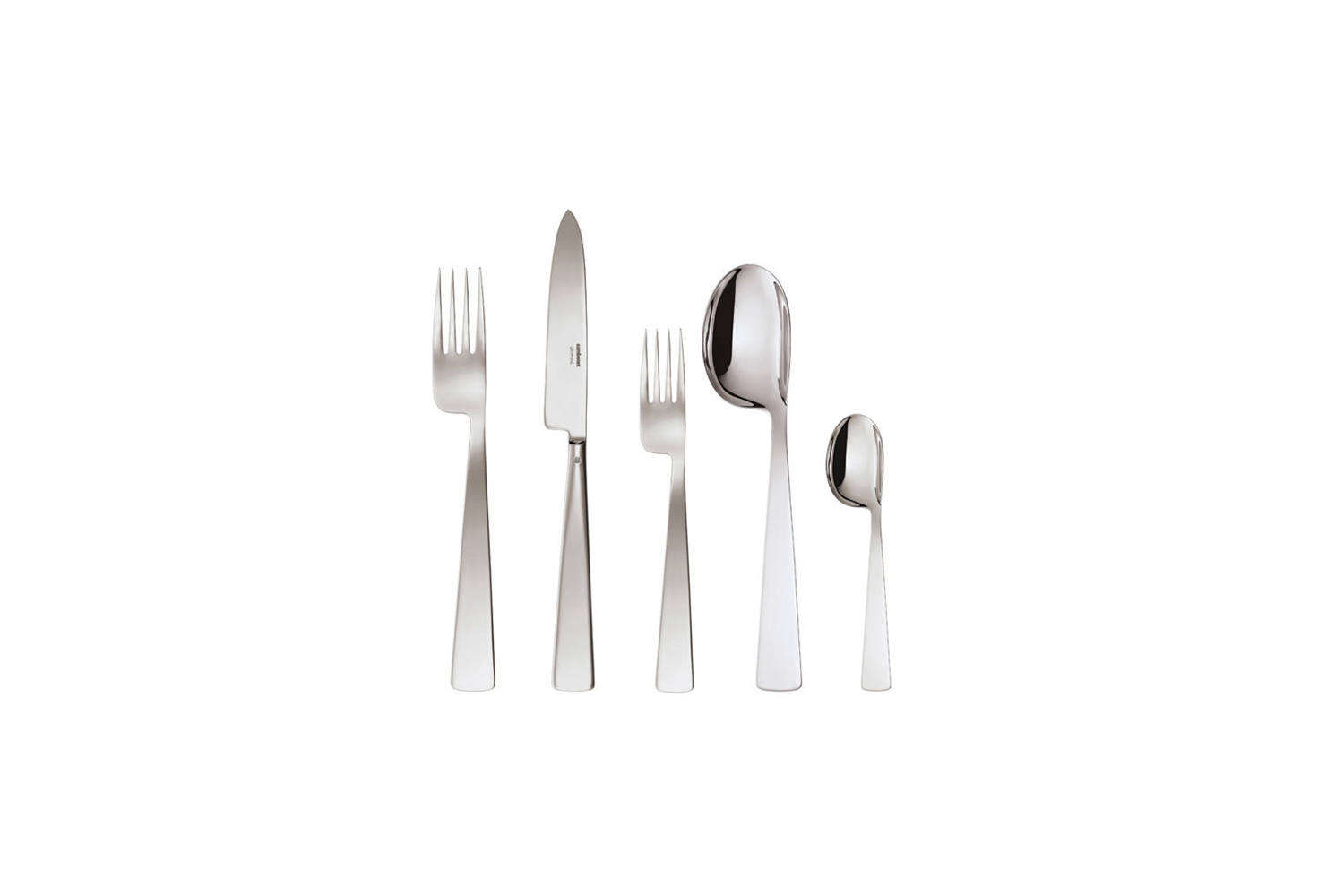
The Conca Gio Ponti 18/10 SS 5 Pcs Place Setting is what happens when an architect looks at ordinary flatware and decides the spoon has been following the rules for far too long. Designed by legendary Italian architect and industrial designer Gio Ponti, the Conca collection transforms five familiar dining tools into small pieces of functional sculpture.
Made by Sambonet from polished 18/10 stainless steel, this five-piece flatware set balances mid-century Italian design with practical everyday durability. It is elegant enough for a formal dinner, interesting enough for a design collector, and sturdy enough for Tuesday-night pasta. That last qualification matters because beautiful tableware is less impressive when it spends its entire life hiding in a velvet-lined drawer.
This in-depth guide explores the set’s design history, materials, included pieces, ergonomics, maintenance requirements, styling possibilities, value, and real-world ownership experience.
Product identity, material, finish, composition, and set contents verified through Sambonet’s official collection and product information.
What Is the Conca Gio Ponti 5-Piece Place Setting?
The Conca Gio Ponti place setting is a single-person flatware set from Sambonet’s Gio Ponti Conca collection. The standard mirror-polished version includes five pieces:
- One table fork
- One table knife
- One dessert fork
- One dessert spoon
- One teaspoon
This particular version uses a solid-handle, one-piece knife rather than the more elaborate hollow-handle Orfèvre knife available in other Conca configurations. The monobloc construction eliminates the joint between the handle and blade, giving the knife a substantial, unified feeling in the hand.
The mirror finish is produced through mechanical polishing that smooths the stainless-steel surface until it becomes highly reflective. It catches candlelight beautifully, although it also catches fingerprints with the dedication of a detective collecting evidence.
Quick Product Overview
| Designer | Gio Ponti |
|---|---|
| Manufacturer | Sambonet |
| Collection | Gio Ponti Conca |
| Material | 18/10 stainless steel |
| Finish | Mirror-polished steel |
| Number of Pieces | Five |
| Place Settings | One |
| Knife Construction | Solid-handle monobloc |
| Dishwasher Safe | Yes, according to the manufacturer’s care guidance |
The Story Behind Gio Ponti’s Conca Flatware
Gio Ponti was not merely a product designer. Born in Milan in 1891, he worked across architecture, furniture, ceramics, glass, lighting, interiors, publishing, and industrial design. He founded the influential design magazine Domus in 1928 and remained one of the most energetic voices in twentieth-century Italian design.
Ponti’s projects ranged from the Pirelli Tower in Milan to furniture, tableware, decorative objects, and the building now known as the Martin Building at the Denver Art Museum. His work frequently combined apparently opposite ideas: industrial production and hand craftsmanship, rational planning and playful decoration, tradition and experimentation.
The Conca flatware concept emerged during the early 1950s and is commonly associated with Ponti’s 1955 design for the table. Instead of decorating a conventional fork or spoon, he reconsidered how each utensil interacted with the human hand, plate, and food.
The result was not conventional symmetry. Conca’s utensil heads sit slightly off-center from their handles. The junctions appear asymmetrical, and several pieces have subtle triangular transitions. The effect is unusual but controlled, like a perfectly tailored suit with one unexpectedly brilliant button.
Gio Ponti’s career and the historical significance of Conca were synthesized from the Denver Art Museum, Domus, Sambonet, and Gio Ponti’s official store.
Why the Conca Design Looks So Different
Purposeful Asymmetry
Most flatware is visually centered: handle, neck, and utensil head align along one predictable axis. Conca gently disrupts that arrangement. The bowls and tines appear to lean or shift to one side, creating a lively profile without making the pieces difficult to use.
This asymmetry gives the set its identity. Viewed from across the room, the flatware looks streamlined and polished. Viewed closely, it reveals small geometric surprises. It is modern without resembling laboratory equipment and artistic without requiring guests to ask, “Which end am I supposed to hold?”
A Shorter Knife Blade
Ponti studied the way diners actually cut food. Because much of the cutting action occurs near the blade’s tip, the Conca knife uses a relatively short, angled blade. This concentrates the design around the functional area instead of adding unnecessary length simply because traditional knives have always been shaped that way.
The solid-handle version feels firm and straightforward. Buyers who prefer the lighter balance and artisanal construction of a hollow-handled knife may want to compare it with the Orfèvre version, but the monobloc model is arguably better suited to frequent everyday use.
Short Tines and a Concave Fork
The fork reflects another observation about dining habits: diners usually engage food with the tips of the tines. Conca therefore uses relatively short tines and a broader concave area behind them. The shape can help hold sauces, grains, and small bites instead of merely stabbing food like a tiny four-pronged trident.
Spoons Inspired by a Shell-Like Form
The spoons are among the collection’s most recognizable pieces. Their bowls are generously hollowed and subtly shell-like, reinforcing the meaning of “Conca,” a word associated with a basin or concave form. The unusual transition from handle to bowl makes each spoon look almost organic.
Design writers have repeatedly included Conca in selections of historically important or sculptural flatware, highlighting its asymmetrical geometry and distinctive utensil heads.
Design details and critical recognition were verified through Domus, The Strategist, and Remodelista.
Understanding the 18/10 Stainless Steel
The “18/10 SS” in the product name refers to the approximate chromium and nickel content of the stainless-steel alloy. The steel contains about 18 percent chromium and 10 percent nickel.
Chromium supports corrosion resistance by helping form a protective surface layer. Nickel contributes to the alloy’s smooth appearance, durability, and silvery luster. In flatware, 18/10 stainless steel is commonly associated with premium construction because it offers an appealing combination of shine, strength, stain resistance, and relatively simple maintenance.
Stainless does not mean magically immune to every mark known to civilization. Harsh chemicals, prolonged exposure to acidic or salty food, damp storage, or poor dishwasher practices can still cause staining or corrosion. Under normal household conditions, however, quality 18/10 stainless steel is highly practical.
The standard meaning of 18/10 stainless steel was checked against Lenox flatware guidance and Sambonet material information.
How the Conca Place Setting Feels in the Hand
Flatware comfort depends on more than weight. Balance, handle width, edge finishing, bowl depth, and the relationship between the working end and the handle all influence the experience.
Conca’s pieces feel more substantial than thin stamped cafeteria utensils, but they are not excessively bulky. The smooth handles rest comfortably against the fingers, while the polished edges avoid the sharp, unfinished sensation sometimes found in inexpensive sets.
The asymmetry is visually obvious but generally less dramatic during use. After a few bites, the utensils feel intuitive. The fork’s concavity becomes particularly noticeable with risotto, sauced vegetables, soft grains, or dishes that sit somewhere between “solid food” and “possibly soup.”
The mirror finish adds a luxurious tactile quality, though it may feel slippery when covered in oil or sauce. This is not unique to Conca; highly polished stainless flatware naturally offers less grip than heavily textured or matte handles.
How to Style Conca Gio Ponti Flatware
With Minimalist White Dinnerware
White porcelain allows the unusual silhouettes to become the table’s main visual feature. Use a plain white plate, neutral linen napkin, and clear glassware. The result feels modern, gallery-like, and clean without becoming cold.
With Mid-Century Modern Décor
Conca works naturally beside teak, walnut, smoked glass, and geometric textiles. A dining room does not need to become a complete 1955 time capsule, but a few warm woods and softly curved accessories complement Ponti’s design language.
With Colorful Italian-Inspired Tableware
The polished steel also pairs beautifully with colorful ceramics, patterned linens, and boldly shaped serving dishes. Ponti was not afraid of decoration, so there is no rule requiring the surrounding table to whisper politely in beige.
For Formal Entertaining
Despite its modern profile, the set is polished enough for holidays, anniversaries, dinner parties, or wedding tables. Its unconventional geometry gives formal place settings personality while avoiding ornate scrollwork or decorative motifs that may clash with contemporary dishes.
Cleaning and Caring for the Mirror Finish
Sambonet identifies the mirror-polished stainless-steel set as dishwasher safe. For the best long-term appearance, follow a few practical habits:
- Wash the pieces before their first use with warm water and a neutral detergent.
- Do not leave salty, acidic, or strongly colored food residue on the flatware for extended periods.
- Use a mild liquid dishwasher detergent suitable for cutlery.
- Avoid overcrowding the utensil basket, where pieces may rub against each other.
- Remove the flatware soon after the dishwasher cycle finishes.
- Dry with a soft cloth when water spots remain.
- Avoid abrasive scrubbers that can create visible scratches in the mirror finish.
- Store the pieces in a clean, dry drawer or flatware organizer.
Small surface scratches may develop through normal use. On a highly polished set, they are easier to see at first, but they usually blend into a soft, consistent patina over time. Flatware is a tool, not a museum hostage. Reasonable care is appropriate; holding dinner guests at the door for a jewelry inspection is probably excessive.
Cleaning guidance was based on Sambonet’s official product-care instructions and additional stainless-steel care guidance from established American housewares publishers.
Advantages of the Conca Gio Ponti Place Setting
- Historically significant design: Conca is connected to one of the most influential figures in modern Italian architecture and industrial design.
- Distinctive appearance: Its asymmetrical heads and sculptural transitions stand out from ordinary flatware.
- Premium material: The 18/10 stainless-steel construction offers durability and an attractive silvery finish.
- Practical maintenance: The mirror-steel version is dishwasher safe when cleaned according to manufacturer instructions.
- Versatile styling: It works with minimalist, formal, colorful, and mid-century table settings.
- Expandable collection: Additional Conca utensils and serving pieces can be purchased to build a coordinated service.
- Gift appeal: The set suits weddings, anniversaries, housewarmings, and design-focused collectors.
Possible Drawbacks to Consider
- One setting per package: Outfitting a table for six or eight requires purchasing multiple sets.
- Premium pricing: Buyers pay for recognized design, manufacturing quality, and the Sambonet name.
- Visible fingerprints: Mirror-polished steel shows smudges and water spots more readily than satin finishes.
- Unconventional proportions: Diners who prefer traditional long tines and symmetrical shapes may need time to adjust.
- Not especially heavy: Buyers seeking oversized steakhouse-style flatware may prefer a thicker pattern.
- Potential confusion between versions: Listings may feature solid-handle, hollow-handle, silver-plated, or colored finishes, so product details should be reviewed carefully.
Solid Handle Versus Hollow Handle Orfèvre
The standard five-piece mirror-steel setting commonly uses a solid-handle monobloc knife formed from one piece of steel. It feels sturdy, has no seam between the blade and handle, and is easy to maintain.
The hollow-handle Orfèvre version is constructed differently. Its separate blade is joined to a hollow handle using a traditional process intended to improve balance. The technique is associated with higher-end cutlery production and requires more handwork.
Choose the solid-handle version for simplicity, durability, and a lower entry price. Choose the hollow-handle version when artisanal construction, lighter balance, and luxury detailing matter more than cost.
Who Should Buy the Conca Gio Ponti Set?
This place setting is particularly suitable for:
- Fans of Italian modernism and mid-century design
- Homeowners building a refined but unconventional table setting
- Collectors who want usable examples of important industrial design
- Couples creating a wedding registry
- Hosts who enjoy conversation-starting tableware
- Gift buyers seeking something more memorable than ordinary flatware
It may be less appropriate for shoppers who need a large, inexpensive service immediately or who strongly prefer traditional flatware. Conca is not trying to disappear into the table. It wants to contribute to the experience, though thankfully it does not demand its own chair.
Is the Conca Gio Ponti 5-Piece Place Setting Worth It?
The answer depends on what you expect from flatware. A basic stainless-steel set can transport food from plate to mouth for considerably less money. From a purely mechanical perspective, that mission can be accomplished by thousands of products.
Conca offers something beyond basic transportation. It brings the thinking of a major twentieth-century designer into an object used every day. Its shapes reward close attention, its polished construction works across multiple décor styles, and its 18/10 stainless steel makes it practical enough to escape the display cabinet.
For design enthusiasts, that combination of history, beauty, and usability can justify the premium. For purely budget-driven shoppers, it will likely feel unnecessary. Both conclusions are reasonable. A spoon can be just a spoon, but sometimes it can also be a tiny piece of architecture carrying tiramisu.
Extended Experience Notes: Living With the Conca Place Setting
The following ownership-style observations are based on the set’s documented geometry, construction, finish, and care requirements rather than a claim of personal long-term ownership.
The Unboxing Experience
The first impression is likely to come from the mirror finish. Under normal indoor light, each piece reflects its surroundings sharply enough to feel more decorative than conventional flatware. When arranged together, the five utensils immediately reveal that they belong to the same design family, yet they are not identical shapes stretched into different sizes.
The second impression comes from the asymmetry. Product photographs can make the offset utensil heads appear dramatic, but in person the effect is usually more refined. The pieces do not look bent or incorrectly manufactured. Instead, they appear deliberately animated, as though each utensil moved half an inch away from convention and decided that was far enough.
The First Dinner
At the first meal, the knife may attract the most attention because its blade is shorter than that of many familiar table knives. The shape begins to make sense when cutting vegetables, chicken, soft meat, or pasta. The working tip remains useful, while the compact blade keeps the place setting visually balanced.
The fork feels different when eating food with sauce. Its broader concavity can collect more than narrow, flat-backed forks, making it effective for risotto, couscous, peas, roasted vegetables, and creamy pasta. The short tines may initially seem unusual to anyone accustomed to long American-style dinner forks, but the learning curve is minor.
The spoons provide the most obviously sculptural experience. Their shell-like bowls feel generous and visually soft. The dessert spoon suits custards, yogurt, fruit, cereal, and small portions of soup, while the teaspoon adds the same distinctive design to coffee or tea.
Hosting Guests
During a dinner party, Conca is the kind of flatware that guests may notice without being prompted. Some will recognize the designer. Others will simply ask why the fork looks pleasantly “different.” That makes the set a quiet conversation starter rather than a decorative gimmick.
It also photographs well. On white plates, dark tablecloths, or colorful ceramics, the polished finish creates crisp highlights. Anyone who regularly photographs meals for social media may discover that the flatware behaves like a supporting actor who somehow knows exactly where the camera is.
Daily Maintenance
After several meals, fingerprints and fine water marks are likely to become the main practical annoyance. The mirror surface looks best when dried or buffed with a soft cloth. Putting the pieces into a dishwasher and leaving them there overnight may create more spotting than removing them after the cycle.
Fine scratches should be expected eventually. They do not mean the stainless steel is failing; they are part of using polished metal. Owners who accept a developing patina will enjoy the set more than those who inspect every fork beneath a spotlight.
Long-Term Satisfaction
The strongest long-term advantage is that the design does not depend on a temporary color trend. Mirror-polished steel remains adaptable when dishes, linens, furniture, or dining-room décor change. The unusual geometry continues to supply character without forcing the rest of the table into one narrow style.
Over time, Conca is likely to feel less like special-occasion flatware and more like a familiar household object that happens to have an excellent résumé. That is arguably the best outcome for collectible design: not merely admired, but repeatedly washed, used, and returned to the table.
Conclusion
The Conca Gio Ponti 18/10 SS 5 Pcs Place Setting combines influential Italian design with durable, dishwasher-safe stainless-steel construction. Its asymmetrical utensil heads, compact knife, concave fork, shell-like spoons, and reflective finish distinguish it from conventional flatware without sacrificing everyday function.
It is not the cheapest way to equip a dining table, nor is it intended to be. The value lies in receiving a usable design object created by one of the twentieth century’s most important architects and industrial designers. For shoppers who appreciate thoughtful proportions, mid-century history, and tableware that refuses to be boring, Conca remains an appealing investment.
Note: Product configurations, prices, finishes, and availability may change. Confirm the exact item number and included pieces with the authorized retailer before publication or purchase.