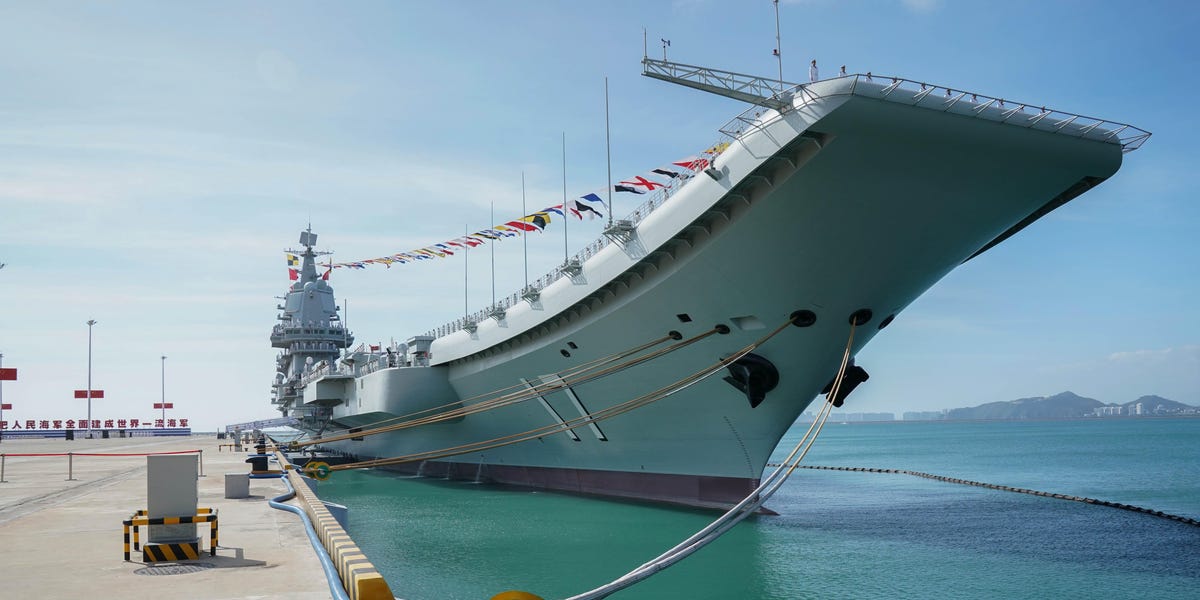
For years, China’s naval story sounded like a Pacific epic: carriers, destroyers, island chains, Taiwan, and a whole lot of maps with arrows pointing east. Then Washington started squinting at the other side of the world and asking an uncomfortable question: what if Beijing wants a foothold on the Atlantic too?
That question is what powers the debate over a possible Chinese naval base on Africa’s Atlantic coast. The headline version is dramatic, because headlines are paid to be dramatic. The reality is more interesting. This is not a story about a giant red flag already flying over some finished Chinese fortress in West Africa. It is a story about logistics, leverage, commercial ports, military access, and the slow, unglamorous way great powers build reach one pier, one runway, one training agreement, and one political relationship at a time.
In plain English, the concern is this: China may be trying to secure a port facility on Africa’s west coast that could eventually support People’s Liberation Army Navy operations in the Atlantic. If that happened, Beijing would gain more than bragging rights. It would gain options. And in military strategy, options are the currency everybody wants to hoard.
What the Atlantic-base story actually means
When people hear the phrase “naval base,” they often imagine a full-blown overseas compound with barracks, missile batteries, dry docks, radar arrays, and a lot of stern men in uniform pretending not to notice satellites. But modern military access can be much fuzzier than that. A future Chinese Atlantic foothold might begin as a dual-use port, a logistics facility, a replenishment point, or a supposedly commercial site with infrastructure that just so happens to fit warships very nicely.
That is why the debate is not really about whether someone has unveiled a shiny sign that says Welcome to PLA Navy Atlantic Headquarters. It is about whether a commercial port can become militarily useful. Can ships refuel there? Can they reload supplies? Can they receive maintenance? Can intelligence teams operate nearby? Can the host nation quietly permit Chinese military access during a crisis? Those questions matter more than the label on the gate.
The Pentagon has long warned that China wants a global network of logistics and basing options, not simply one lonely outpost far from home. Its first confirmed overseas military base in Djibouti changed the old assumption that Beijing would never station troops abroad in any serious way. After Djibouti, every Chinese-built or Chinese-financed port started looking a little more strategic. Maybe not scary on day one, but certainly worth a second look.
Why the United States cares so much
From Washington’s point of view, a Chinese military foothold on Africa’s Atlantic coast would be a strategic shock, even if it began modestly. The Atlantic is not just water with better PR than the Indian Ocean. It is the maritime space that links North America, Europe, West Africa, South America, and vital undersea cables and shipping routes. A Chinese naval presence there would mark a symbolic and operational expansion of Beijing’s reach beyond the Indo-Pacific.
Geography is not a footnote
A base on Africa’s west coast would place Chinese naval activity closer to Atlantic trade routes and closer to the Western Hemisphere than its existing overseas military footprint. It would not magically put Chinese carrier groups off Miami next Tuesday morning. That kind of panic belongs in cable-news cosplay. But it would help China sustain deployments farther from East Asia, collect intelligence in a new theater, and complicate U.S. assumptions about where competition with Beijing can happen.
That is why U.S. commanders have spoken so bluntly. Their concern is not theatrical. It is logistical. A port that allows ships to rearm, repair, and resupply can turn occasional presence into repeat presence. Repeat presence becomes routine access. Routine access becomes influence. And influence, if left unattended long enough, tends to become infrastructure.
Logistics beat slogans every time
Warships are impressive, but warships without fuel, spare parts, food, ammunition, and friendly port access are basically very expensive floating mood swings. China’s navy has grown rapidly, yet global naval reach still depends on a support network. That is one reason basing matters so much in the first place. Countries do not become true long-range maritime powers through speeches alone. They do it through dry docks, replenishment facilities, supply chains, and permissions negotiated behind closed doors.
Why Equatorial Guinea keeps showing up in the conversation
If this story had a recurring co-star, it would be Equatorial Guinea. For several years, U.S. reporting and analysis have treated the country as a prime candidate for a future Chinese Atlantic facility. The reasons are not mysterious. Equatorial Guinea sits on the Gulf of Guinea, an area tied to energy, shipping, and broader security competition in West Africa. It also has Chinese-built port infrastructure and a political system that is not exactly famous for being allergic to opaque deals.
The port of Bata is frequently mentioned because it is commercially useful, physically significant, and strategically located. In the strategic imagination of Washington, it looks less like a random harbor and more like the kind of place that could evolve from civilian infrastructure into military logistics access. That does not prove a Chinese base exists there. It does explain why the location appears in report after report.
Equatorial Guinea also illustrates a larger truth about geopolitics: small states can become very large chess squares. When major powers compete, countries that control ports, coastlines, minerals, and diplomatic recognition suddenly become everyone’s favorite “important partner.” The country’s leadership knows that. China knows it. The United States knows it. Nobody in this story is accidentally standing where the spotlight lands.
Why Gabon entered the chat
More recently, Gabon has become part of the same strategic conversation. That matters because it suggests Washington no longer sees this as a one-country rumor. Instead, it sees a regional pattern: Beijing exploring West African options for military access on or near the Atlantic coast, while the United States tries to block that access through diplomacy, aid, security cooperation, and good old-fashioned strategic persuasion.
Gabon is attractive for several reasons. It has coastline, political importance in Central Africa, and long-standing economic ties with China. Beijing’s broader approach in Africa blends infrastructure, commerce, military diplomacy, training, and elite-level political engagement. So when Gabon began surfacing in official and media reporting as a possible site of Chinese interest, it reinforced the idea that China is not betting on a single throw of the dice. It may be cultivating multiple pathways to the same strategic outcome.
That is how smart powers behave. If one door stays closed, they knock on the next one down the street.
This is bigger than one port
The Atlantic-base story makes the most sense when placed inside China’s wider global port strategy. Across Africa, Chinese firms have played roles as builders, financiers, operators, or stakeholders in a large number of ports. Most of those facilities are commercial. That point matters. But commercial does not always mean strategically harmless.
In modern geopolitics, dual-use infrastructure is the gift that keeps on alarming. A port can serve trade by day and offer military utility by design. Warehousing, dredging depth, fueling capacity, access roads, intermodal connections, maintenance space, and pier size all matter. A state-owned company does not need to hang camouflage netting over cranes for strategists to start asking questions.
China’s established base in Djibouti is the obvious precedent. Beijing describes it in careful terms, but the facility gave China something priceless: a working example of how economic presence, political relationships, maritime interests, and military support infrastructure can fuse into a durable overseas position. Analysts who worry about the Atlantic are really asking whether Djibouti was chapter one rather than the whole book.
How China would benefit from an Atlantic foothold
First, there is the practical military value. Atlantic access would support longer-range naval deployments, replenishment, maintenance, and contingency operations. Even limited access could increase the tempo and duration of Chinese naval presence far from East Asia.
Second, there is the political value. A base, or base-like access arrangement, would signal that China is no longer merely a continental giant with maritime ambitions. It would show Beijing can project power across multiple oceans. That message would land in Washington, Brussels, and African capitals all at once.
Third, there is the intelligence angle. Military logistics facilities can support surveillance, monitoring, and regional awareness. You do not need a Hollywood villain lair to gather useful information. You need infrastructure, permissions, personnel, and persistence.
Fourth, there is the protection-of-interests argument. China has citizens, investments, shipping interests, commercial ties, and political relationships across Africa. Beijing often frames overseas military access as necessary to protect those interests, support evacuations, contribute to peacekeeping, or secure sea lanes. That narrative may sound tidy, but tidy narratives are often how enduring military roles are sold.
How much of this is proven, and how much is inference?
This is where the conversation needs a cold shower. China has one confirmed overseas military base in Djibouti. That is fact. Reports of Chinese interest in Equatorial Guinea and Gabon are persistent, serious, and supported by U.S. official concern. That is also fact. But a completed Atlantic naval base is not a confirmed reality. Not yet.
Some analysts argue Washington may overstate the immediacy of the threat. Others point out that even if Beijing wants such a facility, building a truly useful Atlantic support network would still be difficult. A single port, by itself, does not create instant global dominance. Naval operations need depth, redundancy, escorts, maintenance chains, diplomatic reliability, and a broader web of access agreements. In other words, a base is important, but it is not a magic wand with a pier attached.
That skepticism is healthy. Strategic analysis should not become fan fiction. At the same time, dismissing the issue would be equally careless. Great-power competition often begins with rumors that later turn out to be rehearsal notes.
What African states get out of the competition
African countries are not props in this drama. They have agency, incentives, and bargaining power. Governments on the Atlantic coast can use U.S.-China competition to secure funding, military aid, diplomatic attention, infrastructure, or political support. That does not make them passive. It makes them rational.
From their perspective, a Chinese port project may promise investment and modernization. A U.S. diplomatic push may promise security support and broader partnership. Leaders can play one side against the other, hedge between them, or simply keep everybody guessing. For smaller states, ambiguity can be a very profitable foreign policy.
That is one reason the issue is so sticky. Washington may want a simple answer: yes or no, base or no base. But politics in the region rarely operates like a yes-or-no flowchart. Leaders may prefer strategic vagueness, because vagueness keeps options open and outside powers attentive.
The bigger Atlantic picture
The most important point is that this story is not really about concrete. It is about the changing map of Chinese power. Beijing’s rise at sea is moving from coastal defense to sustained far-seas presence. The Atlantic question is simply the latest stress test of how far that transition can go.
If China eventually secures military access on Africa’s Atlantic coast, the result would not be an instant naval revolution. But it would confirm a trend: China is no longer satisfied with being a Pacific power that occasionally sails elsewhere. It wants the infrastructure of a global maritime power. And global maritime powers do not like leaving entire oceans off their résumé.
So yes, the phrase “China trying to build an Atlantic naval base” sounds dramatic. But the underlying issue is even more important than the headline. It is not just about one port in one African country. It is about whether the Atlantic is becoming another arena where China can convert commercial presence into strategic position.
That is a much bigger story. Also, unfortunately for everyone who hoped geopolitics might become less stressful, it is a much longer story too.
Related experiences and real-world lessons from the Atlantic-base debate
One of the most revealing experiences tied to this topic is watching how a commercial port slowly changes personality in the eyes of outside powers. At first, the conversation is about development: bigger berths, modern cranes, trade capacity, jobs, and investment. Then military planners begin noticing different details. How deep is the harbor? How large is the turning basin? Is there warehouse space nearby? Can fuel be stored safely? Is there room for repair crews, secure communications, and visiting naval personnel? The same port that looked like an economic story in year one can look like a strategic story in year three. Nothing magical happened. People just started asking harder questions.
Another recurring experience is how small and medium-sized states behave when major powers suddenly care very deeply about them. Governments in strategically located countries quickly discover that attention is negotiable. One side offers infrastructure. Another offers security cooperation. A third offers diplomatic recognition, military training, or elite access. Leaders learn that ambiguity can be useful. They do not always have to say yes. Sometimes simply not saying no keeps aid, visits, and promises flowing. That is a familiar pattern in international politics, and it helps explain why rumors around ports in places like Equatorial Guinea or Gabon can persist for years without producing a final public answer.
There is also the experience military professionals know well but civilians often underestimate: presence depends on plumbing. Not the glamorous kind, either. Fuel hoses, spare parts, secure storage, cranes, maintenance teams, legal permissions, supply schedules, and access agreements do more to shape naval power than dramatic speeches about destiny. When analysts talk about China’s possible Atlantic foothold, they are often really talking about the grind of sustainment. A navy becomes globally relevant not when it sails somewhere once, but when it can keep coming back without begging every time for gas, food, repairs, and political approval.
Finally, there is the diplomatic experience of realizing that competing with China in Africa cannot be done on outrage alone. U.S. officials may sound alarmed by a possible Chinese Atlantic facility, but alarm is not a strategy. Countries on Africa’s west coast judge outside partners by what they build, fund, train, and maintain. They compare promises with delivery. That means the Atlantic-base issue is also a lesson in statecraft: if Washington wants to prevent unwanted Chinese military access, it has to offer something more persuasive than a worried expression and a folder labeled “serious concern.” In that sense, the debate over an Atlantic naval base is not just a military story. It is an experience in how modern influence really works: slowly, materially, politically, and often through ports that look commercial until history decides otherwise.