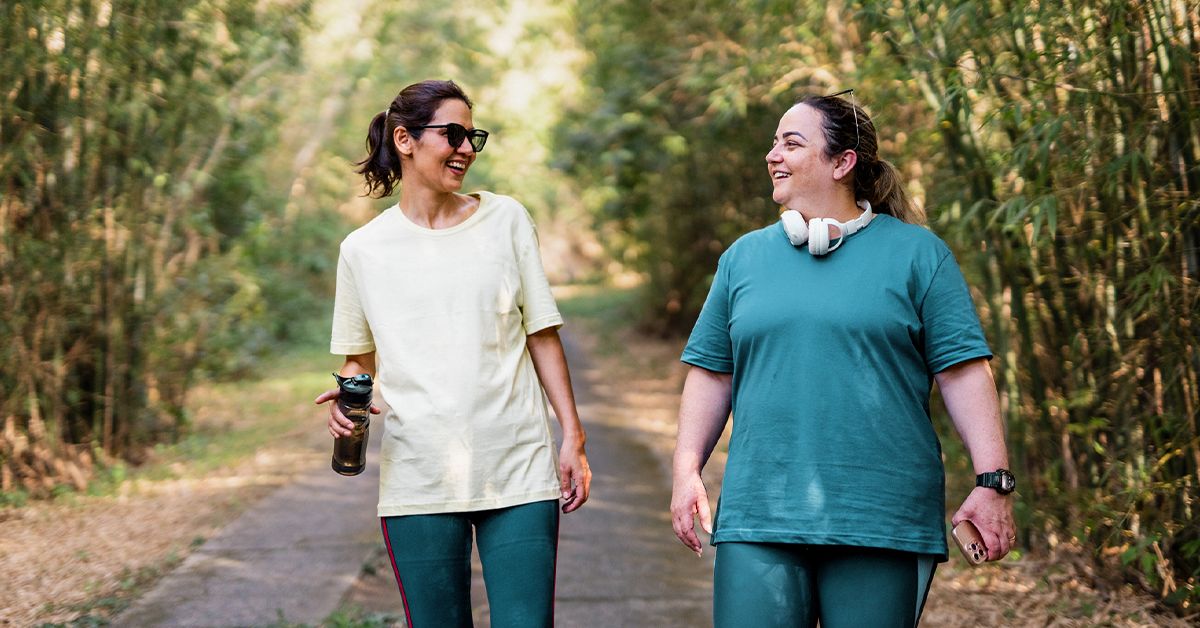
If you’ve ever thought, “I should really exercise,” and then immediately exercised your right to remain seatedgood news. Your heart doesn’t need a dramatic montage with sweat flying in slow motion. Sometimes it just wants you to take a 15-minute walkthe kind of time you can lose scrolling for “one more” video, except this one actually pays dividends.
New research suggests that how you accumulate your steps may matternot just how many you get. Specifically, getting your steps in longer, uninterrupted bouts (think 10–15 minutes or more) may be linked to a meaningfully lower risk of cardiovascular events and even death compared with lots of very short strolls spread through the day. Translation: your heart seems to like a walk that has a beginning, a middle, and an endnot a series of tiny hallway cameos.
Why a 15-minute walk is having its moment
“Daily steps” have become the health world’s favorite scoreboard. But a growing body of evidence says the pattern matters: a sustained walk can keep your heart rate elevated long enough to trigger more of the benefits we associate with aerobic activity. That doesn’t mean short bursts are uselessmovement is still movement. It just means that if you can turn some of your daily steps into a purposeful 15-minute bout, your cardiovascular system may send a thank-you note (in the form of better numbers at your next checkup).
This fits nicely with the bigger, long-standing message from major health organizations: some activity is better than none, and more brings more benefits. If 150 minutes per week of moderate activity feels like a mountain right now, 15 minutes a day is a very climbable hilland it can start changing risk factors sooner than you might think.
Cardiovascular disease 101 (the quick, useful version)
Cardiovascular disease (CVD) is an umbrella term for conditions that affect the heart and blood vessels. It includes things like coronary artery disease (narrowed or blocked heart arteries), heart attack, stroke, heart failure, and rhythm problems. When people say “heart disease,” they often mean one major slice of the CVD piebut the whole pie matters.
Here’s why this topic refuses to be ignored: cardiovascular disease remains a leading cause of death in the United States. Coronary heart disease is the most common type, and major risk factorslike high blood pressure, unhealthy cholesterol, diabetes, smoking, excess weight, and inactivityare common too. The good news is that many of these are modifiable. You can’t change your birthday or your family history, but you can change what your average Tuesday looks like.
The usual suspects: major CVD risk factors
- High blood pressure (often has no symptoms, which is rude)
- High LDL (“bad”) cholesterol and low HDL (“good”) cholesterol
- Smoking (including exposure to secondhand smoke)
- Diabetes and insulin resistance
- Overweight/obesity and high waist circumference
- Physical inactivity and lots of sitting
- Chronic stress and poor sleep (sneaky, but real)
A daily walking habit helps because it doesn’t just “burn calories.” It nudges multiple risk factors in the right direction, often at the same timelike a multitool for your arteries.
How walking protects your heart (without requiring fancy equipment)
1) Blood pressure: less resistance, less strain
Regular aerobic activity can help lower blood pressure over time. One reason is mechanical: as your cardiovascular fitness improves, your heart can pump more efficiently, and your blood vessels can become better at dilating when needed. Even modest reductions in blood pressure matter because high blood pressure is a major driver of heart attack and stroke risk.
2) Cholesterol and triglycerides: improving the “lipid traffic”
Movement supports healthier cholesterol patternsoften by improving HDL and helping manage triglyceridesespecially when paired with heart-healthy eating and other lifestyle changes. You’re essentially improving how your body transports fats through the bloodstream. Less “traffic jam” in the arteries means less plaque buildup over the long run.
3) Blood sugar and insulin: helping your body use fuel better
Walkingparticularly at a brisk paceencourages your muscles to pull glucose from the blood and improves insulin sensitivity. That helps reduce risk for type 2 diabetes and metabolic syndrome, both of which sharply increase cardiovascular risk. If you already have diabetes, activity supports better control (and your heart is very invested in that outcome).
4) Weight and waist size: the slow, steady change that lasts
Walking won’t out-argue an entire diet of ultra-processed snacks by itself, but it can meaningfully support weight management over time. It also tends to be easier to stick with than “all-gas-no-brakes” workouts, which is a big deal because consistency beats intensity when we’re talking about months and years.
5) Stress response: turning down the volume
Exercise can reduce stress hormones and improve mood, which matters because chronic stress can keep your body in a more inflammatory, higher-pressure state. A 15-minute walk also acts like a “pattern interrupt” for your dayespecially if your routine includes long stretches of sitting and a brain full of tabs (both literal and emotional).
What the study found: why longer walking bouts may beat “step snacking”
The headline takeaway from recent research: among people who were not meeting typical activity targets, those who accumulated steps in longer bouts (such as 10–15 minutes or 15 minutes or more) had lower rates of cardiovascular events and lower all-cause mortality than those who accumulated steps mainly in very short bouts (under five minutes).
A simple snapshot of the research design
Researchers analyzed a large group of older adults who were considered “suboptimally active” based on daily step counts. Participants wore wrist accelerometers for about a week, allowing researchers to see not only total steps, but also how those steps were distributed throughout the dayshort bursts versus longer, continuous walks. Then the researchers followed outcomes over years, tracking cardiovascular events and mortality.
So what does “significantly lowers risk” mean here?
In this dataset, people whose steps were gathered in longer bouts had notably lower cumulative rates of cardiovascular disease events and death over follow-up than those whose walking happened mostly in ultra-short bursts. The pattern appeared especially relevant for people who were more sedentary overall.
Importantly, this type of study is observational. It can show strong associations, but it can’t prove that a 15-minute walk causes fewer heart attacks all by itself. Still, the findings line up with something clinicians have said for years: raising your heart rate for a sustained period tends to deliver more cardiovascular conditioning than constantly starting and stopping.
Why longer bouts might have an edge
- More sustained heart-rate elevation, supporting cardiorespiratory fitness
- More continuous muscle engagement, improving glucose uptake and circulation
- Better “training signal” for blood vessel function and stress regulation
- Habit clarity: a deliberate walk is easier to remember and repeat than “I guess I moved a little?”
You don’t have to pick one style forever, by the way. If your day is chaotic, short walks still help break up sitting. The “bonus move” is to add at least one 15-minute continuous walk most days.
How to do a heart-smart 15-minute walk (that actually feels doable)
Step 1: Use the “talk test” to find the right intensity
A moderate-intensity walk usually means you can talk, but you don’t want to sing. (If you can belt a chorus without breathing harder, you’re strolling. If you can’t get out a sentence, you’re basically auditioning for a track team.) Brisk walking is often recommended as a practical form of moderate-intensity activity.
Step 2: Warm up and cool downinside the same 15 minutes
No, you don’t need to dedicate a separate 20 minutes to warming up for your 15-minute walk. Try this:
- Minutes 1–2: easy pace, let your body “wake up”
- Minutes 3–13: brisk pace (talk test zone)
- Minutes 14–15: ease back down, breathe, reset
Step 3: If 15 minutes feels like too much, build toward it
Start where you are. If you can do 5 minutes today, do 5 minutes. Then add 1–2 minutes every few days. Consistency matters more than heroics. The goal isn’t to “win walking.” The goal is to make your cardiovascular system less likely to surprise you later.
Step 4: Make it painfully convenient
The best walking routine is the one that survives your real life. A few ways to “trap” yourself into success:
- Habit-stack: walk right after lunch or after dropping off a sibling/kidsame trigger, same time
- Lower friction: keep shoes by the door (not in a box, not in a closet, not in a different zip code)
- Make it pleasant: a podcast, music, or a friend you actually like
- Track the streak: a calendar X, an app, or a note on your phonetiny accountability works
How this fits with official activity guidelines
Major U.S. guidelines commonly recommend that adults aim for about 150 minutes per week of moderate-intensity aerobic activity (or 75 minutes vigorous), plus muscle-strengthening activity on two days per week. A 15-minute daily walk adds up to 105 minutes per week, which is a strong startespecially if you’re currently near zero.
Think of 15 minutes as a minimum effective dose for building momentum. Once it’s a habit, you can nudge it upward: 20 minutes, 25 minutes, or two 15-minute walks on some days. Your heart likes upgrades, but it loves consistency.
Practical examples: what “15 minutes a day” looks like in real schedules
The desk-day plan
Put a 15-minute walk on your calendar right after lunch. You’ll get movement, a mental reset, and you might return to your screen slightly less convinced that every email is a personal attack.
The busy household plan
Walk during an after-dinner cleanup window: one person handles dishes while the other walks, then swap the next day. Bonus: it becomes a built-in decompression ritual, which can lower stress and improve sleep.
The “I’m just starting” plan
Start with 8 minutes for a week. Then 10. Then 12. Then 15. You’re not behindyou’re building. If joint pain or balance is an issue, flatter routes and supportive shoes can help, and a clinician can guide safer progression.
Safety notes (because your heart likes bravery, but not recklessness)
Walking is generally safe for most people, but if you have known heart disease, significant symptoms (like chest pain, fainting, or unusual shortness of breath), or multiple risk factors, it’s smart to talk with a healthcare professional about the best way to start and progress. Also: if you’re new to exercise, increase speed and time gradually.
The bottom line
A 15-minute daily walk isn’t a magic spellbut it’s a surprisingly powerful, low-cost lever for lowering cardiovascular risk. New evidence suggests that longer, continuous walking bouts may offer extra protection compared with piling up steps only in tiny fragments, especially for people who aren’t meeting typical activity goals.
If you want a simple, non-intimidating place to begin heart-healthy change, this is it: lace up, step outside (or pace indoors), and walk with purpose for 15 minutes. Your future self’s cardiovascular system would like to RSVP “yes.”
Experiences: What a 15-minute walking habit feels like in real life
The science is helpful, but behavior change usually happens in the messy space between “I know” and “I did.” So here are a few realistic, experience-based snapshotscomposite examples that reflect what many people report when they build a 15-minute daily walk into normal life. The details differ, but the patterns are surprisingly consistent.
Experience #1: The “my brain is too loud” lunchtime walk
One of the first things people notice isn’t physicalit’s mental. A short, brisk walk often feels like taking your mind out of a crowded room. The beginning can be awkward: you’re still thinking about what you didn’t finish, what you forgot to say, what you should’ve done differently in 2019. But around minute five, something shifts. Your breathing gets more rhythmic, the mental noise drops a notch, and the walk becomes a moving reset button.
The surprising part is how small this habit is. Fifteen minutes doesn’t require a new identity (“I’m a fitness person now”). It requires a pair of shoes and a decision. People who stick with it often say the walk starts to feel protectivelike a boundary in the day that keeps stress from stacking into a tower that falls over at night.
Experience #2: The “I’m not athletic” starter plan that finally sticks
A common experience for beginners is underestimating how much walking can count. Many assume that if they aren’t drenched in sweat, it doesn’t matter. But walking is sneaky: it improves consistency because it’s accessible, then the consistency is what improves health. The first week can feel anticlimacticno fireworks, no dramatic transformation. Just a small daily promise kept.
What changes next is usually confidence. People often start by choosing an easy loop: around the block, through a parking lot, up and down a hallway, or inside a store on a quiet morning. They pick a pace that feels “brisk-ish,” using the talk test as a guide. After a couple of weeks, the walk stops feeling like a task and starts feeling like something they miss when it doesn’t happenlike forgetting to brush your teeth. That’s when it becomes a real habit: not perfect, but automatic.
Experience #3: The post-dinner walk that improves sleep (and mood)
Another pattern people report: walking in the evening can smooth out the transition from a busy day to actual rest. The body gets a little movement, digestion feels less heavy, and the mind has time to process the day without doomscrolling. Some people use the walk as a “closing ritual”no heavy conversations, no work calls, just a quiet loop and then back home.
Over time, the benefits feel less like “I’m exercising” and more like “I’m functioning better.” People often describe having slightly more energy, fewer tense-shoulder moments, and a more stable mood. And while weight loss isn’t guaranteed or immediate, many notice their clothes fit a bit differently or their waistline becomes easier to manage when the walk is paired with reasonable eating habits.
The most common obstaclesand what actually helps
- “I forget.” Attach the walk to a daily trigger (after coffee, after lunch, after school pickup).
- “I’m too busy.” Treat it like an appointment. Fifteen minutes is shorter than most detours you take by accident.
- “Bad weather.” Have an indoor fallback: mall laps, stairwell walks, hallway loops, or a treadmill if available.
- “I get bored.” Rotate audio: podcasts, playlists, audiobooks, or walking with a friend.
- “I start strong and quit.” Make the goal tiny: “15 minutes, most days.” Not perfect. Just repeatable.
The overall experience many people share is this: a 15-minute daily walk feels almost too simple to matteruntil it does. It’s not flashy. It’s not dramatic. But it’s the kind of small, repeatable behavior that quietly improves blood pressure, cholesterol patterns, blood sugar control, stress response, and long-term cardiovascular riskespecially when it becomes a routine rather than a random burst of motivation.