Brain-computer interfaces sound like something a screenwriter invented after three espressos and a sci-fi marathon. A tiny implant reads brain signals. A person with paralysis moves a computer cursor. Elon Musk announces “Telepathy.” Suddenly, half the internet is imagining humans downloading kung fu like The Matrix, while the other half is hiding its toaster in case artificial intelligence gets ideas.
The truth is more interestingand much less magical. Brain-computer interfaces, often called BCIs, are real medical technologies designed to translate brain activity into commands for computers, speech tools, wheelchairs, robotic arms, or other devices. Neuralink has made the field famous, but it did not invent it. Researchers at universities, hospitals, and neurotechnology companies have been working on brain implants and noninvasive BCIs for decades.
So what is fact, what is fiction, and what belongs in the “maybe one day, but please keep your helmet on” category? Let’s separate the science from the spectacle.
What Is a Brain-Computer Interface?
A brain-computer interface is a system that captures brain signals, processes them with software, and converts them into actions. In simple terms, it is a translator. The brain produces electrical activity. Sensors detect patterns in that activity. Algorithms decode the user’s intention. A computer then performs the intended action, such as moving a cursor, selecting a letter, opening an app, or controlling a robotic device.
BCIs are especially promising for people who have lost movement or speech because of spinal cord injury, amyotrophic lateral sclerosis (ALS), stroke, or other neurological conditions. In these cases, the brain may still generate signals related to movement or speech, even when the body can no longer carry out the command. A BCI attempts to bypass the damaged pathway.
Different Types of BCIs
Not all BCIs require brain surgery. They fall into several broad categories:
- Noninvasive BCIs: These use external sensors, often placed on the scalp, to record brain activity. They are safer but usually produce lower-resolution signals.
- Partially invasive BCIs: These may sit on the brain surface or in blood vessels near the brain, aiming for a balance between signal quality and surgical risk.
- Invasive intracortical BCIs: These place tiny electrodes into brain tissue, often producing stronger signals but requiring neurosurgery.
Neuralink’s implant belongs to the invasive intracortical category. Synchron’s Stentrode, by contrast, is delivered through blood vessels. BrainGate and other research groups have used intracortical implants for years in clinical studies. The field is not a one-company race; it is more like a very serious, very expensive science fair where everyone brought a robot.
What Neuralink Actually Built
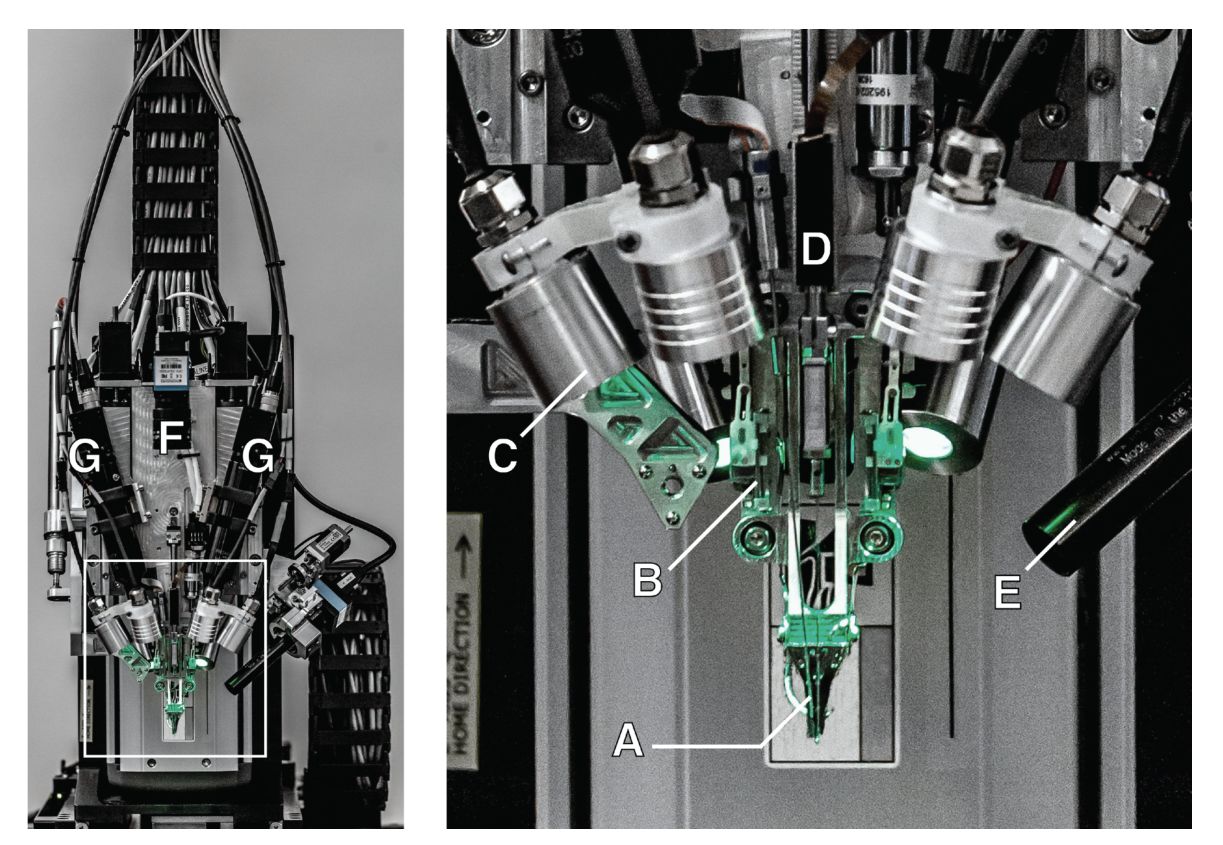
Neuralink’s N1 implant is a wireless brain-computer interface designed to record neural activity through more than a thousand electrodes distributed across flexible threads. These threads are inserted into the brain by a surgical robot, with the goal of detecting activity from neurons in movement-related areas of the cortex.
The company’s first major human study, called the PRIME Study, focuses on people with paralysis due to cervical spinal cord injury or ALS. The goal is not to make healthy people superhuman. The stated medical goal is to help people with severe motor impairment control external devices, such as computers, using their thoughts.
In January 2024, Neuralink implanted its first human participant, Noland Arbaugh, who had paralysis after a spinal cord injury. Public demonstrations later showed him controlling a cursor, playing chess, browsing, and using a computer without using his hands. That is genuinely impressive. It is also not proof that brain implants are ready for the mass market.
Fact: BCIs Can Help People Control Computers
This is the strongest and most evidence-backed part of the story. BCIs can allow some people with paralysis to control digital devices. Neuralink’s demonstration is exciting, but it stands on a long foundation of prior research.
The BrainGate consortium previously showed that people with tetraplegia could use an implanted BCI to operate a tablet, send messages, browse the web, and use common apps. Stanford-led research decoded attempted handwriting movements into text at impressive speeds. Other research teams have translated brain activity into speech-related output, giving hope to people who cannot speak.
The big takeaway: “thought control” is real in a limited, trained, task-specific sense. It does not mean the computer reads every private thought like an overcaffeinated mind detective. The system learns patterns related to intended movement or communication. The user trains with the device. The software adapts. It is closer to learning a new interface than waving a magic wand.
Fiction: Neuralink Can Read Your Mind Like a Diary
One of the biggest myths about brain implants is that they can read complex thoughts, memories, secrets, or emotional monologues. Current BCIs do not work that way. They detect patterns associated with specific intended actions, such as moving a cursor left, selecting a target, imagining handwriting, or attempting speech sounds.
That difference matters. A BCI may decode “move cursor up” after training. It does not decode, “I regret sending that email in 2017 and also I want tacos.” The brain is not a neatly labeled filing cabinet. Neural signals are noisy, distributed, personal, and constantly changing. Decoding them requires context, calibration, and limited task design.
Privacy concerns are still real. As BCIs improve, questions about neural data ownership, consent, cybersecurity, and corporate use will become more urgent. But today’s systems are not mind-reading machines. They are early medical interfaces trying to interpret narrow categories of intention.
Fact: Neuralink Had a Real Technical Setback
Neuralink’s first human implant produced remarkable demonstrations, but it also encountered a serious technical issue. The company disclosed that some of the implant’s threads retracted from the brain after surgery, reducing the number of effective electrodes and lowering performance.
Neuralink said it compensated by adjusting its recording algorithms and improving the user interface. Public reports indicate the participant continued using the system and regained useful performance. That is encouraging, but the episode is important because it shows how experimental this technology still is.
Brain tissue moves. Implants shift. Scar tissue can form. Electrodes can lose signal quality. Batteries, wireless communication, heat, infection risk, and surgical safety all matter. A viral video can show what is possible; long-term clinical data must show what is reliable.
Fiction: FDA Clearance Means the Implant Is Approved for Everyone
This is a common misunderstanding. Neuralink received permission to conduct human clinical research under an investigational device framework. That does not mean the device is approved for consumer use, available at hospitals, or proven safe and effective for the general public.
The FDA can allow investigational devices to be tested in carefully controlled studies to collect safety and effectiveness data. That is different from full approval or clearance for widespread use. Likewise, FDA Breakthrough Device designation can speed development and review for promising technologies that address serious conditions, but it is not the same as final market approval.
In plain English: the FDA has not said, “Everyone line up for a brain chip.” It has said, in effect, “This experimental device may be studied under specific conditions.” That is a very different sentence, and it comes with fewer fireworks.
What About Musk’s “Telepathy” Claim?
Musk described Neuralink’s first product as “Telepathy,” saying it could enable users to control a phone or computer just by thinking. As marketing language, it is catchy. As science language, it needs a footnote the size of a small canoe.
The factual core is this: a trained user with an implanted BCI may be able to control a cursor or digital interface through intended movement signals. That can feel like telepathy because no visible muscle movement is required. But it is not supernatural communication, and it does not transmit thoughts from one person to another.
A better description would be “brain-signal-based computer control.” Unfortunately, that name sounds like a dishwasher manual, so “Telepathy” won the branding contest.
Can Neuralink Restore Vision?
Neuralink has also promoted a visual prosthesis concept called Blindsight, which received FDA Breakthrough Device designation. The idea is to stimulate the visual cortex directly, potentially creating visual perception for people with certain forms of blindness.
This is not impossible in principle. Scientists have studied visual prostheses for decades. Electrical stimulation of visual pathways can produce perceptions such as flashes of light, known as phosphenes. However, restoring useful, high-resolution, natural vision is vastly harder than producing spots of light. The visual system is complex, and meaningful sight requires more than turning pixels on in the brain.
Claims that people blind from birth will soon see normally should be treated carefully. A future device may provide limited visual perception, navigation assistance, or simple patterns. That would still be life-changing. But “restored vision” can mean many things, from detecting light to reading a street sign. Details matter.
Can BCIs Make Humans Compete With AI?
Musk has often framed brain-computer interfaces as part of a larger future in which humans keep pace with artificial intelligence. This idea gets attention because it sounds dramatic: plug the brain into the machine, upgrade humanity, defeat the robots, celebrate with pizza.
The medical reality is much narrower. Today’s implantable BCIs are aimed at restoring lost function, not boosting healthy brains into supercomputers. A person with paralysis using a BCI to control a cursor is not merging with AI in the cinematic sense. They are using a new assistive technology to regain independence.
Could future BCIs become more powerful? Possibly. But the gap between cursor control and seamless human-AI fusion is enormous. The brain is not a USB port. Bandwidth, safety, biology, ethics, regulation, cost, and public trust all stand in the way.
Who Else Is Working on Brain-Computer Interfaces?
Neuralink receives most of the headlines, partly because Musk is a headline-generating machine with shoes. But other organizations are deeply important in the BCI landscape.
BrainGate
BrainGate is one of the most influential research efforts in implanted BCIs. Its studies have shown that people with paralysis can control cursors, robotic arms, and tablet devices using neural signals. This work helped prove that high-performance neural control is possible in humans.
Synchron
Synchron is developing an endovascular BCI called the Stentrode. Instead of opening the skull and placing electrodes directly into brain tissue, the device is delivered through blood vessels. This may reduce some surgical risks, although it may capture different types of signals than intracortical implants.
Academic Speech BCI Research
University research teams have made major advances in decoding attempted speech and handwriting. These systems could eventually help people who are unable to speak communicate more naturally and quickly.
The lesson is simple: Neuralink is a major player, but it is not the whole sport. The future of BCIs will likely come from a mix of companies, universities, hospitals, regulators, and patients brave enough to participate in early trials.
The Real Benefits: Independence, Communication, and Dignity
The most meaningful promise of BCIs is not turning humans into cyborg superheroes. It is helping people do everyday things many of us barely think about: send a message, choose music, browse the internet, talk with family, control a wheelchair, operate a smart home, or return to creative work.
For someone with severe paralysis, moving a cursor independently can be a huge gain. It can mean privacy. It can mean productivity. It can mean not needing another person to click every button. That may not sound flashy, but independence is not measured in Hollywood explosions. Sometimes it is measured in the ability to answer a text without assistance.
The Real Risks: Surgery, Reliability, and Data
Implantable BCIs carry risks. Surgery can cause bleeding, infection, inflammation, seizures, or tissue damage. Devices can fail. Electrodes can lose signal. Software can misinterpret commands. Batteries and wireless communication must be safe and dependable. Long-term durability is still one of the field’s biggest questions.
There are also social and ethical risks. Who owns neural data? Could insurance companies pressure patients toward certain technologies? What happens if a company shuts down support for an implanted device? How do we protect users from hacking, surveillance, or exploitative data practices?
These questions should not stop research, but they should slow down the hype train enough for safety checks. A brain implant is not a smartphone upgrade. You cannot toss it in a drawer when the next model comes out.
How to Evaluate Big BCI Claims
When you see a dramatic brain implant headline, ask five questions:
- Was this shown in humans or animals? Animal results can be promising, but they do not guarantee human success.
- How many participants were involved? One or two successful cases are exciting but not enough to prove broad reliability.
- What exactly did the person do? Cursor control, typing, speech decoding, and vision restoration are very different tasks.
- How long did it work? A short demo is not the same as years of safe daily use.
- What is the regulatory status? A clinical trial, Breakthrough Device designation, and market approval are not the same thing.
If a claim survives those questions, it deserves attention. If it dodges them, keep your skepticism politely plugged in.
Experiences and Practical Reflections on Brain-Computer Interfaces
To understand brain-computer interfaces clearly, it helps to imagine the experience from the user’s side rather than the investor pitch deck. A person who joins a BCI trial is not simply “getting a chip.” They are entering a demanding medical and technical process. There is screening, surgery, recovery, training, troubleshooting, and repeated testing. The user must learn how to generate consistent neural patterns, while engineers adjust the software to interpret those patterns. It is teamwork, not wizardry.
Early users often describe the technology as both thrilling and imperfect. That combination is important. A BCI may open a door to independence, but the door may squeak, stick, and require three engineers named Matt to stand nearby with laptops. The first version of a life-changing device can still be clunky. Anyone who remembers early smartphones, dial-up internet, or printers that sensed fear will understand.
One practical experience likely shared by many BCI users is the mental adjustment. Controlling a cursor through intended movement is not the same as moving a hand. The user may begin by imagining hand motions, then gradually develop a more direct sense of control. Over time, the device can feel less like an external machine and more like an extension of intention. That does not mean the person has become a robot. It means the brain is very good at learning tools, whether the tool is a pencil, a wheelchair joystick, a musical instrument, or a neural decoder.
Another experience is patience. The public sees the highlight reel: the cursor moves, the chess piece slides, the audience gasps. Behind that moment are calibration sessions, signal changes, software updates, fatigue, and occasional frustration. People with disabilities are often expected to be endlessly inspirational, but real assistive technology must respect the full human experience: excitement, boredom, inconvenience, hope, annoyance, humor, and the desire for the thing to simply work.
Families and caregivers may also experience a shift. When a person gains more direct control over communication or digital devices, the relationship can become less about constant assistance and more about collaboration. That can be emotionally powerful. Independence is not only a technical outcome; it changes daily routines, privacy, confidence, and identity.
For clinicians, BCIs create a new kind of responsibility. They must evaluate not only whether an implant works but whether it improves quality of life enough to justify surgical risk. For engineers, the lesson is humility. The brain is not a predictable circuit board. Signals change. Bodies heal. People have different goals. A system that works beautifully in a lab must survive real life: bad sleep, distractions, medical appointments, software bugs, and the sacred human right to have an off day.
For the public, the best experience is informed curiosity. It is reasonable to be amazed. It is also reasonable to ask hard questions. Neuralink and other BCI companies should be judged by transparent data, peer-reviewed results, safety records, patient outcomes, and honest communicationnot by the size of the promise or the fame of the founder.
The most grounded view is also the most hopeful one: brain-computer interfaces are not science fiction anymore, but they are not everyday medicine yet. They are experimental tools moving through a difficult, important transition. If they succeed, the first great achievement may not be superhuman intelligence. It may be something more human: giving people back a measure of choice, voice, and control.
Conclusion: The Future Is Real, But It Needs Receipts
Brain-computer interfaces are among the most exciting technologies in modern medicine. Neuralink has accelerated public attention, attracted investment, and shown memorable demonstrations of thought-based computer control. That is the fact.
The fiction is the idea that brain implants are already ready to read minds, cure blindness overnight, merge humans with AI, or turn anyone into a cybernetic genius before breakfast. Current BCIs are experimental medical devices with real promise, real risks, and many unanswered questions.
The smartest response is neither blind hype nor automatic panic. It is careful optimism. BCIs may transform life for people with paralysis, speech loss, and other serious neurological conditions. But the road from a stunning demo to a safe, affordable, widely available therapy is longand it should be. When the device goes in the brain, “move fast and break things” is not a comforting slogan.