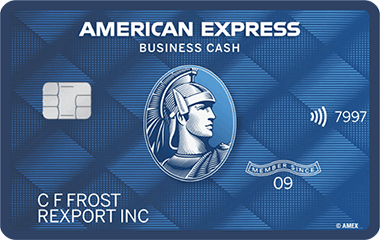
Some business tools make a dramatic entrance. A new espresso machine hisses. A delivery van beeps. A business credit card? It mostly sits in a wallet and quietly helps pay for printer toner, software subscriptions, inventory, and the occasional “how did shipping cost that much?” invoice.
That quiet usefulness is the appeal of the Blue Business Cash Card from American Express. It is built for owners who want uncomplicated rewards without memorizing rotating categories, decoding a 42-page points chart, or forming a committee to decide whether a sandwich counts as “business dining.” Its headline feature is simple: earn cash back on eligible purchases, with no annual fee.
For freelancers, side hustlers, startups, consultants, online sellers, and established small businesses with moderate card spending, that simplicity can be genuinely valuable. Still, simple does not mean perfect. The annual rewards cap, foreign transaction fee, and post-introductory APR deserve a clear-eyed look before this card becomes the chief financial officer of your backpack.
Blue Business Cash Card: The Quick Snapshot
| Feature | What It Means for a Business Owner |
|---|---|
| Annual fee | $0 annual fee for the primary card. |
| Cash back | 2% cash back on the first $50,000 in eligible purchases per calendar year, then 1% back. |
| Reward delivery | Cash back is automatically applied as a statement credit, so there is no reward dashboard treasure hunt. |
| Introductory financing | A 0% introductory APR on purchases is currently available for 12 months, subject to the offer terms. |
| Foreign transaction fee | 2.7% of each transaction after conversion to U.S. dollars. |
| Spending flexibility | Expanded Buying Power may allow certain charges above the credit limit, but approval is not guaranteed and the amount above the limit must be paid as part of the minimum payment due. |
How the Blue Business Cash Card Rewards Work
The best thing about a flat-rate business cash back card is that it does not ask you to become a part-time accountant just to earn rewards. Eligible purchases earn 2% cash back until your business reaches $50,000 in purchases during the calendar year. After that threshold, eligible purchases earn 1% back.
The calendar-year detail matters. The cap does not reset on your card anniversary. It resets with a new calendar year, which means a business with predictable purchasing cycles can plan around it. A company that places a large inventory order in December and another in January may capture the higher 2% rate on both purchases, assuming they fall within the applicable annual limit.
What the math looks like
Suppose a freelance design studio spends $24,000 in a year on software, client travel, office supplies, online advertising, and contractor expenses. At 2%, that spending produces $480 in cash back. Not enough to buy a private island, admittedly, but enough to cover a useful software subscription, a few client lunches, or a suspiciously expensive printer cartridge.
At $50,000 in annual eligible spending, the maximum value of the 2% tier is $1,000. At $80,000 in annual spending, the math becomes $1,000 on the first $50,000 plus $300 on the next $30,000, for a total of $1,300.
This rewards structure is strongest for businesses that spend steadily but do not consistently race far beyond $50,000 a year on one card. The card gives owners a dependable return on ordinary expenses without requiring their spending to match special merchant categories.
Automatic statement credits: convenient, with one trade-off
The cash back is automatically credited to your account as a statement credit. That is excellent for owners who prefer rewards to be invisible in the best possible way: they simply reduce the bill. There is no need to transfer points, choose gift cards, or remember a redemption deadline.
The trade-off is flexibility. Some business owners prefer rewards deposited into a business checking account or saved for travel. The Blue Business Cash Card is more “thank you, your bill is smaller” than “welcome to a loyalty program with seventeen redemption tabs.” For many owners, that is a feature, not a flaw.
Cash Flow Benefits and the 0% Introductory APR
The cash back is attractive, but the introductory APR can be equally important for a young or growing business. A 0% introductory APR on purchases for 12 months can create breathing room when you need to buy equipment, place an inventory order, launch a website, pay for a trade show booth, or restock the products that keep mysteriously selling out on Friday afternoon.
Used responsibly, introductory financing can help smooth out uneven cash flow. For example, a small e-commerce seller might purchase seasonal inventory before receiving revenue from holiday orders. A consultant may need a new laptop before a large contract begins. A contractor may buy materials before an invoice is paid. The card can help bridge timing gaps.
However, a 0% APR offer is not free money wearing sunglasses. It is a temporary financing period. Once the promotional period ends, any unpaid balance may begin accruing interest at the card’s variable purchase APR. The exact APR depends on the offer and creditworthiness, so owners should review the application disclosure carefully before applying.
Expanded Buying Power is not unlimited spending power
American Express may provide Expanded Buying Power, which can allow eligible cardholders to make purchases above their stated credit limit. This can be useful when a business has a large but temporary expense, such as a bulk materials order or a last-minute equipment replacement.
But this feature should not be treated like a financial trampoline. The amount available is flexible, based on factors such as account use, payment history, credit record, and financial information known to American Express. A charge above the limit can be declined. Even when approved, the amount above the limit is generally included in the minimum payment due.
In plain English: it can help during a crunch, but it is not permission to purchase a forklift because the office plant looked lonely.
Who Should Consider the Blue Business Cash Card?
The Blue Business Cash Card from American Express is especially appealing for business owners who value simplicity more than travel points, luxury benefits, or category optimization.
This card can be a strong match for:
- Freelancers and consultants with recurring spending on software, technology, advertising, professional services, and client-related costs.
- Side hustles and sole proprietors who want to separate business purchases from personal spending.
- New businesses that want a no-annual-fee card with a straightforward reward structure.
- Owners with annual card spending under or near $50,000, where the 2% tier does most of the heavy lifting.
- Businesses making large domestic purchases during the introductory APR period and capable of paying the balance down before regular interest begins.
A business does not need to be a giant corporation with a lobby fountain to benefit from a business credit card. A legitimate freelance practice, home-based business, startup, online shop, or side business may qualify, depending on the issuer’s application requirements. The most useful reason to use a business card is often operational: it separates work spending from personal spending and creates cleaner records.
That separation is not just aesthetically pleasing. It can make bookkeeping easier, simplify expense reviews, and reduce the annual panic of trying to determine whether a charge from eight months ago was for a client project or a very enthusiastic late-night snack.
Where the Blue Business Cash Card Falls Short
No business credit card deserves blind loyalty. Even a very blue card can have a few gray areas.
The $50,000 rewards cap can become limiting
The card is generous up to $50,000 in annual eligible purchases. After that, rewards fall to 1%. A business that routinely spends well above that level may eventually earn more with an unlimited 2% cash back business card, even if that alternative charges an annual fee.
For comparison, an unlimited 1.5% cash back card can become more rewarding than the Blue Business Cash Card around $100,000 in annual spending, assuming neither card has special bonus categories or promotional incentives that change the calculation. At that point, the higher uncapped rate starts doing more work than the Blue card’s front-loaded 2% tier.
It is not ideal for international business spending
The card charges a 2.7% foreign transaction fee. That can erase the value of 2% cash back in one transaction. A business that regularly buys inventory from overseas suppliers, pays international software vendors in foreign currencies, or travels outside the United States may want a card with no foreign transaction fees.
Cash back is not the same as transferable travel points
Owners who travel frequently for work may prefer a business card that earns points transferable to airline and hotel partners. Cash back is wonderfully predictable, but it generally does not create the outsized travel redemption opportunities that points enthusiasts enjoy discussing with the intensity of sports commentators.
Interest can quickly overpower rewards
A 2% cash back return is helpful. Carrying a high-interest balance for months is not. If your business expects to revolve debt long term, a lower-interest loan, line of credit, or structured financing option may be more appropriate than relying on a rewards card. Cash back should be a bonus for spending you can manage, not a tiny bandage on a very large financing problem.
Blue Business Cash Card vs. Other Business Card Options
The right business card depends less on which one has the loudest advertising and more on where your company spends money.
Choose a flat-rate cash back card when spending is mixed
If your expenses are scattered across software, shipping, utilities, supplies, client meals, ads, and random online purchases that somehow become necessary at 11:47 p.m., a flat-rate card can be easier to use than a category-heavy alternative.
Choose a category bonus card when your expenses are concentrated
A card offering elevated rewards on advertising, gas, office supply stores, shipping, telecommunications, or travel can outperform a flat 2% card when most of your business budget lands in those categories. The catch is that merchant coding can be unpredictable. A business owner may believe a purchase is “advertising,” while the card network may label it “miscellaneous internet thingamajig.”
Consider unlimited 2% cash back when spending grows
American Express now offers the Graphite Business Cash Unlimited Card, which earns unlimited 2% cash back but carries a $295 annual fee. Ignoring its other features, the simple cash back math begins to favor an unlimited 2% card over the Blue Business Cash Card at roughly $79,500 in annual spending. That threshold can shift when welcome offers, travel rewards, or extra card benefits enter the picture.
For a company spending $40,000 a year, the Blue Business Cash Card is usually the simpler and cheaper proposition. For a company spending $150,000 annually, a capped 2% rate may begin to feel like using a garden hose to fill a swimming pool.
How to Use This Amex Business Cash Back Card Wisely
The card works best when it supports a system, rather than becoming the system itself.
- Use it only for legitimate business spending. Keep personal purchases off the account whenever possible.
- Set a monthly review date. Review charges, flag questionable transactions, and confirm that subscriptions still serve a purpose.
- Save receipts and supporting records. A credit card statement is helpful, but it does not replace business documentation for tax and accounting purposes.
- Plan the 0% APR payoff before charging a large purchase. Divide the balance by the remaining promotional months and create a realistic payment target.
- Monitor the $50,000 annual threshold. Once spending exceeds the cap, compare whether another card would earn more on future purchases.
- Do not count on Expanded Buying Power. Treat it as an occasional option, not part of your normal operating budget.
Practical Experiences With the Blue Business Cash Card
The following examples are illustrative business-owner scenarios, not personal endorsements or guarantees of approval, spending capacity, or rewards.
Picture a one-person marketing consultant who works from a home office and bills several clients each month. Her recurring expenses include project-management software, video conferencing, cloud storage, online advertising, stock photography, a mobile phone bill, and occasional train tickets to meet clients. None of these expenses are glamorous. No one frames a cloud-storage invoice and hangs it on the wall. Yet together, they create a steady stream of business spending that is ideal for a flat-rate cash back card. She does not need to remember whether April is “streaming month” or whether a software subscription earns a special multiplier. She charges eligible expenses, receives automatic statement credits, and uses the reduced balance as a small offset against her operating costs. The experience is not fireworks. It is more like having a tidy desk: quietly satisfying and surprisingly helpful.
Now consider a small online retailer preparing for a busy season. The owner expects strong fourth-quarter sales but must buy packaging, inventory, labels, website tools, and promotional materials before the first holiday order arrives. The introductory 0% APR period can create valuable breathing room if the owner builds a repayment plan before making the purchases. The key word is plan. A sensible approach is to calculate the expected gross margin, estimate the monthly payment needed to clear the balance before the promotional period ends, and reserve part of each sales deposit for that payment. The dangerous approach is to stare at the available credit limit, whisper “future me will handle it,” and proceed with the confidence of a person who has never met future-me’s calendar.
A third scenario involves a growing service company with two employees. The owner adds employee cards for approved business expenses, such as fuel, client supplies, and emergency purchases. This can reduce reimbursement paperwork and give the owner a clearer picture of where company money is going. But it also introduces a management responsibility. Employee cards are convenient only when spending policies are clear. One employee may view a $24 office supply purchase as routine; another may interpret “office supplies” as a surprisingly expensive ergonomic chair. Clear limits, periodic reviews, and a simple written policy prevent awkward conversations and protect the business budget.
Finally, imagine a contractor whose spending climbs above $50,000 annually. At first, the Blue Business Cash Card feels excellent because nearly every purchase earns 2% back. As the business grows, however, more spending begins earning only 1%. That is not a failure of the card. It is evidence that the business has outgrown the card’s sweet spot. The owner can keep the card for flexible domestic purchases while opening another card for category bonuses, unlimited rewards, or travel-related expenses. A business card strategy does not need to be permanent. The best card for a business at $20,000 in annual expenses may not be the best card at $120,000. Growth changes the math, and changing the card setup is often a sign of progress rather than disloyalty.
Final Verdict: Is the Blue Business Cash Card Worth It?
The Blue Business Cash Card from American Express is one of the better no-annual-fee options for owners who want uncomplicated cash back on everyday business spending. Its 2% rate on the first $50,000 in eligible purchases per calendar year, automatic statement credits, employee-card availability, and 0% introductory purchase APR make it particularly appealing for small businesses, side hustles, and startups.
Its limitations are equally clear: rewards fall to 1% after $50,000, foreign transactions carry a fee, and carrying a balance after the introductory period can get expensive. For business owners who spend modestly, pay on time, and prefer simplicity over points gymnastics, this card can be a dependable financial sidekick. It may not wear a cape, but it can still make the expense report less painful.