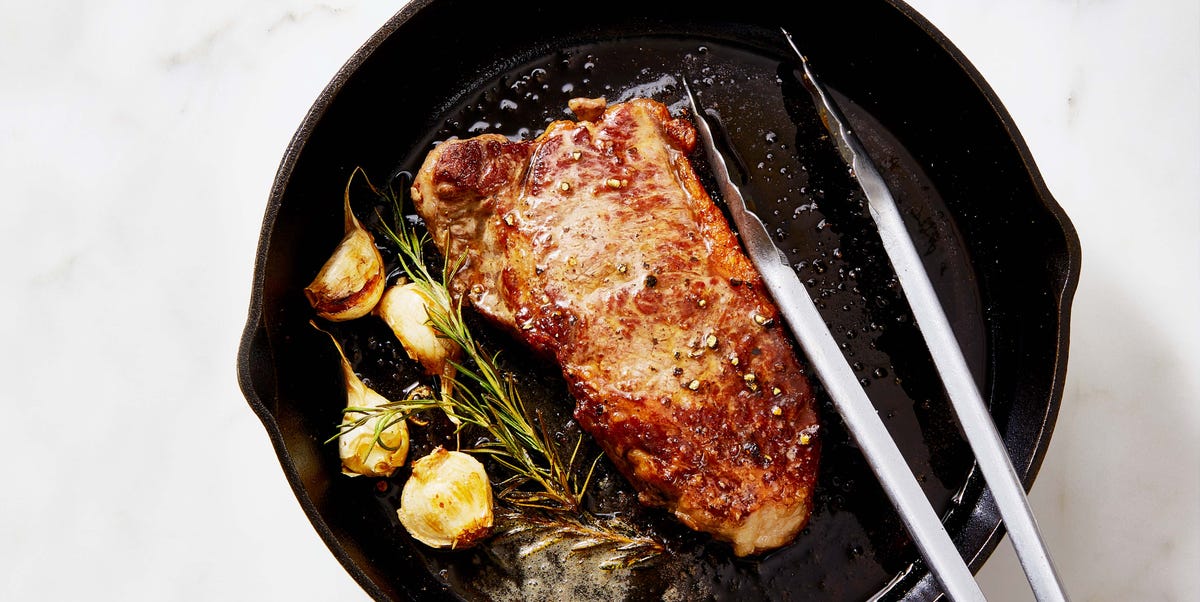
A great New York strip steak does not need a complicated marinade, a suitcase full of seasonings, or a chef dramatically shouting across the kitchen. It needs good beef, a dry surface, a properly heated skillet, and the discipline to stop cooking before the steak turns into an expensive doorstop.
This New York strip steak recipe produces a deeply browned crust, a juicy center, and a glossy garlic-herb butter finish. The method is designed for a cast-iron skillet, but you will also find instructions for grilling, oven finishing, reheating, and choosing the right internal temperature.
Why This Is the Best New York Strip Steak Recipe
New York strip sits in the sweet spot between tender filet mignon and richly marbled ribeye. It has a bold beef flavor, a pleasantly firm bite, and usually enough exterior fat to keep things interesting without turning dinner into an oil-slicked adventure.
The cut comes from the short loin, an area known for naturally tender steaks. A boneless strip is commonly called a New York strip, while closely related bone-in versions may be labeled shell steak, Kansas City strip, or club steak. Whatever the butcher calls it, look for even thickness, creamy white fat, and thin lines of marbling running through the meat.
Research basis for the cut and recommended cooking methods.
This recipe succeeds because it concentrates on five details that matter:
- The steak is thick enough to develop a crust before the center overcooks.
- The surface is dried thoroughly to encourage browning rather than steaming.
- A heavy skillet is preheated before the oil and steak are added.
- Butter, garlic, and herbs enter near the end so they flavor the meat without burning.
- An instant-read thermometer determines doneness more accurately than guesswork.
Ingredients
Yield: 2 large steaks, serving 2 to 4 people
Preparation time: 10 minutes, plus optional dry-brining time
Cooking time: Approximately 8 to 12 minutes
Resting time: 5 to 10 minutes
For the Steaks
- 2 boneless New York strip steaks, 12 to 16 ounces each and 1 1/4 to 1 1/2 inches thick
- 1 1/2 teaspoons Diamond Crystal kosher salt, or about 1 teaspoon Morton kosher salt
- 1 teaspoon coarsely ground black pepper
- 1 tablespoon avocado, canola, grapeseed, or another high-smoke-point oil
- 2 tablespoons unsalted butter
- 3 garlic cloves, lightly crushed
- 3 sprigs fresh thyme
- 1 small sprig fresh rosemary
- Flaky sea salt, optional, for serving
Optional Garlic-Herb Butter
- 4 tablespoons softened unsalted butter
- 1 small garlic clove, finely grated
- 1 teaspoon chopped fresh parsley
- 1/2 teaspoon chopped fresh thyme
- 1/2 teaspoon lemon zest
- Pinch of kosher salt
How to Choose a New York Strip Steak
Buy a Thick Steak
A strip steak measuring at least 1 1/4 inches thick is much easier to cook than a thin supermarket steak. Thin steaks can become overdone before a dark crust develops. A thicker steak gives you more time to brown the exterior while keeping the center rosy and juicy.
Look for Consistent Marbling
Marbling refers to the small streaks of intramuscular fat visible inside the meat. As the steak cooks, this fat contributes flavor and moisture. USDA Prime generally has the most marbling, but a well-selected USDA Choice strip steak can deliver excellent results at a friendlier price.
Avoid an Oversized Tough End
Some strip steaks have a large, uneven section separated by a thick line of connective tissue. That end can be chewier. Select steaks with a tidy rectangular shape and relatively uniform interior structure whenever possible.
Should You Salt Steak in Advance?
For the best result, salt the New York strip steaks 1 to 24 hours before cooking. Place them uncovered on a wire rack set over a plate and refrigerate them. This dry-brining period gives the salt time to season the meat more deeply while the refrigerator air dries the exterior.
A dry surface is important because water must evaporate before strong browning can begin. Less surface moisture means the steak can form a crust faster, reducing the risk of overcooking the center.
Research basis for drying, seasoning, and crust development.
No time to plan ahead? Season the steak immediately before it enters the skillet. Avoid salting it only 10 or 15 minutes in advance, when moisture may have been drawn to the surface but has not yet had enough time to reabsorb.
How to Make New York Strip Steak in a Cast-Iron Skillet
Step 1: Prepare the Steaks
Remove the steaks from the refrigerator about 20 to 30 minutes before cooking. Pat every surface thoroughly dry with paper towels. If the steaks were not dry-brined, season both sides and the edges with kosher salt. Add the black pepper just before cooking.
Do not leave raw meat sitting at room temperature for an extended period. A brief rest takes off some of the refrigerator chill, but the thickness of the steak and accurate temperature control matter far more than trying to make the entire steak “room temperature.”
Step 2: Preheat the Skillet
Place a 10- or 12-inch cast-iron skillet over medium heat for 4 to 6 minutes. Cast iron holds heat extremely well, but it takes time to heat evenly. Rushing this stage can create scorching hot spots surrounded by cooler areas.
Increase the heat to medium-high during the final minute. Turn on the exhaust fan and consider opening a window. Steak night is wonderful; setting off every smoke alarm in the house is less romantic.
Research basis for properly preheating cast iron.
Step 3: Sear the First Side
Add the high-smoke-point oil and swirl it across the pan. Carefully lower the steaks into the skillet, placing them away from you to reduce splashing. They should sizzle immediately.
Cook without moving them for approximately 2 1/2 to 3 minutes. Leaving the meat alone allows direct contact with the hot pan and encourages an even mahogany crust. If the steaks are crowded, cook them one at a time. Crowding lowers the skillet temperature and traps steam.
Step 4: Flip and Sear the Second Side
Turn the steaks with tongs and cook for another 2 minutes. If each steak has a thick fat cap, hold it upright with the tongs and sear that edge for 30 to 60 seconds. Rendering the exterior fat improves its texture and adds flavorful fat to the pan.
Step 5: Add Butter and Aromatics
Reduce the heat to medium-low. Add the butter, crushed garlic, thyme, and rosemary. As the butter melts and becomes foamy, tilt the skillet slightly so it collects along one side.
Use a large spoon to scoop the aromatic butter and pour it repeatedly over the steaks. Continue basting and flipping every 30 to 45 seconds until the center approaches your preferred temperature. Adding butter late prevents its milk solids and the fresh herbs from burning during the initial high-heat sear.
Research basis for late-stage butter basting with herbs and garlic.
Step 6: Check the Internal Temperature
Insert an instant-read thermometer horizontally through the side of the steak, aiming for the thickest part of the center. Avoid touching the skillet, a large pocket of fat, or the exterior fat cap.
| Preferred Doneness | Typical Final Temperature | Suggested Pull Temperature |
|---|---|---|
| Rare | 120 to 130°F | 115 to 125°F |
| Medium-rare | 130 to 135°F | 125 to 130°F |
| Medium | 135 to 145°F | 130 to 140°F |
| Medium-well | 145 to 155°F | 140 to 150°F |
| Well-done | 155°F or higher | 150°F or higher |
Official USDA safety temperature and culinary temperature guidance.
Step 7: Rest the Steak
Transfer the steaks to a cutting board or warm plate. Spoon a little of the browned garlic-herb butter over the top and rest them for 5 to 10 minutes.
The internal temperature normally rises several degrees after the steak leaves the skillet, a process known as carryover cooking. Resting also gives the temperature and juices time to become more evenly distributed. Do not wrap the steak tightly in foil, which can trap steam and soften the crust. A loose foil tent is acceptable in a cold kitchen.
Research basis for resting and carryover cooking.
Step 8: Slice and Serve
Serve each steak whole or slice it across the grain into 1/2-inch pieces. Cutting across the grain shortens the muscle fibers, making each bite feel more tender. Finish with flaky salt, freshly ground black pepper, or a spoonful of compound butter.
Optional Garlic-Herb Compound Butter
Combine the softened butter, grated garlic, parsley, thyme, lemon zest, and salt. Spoon the mixture onto parchment paper, shape it into a small log, and refrigerate it until firm. Place a slice on each hot steak just before serving.
The lemon zest is subtle but useful. It cuts through the richness without making the steak taste like lemonade wandered into the wrong dinner.
How Long Does New York Strip Steak Take to Cook?
Cooking time depends on steak thickness, starting temperature, skillet temperature, and preferred doneness. For a 1 1/4-inch steak cooked in a properly preheated skillet, expect approximately 7 to 10 minutes of active cooking. A 1 1/2-inch steak may take 9 to 12 minutes.
These figures are estimates, not legally binding appointments. Two steaks with the same weight can have different shapes and fat distribution. Start checking early with a thermometer rather than waiting for an exact minute on the clock.
General skillet timing guidance for boneless strip steak.
Common Mistakes to Avoid
Cooking a Wet Steak
Moisture encourages steaming and delays browning. Pat the steak dry even when it does not appear visibly wet.
Starting With a Cold Skillet
A lukewarm pan produces a pale, gray exterior. Give a heavy skillet enough time to preheat evenly before adding oil.
Using Butter for the Initial Sear
Regular butter can burn under intense searing heat. Begin with a neutral, high-smoke-point oil and add butter after the crust has started forming.
Crowding the Pan
Two large steaks may overwhelm a 10-inch skillet. Use a 12-inch pan or cook in batches so the surface temperature remains high.
Cooking Only by Time
Thickness varies, stoves behave differently, and cast-iron skillets have personalities. Some are calm and predictable; others seem to wake up ready for arson. Use a thermometer.
Cutting Immediately
Slicing straight from the skillet releases more juice onto the cutting board and gives carryover cooking no time to settle. Rest the steak before cutting.
Slicing With the Grain
Look for the direction in which the muscle fibers run and cut across them. This small detail makes a noticeable difference in perceived tenderness.
Research basis for avoiding overcrowding, measuring doneness, resting, and slicing across the grain.
How to Grill New York Strip Steak
Prepare a grill for direct high heat, approximately 500 to 550°F. Clean and oil the grates. Pat the steaks dry, coat them lightly with oil, and season with salt and pepper.
Grill 1- to 1 1/2-inch steaks over direct heat for about 3 to 5 minutes per side, rotating or repositioning them as needed for even browning. For especially thick steaks, create a two-zone fire. Sear over the hot side, then move the steaks to the cooler side and close the lid until they reach the desired internal temperature.
Rest the grilled steaks for 5 to 10 minutes before serving. Use temperature rather than rigid timing, especially when cooking over charcoal, where heat can vary dramatically across the grill.
Research basis for direct high-heat grilling and two-zone finishing.
Can You Finish New York Strip Steak in the Oven?
Yes. The skillet-to-oven method is particularly useful for steaks thicker than 1 1/2 inches. Preheat the oven to 400°F. Sear the first side of the steak for 2 to 3 minutes, flip it, and transfer the oven-safe skillet to the oven.
Cook until the center is several degrees below the desired final temperature, usually another 3 to 7 minutes. Return the pan to the stovetop, add butter and aromatics, and baste briefly before resting.
Remember that the skillet handle will be extremely hot after leaving the oven. Keep an oven mitt over the handle as a visual reminder. Few things humble a confident cook faster than grabbing a 400-degree handle with enthusiasm.
Quick Pan Sauce for New York Strip Steak
After transferring the steaks to rest, pour off any blackened oil while leaving the flavorful browned bits in the skillet. Add one finely chopped shallot and cook for about one minute.
Pour in 1/2 cup beef broth, red wine, or a combination of both. Scrape the bottom of the pan with a wooden spoon and simmer until the liquid has reduced by roughly half. Remove the skillet from the heat and whisk in one tablespoon of cold butter and a teaspoon of Dijon mustard.
Taste before adding salt because the reduced liquid and steak drippings may already be well seasoned. Spoon the sauce around the sliced steak rather than drowning the crust.
Research basis for deglazing fond and finishing pan sauce with butter.
What to Serve With New York Strip Steak
For a classic steakhouse dinner, serve the steak with mashedFor a classic steakhouse dinner, serve the steak with mashed potatoes, creamed spinach, roasted mushrooms, or a crisp wedge salad. For something lighter, pair it with grilled asparagus, green beans, roasted broccoli, or arugula dressed with lemon juice and olive oil.
Other excellent side dishes include:
- Crispy roasted potatoes with garlic
- Macaroni and cheese
- Charred Brussels sprouts
- Roasted carrots with thyme
- Tomato and blue cheese salad
- Buttered corn on the cob
- Crusty bread for collecting pan sauce
How to Store and Reheat Leftover Strip Steak
Cool leftover steak promptly and refrigerate it in an airtight container for up to three to four days. Store it whole when possible because a whole piece loses less moisture than pre-sliced meat.
For gentle reheating, place the steak on a wire rack over a baking sheet in a 250°F oven. Warm it until the center reaches the temperature you prefer, then sear it briefly in a hot skillet to refresh the crust. You can also slice the steak thinly and warm it for only a few seconds in a skillet.
Leftover New York strip is excellent in steak sandwiches, breakfast hash, tacos, quesadillas, grain bowls, salads, and scrambled eggs. Add it near the end of cooking so it warms without becoming tough.
Frequently Asked Questions
Does New York Strip Steak Need a Marinade?
No. A good strip steak is naturally tender and flavorful. Salt, pepper, a proper sear, and butter are usually enough. Marinades can add flavor, but strongly acidic mixtures may make the outer layer soft or mushy when left too long.
Is New York Strip Better Than Ribeye?
Neither is universally better. Ribeye generally contains more internal fat and has a richer, softer texture. New York strip is slightly leaner, firmer, and often delivers a more pronounced beefy chew. Choose ribeye for maximum richness and strip steak for a balance of tenderness and structure.
Can I Use Olive Oil?
Refined olive oil can work, but extra-virgin olive oil may smoke heavily or develop bitter flavors under intense heat. Avocado, canola, grapeseed, or another neutral high-heat oil is more forgiving for the initial sear.
Should I Flip Steak Once or Several Times?
Both approaches can work. Leaving the first side undisturbed helps establish an initial crust. Once both sides have browned, flipping every 30 to 45 seconds during butter basting can promote more even cooking and reduce the chance of scorching one side.
Why Is My Steak Gray Instead of Brown?
The surface may have been wet, the skillet may not have been hot enough, or the pan may have been crowded. Dry the steak, preheat the pan thoroughly, and leave enough space for steam to escape.
Experience Notes: What Home Cooks Commonly Learn From This Recipe
The following section is a composite of common home-kitchen experiences rather than a claim of personal hands-on testing.
The first lesson many cooks learn is that the simplest-looking recipes can be the least forgiving. A steak recipe with only salt, pepper, oil, and butter appears almost suspiciously easy. There is nowhere for mistakes to hide, however. If the skillet is cool, the surface is damp, or the steak cooks two minutes too long, dinner tells the whole story.
A common first attempt begins with nervous movement. The steak enters the skillet, sizzles loudly, and the cook immediately lifts one corner to check it. Then another corner. Then the entire steak gets shuffled around as though it is searching for a better seat. The result is usually patchy browning. On the next attempt, leaving the first side alone for a full two or three minutes creates a noticeably darker, more even crust.
Another memorable improvement comes from drying the steak more thoroughly than seems necessary. A strip steak straight from its package can look dry while still carrying a thin film of moisture. Pressing it firmly with several paper towels, including along the fat cap and edges, transforms the sear. Instead of bubbling in released water, the steak begins browning almost immediately.
Home cooks also discover that a meat thermometer reduces stress rather than making the process feel overly technical. Without one, every minute becomes a debate: Is it done? Is it raw? Should it get another 30 seconds? With a thermometer, the answer is sitting in the center of the steak. The cook can focus on the crust, butter, and aromatics instead of repeatedly cutting into the meat and releasing juices.
Butter basting is usually the moment the recipe starts feeling like a restaurant performance. The skillet is tilted, the butter foams around the garlic and herbs, and the kitchen smells far more impressive than the ingredient list suggests. The key experience is learning to reduce the heat first. Butter added to a screaming-hot pan can blacken almost instantly. Added after the main sear, it turns nutty and aromatic while coating the steak in a glossy layer.
Resting can be the hardest step because the finished steak is sitting only a few feet away, looking extremely available. Cutting immediately may reveal a flood of juice on the board. Waiting five to ten minutes produces cleaner slices and keeps more of that flavorful moisture in the meat. The steak will not become cold during a brief rest, especially when served on a warm plate with hot pan butter or sauce.
The final lesson is that “perfect” does not mean identical for every person. One diner wants a ruby center, another prefers medium, and someone at the table may request well-done with the confidence of a person starting a family argument. A thermometer makes it possible to respect each preference. Cook individual steaks to their requested temperatures, rest them properly, and save the debates for safer subjectsperhaps politics or whether pineapple belongs on pizza.
Final Thoughts
The best New York strip steak recipe is built on control rather than complexity. Start with a thick, well-marbled steak. Salt it in advance when possible, dry it carefully, and give the skillet enough time to heat. Sear confidently, add butter and herbs near the end, and remove the steak according to its internal temperature.
Once these habits become familiar, cooking NY strip steak at home stops feeling like a special-occasion gamble. It becomes a dependable dinnercrisp outside, juicy inside, and dramatically less expensive than ordering two steaks at a restaurant.
This article synthesizes cooking and food-safety guidance from USDA FSIS, Beef. It’s What’s For Dinner, Serious Eats, Epicurious, Food Network, Bon Appétit, The Kitchn, Weber, Martha Stewart, Southern Living, Tarch3turn942768search3turn942768search1turn942768search2