Confidence is a wonderful fuel, but it can turn into smoke if humility is not holding the steering wheel. Humility is a wonderful virtue, but it can become a parking brake if confidence never lets the car leave the driveway. Somewhere between “I am a genius, please applaud the entrance of my coffee mug” and “Who am I to try anything?” sits the sweet spot where real growth happens.
Few Hollywood stories capture that balance better than the creative overlap between Cameron Crowe and Philip Seymour Hoffman. Crowe, the former teenage music journalist who became the Oscar-winning writer-director of Almost Famous, built a career on emotional honesty, curiosity, and a deep love of music. Hoffman, one of the most respected actors of his generation, brought volcanic confidence and bruised humanity to even the smallest roles. When those two artistic temperaments met in Almost Famous, the result offered more than a memorable movie scene. It offered a masterclass in how to believe in yourself without becoming unbearable at dinner.
Why Confidence and Humility Need Each Other
Confidence says, “I can do this.” Humility says, “I can still learn while doing it.” When they work together, they create a healthy inner engine. Confidence gives you courage to write the article, audition for the role, pitch the idea, start the business, apologize first, or walk into the room without mentally crawling under the carpet. Humility keeps you from assuming the first draft, first take, first opinion, or first emotional reaction is automatically sacred scripture.
The problem is that most people treat confidence and humility like enemies. They are not. Confidence without humility becomes ego. Humility without confidence becomes self-erasure. The goal is not to shrink yourself or inflate yourself. The goal is to stand at your real height.
Cameron Crowe: The Confident Beginner Who Kept Listening
Cameron Crowe’s early career sounds almost fictional, which is convenient because he later turned parts of it into fiction. As a teenager, he became a music journalist at a time when rock culture was loud, glamorous, messy, suspicious, and wonderfully over-accessorized. He interviewed major artists, traveled near the center of the 1970s music world, and eventually transformed those experiences into Almost Famous, a semi-autobiographical film about a young writer learning that access is not the same thing as wisdom.
What makes Crowe’s story useful is not simply that he achieved success young. Plenty of people achieve success young and become walking cautionary tales with better sunglasses. Crowe’s real lesson is that he had enough confidence to enter rooms where he was obviously the kid, but enough humility to keep observing. He did not pretend to be bigger than the artists he interviewed. He watched. He listened. He noticed emotional weather: pride, insecurity, performance, loneliness, charm, betrayal, and the strange sadness that can hide behind applause.
The “Uncool” Advantage
One of the central ideas around Crowe’s work is the dignity of being “uncool.” In Almost Famous, uncoolness is not failure. It is freedom. The uncool person can ask sincere questions. The uncool person can care openly. The uncool person can admit, “I love this,” without wrapping the feeling in twelve layers of irony.
That is humility in action. It does not mean thinking you are worthless. It means not needing to perform superiority every minute. Crowe’s storytelling often works because he lets sincerity survive in environments that reward posing. He understands that confidence is not always the loudest voice in the room. Sometimes confidence is the teenager with a notebook, asking one more question because the truth matters more than looking smooth.
Philip Seymour Hoffman: Confidence as Artistic Boundaries
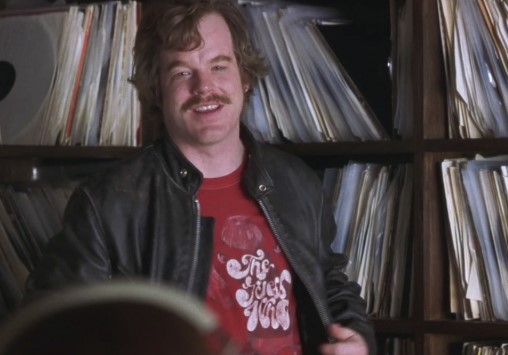
Philip Seymour Hoffman brought a different kind of confidence. He was not a glossy movie-star presence in the traditional sense. His power came from precision, risk, and a fearless willingness to look awkward, needy, angry, weak, brilliant, ridiculous, or wounded if the role demanded it. In Almost Famous, Hoffman played Lester Bangs, the legendary rock critic who mentors the young journalist William Miller from a distance. The role is brief, but it has the gravitational pull of a planet with excellent taste in records.
Hoffman’s performance as Bangs is a perfect example of confidence with depth. He does not play the character as merely loud or cynical. He plays him as lonely, intelligent, funny, disappointed, and protective. That is why the performance lasts in the memory. Confidence made Hoffman bold enough to claim the scene. Humility made him human enough not to flatten Bangs into a cartoon.
The Boundary Lesson From the Set
A famous behind-the-scenes story from the making of Almost Famous describes Crowe using music to shape the mood of scenes. That approach often worked for actors. But during Hoffman’s work as Lester Bangs, the actor reportedly resisted when music was played externally, essentially pushing back because he already had the emotional music of the scene inside his head.
That moment is a gold mine. Hoffman was not being difficult for sport. He was protecting the work. He trusted his preparation enough to tell the director what he needed. That is confidence. But it also required humility from Crowe. A less secure director might have treated the pushback as disrespect. Crowe recognized that the actor had a process and gave him room. That is humility.
The lesson is simple: in healthy creative work, confidence is not domination, and humility is not surrender. Confidence says, “This is what I need to do my best work.” Humility says, “Maybe someone else’s process is wiser than my plan.”
Life Lesson 1: Self-Doubt Is Not Always the Villain
Modern culture often treats self-doubt like a villain wearing a cape made of unpaid bills. But self-doubt can be useful when it arrives in the right dose. A little doubt makes you revise the sentence, check the numbers, practice the speech, or ask whether your brilliant plan is actually just caffeine wearing a blazer.
Crowe’s career shows that even successful people can wrestle with uncertainty. That does not make them frauds. It makes them attentive. The trick is to turn self-doubt into quality control, not paralysis. Doubt should be a thoughtful editor, not a prison guard.
Life Lesson 2: Confidence Is Strongest When It Serves the Work
Hoffman’s confidence was powerful because it served the performance. He was not simply demanding attention; he was defending truth. That distinction matters in every field. A confident teacher does not need to humiliate students. A confident doctor can say, “Let’s get another opinion.” A confident entrepreneur can admit the market changed. A confident writer can delete a beautiful paragraph because it does not belong.
Confidence becomes trustworthy when it is tied to standards rather than ego. When confidence serves the work, people feel its strength. When confidence serves vanity, people start checking how close they are to the nearest exit.
Life Lesson 3: Humility Is Not Weakness
Humility often gets misunderstood as softness, passivity, or a chronic inability to accept a compliment without turning into a folding chair. Real humility is much stronger than that. It is the ability to see reality clearly, including your talents, limits, mistakes, and responsibilities.
Crowe’s humility as a director did not mean he lacked vision. He had a very specific emotional world in mind for Almost Famous. But humility allowed him to collaborate. It allowed him to notice when an actor’s instinct improved the scene. Great leadership often looks like that: strong enough to guide, secure enough to adjust.
Life Lesson 4: Being “Uncool” Can Make You More Honest
The fear of being uncool ruins more dreams than lack of talent ever will. People avoid trying because beginners look awkward. They avoid caring because sincerity can be mocked. They avoid asking questions because someone might discover they do not already know everything. Congratulations, ego: you have protected us from embarrassment and also from growth.
Almost Famous argues that being uncool is not a social death sentence. It is a doorway into honesty. The person who can admit excitement, confusion, admiration, or fear is often closer to the truth than the person who must always appear above it all. Confidence lets you be seen. Humility lets you be real while being seen.
Life Lesson 5: Mentorship Requires Both Candor and Care
The relationship between Lester Bangs and William Miller in Almost Famous is a classic mentorship dynamic. Bangs warns William not to be seduced by fame, charm, and backstage access. He tells him, in effect, to stay honest. That kind of mentorship requires confidence because the mentor must speak plainly. It also requires humility because the mentor must care more about the younger person’s growth than about sounding impressive.
The best mentors do not simply hand out motivational confetti. They tell the truth with enough warmth that the truth can be received. They challenge without crushing. They encourage without flattering. They remind you who you are when the room gets loud.
Life Lesson 6: Know When to Lead and When to Listen
Crowe and Hoffman represent two sides of a mature creative relationship. Sometimes you must lead with conviction. Sometimes you must listen with openness. Wisdom is knowing which moment you are in.
In daily life, this applies everywhere. In a meeting, you may need the confidence to defend a good idea. Five minutes later, you may need the humility to accept a better one. In a relationship, you may need the confidence to express a need. Then you may need the humility to hear how your behavior affected someone else. In creative work, you may need the confidence to protect your voice and the humility to improve your craft.
Practical Ways to Balance Confidence With Humility
1. Separate Your Worth From Your Performance
You are not your latest success, and you are not your latest failure. When your identity is fused to performance, feedback feels like an attack. When your worth is stable, feedback becomes information. That is where confidence and humility can finally shake hands like civilized adults.
2. Practice Saying “I Might Be Wrong”
This phrase is not a weakness. It is an intellectual seatbelt. It keeps your mind from flying through the windshield of certainty. You can still make decisions, hold standards, and act boldly while admitting that your perspective may be incomplete.
3. Defend the Work, Not the Ego
Before pushing back, ask: “Am I protecting quality, or am I protecting pride?” Hoffman’s artistic boundary worked because it served the scene. Use that test. If your confidence helps the work become truer, cleaner, kinder, or stronger, speak up. If it only helps your ego avoid a bruise, pause.
4. Stay Curious After Success
Success is dangerous when it convinces you that learning is now for other people. Crowe’s best work carries the spirit of a listener. Hoffman’s best performances feel researched from the inside out. Curiosity keeps confidence from hardening into arrogance.
Additional Experiences: What This Balance Looks Like in Real Life
In real life, balancing confidence with humility rarely looks dramatic. There is usually no movie lighting, no perfect soundtrack, and no wise mentor calling at the exact emotional turning point. Most of the time, it looks like small choices made when nobody is handing out awards.
Think about the first day at a new job. Confidence is what helps you introduce yourself, ask where the files are, and resist the urge to pretend you understand the mysterious internal software everyone calls “simple.” Humility is what allows you to say, “Can you show me that again?” without acting as if the printer personally betrayed your ancestors. People trust the person who is willing to learn. They also respect the person who is willing to contribute. You need both.
Or consider creative work. Anyone who writes, designs, films, paints, cooks, teaches, builds, or performs knows the strange emotional weather of making something. At first, confidence gets you started. You need a little unreasonable belief just to face the blank page or empty room. But once the work exists, humility must enter with a broom and a flashlight. It finds the weak paragraph, the lazy assumption, the overdecorated idea, the joke that is funny only because you are tired. Confidence creates. Humility revises.
The balance also matters in conflict. Imagine apologizing after a disagreement. Confidence helps you stay present instead of disappearing into defensiveness. Humility helps you admit the part you played. Without confidence, you may collapse into shame and make the other person comfort you. Without humility, you may deliver one of those fake apologies that begins with “I’m sorry you felt” and ends with everyone needing a walk.
Parenting, leadership, friendship, and marriage all ask for the same rhythm. Speak clearly, then listen carefully. Know your values, but do not worship your opinions. Bring your strengths to the table, but leave room for someone else’s strengths too. The most effective people are not those who are always certain. They are the ones who can act with commitment while staying open to correction.
That is the lasting lesson from Cameron Crowe and Philip Seymour Hoffman. Crowe’s path shows the beauty of curiosity, sincerity, and the courage to tell personal stories. Hoffman’s craft shows the power of preparation, boundaries, and fearless emotional truth. Together, their example reminds us that confidence and humility are not opposite destinations. They are traveling companions. Confidence gives you a voice. Humility teaches that voice how to listen.
Conclusion: Stand Tall, Stay Open
Balancing confidence with humility is not about becoming perfectly calm, endlessly wise, or immune to embarrassment. Nobody gets there, and anyone who claims otherwise should be assigned to assemble furniture without instructions as a character-building exercise. The real goal is simpler and harder: believe in your ability to act, while respecting your need to learn.
Cameron Crowe’s life and work remind us that sincerity can be brave. Philip Seymour Hoffman’s artistry reminds us that confidence can be disciplined, specific, and deeply human. One teaches us to stay curious. The other teaches us to trust the inner music when the moment demands it. Together, they offer a practical philosophy for work, creativity, relationships, and personal growth: be bold enough to begin, humble enough to improve, and honest enough to remain uncool when uncool is where the truth lives.