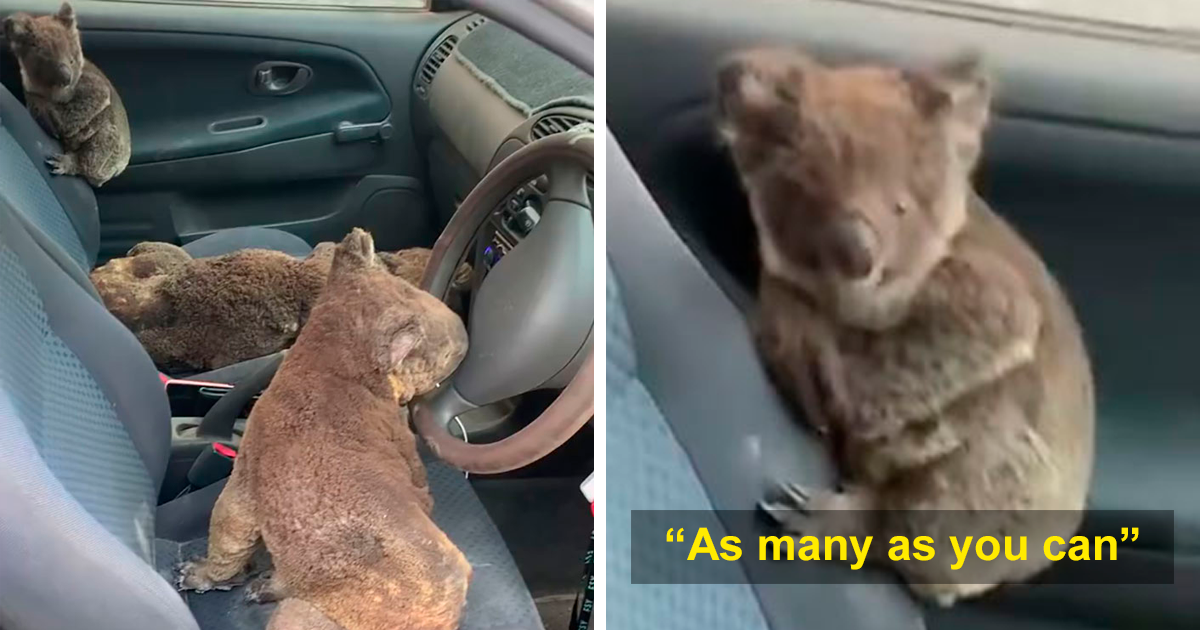
In the middle of Australia’s devastating bushfire season, a simple video of a car packed with koalas did something rare: it made the internet stop doom-scrolling for a moment and collectively say, “Wait, those teenagers did what?” The story centered on two young Australians on Kangaroo Island who, after fires tore through the landscape, drove around looking for surviving koalas and carefully loaded distressed animals into a vehicle. It was not polished. It was not a grand rescue operation with matching uniforms, dramatic theme music, and a slow-motion helicopter shot. It was more like: towels, a car, smoke, worry, and a very crowded back seat full of fuzzy passengers who had absolutely not agreed to ride-share terms and conditions.
The rescue became widely shared because it captured something people desperately needed to see: quick human action in the face of overwhelming wildlife loss. During the 2019–2020 Australian bushfires, often called the Black Summer fires, millions of acres burned, communities were damaged, and huge numbers of animals were killed, injured, or displaced. Koalas became one of the most visible symbols of that crisis because they are slow-moving, tree-dwelling, dependent on eucalyptus forests, and tragically vulnerable when intense fire moves through their habitat.
This article looks at the real story behind the viral koala rescue, why it mattered, what it tells us about koala conservation, and why saving wildlife is never as simple as grabbing a cute animal and calling yourself a hero. Though, to be fair, a car full of koalas is still one of the most Australian emergency scenes ever recorded.
The Kangaroo Island Koala Rescue That Went Viral
The rescue happened on Kangaroo Island, off the coast of South Australia, during one of the most destructive periods of the 2019–2020 bushfire season. Reports identified one of the rescuers as Micah Lovegrove, who, along with his cousin, found distressed koalas near fire-damaged property. Using towels, they picked up animals that appeared injured, weak, or unable to move safely and placed them in a car before taking them to a safer location.
The video showed multiple koalas sitting inside the vehicle, including a young one. The teens were heard explaining that they were trying to collect as many live koalas as they could. It was a raw moment: no studio lighting, no polished narration, just a practical response to a heartbreaking scene. They searched through nearby blue gum plantations and checked koalas for signs of injury or distress. Animals that seemed responsive, able to climb, and in better condition were reportedly left alone, while the most vulnerable were moved.
That detail matters. Wildlife rescue is not about scooping up every animal in sight. A healthy wild animal is usually safest in its habitat if that habitat is not actively dangerous. The goal is to identify animals that cannot survive without immediate help: those burned, dehydrated, orphaned, disoriented, trapped, or too weak to climb.
Why Koalas Were Hit So Hard By the Bushfires
Koalas are built for life in eucalyptus trees, not for emergency evacuation. They eat eucalyptus leaves, rest in eucalyptus branches, and spend much of their lives conserving energy because their diet is low in calories. This lifestyle works beautifully during normal conditions. It works less beautifully when fire races through a dry forest.
Unlike kangaroos or wallabies, koalas cannot sprint long distances to safety. Their instinct during danger is often to climb higher into trees. In ordinary threats, this can help. In extreme bushfires, it can trap them in the canopy as flames, heat, and smoke rise. Eucalyptus trees also contain oils that can burn intensely, turning a koala’s home into a very unfortunate natural torch.
Koalas that survive fire may still suffer burns to paws, noses, ears, or eyes. Others face smoke inhalation, dehydration, starvation, and displacement after their food trees are destroyed. A koala does not simply walk into a new neighborhood and order takeout. It needs suitable eucalyptus species, safe tree cover, and connected habitat. When forests are fragmented by roads, farms, logging, and urban development, survival becomes harder even after the flames are gone.
The Bigger Conservation Problem Behind One Carload of Koalas
The Kangaroo Island rescue was moving because it was personal. People could look at the car and understand the emergency instantly. But behind that one carload was a much larger conservation crisis. Koalas face overlapping threats: habitat loss, climate-driven heat and drought, bushfires, disease, vehicle strikes, dog attacks, and genetic isolation in fragmented populations.
In parts of eastern Australia, koalas were officially listed as endangered in 2022 after years of decline. That listing applies to populations in Queensland, New South Wales, and the Australian Capital Territory. The decision reflected the combined pressure of habitat destruction, disease, drought, bushfire damage, and urban expansion. In short: koalas are not in trouble because of one bad fire season. The fires exposed and intensified problems that were already there.
Habitat loss remains one of the most serious issues. Koalas need eucalyptus forests for food and shelter, but land clearing and development can break those forests into smaller pieces. Fragmented habitat forces koalas to come down to the ground more often, where they are more likely to cross roads, encounter dogs, or struggle to find mates. A koala on the ground is still adorable, yes, but it is also much more vulnerable.
Why the Teens’ Rescue Struck a Global Nerve
People love koalas because they look like sleepy teddy bears designed by a committee of kindergarteners. Round ears? Yes. Big nose? Absolutely. Fluffy body? Make it extra. But the emotional power of the rescue video came from more than cuteness. It showed ordinary young people refusing to freeze in the face of disaster.
The teens were not solving the entire bushfire crisis. They were not restoring forests, rewriting environmental law, or building wildlife corridors before lunch. They were doing what could be done in that moment: finding living animals, moving the most vulnerable ones, and giving them a chance. That kind of action is relatable. Most people cannot fix a global conservation crisis, but they can understand the instinct to help the living creature right in front of them.
The rescue also reminded viewers that wildlife disasters are not abstract. “Habitat loss” sounds like a term from a government report. A burned koala in the back seat of a car feels immediate. It has a face. It has paws. It may also have claws capable of making a rescuer regret their life choices, which is why proper handling matters.
Wildlife Rescue Is Heroic, But It Is Also Complicated
It is tempting to watch a rescue story and think, “Great, I too shall grab wildlife with a towel and become the woodland Uber.” Please do not. Koalas are wild animals, not plush toys with eucalyptus breath. They can bite, scratch, and become severely stressed when handled. Injured animals may also have hidden burns, fractures, dehydration, or disease that require trained care.
The safest response is usually to call local wildlife rescue services, emergency responders, or licensed rehabilitators. If an animal is in immediate danger and professional help is not yet available, rescuers should prioritize safety: avoid direct handling when possible, use thick towels or containers only when necessary, keep the animal in a quiet and dark space, and get expert help quickly. The goal is not to cuddle the koala. The goal is to reduce stress and prevent further harm.
What Responsible Koala Rescue Usually Involves
Professional wildlife rescue may include assessing burns, checking hydration, treating smoke exposure, providing pain relief, offering species-appropriate food, and monitoring for infection. Koalas with burned paws often require careful wound care because they need their feet to climb and feed. Orphaned joeys need specialized care, warmth, and feeding. Adult koalas may need weeks or months of rehabilitation before release.
Release is also not random. A rehabilitated koala must return to suitable habitat with enough food trees, safe distance from roads and dogs, and the best possible chance of survival. A rescue is only successful when it leads to a stable return to the wild or, when release is impossible, humane long-term care under expert supervision.
Kangaroo Island: A Unique Place With Unique Wildlife Challenges
Kangaroo Island is famous for rugged coastlines, native wildlife, and landscapes that feel almost cinematic. It is also home to complicated conservation questions. Before the fires, the island supported a large koala population, partly because koalas had been introduced there many decades earlier. Some conservationists viewed the island population as important; others noted that in certain areas, koala numbers could pressure local vegetation. Then the bushfires changed everything.
When fire burns through a place like Kangaroo Island, it does not only kill animals directly. It alters food supply, shelter, breeding patterns, predator exposure, and the health of surviving populations. The aftermath can last for years. Some species return quickly. Others need targeted support, habitat restoration, pest control, disease monitoring, and careful management.
This is why a viral rescue story should be seen as the beginning of a conversation, not the end. The teens saved individual animals. Conservation work must also save the systems those animals depend on.
What Koalas Need Beyond Emergency Rescues
Emergency rescue is vital, but koalas cannot be rescued one carload at a time forever. Long-term protection requires healthy forests, connected habitat, responsible planning, and climate resilience. Wildlife corridors can help koalas move safely between feeding and breeding areas. Road signs, speed reduction zones, and wildlife crossings can reduce vehicle strikes. Dog control in koala habitat can prevent attacks. Habitat restoration can rebuild food supply after fire or clearing.
Disease management is another key issue. Chlamydia affects many koala populations and can cause blindness, infertility, and death. Research into vaccines and treatment has become an important part of koala conservation, but medical solutions cannot replace habitat protection. A vaccinated koala still needs trees. Even the healthiest koala cannot thrive in a parking lot, no matter how emotionally supportive the asphalt tries to be.
Why This Story Still Matters Years Later
The Kangaroo Island rescue remains memorable because it combines urgency, compassion, and youth-led action. It shows how teenagers can play a serious role in community response. It also shows that conservation is not only the work of scientists, firefighters, veterinarians, and policymakers. It is also the work of neighbors, families, volunteers, students, and people willing to look carefully when the world around them looks ruined.
But the story should not be reduced to “cute koalas in car.” The cuteness is real, obviously. A koala sitting in a vehicle looks like it is late for a very important forest meeting. Still, the deeper lesson is that wildlife rescue happens because people notice suffering and act with urgency. The best version of that action is guided by training, respect for animals, and support for long-term conservation.
How Readers Can Help Koalas From Anywhere
You do not need to live in Australia to care about koalas. People can support reputable wildlife hospitals, habitat restoration programs, and conservation groups working on koala recovery. They can share accurate information instead of dramatic myths. They can avoid treating viral rescue clips as entertainment only and instead ask, “What conditions created this emergency, and how can they be reduced?”
For travelers, responsible wildlife tourism matters. Choose sanctuaries and conservation experiences that prioritize animal welfare, avoid forced handling, and contribute to habitat protection. For students and families, the koala story can be a powerful introduction to ecology: diet specialization, climate stress, habitat fragmentation, and the relationship between local action and global attention.
Most importantly, people can remember that conservation is not one heroic moment. It is a chain of choices. The teens on Kangaroo Island were one link in that chain. The next links include veterinary care, habitat recovery, research, public policy, and community education.
Experiences and Reflections: What This Koala Rescue Teaches Us
To understand why this story resonates, imagine the experience from the ground. The fire has passed, but the danger has not. The air smells burned. Trees that once formed green shelter stand blackened. The usual sounds of birds and insects are replaced by an uncomfortable quiet. Then, somewhere near a tree, there is movement. A koala is alive, but not okay. It may be burned, thirsty, confused, or too exhausted to climb. In that moment, conservation stops being a distant idea. It becomes a decision measured in seconds.
That is the emotional center of the Kangaroo Island rescue. The teenagers were not working with perfect conditions. They were moving through a damaged landscape, checking for survivors, and making quick judgments. Which animals looked strong enough to remain? Which ones needed help immediately? How could they be moved without causing more injury? A towel became rescue equipment. A car became a temporary wildlife ambulance. The back seat became the strangest waiting room in Australia.
The experience also reveals how messy real compassion can be. Rescue is not glamorous when your hands are shaking, the road is rough, and the animal you are trying to help has claws sharp enough to sign its name on your forearm. It requires patience and restraint. Sometimes helping means picking an animal up. Sometimes helping means leaving it alone because it is alert, mobile, and safer in place. That distinction is hard, especially when every koala looks like it should be personally escorted to a five-star eucalyptus buffet.
For young people, the story carries a strong lesson: age does not prevent meaningful action. Teenagers often hear that big problems belong to adults, governments, or experts. Yet in emergencies, young people can observe, assist, organize, document, donate, volunteer, and learn. The key is to combine courage with humility. The best rescuers do not act like movie heroes. They act like careful helpers who know when to call professionals.
The experience also teaches communities to prepare before disaster strikes. Fire seasons, heatwaves, floods, and habitat loss are not isolated headlines. In wildlife areas, families and local groups can keep emergency numbers handy, learn basic wildlife safety, support rescue organizations, and understand which animals live nearby. Preparedness does not remove the tragedy of disasters, but it can make the first response faster and safer.
Finally, this rescue reminds us that hope is often practical. Hope is not pretending everything is fine while the forest burns. Hope is carrying towels in the car. Hope is checking one more row of trees. Hope is funding a wildlife hospital. Hope is planting habitat that will not make headlines for years but may someday feed a joey. Hope is a teenager saying, “Let’s look for the live ones,” and then actually looking.
Conclusion
The story of Australian teens driving around Kangaroo Island to save as many live koalas as they could is both heartwarming and sobering. It gives us the image of a car full of rescued koalas, which is unforgettable, but it also points to a much bigger truth: wildlife rescue is what happens after habitat, climate, and disaster pressures collide. The teens’ actions mattered because individual lives matter. At the same time, koalas need more than emergency rescues. They need connected eucalyptus forests, safer roads, disease control, responsible land management, and communities that understand how fragile survival can be.
In the end, the rescue is not just a cute animal story. It is a reminder that ordinary people can act with extraordinary care, especially when they refuse to look away. And if the internet is going to make something famous, a car full of rescued koalas is a pretty good candidate.