For decades, scientists have wondered whether the ingredients that eventually became life on Earth were cooked entirely on our young planet or delivered from space like an extremely slow, extremely rocky meal-kit subscription. Material collected from the asteroid Bennu is now giving researchers their best answer yet.
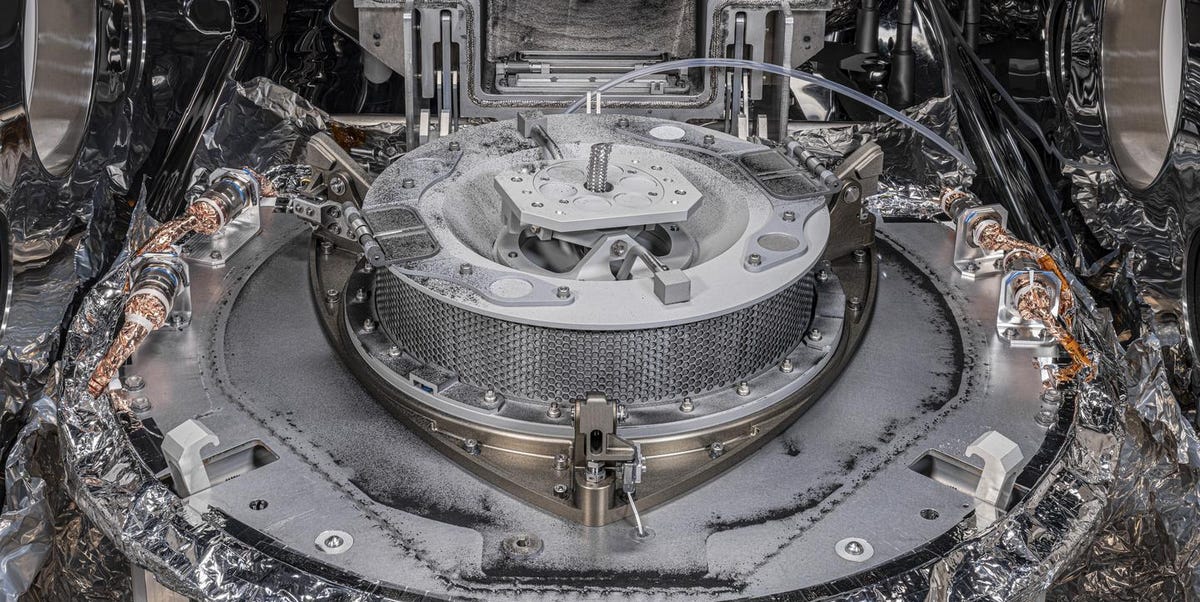
NASA’s OSIRIS-REx mission returned 121.6 grams of pristine dust and rock from Bennu. Inside that dark material, researchers have identified amino acids, all five canonical nucleobases used by DNA and RNA, abundant ammonia, ancient salt minerals, ribose, glucose, unusually complex nitrogen-rich organic material, and even dust produced by stars that died before our solar system existed.
None of this proves that life existed on Bennu. It reveals something almost as important: many of the raw materials and chemical environments associated with life were already widespread in the early solar system. Earth may not have invented the basic ingredients. It may have inherited a well-stocked cosmic pantry.
Why Scientists Went to Bennu
Bennu is a carbon-rich near-Earth asteroid roughly 1,600 feet, or about 500 meters, across. It looks like a dark, spinning pile of rubble with a slightly squashed diamond shape. It is not the original world on which its minerals formed. Instead, Bennu assembled from fragments of a much larger parent asteroid that was shattered by one or more ancient collisions.
NASA launched OSIRIS-REx in September 2016. The spacecraft arrived at Bennu in 2018, mapped its unexpectedly rugged surface and briefly touched down on October 20, 2020. Its sampling device fired nitrogen gas into the surface, stirring up dust and pebbles that were captured inside a collection head.
The spacecraft released its sample capsule over Earth on September 24, 2023. The capsule landed in the Utah desert while the main spacecraft continued toward another asteroid, Apophis. Scientists then moved the Bennu material into carefully controlled facilities where it could be stored and examined without ordinary exposure to Earth’s moisture, soil, microbes and atmosphere.
Why a Pristine Sample Matters
Meteorites have been delivering asteroid material to Earth for billions of years, but they are imperfect scientific witnesses. Atmospheric entry can heat or destroy delicate minerals. Once a meteorite lands, rain, oxygen, soil and living organisms may alter its chemistry. Even a scientist wearing very clean gloves can only do so much after a rock has spent three weeks being investigated by curious bacteria.
Bennu’s sample was collected directly in space and protected through its return. That allowed researchers to study fragile salts and reactive organic compounds that might disappear or become contaminated in meteorites. The mission did not merely bring back another space rock. It delivered a time capsule with the tamper-evident seal still attached.
The Building Blocks of Biology Were Already There
One of the most significant analyses revealed 14 of the 20 amino acids that terrestrial organisms use to build proteins. Amino acids are not living things, but when biology links them into chains, those chains fold into proteins that perform much of the work inside cells.
Researchers also detected all five canonical nucleobases: adenine, guanine, cytosine, thymine and uracil. These molecules form the information-carrying “letters” of DNA and RNA. The sample was also rich in ammonia, formaldehyde, carboxylic acids, amines and thousands of nitrogen-bearing chemical species.
Ammonia is especially interesting because it can participate in reactions that produce amino acids and other biologically relevant compounds. Isotopic evidence suggests that much of Bennu’s nitrogen-rich material originated in a very cold molecular cloud or in the outer region of the disk from which the solar system formed.
In other words, important prebiotic chemistry may have begun before Earth existed and possibly before the Sun had fully finished forming. The chemistry of life appears to have very old roots.
The Mystery of Left-Handed Life
Amino acids can exist in two mirror-image forms, often described as left-handed and right-handed. Life on Earth overwhelmingly uses left-handed amino acids. Scientists have debated whether asteroids delivered an excess of the left-handed form, giving terrestrial biology an early nudge in that direction.
Bennu did not cooperate with that tidy explanation. Its relevant amino acids were found in approximately equal left- and right-handed mixtures. This suggests that life’s preference may have emerged later through chemical selection, environmental conditions or early biological evolution. Bennu answered one question by handing researchers a larger and more interesting question.
Ribose and Glucose Made the Discovery Even Sweeter
Later research added a striking new chapter. Scientists detected several sugars in Bennu material, including ribose, arabinose, xylose, lyxose, galactose and glucose. Glucose was reported as the first well-supported detection of this six-carbon sugar in a pristine extraterrestrial sample.
Glucose is widely used by organisms on Earth as an energy source, although its presence on Bennu does not mean anything on the asteroid was enjoying breakfast. More important for origin-of-life research was the detection of ribose.
Ribose forms part of RNA’s structural backbone. Because Bennu also contains phosphate and all the nucleobases used in RNA, researchers can now say that every basic molecular component required to assemble RNA was present in the asteroid material.
The researchers did not detect deoxyribose, the related sugar used in DNA. That difference is consistent with the RNA world hypothesis, which proposes that early life relied on RNA before DNA and proteins assumed many of their modern biological roles. RNA is capable of both carrying information and helping catalyze chemical reactions, making it a plausible multitasking molecule for primitive life.
Bennu does not prove the RNA world hypothesis. It does show that ribose could form and survive in nonliving extraterrestrial environments alongside other RNA components. The early solar system may therefore have distributed partially stocked RNA construction kits among its planets and moons. Assembly instructions, unfortunately, were not included.
Bennu’s Ancestor Was Wet, Salty and Chemically Active
Organic molecules alone are not enough to explain the path toward life. Chemistry also needs suitable environments where molecules can dissolve, mix, react and become concentrated. Bennu’s minerals reveal that its parent asteroid once offered exactly that kind of setting.
Researchers identified an unusually complete sequence of minerals formed when salty water evaporates or freezes. The collection included sodium-bearing phosphates, carbonates, sulfates, chlorides and fluorides. Eleven evaporation-related minerals were identified, including halite, the mineral form of ordinary table salt, as well as trona, which had not previously been confirmed in an extraterrestrial sample.
The salts indicate that liquid water circulated inside Bennu’s much larger parent body billions of years ago. Ice incorporated during the asteroid’s formation probably melted as the interior warmed. Water then reacted with rock, dissolved minerals and produced increasingly concentrated brines.
This does not mean modern Bennu once had blue oceans and pleasant beachfront property. The watery chemistry occurred inside its ancient parent asteroid before that body was broken apart. Bennu is the rubble that survived, carrying mineral records of that vanished environment.
Similar brines may exist today beneath the surfaces of Ceres and icy moons such as Enceladus. The Bennu sample gives scientists direct laboratory evidence of how water, salts and organics could interact inside small worlds throughout the solar system.
The Strange “Space Gum” Hidden in the Sample
As though sugars, genetic components and ancient brine were not enough, scientists also found a flexible, gum-like organic material unlike anything previously recognized in asteroid samples.
The substance contains polymer-like structures exceptionally rich in nitrogen and oxygen. It includes chemical groups such as amines, amides and nitrogen-containing rings. Under microscopic examination, some pieces appeared layered, translucent and capable of bending or developing dimples under pressure. Radiation later made the material more brittle.
Scientists jokingly compared it with used chewing gum or soft plastic, but it is not synthetic plastic and certainly did not come from an ancient alien convenience store. Its disorderly molecular structure appears to have formed naturally through reactions involving compounds such as ammonia, carbon dioxide and carbamate.
The material may have developed before Bennu’s parent body became thoroughly wet. It was later altered as liquid water moved through the rock. Its survival shows that asteroid chemistry can create large, complex organic networks through several stages, beginning in cold environments and continuing during watery geological processing.
This expands the known range of extraterrestrial organic chemistry. Space does not merely produce isolated amino acids and simple carbon compounds. Under the right conditions, it can build flexible, polymer-like material with considerable molecular complexity.
A Mixture of Stardust, Solar Material and Interstellar Chemistry
Bennu’s sample is not chemically uniform. It contains material that formed in several dramatically different environments. Researchers have identified minerals produced near the young Sun, organic matter associated with colder outer regions and presolar grains created around older stars.
Some of the grains existed before the solar system. They are literal stardust, identifiable through unusual isotopic signatures. One analysis found that portions of the Bennu sample contained about six times more supernova-produced dust than previously studied extraterrestrial material.
These findings challenge the idea that the disk around the young Sun was thoroughly mixed. Bennu’s parent body apparently assembled from a patchwork of materials: hot inner-system solids, cold outer-system ices, interstellar organics and debris from stars that had already lived and died.
Bennu is therefore less like a simple rock and more like a geological scrapbook assembled by the early solar system, left in a basement for 4.5 billion years and finally opened by scientists with extremely expensive microscopes.
How the Bennu Sample Changes the Story of Life
Life’s Ingredients May Be Common
The results strengthen the argument that biologically useful molecules are natural products of cosmic chemistry. Amino acids, nucleobases, sugars and nitrogen-rich organics can form without organisms. Asteroids may have delivered these compounds repeatedly to the early Earth, Mars and other worlds.
This does not make the emergence of life inevitable. Flour, sugar and eggs do not spontaneously become a cake simply because they occupy the same kitchen. Yet a universe that routinely manufactures the ingredients gives emerging life a better starting position than a universe in which every useful molecule must form from scratch on each planet.
Small Worlds Can Host Big Chemistry
Bennu’s parent body was not a planet. It was a comparatively small asteroid, yet it contained ice, internal heat, liquid water, reactive minerals and complex organic compounds. This means sophisticated prebiotic chemistry did not require an Earth-sized world with an atmosphere and surface ocean.
Countless asteroids and icy bodies may have functioned as chemical laboratories during the solar system’s youth. Collisions then scattered their products, transferring water and organics between worlds.
RNA Components Could Have Arrived Together
The combination of nucleobases, phosphate and ribose is especially provocative. These substances were not discovered as an assembled RNA molecule, but their coexistence shows that the essential components could be produced in related extraterrestrial environments and delivered to a young planet.
Future experiments will investigate whether asteroid minerals could concentrate these compounds or help them connect into more complex structures. Clays, carbonates, metal ions and repeated wet-dry cycles may all influence the reactions.
What the Discovery Does Not Prove
No cells, fossils or biological structures have been discovered in the Bennu sample. The detected molecules can form through nonbiological processes, and scientists have carefully emphasized that “ingredients for life” are not the same as life.
The distinction matters. Declaring that scientists found aliens would be exciting for approximately twelve minutes, after which everyone would have to explain why amino acids are not tiny astronauts.
Bennu instead provides evidence for prebiotic chemistry: the collection of nonliving reactions that can produce molecules later used by biology. The difficult question remains how those molecules became organized into self-replicating systems capable of evolution.
The sample also cannot tell researchers exactly how much extraterrestrial material reached the early Earth or which delivered compounds survived impacts. It does, however, demonstrate that asteroids carried a much richer chemical inventory than scientists could confirm from contaminated meteorites alone.
What Scientists Will Study Next
Only a small portion of the returned material has been consumed in published analyses. Much of the Bennu collection is being preserved for future scientists who will have instruments and techniques that do not yet exist.
Researchers will continue mapping how organic compounds vary between different particles and rock types. They will examine whether particular minerals encouraged sugar, amino-acid or polymer formation. They will also compare Bennu with samples returned from the asteroid Ryugu and with material that future missions may collect from comets, Mars, Ceres or the moons of the outer planets.
Another major goal is understanding how Bennu’s ingredients changed over time. The material experienced cold interstellar chemistry, asteroid formation, internal heating, liquid-water reactions, catastrophic collisions, radiation and micrometeorite impacts. Untangling that history could reveal which environments created certain compounds and which merely preserved them.
Sample-return missions will remain essential because telescopes can identify broad surface compositions but cannot perform the detailed isotopic, molecular and microscopic work possible in laboratories. Bennu has shown that a few grams of carefully protected material can answer questions that millions of remote observations cannot.
The Human Experience of Following Bennu’s Journey
Following the Bennu mission changes the way a person looks at something as ordinary as dust. On Earth, dust is what gathers under a bookshelf and makes people suddenly interested in cleaning five minutes before guests arrive. In planetary science, a speck of dust can preserve the death of a star, the movement of water through an asteroid and chemical reactions that occurred before Earth had a surface.
Imagine watching the sample capsule descend over Utah in September 2023. After traveling billions of miles, it entered Earth’s atmosphere protected by a heat shield, deployed a parachute and settled onto the desert floor. From the outside, it looked like a dark, slightly battered container. Inside was material older than every mountain, ocean, fossil and living organism on Earth.
The most powerful part of the experience is the shift in scale. The mission involved a spacecraft, global tracking networks, clean rooms, electron microscopes and hundreds of scientists. Yet many discoveries came from particles smaller than grains of sand. A fragment only a few micrometers wide could contain a mineral that formed from ancient brine or an organic structure that once bent like soft plastic.
There is also something wonderfully humbling about the sample’s mixed heritage. Some components formed near the young Sun. Others originated in the frozen outer solar system. Still others were manufactured around stars that exploded before our Sun was born. The atoms in a Bennu grain traveled through environments separated by enormous distances and timescales before ending up beneath a laboratory microscope in Houston, Arizona, California or another research center.
For students and amateur skywatchers, Bennu offers a practical lesson in how science works. The mission did not return with one dramatic answer stamped on the container. Knowledge accumulated gradually. First came evidence of carbon and water-bearing minerals. Then scientists reported amino acids, nucleobases, ammonia and ancient salts. Later came sugars, presolar dust and the strange nitrogen-rich polymer. Each finding revised the picture without making the previous work obsolete.
That unfolding process can feel slower than a science-fiction movie, but it is far more convincing. Multiple laboratories use different instruments, analyze control samples and check for contamination. Researchers debate alternative explanations. Conclusions become stronger as independent techniques point in the same direction.
The experience also changes how we imagine the early Earth. Instead of a lonely planet inventing every useful molecule by itself, picture a young world under steady bombardment. Asteroids and comets delivered water, minerals and organic compounds into oceans, lakes, volcanic landscapes and impact basins. Some molecules were destroyed. Others accumulated, reacted or became trapped on mineral surfaces. Over immense spans of time, chemistry crossed a threshold and became biology.
Bennu cannot tell us precisely when or where that threshold was crossed. It makes the steps leading toward it easier to envision. The gap between “dead rock” and “living chemistry” no longer looks like an empty chasm. It contains amino acids, bases, sugars, salts, polymers, water and countless reactions waiting to be explored.
Perhaps the most memorable lesson is that scientific wonder does not require exaggeration. Researchers did not find life inside Bennu. What they found is remarkable on its own: the universe was practicing complicated organic chemistry long before Earth became habitable. The ingredients that eventually became cells, forests, whales and people may have begun their journey in frozen clouds, shattered asteroids and the ashes of ancient stars.
Conclusion: A Solar System Prepared for Biology
The Bennu sample has transformed a familiar idea into something supported by pristine physical evidence. Asteroids did not carry only water and a few simple carbon compounds. At least some carried amino acids, every canonical nucleobase, biologically important sugars, phosphates, abundant ammonia, complex polymers and minerals produced by long-lived brines.
The discovery makes the early solar system appear chemically fertile. Many worlds may have received similar deliveries, and many small bodies may once have hosted water-driven reactions capable of increasing molecular complexity.
Earth remains the only place where life has been confirmed. Bennu helps explain how our planet may have obtained part of its starting inventory, while making the silence elsewhere even more intriguing. The universe appears generous with ingredients. The mystery is how often it manages to turn them into something that can look back at the stars and ask where it came from.