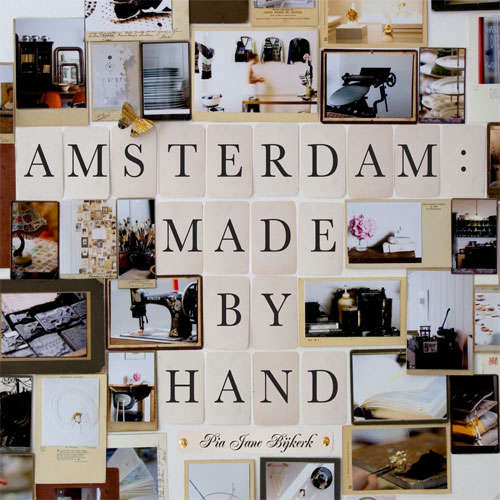
Amsterdam has a funny habit of looking effortless while secretly being one of Europe’s great overachievers. At first glance, it is all canal reflections, narrow houses, and bicycles behaving like they own the place. Look closer, though, and the city reveals something more interesting: Amsterdam feels handmade. Not in the souvenir-shop sense of “handmade,” where a wooden clog gets promoted to cultural ambassador, but in the deeper sense of a place shaped by makers, restorers, designers, bakers, printers, florists, jewelers, carpenters, ceramicists, and inventive people who look at raw materials and think, “Yes, but what else could you become?”
That is what makes Amsterdam: Made by Hand such a compelling idea. The city’s appeal is not just visual. It is tactile. You feel it in old brick facades, polished shop counters, stitched leather bags, imperfect ceramics, beautifully bound books, and pastries that clearly had a better childhood than most of us. Amsterdam is a place where craftsmanship is not boxed off in museums or frozen in history. It lives in neighborhoods, markets, ateliers, and concept stores. It is classical and experimental at the same time, as if Rembrandt and a very stylish product designer agreed to share the same apartment.
Why Amsterdam Still Feels Handmade
A lot of cities claim authenticity. Amsterdam barely has to bother. Its historic canal ring, planned in the late 16th and early 17th centuries, was itself an enormous act of design and engineering. The city was expanded through canals, drained land, and a remarkably coherent urban plan, creating the kind of human-scaled environment that still feels walkable, legible, and oddly intimate for a global capital. The result is not only photogenic but deeply practical. Amsterdam’s beauty was built with purpose, and that practical elegance still defines the city today.
This is where the handmade feeling begins. Amsterdam’s architecture never really lets you forget that people built it board by board, beam by beam, window by window. The canal houses do not feel mass-produced. They feel specific. Their proportions vary, their details shift, their facades lean with enough personality to suggest that even the buildings are trying to join the conversation. The city’s old warehouses, workshops, churches, and merchant homes carry the memory of labor. Amsterdam may be modern, but it never pretends it appeared fully assembled overnight.
That helps explain why craftsmanship still feels native here rather than performative. In Amsterdam, design is not treated like a decorative afterthought. It is woven into daily life. A café interior, a market stall, a bicycle accessory, or a tiny jewelry studio can all reflect the same Dutch instinct: make it functional, make it beautiful, and please do not make it fussy unless the fuss is really earning its keep.
The Handmade City, Neighborhood by Neighborhood
Jordaan and the Nine Streets
If Amsterdam had a chapter called “I swear I was only window-shopping,” it would be set in the Jordaan and the Nine Streets. This is where the city’s craft-loving soul becomes visible in storefront form. The area is packed with artisan boutiques, local fashion labels, jewelers, chocolatiers, leather goods makers, galleries, and concept stores that somehow make you feel underdressed and inspired at the same time.
The charm of the Nine Streets is that it does not feel like a retail theme park. It feels layered. One shop sells timeless clothing, another specializes in handcrafted accessories, and a few doors down you may find art prints, ceramics, or locally designed stationery that suddenly make your current notebook seem emotionally underqualified. The browsing experience matters here. Amsterdam understands that good shopping is not just acquisition; it is discovery.
In the Jordaan, the same spirit continues with a slightly softer edge. There are vintage finds, small galleries, handmade home goods, micro bakeries, and the kind of beautifully arranged shop windows that make you believe your life would improve dramatically if you owned the correct hand-thrown mug. Sometimes that belief is irrational. Sometimes it is completely correct.
De Pijp and Albert Cuyp Market
De Pijp brings a livelier, more everyday expression of Amsterdam’s maker culture. This neighborhood is energetic, multicultural, and gloriously unpretentious. At Albert Cuyp Market, the city’s handmade identity shows up in edible form: fresh stroopwafels, cheeses, breads, spices, fabrics, and practical goods sold in an atmosphere that feels more lived-in than curated.
What makes De Pijp special is the overlap between tradition and trend. One minute you are standing near a market stall with produce and street snacks; the next you are stepping into a contemporary design shop, a stylish coffee bar, or a boutique full of locally rooted brands. This is also one of the places where Amsterdam’s café culture quietly proves how much craft can matter in everyday rituals. A well-pulled espresso, a carefully roasted bean, a pastry laminated into flaky perfection: handwork shows up here before noon and often before your second cup.
Amsterdam-Noord and NDSM
Then there is Amsterdam-Noord, where the city loosens its collar a little and gets gloriously experimental. The former shipyard at NDSM is one of the clearest examples of Amsterdam’s creative reinvention. Industrial space has been transformed into a cultural hub filled with makers, art, events, studios, and enough raw visual texture to keep any camera busy for hours.
NDSM matters because it shows that “made by hand” does not mean quaint. Amsterdam’s craft culture is not trapped in nostalgia. It is fully capable of living inside steel, concrete, graffiti, reclaimed materials, and giant warehouse spaces. Here, making can be rough-edged, collaborative, circular, and future-facing. It is the perfect setting for the kind of work that begins with salvage, experimentation, or a bold idea that would terrify a more conservative city.
Markets That Still Feel Human
Amsterdam’s markets deserve special credit because they preserve one of the oldest truths in urban life: cities become memorable when people actually sell things they know, care about, and can explain without sounding like a brochure. Noordermarkt is a favorite for exactly that reason. It offers produce, breads, cheeses, flowers, and artisanal goods in a way that feels social rather than transactional.
The Sunday Market adds another layer. Designers, artists, craftsmen, and other creative entrepreneurs sell directly to the public, which means you are often buying from the person who actually made the thing. That changes the atmosphere immediately. A print is no longer just a print. A ceramic bowl is no longer just a bowl. Someone can tell you how it was made, why it looks the way it does, and why the glaze misbehaved on a rainy Tuesday. Frankly, that is more charming than half the podcasts on the internet.
Amsterdam’s Design DNA
To understand Amsterdam by hand, you also have to understand Dutch design. This is not a city that worships ornament for ornament’s sake. Dutch design tends to prize clarity, utility, natural materials, strong silhouettes, and a sense that beauty should work for a living. That is part of why Amsterdam feels so coherent. Even when the styles vary, there is often a shared belief in thoughtful form.
You can see that sensibility in the ideas often associated with Dutch interiors: natural light, flow, restraint, texture, and a lived-in kind of simplicity. It is less about sterile minimalism and more about calm intelligence. In practical terms, that might mean neutral palettes, durable materials, furniture that invites gathering, or spaces that feel edited rather than empty. Amsterdam rarely screams for attention. It tends to win you over by getting the details right.
At the same time, the city is not shy about experimentation. Amsterdam has long been linked to influential names and institutions in Dutch design, from Droog’s conceptual irreverence to designers like Marcel Wanders, Hella Jongerius, and Joris Laarman, whose work blurs the boundaries between craft, industry, technology, and art. That tension is part of the city’s charm. Amsterdam appreciates the handmade object, but it is equally interested in how new tools can reinvent old skills.
This is where the city becomes especially fascinating. In Amsterdam, the handmade is not automatically anti-technology. A digitally generated chair, a recycled-material accessory, or a high-resolution museum archive can still belong to the same larger conversation about making. The hand is still present, even when software, machines, and algorithms enter the room. The point is not purity. The point is intention.
Museums That Teach You How to See Craft
No article about Amsterdam’s handmade identity would be complete without the museums. The Rijksmuseum gives you the long view: Dutch art, decorative arts, material culture, and the visual language of skill over centuries. Spend time there and you start noticing details differently outside the museum too. Lace, silver, wood, ceramics, domestic interiors, and painted light all sharpen your eye for workmanship in the city beyond the gallery walls.
The Stedelijk shifts the conversation toward modern and contemporary art and design. It reminds visitors that chairs, posters, industrial objects, textiles, graphics, and interiors belong in the same serious conversation as painting and sculpture. That matters in Amsterdam, because the city does not draw a hard border between art and useful things. A well-designed lamp can carry cultural meaning. So can a typeface, a table, or a clever object that solves a problem with style.
Together, these institutions make Amsterdam feel unusually fluent in both heritage and experimentation. One museum helps you admire what human hands have done for centuries. The other helps you imagine what making can become next. That is a powerful combination, and Amsterdam wears it well.
What to Bring Home Besides 400 Photos of Canal Reflections
If you want to shop Amsterdam in a way that reflects the city’s spirit, skip the generic souvenirs and look for objects with texture, utility, and local character. Ceramics are an obvious favorite, but not a boring one. Dutch design shops are full of tableware and vessels that feel modern without being cold. Jewelry ateliers often lean sculptural. Leather goods tend to be practical and handsome, which is basically the Dutch equivalent of flirting.
Textiles, design books, prints, illustrated cards, fair-fashion pieces, and thoughtfully made pantry goods also make excellent choices. Handmade cookies from a neighborhood bakery, a bag of carefully roasted coffee, a bar of artisan chocolate, or a well-wrapped wedge of Dutch cheese can say as much about Amsterdam as a decorative object. Craft is not always something you display on a shelf. Sometimes you eat it before dinner and then regret not buying more.
The Real Luxury of Handmade Travel
What Amsterdam offers, ultimately, is not just stuff. It is a slower way of paying attention. In a world increasingly optimized for speed, scale, and sameness, handmade culture invites a different rhythm. It asks you to notice grain, texture, labor, process, and imperfection. It asks you to understand that value can come from care, not just rarity.
That may be why Amsterdam feels so satisfying. Even when it is busy, it remains legible at the human level. You can walk it. Taste it. Browse it. Watch a maker explain a material. Step from a 17th-century canal house into a concept store, then into a market, then into a museum, and feel as though all of it belongs to the same citywide conversation. Amsterdam does not separate craft from culture. It lets craft be culture.
Experience Section: Walking Through a City Made by Hand
Start in the morning, before the city’s bridges become crowded with cameras and confidence. Amsterdam is best when it feels like it is still waking up. In the Jordaan, the light arrives softly, sliding over brick facades and canal water like it has done this job for centuries and would prefer not to be interrupted. A bakery door opens. A cyclist in a trench coat glides by with impossible balance. A café sets out chairs with the calm efficiency of people who know exactly how much joy can fit into one small table and a hot drink.
You begin with coffee, naturally, because Amsterdam takes daily rituals seriously. The cup is better than it strictly needs to be. The pastry beside it is flaky enough to create emotional attachment. Around you, shelves hold ceramics, art books, or flowers arranged with the kind of effortless elegance that only looks accidental because someone talented made it look that way. This is the first lesson of the city: craftsmanship often whispers.
From there, walk into the Nine Streets. Do not rush. Amsterdam rewards loitering with purpose. Peek into boutiques where leather bags hang like they know they are beautiful. Pause at a jeweler’s display full of sculptural pieces that feel half artifact, half attitude. Pick up a notebook whose paper is so good it makes your current handwriting seem unworthy. This is not consumption for its own sake. It is contact with people who still believe objects should have character.
Later, head toward De Pijp and let the mood change. Albert Cuyp Market is louder, warmer, more democratic. Here the city trades whispering for talking with its hands full. Vendors slice cheese, press warm stroopwafels, package spices, stack fruit, and move with the choreography of people who have done this many times and still care whether the result is good. You eat standing up because that is part of the pleasure. There is powdered sugar on your sleeve, and frankly, that is between you and your laundry.
By afternoon, take the ferry to Amsterdam-Noord. The crossing itself feels like a palate cleanser. Then NDSM appears, all industrial bones and creative nerve endings. You wander through cavernous spaces, public art, workshop corners, reused materials, and the beautiful mess of ideas still in progress. If central Amsterdam shows you what craftsmanship looks like when it is polished, NDSM shows you the rough draft, the prototype, the reclaimed plank, the paint under the fingernails. It is handmade without the makeup on.
As evening comes, return to the canals. This is when Amsterdam becomes almost suspiciously attractive, like it hired a cinematographer. Windows glow. Reflections double the architecture. Somewhere nearby, dinner is being plated with ridiculous care. Somewhere else, a small shop is closing up after a day spent selling objects that were made to last longer than trends. You think about what you saw: old houses built with ambition, markets fueled by human exchange, museums full of material intelligence, and neighborhoods where making still matters.
That is the real experience of Amsterdam by hand. It is not just that the city contains beautiful handmade things. It is that Amsterdam itself feels assembled from attention. Attention to materials. Attention to light. Attention to usefulness, comfort, and delight. It reminds you that cities, like objects, are best when they bear the marks of care. And once you notice that, it becomes very difficult to settle for anything mass-produced in spirit.
Conclusion
Amsterdam earns its reputation not just as a beautiful city, but as a city where beauty is still tied to skill. Its canals, neighborhoods, museums, markets, and studios all point to the same idea: making matters here. The handmade is not an aesthetic trend in Amsterdam. It is part of the city’s cultural grammar. Whether you are admiring a centuries-old facade, browsing for locally designed objects, sipping expertly brewed coffee, or discovering experimental design in a former shipyard, you are participating in a place that still values thoughtful creation.
That is why Amsterdam lingers in the mind. It offers more than postcard charm. It offers proof that a modern city can remain tactile, intelligent, and deeply human. In other words, Amsterdam was made by hand, and thankfully, it still feels that way.