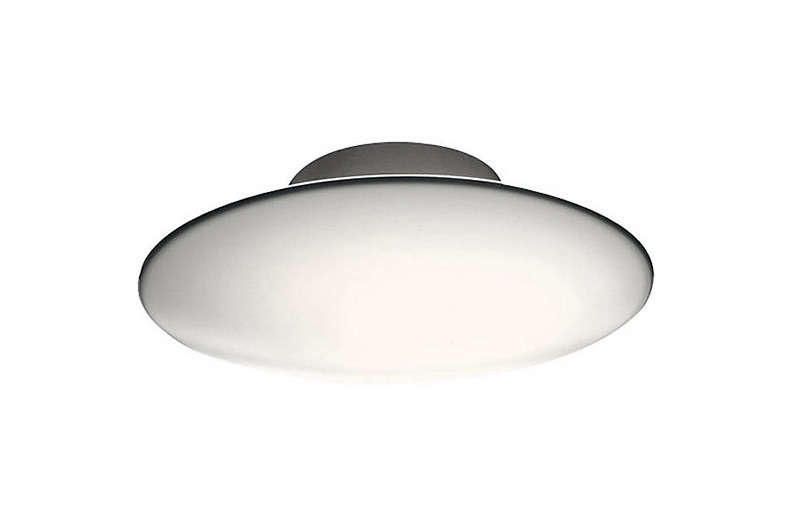
The AJ Eklipta Wall Sconce is the kind of light fixture that quietly enters a room, says absolutely nothing dramatic, and somehow makes everything look more expensive. Designed by Danish architect and designer Arne Jacobsen for Louis Poulsen, the AJ Eklipta is a round, opal-glass wall lamp with a calm glow, a clean silhouette, and the confidence of a design that has survived decades without needing a trendy makeover. In a world where some wall sconces look like they are auditioning for a science-fiction movie, the AJ Eklipta keeps things beautifully simple.
At first glance, it may look like a glowing disc. That is exactly the point. The sconce is all about purity of form: a circular shade, soft diffused light, and minimal visual noise. Yet behind that simplicity is a serious design pedigree. The fixture was originally created for architectural projects such as Rødovre Town Hall and later used in other Jacobsen-designed spaces, including St. Catherine’s College in Oxford. Today, it remains a favorite for homeowners, interior designers, architects, and anyone who believes lighting should do more than merely prevent people from bumping into furniture.
What Is the AJ Eklipta Wall Sconce?
The AJ Eklipta Wall Sconce is a minimalist wall and ceiling light produced by Louis Poulsen, one of Denmark’s most respected lighting manufacturers. It features a hand-blown white opal glass shade mounted on a simple base, typically made from powder-coated spun aluminum. The glass shade diffuses light evenly, creating a soft, glare-reduced glow that works well in hallways, staircases, bathrooms, bedrooms, entryways, covered patios, and modern living areas.
Unlike decorative sconces that rely on ornamental arms, exposed bulbs, or shiny metal gymnastics, the AJ Eklipta focuses on one strong shape: the circle. It is available in several sizes, commonly around 8.7 inches, 13.7 inches, and 17.7 inches in diameter, depending on the version and market. Smaller versions are often used as wall sconces, while larger models can work beautifully as flushmount ceiling lights or statement wall lamps. It is a versatile fixture, but not in the “Swiss Army knife with a lampshade” way. It is versatile because the design is so restrained that it adapts naturally to many interiors.
The Design Story: Arne Jacobsen and Architectural Lighting
Arne Jacobsen was not merely designing lamps; he was designing entire environments. His work often blended architecture, furniture, lighting, textiles, and hardware into one unified experience. The AJ Eklipta reflects that total-design mindset. It was created in the 1950s during a period when Jacobsen’s architecture leaned toward precision, geometry, and functional clarity. In other words, no unnecessary frills, no decorative shouting, and absolutely no “because we had extra brass lying around” design choices.
The lamp was used indoors on stairways and outdoors as a wall fixture, which tells us a lot about its character. It was not meant to be a delicate art object that panics at the sight of real life. It was designed for architecture: walls, circulation spaces, building exteriors, public interiors, and everyday movement. Its clean round face helped reinforce the geometry of Jacobsen’s buildings, while the opal glass softened the practical need for illumination.
Why the AJ Eklipta Still Looks Modern
Many mid-century designs age well because they avoid chasing fashion. The AJ Eklipta is a perfect example. It does not depend on a trendy color, oversized hardware, or a dramatic shape that screams, “Look at me, I have a Pinterest account.” Instead, it uses proportion, material, and light quality. That is why it can sit comfortably in a modern apartment, a renovated ranch home, a Scandinavian-inspired house, a boutique hotel corridor, or a minimalist bathroom.
A Shape That Works Almost Anywhere
Circles are visually friendly. They soften straight architectural lines, balance rectangular doors and windows, and bring a quiet rhythm to a wall. A row of AJ Eklipta sconces in a hallway can feel architectural and intentional, while a single fixture near a bed or entry door can feel warm and welcoming. Because the profile is relatively low and simple, it does not compete with art, mirrors, tile, or furniture.
Soft Light Without the Harsh Drama
The white opal glass shade is one of the fixture’s biggest strengths. It diffuses the bulb or LED source, reducing glare and spreading light across the surface of the glass. The result is ambient illumination rather than a sharp spotlight. This makes the AJ Eklipta especially useful in spaces where comfort matters: bedrooms, bathrooms, stairwells, and transitional areas. Nobody wants a hallway light that feels like an interrogation lamp. The Eklipta politely refuses that assignment.
Materials and Build Quality
The AJ Eklipta Wall Sconce is typically described with two core materials: hand-blown white opal glass and powder-coated spun aluminum. The hand-blown glass gives the fixture its soft luminous surface and subtle crafted character. Because glass production can create slight variations, each shade has a sense of material authenticity. It is refined, but not sterile.
The aluminum structure provides support without adding visual heaviness. The fixture is generally offered in a white finish, allowing the glass and the light itself to remain the focus. This is a very Louis Poulsen move: the product is not simply a decorative object; it is a tool for shaping atmosphere. The design philosophy is less “look at the lamp” and more “notice how good the room feels.” Sneaky? Maybe. Effective? Absolutely.
Common Sizes and Where to Use Them
The AJ Eklipta is available in multiple sizes, and choosing the right one depends on where it will be installed and how much visual presence you want. The smallest size, around 8.7 inches, works well in compact hallways, powder rooms, beside beds, or in pairs around a mirror. It offers a clean glow without overwhelming a small wall.
The medium size, around 13.7 inches, is the sweet spot for many homes. It is large enough to feel intentional but not so large that it takes over the room like a polite Scandinavian moon. Use it in staircases, entryways, bathrooms, mudrooms, or along a corridor. The large size, around 17.7 inches, has more architectural presence and works well on broad walls, high-ceilinged spaces, exterior walls, or as a ceiling-mounted flushmount where allowed by the product version.
Indoor and Outdoor Applications
One reason the AJ Eklipta Wall Sconce remains popular is its flexibility. Depending on the specific version, lamping option, and rating, it may be suitable for indoor use, damp locations, or wet locations. Buyers should always check the exact product specification before installation, especially for bathrooms, covered patios, or exterior walls. Lighting ratings are not the place to “wing it.” Electricity has a famously poor sense of humor.
Hallways and Staircases
The AJ Eklipta shines in hallways and staircases because these areas need clear, comfortable light without bulky fixtures. Mounted in a sequence, the sconce creates rhythm and wayfinding. It helps the space feel designed rather than merely lit. In stairways, the larger versions can create a strong architectural effect, especially when spaced evenly along the wall.
Bathrooms and Powder Rooms
In a bathroom, the AJ Eklipta can bring a spa-like softness. It works especially well as an ambient layer around mirrors, vanities, or bathing areas. For task-heavy grooming, it should be paired with more direct vanity lighting, because soft ambient light is flattering but not always precise. Translation: it will make the bathroom look great, but your tweezers may still need backup.
Bedrooms and Reading Corners
As a bedside wall sconce, the AJ Eklipta is calm and sculptural. It is not a focused reading lamp in the way an adjustable arm sconce would be, but it creates a warm background glow that makes a bedroom feel finished. For reading, pair it with a directional lamp or choose a layout where the Eklipta provides mood lighting while another source handles the tiny-print detective novels.
Exterior Walls and Covered Entries
For outdoor use, the AJ Eklipta can create a refined, modern entry. Its circular opal form looks excellent against brick, stucco, concrete, painted siding, and wood cladding. On exterior walls, the glow is welcoming without being fussy. Again, make sure the exact model is rated for the intended outdoor location before purchase and installation.
Lighting Performance: What Kind of Glow Should You Expect?
The AJ Eklipta is best understood as an ambient wall light. It provides a soft, diffused glow rather than a narrow beam. Some LED versions may offer warm color temperatures, commonly around the warm-white range, which helps create a comfortable residential atmosphere. The opal glass prevents the lamp from feeling harsh and gives the fixture its signature luminous-disc effect.
If you are lighting a long hallway, several AJ Eklipta fixtures can provide a balanced lighting scheme. If you are lighting a single small room, one fixture may serve as a beautiful accent but may not be enough as the only light source. Think of it as the lighting equivalent of good background music: it sets the mood wonderfully, but it may not carry the entire concert alone.
AJ Eklipta vs. a Typical Wall Sconce
A standard wall sconce often functions as decoration first and lighting second. The AJ Eklipta reverses that priority. It is decorative because it is useful, well-proportioned, and beautifully made. The difference becomes clear once it is installed. Instead of throwing odd shadows or exposing a glaring bulb, it turns into a calm circle of light that supports the room.
Compared with industrial sconces, it feels softer. Compared with ornate traditional sconces, it feels cleaner. Compared with cheap globe lights, it feels more deliberate and architectural. The price is higher than mass-market alternatives, but the design value comes from its history, materials, proportions, and long-term visual relevance. It is the kind of fixture people keep, not the kind they replace when the next micro-trend arrives wearing matte black and calling itself “edgy.”
How to Style the AJ Eklipta Wall Sconce
The AJ Eklipta works best when you give it breathing room. Because it is circular and luminous, it benefits from clean wall space around it. On a white wall, it blends quietly and lets the glow become the detail. On a darker wall, the opal disc becomes more graphic and dramatic. Against brick or textured plaster, it introduces a smooth modern contrast.
Use Repetition for Architectural Impact
One AJ Eklipta is elegant. Three in a row can be stunning. Repetition is one of the best ways to use this fixture, especially in hallways, staircases, hotel-style corridors, or exterior facades. The circular form creates a visual beat, like punctuation marks made of light. Very fancy punctuation, admittedly.
Pair It With Natural Materials
The sconce looks excellent with oak, walnut, limestone, travertine, concrete, linen, and handmade tile. Its simplicity allows rich materials to shine without visual conflict. In Scandinavian interiors, pair it with pale wood and soft textiles. In modern organic interiors, use it against plaster or warm neutral walls. In a mid-century space, it works beautifully with teak, leather, and low-profile furniture.
Let It Contrast With Dark Walls
On navy, charcoal, forest green, or deep brown walls, the AJ Eklipta becomes a glowing graphic circle. This can be especially effective in powder rooms, dining corners, and entryways. The design remains simple, but the contrast adds drama. It is the lighting equivalent of wearing a crisp white shirt with a black suit: simple, timeless, and annoyingly effective.
Buying Tips Before You Choose
Before buying the AJ Eklipta Wall Sconce, confirm the size, lamping, voltage, mounting requirements, dimming compatibility, and location rating. Some versions use replaceable bulbs, while others may include LED options. Some are appropriate for damp or wet locations, while others may have different installation limits. Product listings can vary, so read the specification sheet carefully.
Also consider scale. A small sconce can look lost on a large exterior wall, while a large one can dominate a narrow hallway. Use painter’s tape or a paper template to test the diameter on your wall before ordering. It is a low-tech trick, but it saves high-priced regret. Your future self may send a thank-you note.
Installation and Maintenance
Professional installation is strongly recommended, especially for hardwired wall lights and outdoor applications. The fixture should be mounted to the correct junction box and installed according to local electrical codes. If the model is being used outdoors or in a bathroom, the rating and sealing details matter even more.
For maintenance, the opal glass should be cleaned gently. A soft dry cloth is usually enough for dust. For fingerprints or light residue, use a mild detergent with a damp cloth, then allow the glass to dry completely before turning the lamp back on. Avoid abrasive cleaners, harsh chemicals, and aggressive scrubbing. Hand-blown glass deserves better treatment than a frying pan after taco night.
Is the AJ Eklipta Wall Sconce Worth It?
The AJ Eklipta is worth considering if you value authentic design, soft light, durable materials, and architectural simplicity. It is not the cheapest wall sconce, and it is not trying to be. Its appeal lies in timelessness. You are buying a fixture with real design history, produced by a respected lighting brand, and capable of working across many interior styles.
It may not be ideal if you need a highly directional reading lamp, a decorative statement full of metal details, or a budget fixture for a quick renovation. But if you want a wall light that looks refined today and will still make sense years from now, the AJ Eklipta is a strong choice. It is quiet luxury before quiet luxury needed a hashtag.
Real-World Experience: Living With the AJ Eklipta Wall Sconce
The experience of living with an AJ Eklipta Wall Sconce is different from simply admiring it in a showroom photo. In pictures, it appears clean, round, and elegant. In real life, its biggest strength is atmosphere. When switched on in the evening, the opal glass does not blast the room with light. Instead, it glows gradually across its surface and creates a soft halo around the fixture. That halo is where the magic happens. A plain hallway suddenly feels like part of the home, not just the place where everyone drops shoes and forgets umbrellas.
In an entryway, the AJ Eklipta makes an excellent first impression. Guests may not immediately say, “What a historically significant Danish lighting fixture,” because most guests are normal people. But they will notice the space feels calm, warm, and intentional. The round shape softens the usual hard edges around doors, trim, and stair rails. It gives the wall a focal point without turning the fixture into a diva. The lamp is present, but it does not demand applause.
In a bathroom, the sconce can be wonderfully flattering as ambient light. It gives tile, plaster, and mirrors a softer appearance, especially when paired with warm bulbs or warm LED options. However, it is best used as part of a layered lighting plan. For shaving, makeup, or detailed grooming, a more direct vanity light is helpful. The Eklipta is the friend who makes everyone look good at dinner; it is not the friend who brings a spreadsheet and solves every technical problem.
In a bedroom, the fixture brings a peaceful, hotel-like feeling. Mounted beside the bed or on a nearby wall, it creates enough glow for winding down, relaxing, or moving around at night without waking the entire household. It is especially effective in minimalist bedrooms where table lamps would clutter small nightstands. The only caution is that it does not behave like an adjustable reading lamp. If bedtime reading is a serious sport in your home, pair it with a directional task light.
One of the best uses is in a staircase. Stairs often suffer from lighting that is either too harsh or too boring. A series of AJ Eklipta sconces solves both problems. The repeated discs guide movement, highlight the architecture, and add a sense of rhythm. The effect feels custom and considered, even if the rest of the house is currently negotiating with laundry baskets and charging cables.
Maintenance is also pleasantly simple. Because the fixture has such a pure form, there are fewer decorative crevices to collect dust. The glass surface needs gentle cleaning, but not constant attention. The white finish and opal shade keep the look fresh, though fingerprints can show during installation. Once mounted, it becomes one of those design pieces that quietly earns its keep every night.
The main emotional experience of the AJ Eklipta is calm. It does not make a room feel trendy; it makes it feel settled. It works especially well for people who prefer long-lasting design over seasonal decoration. If your home leans modern, Scandinavian, mid-century, Japandi, or architectural minimalist, the AJ Eklipta feels natural. If your space is more traditional, it can still work as a clean contrast. That is the advantage of a simple circle: it rarely argues with the room.
Conclusion
The AJ Eklipta Wall Sconce is more than a round wall light. It is a lesson in how simplicity can be powerful when the proportions, materials, and light quality are right. Designed by Arne Jacobsen and produced by Louis Poulsen, it brings together mid-century modern history, hand-blown opal glass, soft ambient illumination, and architectural flexibility. Whether installed in a hallway, bathroom, bedroom, stairwell, or exterior entry, it adds warmth without clutter and style without showing off.
For homeowners and designers seeking a timeless wall sconce, the AJ Eklipta remains a compelling choice. It is calm, practical, elegant, and quietly iconic. In other words, it does exactly what great lighting should do: it makes the space better, then politely lets you take the credit.
Note: This article is original editorial content based on real product information, design history, and current lighting references related to the AJ Eklipta Wall Sconce.