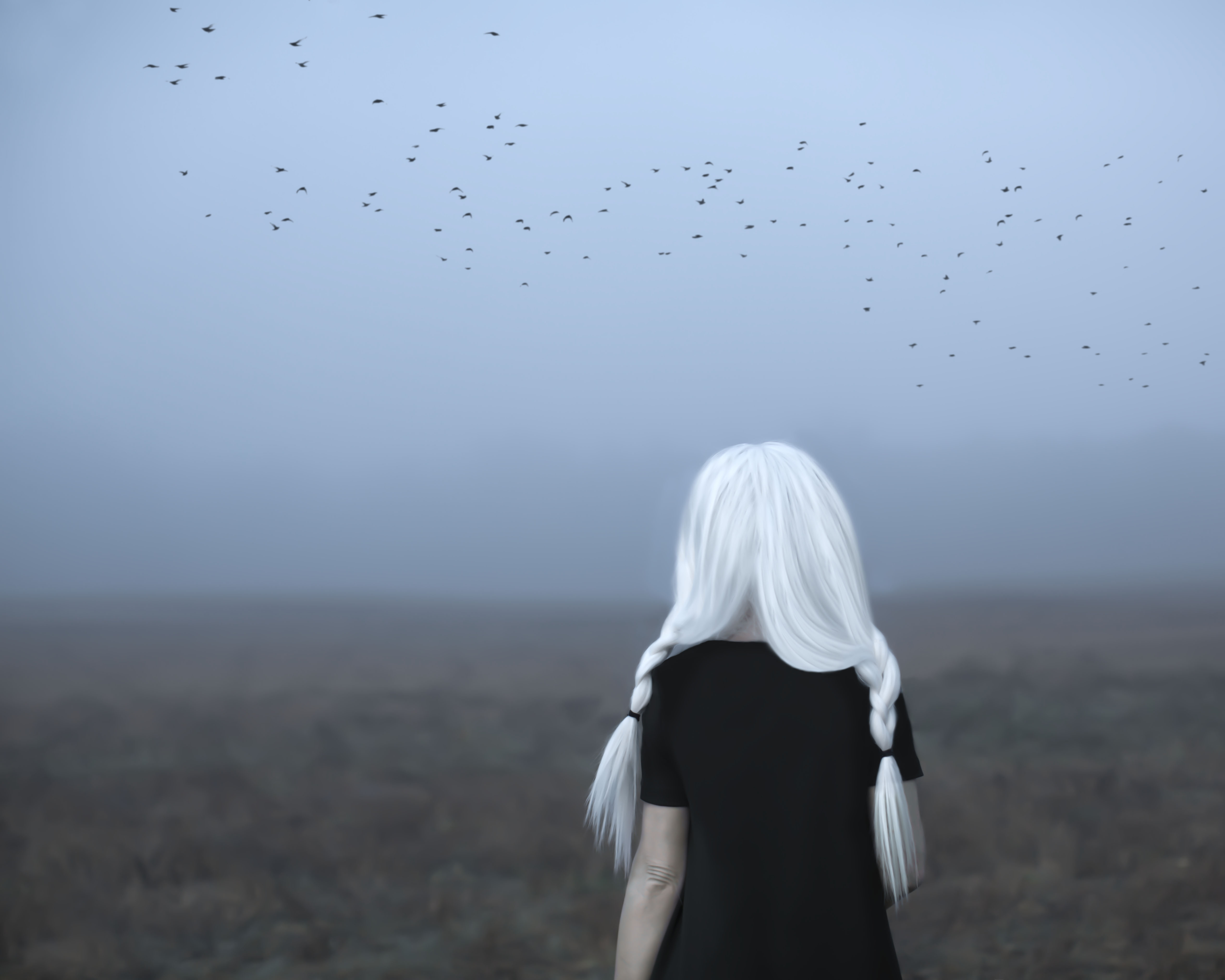
Grief is not especially cooperative. It ignores calendars, arrives without knocking, and occasionally interrupts an ordinary Tuesday because a song, a scent, or a lonely coffee cup remembers something before you do. A conceptual photography series about grief attempts an ambitious task: giving visible form to an experience that often feels impossible to explain.
Rather than documenting sadness in a literal, photojournalistic way, conceptual grief photography uses staged scenes, symbolic objects, unusual lighting, self-portraiture, visual repetition, and carefully arranged sequences. The goal is not simply to show a person crying. It is to translate absence, memory, anger, numbness, love, confusion, and survival into photographs that communicate beyond words.
That approach reflects the complexity of grief itself. Loss can affect mood, concentration, energy, sleep, appetite, identity, and a person’s sense of safety. It may follow a death, but it can also emerge after divorce, illness, migration, lost employment, family separation, or another major life change. There is no single emotional script that everyone follows.
What Makes Grief Photography Conceptual?
Conceptual art places the idea behind the work at the center of the creative process. A photograph can be technically beautiful, but in conceptual photography, sharp focus and attractive lighting are supporting actors rather than the entire cast. The image succeeds when its visual decisions serve a larger thought, question, or emotional experience.
A traditional portrait might show a bereaved person sitting beside a window. A conceptual portrait might place that person in a room where every chair is covered except one. It might show them carrying an empty picture frame through a field, standing waist-deep in fabric, or reaching toward a doorway filled with light. None of these scenes needs to represent a literal event. They make the internal world of grief physically visible.
The camera becomes less like a recording device and more like a translator. Unfortunately, grief speaks in riddles, so the translation often requires symbolism.
The Difference Between Illustration and Emotional Truth
Conceptual grief photography does not need to explain every symbol as though it were assembling flat-pack furniture. A photograph can remain mysterious while still feeling emotionally accurate. Viewers may not know why a figure is surrounded by feathers, water, smoke, or broken glass, yet they can recognize vulnerability, pressure, distance, or transformation.
This is where emotional truth becomes more important than literal accuracy. A person may never have stood in an abandoned hallway wearing a soaked evening dress. Yet the image can still express the exhausting sensation of moving through daily life after a devastating loss.
Why Grief Resists a Neat Visual Timeline
Popular discussions sometimes present grief as a staircase: complete one emotional stage, step upward, and eventually reach the top with excellent posture and a renewed enthusiasm for brunch. Real grief is rarely that tidy.
People can experience sadness, anger, disbelief, guilt, relief, anxiety, longing, gratitude, and even laughter within the same day. Some emotions disappear and later return. Others coexist in ways that appear contradictory. Relief does not cancel love. Laughter does not prove that mourning is over. A good conceptual photography series respects this disorder instead of forcing every image into a predictable progression.
For that reason, the strongest projects often use cycles, echoes, interruptions, or repeated motifs. An object may appear in several photographs but change slightly each time. A room may grow brighter without becoming cheerful. A figure may move toward the camera in one image and vanish completely in the next.
Grief as an Ongoing Relationship
Contemporary bereavement research often discusses “continuing bonds,” meaning the ways people maintain an inner relationship with someone who has died through memories, rituals, belongings, imagined conversations, and other forms of connection. These bonds can provide comfort, although their effects differ according to the person and circumstances.
Photography is especially suited to exploring these bonds because every photograph already contains a conversation between presence and absence. It shows what stood before the lens, but it also reminds us that the photographed moment is gone. In grief photography, that tension is not a technical side effect. It is often the entire point.
The Visual Language of a Conceptual Grief Series
Empty Spaces
An unoccupied bed, a chair turned toward a wall, or an empty place at a table can communicate loss without showing a face. Negative space becomes active rather than decorative. The missing person seems to occupy the emptiness, creating the strange feeling that absence itself has entered the room and is now refusing to leave.
Domestic spaces are particularly powerful because grief frequently collides with ordinary routines. The kitchen still needs cleaning. Laundry continues reproducing in its mysterious natural habitat. Mail arrives for someone who is no longer there. Photographing these spaces can reveal how the everyday world continues even when the grieving person feels temporarily disconnected from it.
Personal Objects and Memory
Clothing, handwritten notes, tools, jewelry, medicine bottles, photographs, toys, and household objects can function as emotional anchors. Their value is not determined by price. A chipped mug may carry more narrative weight than an expensive heirloom because it still holds the shape of a daily ritual.
Artists can photograph these objects exactly as they were found or place them inside carefully staged compositions. Repetition is useful: the same coat might appear hanging in a doorway, floating in water, folded on a bed, and finally sealed inside a box. The changing context allows the object to represent memory, longing, resistance, and eventual transformation.
The Body as a Landscape
Grief is emotional, but it is also physical. It can feel heavy, hollow, restless, frozen, or painfully alert. Conceptual self-portraits often use posture and gesture to express these sensations. A tightly folded body may suggest protection. Blurred movement can imply agitation or disorientation. A face concealed by hair, fabric, shadow, or an object may represent numbness or a disrupted sense of identity.
The face does not always need to appear. Hands gripping a doorframe or feet planted beside an untouched pair of shoes may tell a more intimate story than a conventional close-up.
Light, Shadow, and Color
Darkness is an obvious visual shorthand for grief, but an entire series of underexposed gray images can become as subtle as a foghorn. Light works best when it contributes to the idea rather than merely declaring, “Attention: sadness is happening.”
Harsh midday light can create emotional exposure. Flat fluorescent light may suggest hospital rooms, bureaucracy, or emotional numbness. Warm light entering an otherwise empty room can communicate affection that remains after loss. Bright colors can be just as effective as muted ones, especially when grief exists inside a world that appears stubbornly cheerful.
Repetition and Sequencing
A photography series is more than several related images standing politely beside one another. Sequence produces meaning. The order in which viewers encounter photographs can create anticipation, interruption, memory, or release.
The International Center of Photography emphasizes the development of coherent visual narratives, including the relationship between personal voice, composition, emotional meaning, and image sequencing. A grief series benefits from the same discipline: each photograph should contribute something new while remaining connected to the project’s central idea.
How Contemporary Artists Photograph Grief
Recent photographic projects demonstrate that mourning can be represented without relying on a single visual formula.
In Olivia Crumm’s series Wake, grief after her father’s death becomes a world that shifts between ordinary domestic life and surreal staging. Drawing partly from her experiences as a caregiver during his illness, Crumm constructs photographs involving herself, relatives, and friends. The images suggest that loss does not simply alter one emotion; it bends the atmosphere of everyday reality.
Alana Perino’s Pictures of Birds examines a family home affected by loss. Rather than treating the house as a passive setting, the photographs allow rooms, possessions, natural elements, and traces of family history to operate like characters. The work shows how a place can feel occupied by memory even when someone is missing.
Katherine Hubbard’s The Great Room grew from collaboration with her mother during a period of severe memory loss. Daily activities were transformed into layered black-and-white photographs about care, intimacy, vulnerability, and the unstable nature of memory. The project illustrates how grief can begin before a physical death, particularly when illness gradually changes a familiar relationship.
Rose-Lynn Fisher approached emotion on an entirely different scale by photographing the microscopic structures left behind by dried tears, including tears associated with grief, joy, irritation, and reunion. Her images turn something fleeting and private into a detailed physical landscape.
These projects look very different, yet each uses photography to examine something that ordinary language struggles to hold. One builds surreal scenes, another studies a home, another documents care, and another enlarges tears until emotion resembles geography.
Can Making Photographs Help Someone Process Loss?
Creative activity can give people a nonverbal way to organize difficult experiences. Art-making may help externalize feelings, preserve memories, develop personal narratives, and create a sense of connection. Research into art and narrative programs for bereaved participants has reported potential psychosocial benefits, while museums and art-therapy organizations continue to explore how creative work can support reflection around death and loss.
However, making a personal photography project is not automatically the same as receiving art therapy. The American Art Therapy Association describes art therapy as a mental health profession involving art-making, psychological theory, and a therapeutic relationship with a trained clinician. A self-directed photo series may be meaningful, calming, or revealing, but it should not be marketed as clinical treatment unless appropriately qualified professionals are involved.
The Camera Creates Useful Distance
Photography can place a small but important frame around an overwhelming experience. Instead of confronting “all of grief,” the artist can focus on one room, one object, one gesture, or one memory. That frame does not eliminate pain, but it may make the experience more approachable.
The technical process can also provide structure. Selecting a location, arranging light, setting a timer, reviewing contact sheets, editing images, and building a sequence require attention. During a period that feels chaotic, the act of making deliberate choices can restore a modest sense of agency.
How to Develop a Conceptual Photography Series About Grief
Begin With a Question, Not an Aesthetic
“I want the pictures to look dark and cinematic” is a visual preference, not yet a concept. A stronger starting point is a question:
- How does a home change after someone leaves it?
- What happens to identity when a relationship ends?
- Can an object hold the memory of its owner?
- How does anticipatory grief differ from mourning after death?
- Why do ordinary routines feel surreal after loss?
The question should be open enough to explore across multiple images but specific enough to prevent the project from becoming a general collection of attractive gloom.
Create a Symbolic Vocabulary
List objects, colors, locations, gestures, textures, weather conditions, and recurring memories connected with the loss. Then consider what each might communicate visually.
Water could suggest cleansing, danger, memory, distance, or a lack of control. A closed door might represent privacy in one image and emotional separation in another. Flowers could symbolize mourning, but wilted flowers are not compulsory. Grief photography has survived quite a few dead bouquets already.
Personal symbols are usually more convincing than universal clichés. A jar of fishing lures, an unfinished crossword puzzle, or a dent in the couch may carry an emotional history that no generic symbol can reproduce.
Choose an Approach
A grief photography series might use staged self-portraits, documentary observations, still lifes, archival family images, landscapes, experimental exposures, collage, projections, or a combination of methods. The approach should match the subject.
A project about fragmented memory might use layered negatives or partial obstructions. A series about repetitive caregiving could use consistent framing and recurring gestures. A project about emotional disorientation may deliberately shift between visual styles, although those changes should still feel intentional.
Edit Ruthlessly but Compassionately
Not every emotionally important photograph belongs in the final series. Some images may matter deeply to the artist but repeat information already expressed more effectively elsewhere. Editing does not devalue the memory behind an image. It strengthens the work’s ability to communicate.
Print small copies or arrange thumbnails on a screen. Look for visual rhythms, repeated ideas, abrupt transitions, and weak images that depend too heavily on explanation. A strong sequence should reward viewers who know nothing about the artist’s private history.
Ethical Questions Behind Personal Grief Photography
Photographing grief can expose intensely private experiences. When other people appear, informed consent should extend beyond permission to press the shutter. Participants should understand the project’s purpose, where the images may appear, and whether online publication could make them effectively permanent.
Special care is needed when photographing children, illness, medical environments, funerals, suicide loss, or people experiencing acute distress. An image can be artistically powerful and still be ethically inappropriate to publish.
Artists should also consider how the deceased person is represented. Does the series honor a complex human being, or reduce that person to a plot device in someone else’s artistic identity? There may not be a perfect answer, but asking the question matters.
Avoid Turning Pain Into Decoration
Beautiful photography can engage viewers, but visual elegance should not romanticize suffering. Grief is not automatically profound, noble, or photogenic. Sometimes it is repetitive, irritating, lonely, administrative, and deeply inconvenient.
Including these less glamorous realities can make a series more honest. A photograph of insurance forms, cold leftovers, or a phone full of unanswered messages may communicate more than an elaborately staged image involving smoke machines and twelve yards of black chiffon.
Why Viewers Connect With Images of Loss
Viewers bring their own histories to photographs. A single image of an empty hallway may remind one person of a childhood home, another of a hospital, and another of a relationship that ended years earlier. Conceptual photography leaves room for these associations.
That openness can create recognition without demanding that every viewer share the artist’s exact experience. The photograph says, “This is one shape grief can take,” rather than claiming, “This is what grief always looks like.”
Art can also create a witnessing space. Private grief often feels invisible because ordinary conversation has limits. Friends may change the subject, offer hurried solutions, or become uncomfortable when mourning lasts longer than expected. A sustained photography series refuses that hurry. It asks viewers to remain with the experience for more than a few seconds.
Conclusion: Photographing What Is No Longer There
A conceptual photography series about grief cannot solve loss, and it should not pretend to. Its power comes from giving form to what feels formless. Through empty rooms, altered objects, obscured bodies, repeated gestures, and shifting light, photography can make emotional absence visible without reducing it to a simple explanation.
The best grief photography is not necessarily the darkest, most dramatic, or most technically perfect. It is the work that feels specific, ethically considered, and emotionally awake. It allows grief to be contradictory: painful and loving, private and universal, heavy and occasionally absurd.
Most importantly, it recognizes that mourning is not simply about leaving someone behind. It may also involve learning how memory, identity, and love continue in a changed form.
A Final Experience-Based Reflection on Grief Photography
Experiencing a conceptual grief serieswhether as its creator, participant, or vieweris rarely passive. The images can activate memories before the conscious mind has identified why. A familiar wallpaper pattern, the curve of a hand, or light falling across an empty pillow may suddenly connect with a private loss. The reaction may be immediate, delayed, quiet, or unexpectedly physical.
For the photographer, the earliest sessions can feel awkward. Grief is enormous, while the available materials may seem embarrassingly ordinary: a camera, a lamp, an old shirt, and a room that still needs vacuuming. Yet ordinary materials are often precisely where the emotional force lives. Loss is experienced not only during ceremonies or dramatic moments but while opening cabinets, hearing floorboards creak, or reaching for a phone before remembering there is no one to call.
Creating the first image may provide relief simply because something internal has become visible. The photograph does not need to be good. It has performed an initial function by moving an experience from the mind into the physical world. Later, the artist can decide whether it belongs in a public series or should remain private.
Repeated sessions may reveal changes that are difficult to notice day by day. Early photographs might feel compressed, enclosed, or visually chaotic. Later images may contain more distance, humor, color, or empty space. That does not necessarily indicate a clean journey from pain to healing. It may simply show that the artist’s relationship with the loss is becoming more complex.
There can also be frustration. A carefully staged scene may look emotionally false. A spontaneous photograph of a grocery receipt may contain more truth than an expensive production. Cameras are unhelpfully honest in this way. They frequently ignore the image an artist planned and point toward the one the project actually needs.
Participants may experience the process differently from the photographer. Being photographed can feel validating because someone is paying sustained attention to a difficult story. It can also feel exposing. Regular check-ins, clear boundaries, and permission to stop are essential. A participant should never feel obligated to reenact distress merely because the lighting is excellent.
For viewers, encountering the completed sequence may create a sense of companionship. The circumstances behind the photographs may be unfamiliar, but a gesture or object can still produce recognition. Someone who has lost a parent may connect with a series about divorce. Someone grieving a home, body, friendship, pet, career, or former identity may recognize the same language of disruption and longing.
Not every response will be sorrowful. Viewers may feel warmth, gratitude, tenderness, or even amusement. Humor can coexist with mourning because relationships contain funny memories, odd habits, family jokes, and moments of spectacular human clumsiness. Allowing those details into the work prevents the deceased or absent person from becoming a solemn symbol instead of a fully remembered individual.
The most meaningful experience may occur after the camera is put away. An artist notices the photographed object differently. A viewer calls someone they have been avoiding. A family begins discussing a memory that had remained unspoken. The series becomes less a monument to a finished past and more a place where continuing relationships, questions, and emotions can be acknowledged.
That is the quiet achievement of conceptual grief photography. It does not demand closure. It offers attention. It creates a frame spacious enough for pain, love, uncertainty, and the stubborn continuation of life to exist together.