Children are natural explorers, but even the bravest pint-sized adventurer occasionally needs a hand crossing the wobbly bridge between “I can’t do this” and “Look! I did it myself!” That temporary helping hand is the basic idea behind scaffolding in child development.
Scaffolding is a teaching and parenting strategy in which an adult provides carefully matched support while a child learns a new skill. As the child becomes more capable, the adult gradually reduces that support. The goal is not to produce a child who constantly waits for instructions. It is to help the child develop the knowledge, confidence, problem-solving ability, and self-regulation needed to work independently.
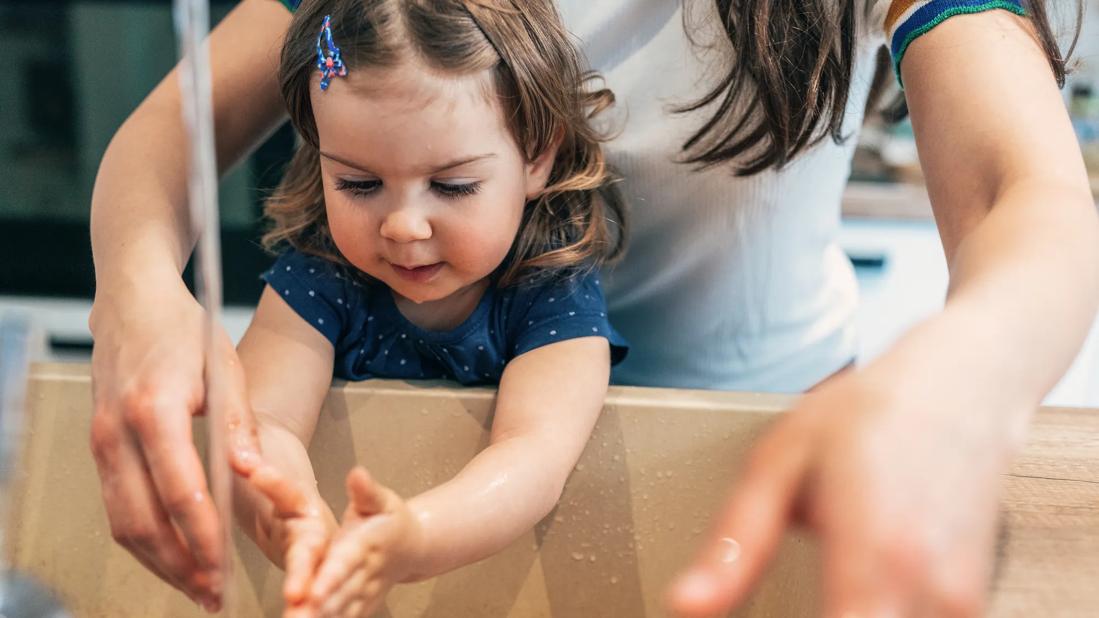
The strategy can be used while teaching a toddler to wash their hands, helping a preschooler build a block tower, guiding a student through a reading assignment, or coaching a teenager through a difficult decision. Done well, scaffolding turns everyday challenges into manageable learning opportunities instead of household-sized emergencies.
What Is Scaffolding in Child Development?
In child development, scaffolding means providing temporary, responsive assistance that helps a child complete a task they cannot yet manage alone. The support might include modeling a skill, offering a hint, asking a guiding question, breaking a task into smaller steps, providing a visual reminder, or simply offering encouragement.
The construction metaphor is surprisingly accurate. A physical scaffold supports workers while a building is being completed. Once the building can stand safely, the scaffold comes down. Likewise, adults support children while they are developing a skill, then step back as the child gains competence.
Effective scaffolding contains three essential ingredients:
- The child participates actively. The adult does not take over the entire task.
- The support matches the child’s current needs. Help is adjusted rather than delivered through a one-size-fits-all script.
- The support gradually fades. Responsibility shifts to the child as skills improve.
Organizations including the Cleveland Clinic and Mount Sinai Parenting Center describe scaffolding as a way to meet children at their current ability level while helping them move toward greater independence. NAEYC similarly emphasizes providing the right assistance at the right moment and in the right form.
The Theory Behind the Scaffolding Method
Scaffolding and the Zone of Proximal Development
The idea is closely connected to psychologist Lev Vygotsky’s concept of the zone of proximal development, commonly shortened to ZPD. This zone lies between what a child can already do independently and what is currently too difficult, even with assistance.
Inside that middle zone are tasks the child can accomplish with support from a more knowledgeable person, such as a parent, teacher, caregiver, older sibling, coach, or skilled peer. That is the sweet spot for scaffolding: challenging enough to encourage development but not so difficult that the child becomes completely lost.
For example, a preschooler may be able to recognize several letters independently but may not yet be able to write their name. An adult might demonstrate the first letter, provide dotted lines to trace, or verbally describe each movement. Those supports allow the child to practice a skill that is slightly beyond their independent ability.
Where the Term Came From
The educational use of the term became widely associated with the 1976 work of researchers David Wood, Jerome Bruner, and Gail Ross. Their tutoring research examined how adults could help children solve a task by controlling difficult parts, maintaining attention, demonstrating solutions, and reducing frustration.
Modern educators apply the concept in classrooms, early childhood programs, therapy settings, and homes. The IRIS Center at Vanderbilt University describes instructional scaffolds as temporary and adjustable supports that are gradually removed as learners master a task. The University of Florida also connects scaffolding with prior knowledge, engagement, and increasingly self-regulated learning.
How Scaffolding Works
Scaffolding is flexible, but the process generally follows a recognizable pattern.
1. Observe the Child
Before jumping in, watch what the child can already do. Which part of the task is manageable? Where does the child pause, guess, become frustrated, or ask for help?
This observation prevents adults from helping too much. A child who can put on a shirt but struggles with buttons does not need the adult to complete the entire dressing routine. The buttons are the learning target.
2. Choose a Reachable Next Step
The next challenge should stretch the child’s ability without launching them into educational outer space. A manageable challenge might involve one new step, a slightly more complex puzzle, a longer sentence, or a new way to solve a familiar problem.
3. Provide the Least Help That Works
Begin with a small prompt rather than immediately demonstrating the entire solution. You might ask, “What do you think comes next?” or point to a visual clue. If that is not enough, offer a clearer hint, model one part, or complete the first step together.
4. Let the Child Try
Scaffolding requires room for effort, mistakes, and correction. Adults sometimes become nervous during the silence between a question and a child’s answer. Give the child time to think before filling that silence with seventeen additional instructions and a motivational speech.
5. Reduce Support Gradually
As the child improves, remove prompts one at a time. A parent teaching a morning routine might initially use verbal reminders, a picture chart, and hands-on help. Later, the parent may use only the chart. Eventually, the child may complete the routine without assistance.
Gradual release is what distinguishes scaffolding from ordinary help. The adult is intentionally working toward becoming less necessary.
Examples of Scaffolding for Different Ages
Babies and Toddlers
Scaffolding begins long before worksheets and homework appear. A caregiver may place an interesting toy slightly beyond a baby’s reach, encourage movement, and reposition the toy if frustration becomes overwhelming. While teaching a toddler to use a spoon, the adult may guide the child’s hand before gradually allowing independent scooping.
Language development also involves natural scaffolding. When a toddler says, “Dog run,” an adult might respond, “Yes, the brown dog is running fast.” The response accepts the child’s communication while providing a richer language model.
NAEYC notes that adults scaffold infant and toddler learning by arranging environments, following children’s interests, adjusting assistance, and offering appropriately timed interactions.
Preschool Children
Preschool scaffolding often appears during play. Suppose a child wants to build a bridge with blocks, but the bridge keeps collapsing. Instead of rebuilding it, the adult might ask, “What could make the bottom stronger?” The adult could compare wide and narrow bases or demonstrate one stable arrangement before inviting the child to continue.
During early writing, teachers may provide alphabet cards, name labels, sound prompts, or opportunities to copy meaningful words. Reading Rockets emphasizes matching writing support to each child’s current developmental stage rather than providing more assistance than necessary.
Elementary-School Children
A teacher introducing multi-step math problems might first solve one aloud, explaining each decision. The class may solve the next problem together, complete another in pairs, and finally work independently. Visual organizers, sentence starters, vocabulary previews, checklists, and worked examples are all common instructional scaffolds.
For reading comprehension, a teacher might preview unfamiliar vocabulary, divide a text into sections, ask guiding questions, or model how to summarize a paragraph. These supports allow children to engage with challenging material while developing strategies they can later use alone.
Older Children and Teenagers
Scaffolding remains useful as children grow, although the support becomes less visible. A parent helping a teenager plan a long-term project might assist with creating deadlines and identifying materials without doing the research or writing.
Decision-making can also be scaffolded. Instead of issuing a command, an adult might ask the teenager to identify available choices, consider possible consequences, and explain which option best matches their goal. Over time, the teenager internalizes that process.
How Scaffolding Supports Child Development
It Builds Independence
Appropriate support gives children repeated opportunities to experience success without making success effortless. They learn, “I can make progress when I use a strategy,” rather than, “An adult will rescue me whenever something looks difficult.”
The Child Mind Institute describes scaffold parenting as providing warmth, structure, and encouragement while progressively allowing children to solve problems and make choices for themselves.
It Develops Executive Function Skills
Executive function skills help children focus attention, remember instructions, control impulses, plan actions, and switch strategies. Adults can support these abilities through predictable routines, modeling, games, reminders, and guided practice.
Harvard’s Center on the Developing Child explains that children strengthen these skills through practice supported by responsive adults. As children become more capable, adults can gradually step back.
It Encourages Problem-Solving
Rather than supplying answers, scaffolding helps children notice information, test ideas, and evaluate results. A useful prompt directs attention without stealing the intellectual work.
“What have you tried?” usually develops more thinking than “Here, let me do it.” The second sentence may be faster, but speed is not always the same as learning.
It Supports Emotional Regulation
Children often need assistance managing frustration before they can use their cognitive skills. Adults can acknowledge feelings, model calming strategies, break an overwhelming task into smaller parts, and encourage another attempt.
With repetition, children begin to use these strategies independently. Child Mind Institute guidance describes this supportive framework as a way to coach children through challenging situations while avoiding both abandonment and adult takeover.
It Builds Confidence and Persistence
Confidence does not grow only from praise. It grows from evidence: “I struggled, tried a strategy, accepted some help, and succeeded.” Scaffolded learning provides manageable experiences of effort and improvement, helping children become more willing to attempt unfamiliar tasks.
Useful Scaffolding Strategies for Parents and Teachers
- Model the process: Demonstrate a skill while explaining your thinking aloud.
- Break tasks into steps: Turn “clean your room” into sorting laundry, putting away books, and clearing the floor.
- Connect new learning to familiar knowledge: Use known words, experiences, or objects as starting points.
- Ask guiding questions: Try “What do you notice?” or “Which tool might help?”
- Offer limited choices: Two reasonable options support decision-making without creating chaos.
- Use visual supports: Picture schedules, diagrams, checklists, labels, and examples reduce memory demands.
- Provide sentence starters: Phrases such as “I predict that…” help children express developing ideas.
- Invite peer support: A classmate or sibling can sometimes model a strategy in relatable language.
- Allow wait time: Give children a genuine opportunity to think and respond.
- Fade assistance: Replace direct help with hints, then reduce hints as independence grows.
Guided play is another powerful form of scaffolding. It preserves children’s choice, curiosity, and enjoyment while an adult lightly shapes the environment or asks questions connected to a learning goal. The result feels more like discovery than a surprise staff meeting for preschoolers.
Common Scaffolding Mistakes
Giving Too Much Help
If an adult performs every difficult step, the child may finish the activity without learning the skill. Overhelping can also communicate that the adult does not believe the child is capable.
Giving Too Little Help
“Figure it out” is not scaffolding when the child has no strategy, background knowledge, or realistic way to begin. Productive struggle should be challenging, not defeating.
Using the Same Support for Every Child
Children differ in language, temperament, prior experience, attention, motor development, and cultural background. One child may benefit from a demonstration, while another needs a visual example or more processing time.
Failing to Remove the Support
A scaffold that never comes down becomes a permanent dependency. Adults should regularly ask whether a reminder, chart, prompt, or routine is still needed.
Correcting Every Mistake Immediately
Some errors are useful information. Allowing a block tower to wobble or a puzzle piece to land in the wrong spot gives children a chance to observe, reconsider, and revise.
Research on parental scaffolding connects responsive, autonomy-supportive interactions with children’s competence and self-regulation. The key is contingent supportassistance that changes according to the child’s behavior rather than a fixed amount of adult control.
How to Tell Whether the Support Level Is Right
Well-matched scaffolding usually keeps a child engaged while allowing meaningful effort. The child may struggle briefly, but can make progress with a prompt or demonstration. Over time, the child needs fewer reminders and begins applying the strategy in other situations.
The support may be too low if the child repeatedly freezes, guesses randomly, abandons the task, or cannot understand the first step. It may be too high if the adult is making nearly every decision, touching all the materials, answering every question, or correcting mistakes before the child notices them.
Children naturally develop at different rates. However, parents should speak with a pediatrician, teacher, or qualified child-development professional when a child consistently struggles with age-expected activities across settings, loses previously acquired skills, or experiences challenges that significantly interfere with daily life. Scaffolding can support learning, but it is not a substitute for an appropriate developmental evaluation.
Practical Experiences: What Scaffolding Looks Like in Real Life
The following composite experiences reflect common situations in homes and classrooms. They show how small changes in adult behavior can turn frustration into learning.
Experience One: The Zipper Battle
A four-year-old wants to zip a jacket independently but cannot insert the zipper pin correctly. The morning routine quickly starts resembling a tiny labor dispute. The adult’s first instinct is to zip the jacket and get everyone out the door.
A scaffolded approach begins by identifying the exact difficulty. The child can pull the zipper but cannot connect the two sides. The adult holds the bottom of the jacket steady and says, “Push this piece all the way into the box.” After several attempts, the child connects it, and the adult lets the child pull the zipper.
Over the next few days, the adult holds less of the jacket. Eventually, the support becomes a verbal reminder: “Check whether the pin is all the way down.” Soon the child manages the zipper alone. The process takes longer than simply doing it for the child, but the payoff is a reusable skill and a proud preschooler who suddenly wants to zip every jacket in the house.
Experience Two: The Blank Page Problem
An elementary-school student is asked to write a paragraph about an animal. The student knows plenty about dolphins but stares at the blank page and insists there is “nothing to write.” Telling the student to try harder adds pressure without supplying a strategy.
The teacher begins with three prompts: What does the animal look like? Where does it live? What makes it interesting? The child answers verbally. The teacher records a few keywords and provides the sentence starter, “Dolphins are interesting animals because…”
The student completes the sentence and uses the keyword notes to write two more. During the next assignment, the teacher provides questions but no sentence starter. Later, the student learns to create a three-question planning list independently.
The scaffold does not write the paragraph. It makes the invisible planning process visible until the student can perform it without assistance.
Experience Three: The Playground Disagreement
Two children want the same playground truck. One grabs it, the other shouts, and an adult approaches. The fastest solution would be to confiscate the truck or decide whose turn comes first. That might stop the argument, but it would not necessarily teach conflict resolution.
Instead, the adult helps the children slow down. Each child describes what happened. The adult asks, “What are two ways both of you could get a turn?” At first, the children shrug. The adult offers categories rather than a complete answer: “Could you use time, trade for another toy, or play together?”
The children decide to use a timer. In future disagreements, the adult reminds them to name possible solutions. Eventually, the children begin suggesting turns or trades before an adult intervenes.
The Lesson Across These Experiences
In every example, the adult resists two extremes: solving the entire problem and leaving the child completely unsupported. The adult observes, identifies the sticking point, provides just enough structure, and then withdraws.
That balance will not look identical every day. A tired child may need more help with a familiar task, while an enthusiastic child may suddenly need less. Scaffolding is responsive rather than rigid. It is less like following a recipe and more like adjusting the training wheels while the bicycle is movingoccasionally awkward, but highly effective when everyone keeps their fingers away from the spokes.
Conclusion
Scaffolding in child development is the practice of providing temporary, carefully matched support while a child learns something new. Parents, teachers, and caregivers can scaffold development by modeling skills, dividing difficult tasks into manageable steps, asking thoughtful questions, providing visual cues, supporting emotional regulation, and gradually reducing assistance.
The strategy works because it keeps children actively involved. Instead of completing tasks for them, adults create conditions in which children can stretch beyond their current abilities without becoming overwhelmed. The destination is not perfect performance on the first attempt. It is increasing independence, flexible thinking, confidence, and a willingness to keep learning.
The best scaffold is ultimately the one a child no longer needs.