Note: In this article, “this weekend” refers to the first major weekend and surrounding days of nationwide Black Lives Matter demonstrations after George Floyd was killed in Minneapolis on May 25, 2020. The names below are based on public reporting, social media documentation, and verified entertainment coverage from that period.
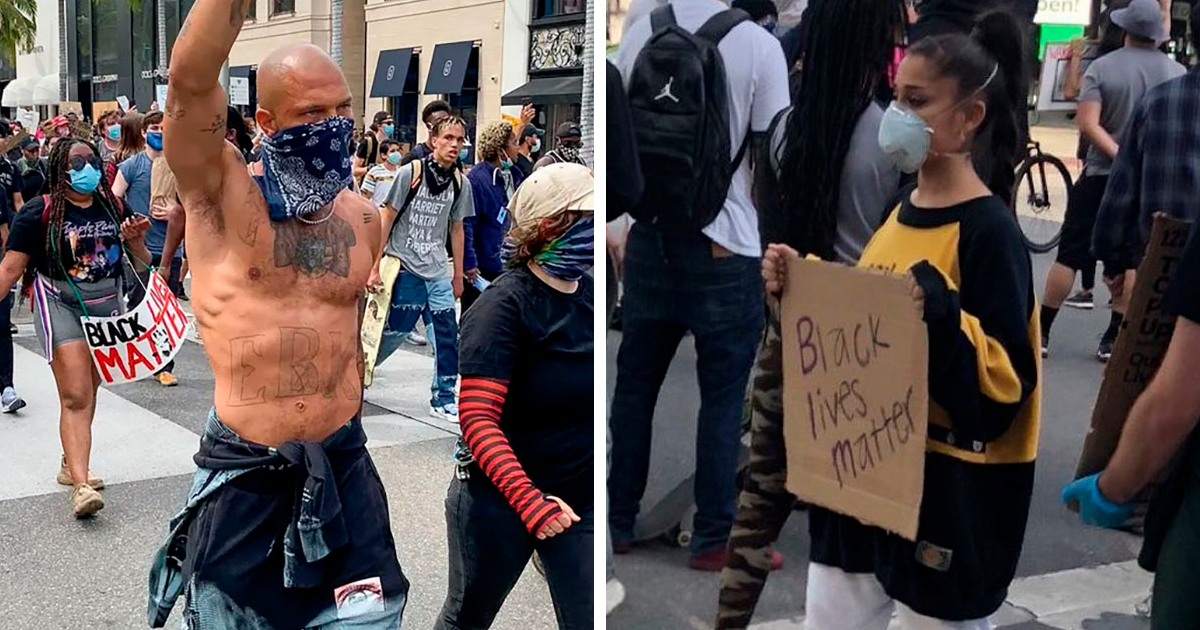
When crowds filled streets across America in late May and early June 2020, the message was not whispered. It was painted on cardboard, chanted through masks, written across city walls, carried past police barricades, and repeated until it became impossible to pretend not to hear it: Black lives matter.
The protests followed the killing of George Floyd, whose death became a national and global flashpoint in the fight against police brutality, racial injustice, and systemic racism. Millions of ordinary people marched. Students marched. Parents marched. Nurses marched after hospital shifts. Grandparents marched carefully, because sneakers and protest signs do not come with an age limit.
And, yes, famous people marched too.
Celebrity attendance did not make the movement important. The movement was already important. But when actors, musicians, athletes, models, and public figures stepped out from behind carefully managed feeds and joined protesters in the street, it amplified the message to millions of followers who might otherwise have treated the moment like just another headline between banana bread recipes and streaming recommendations.
Why Celebrity Protest Attendance Mattered
Black Lives Matter began in 2013 after the acquittal of George Zimmerman in the shooting death of Trayvon Martin. Founded by Alicia Garza, Patrisse Cullors, and Opal Tometi, the phrase grew into a decentralized racial justice movement focused on anti-Black racism, police violence, and broader systems of inequality.
By 2020, the movement was no longer just a hashtag. It was a global demand. After George Floyd’s death, demonstrations spread across U.S. cities and around the world. Research and reporting from that summer estimated that millions of Americans participated in protests, making the George Floyd demonstrations one of the largest protest movements in U.S. history.
Celebrity participation helped in three main ways. First, it drew media attention to peaceful marches that were often overshadowed by images of conflict. Second, it pushed conversations about racial justice into entertainment spaces, where audiences do not always expect civic urgency. Third, it reminded fans that activism is not only something people post about while wearing perfect lighting and a suspiciously wrinkle-free T-shirt.
29 Famous People Reported At Black Lives Matter Protests
1. Ariana Grande
Ariana Grande was photographed and discussed online after joining demonstrations in Los Angeles. She also used her platform to ask media outlets to cover peaceful protesters, not only scenes of destruction or confrontation. Her involvement helped push the phrase “peaceful protest” into timelines where fans might have been seeing only fragmented clips.
2. Halsey
Halsey became one of the most visible celebrity protesters of the early demonstrations. She documented her experience in Los Angeles and described helping treat injured protesters with medical supplies. Her posts were widely shared because they showed that being present at a protest can mean much more than holding a sign for a camera.
3. Kendrick Sampson
Actor and activist Kendrick Sampson, known for Insecure, was active in demonstrations and spoke publicly about being hit by rubber bullets during a Los Angeles protest. Sampson had long connected his public platform with organizing, making his presence feel less like a celebrity cameo and more like a continuation of existing advocacy.
4. Emily Ratajkowski
Model and author Emily Ratajkowski attended demonstrations and shared protest images calling attention to oppressive power structures. Her presence reflected how the 2020 protests drew people from across entertainment, fashion, sports, and media into a shared public space.
5. Machine Gun Kelly
Machine Gun Kelly joined protests in Los Angeles and was seen holding a sign with a message about silence and complicity. During a moment when many fans were watching celebrities carefully, his street-level participation stood out as more direct than a standard black-square post.
6. Mod Sun
Rapper and musician Mod Sun was reported alongside Machine Gun Kelly at demonstrations. In the larger picture, his involvement showed how protest participation often happened in clusters: friends, collaborators, and creative communities showing up together instead of acting as isolated public brands.
7. Ben Affleck
Ben Affleck attended a protest in Venice, California, where he carried a Black Lives Matter sign. His presence also intersected with local concerns about preserving the historic First Baptist Church of Venice, showing how national racial justice demands often connected with neighborhood-level issues.
8. Ana de Armas
Ana de Armas joined Ben Affleck at the Venice demonstration. At the time, she was already highly visible in entertainment media, so her participation brought additional attention to the protest and to the broader Black Lives Matter message.
9. Keke Palmer
Keke Palmer became one of the most talked-about figures of the protest wave after a video circulated of her speaking directly to National Guard members in Los Angeles. She urged them to march with protesters, turning a tense street moment into a widely discussed example of moral pressure, courage, and public accountability.
10. Timothée Chalamet
Timothée Chalamet was among the young Hollywood figures reported at Los Angeles protests. His attendance mattered partly because of his enormous youth following. When a celebrity with a devoted fan base shows up, the movement’s message travels into group chats, fan accounts, and timelines that news organizations do not always reach.
11. Michael B. Jordan
Michael B. Jordan did more than attend. At a Hollywood protest, he spoke about the entertainment industry’s responsibility to support Black creators, Black stories, and Black leadership. His remarks connected racial justice in the streets with racial equity inside boardrooms, casting offices, and production companies.
12. Cole Sprouse
Cole Sprouse, known for Riverdale, said he was detained during a Santa Monica protest. Importantly, he also urged people not to make his arrest the center of the story. That point mattered: celebrity involvement can amplify a cause, but it should not steal the microphone from the people most affected.
13. Jamie Foxx
Jamie Foxx joined demonstrators in San Francisco and had also been visible in Minneapolis after Floyd’s death. His participation carried emotional weight because he spoke not just as an entertainer, but as a Black father, artist, and public figure responding to repeated violence against Black communities.
14. Nick Cannon
Nick Cannon traveled to Minneapolis and appeared at demonstrations near the place where George Floyd died. He used his platform to call attention to the pain behind the protests and the long history that made the moment feel, to many Americans, like a breaking point rather than a sudden event.
15. John Boyega
John Boyega delivered one of the most powerful speeches of the protest period at a Black Lives Matter demonstration in London. Though not in the United States, his words echoed across American media. His emotional statement about race, family, and career risk became a defining celebrity protest moment.
16. Kanye West
Kanye West appeared at a Chicago protest and also made donations connected to the families of George Floyd, Ahmaud Arbery, and Breonna Taylor. His participation drew major media attention, in part because anything involving Kanye tends to enter the news cycle wearing a neon sign.
17. Harry Styles
Harry Styles was reported at a Los Angeles demonstration, where he joined protesters taking a knee. Styles had already publicly supported racial justice causes, and his attendance mattered because his global fan base ensured that protest images spread far beyond the city where they were taken.
18. Ellen Pompeo
Grey’s Anatomy star Ellen Pompeo joined Los Angeles protests and was photographed taking part in demonstrations. Her presence connected the movement to television audiences who had followed her for years, proving that activism sometimes arrives wearing scrubs only metaphorically.
19. T.R. Knight
T.R. Knight, also known for Grey’s Anatomy, was reported alongside Pompeo at Los Angeles demonstrations. Their attendance reflected how casts and entertainment communities were collectively responding to the movement rather than treating it as a distant political news item.
20. Shawn Mendes
Shawn Mendes participated in Black Lives Matter demonstrations and was reported among the musicians who showed up publicly. For pop stars, joining a protest can be a careful decision because every step is photographed, criticized, and debated. Still, showing up can also help normalize civic participation among younger fans.
21. Camila Cabello
Camila Cabello marched in support of Black Lives Matter and was reported attending protests with Shawn Mendes. Her presence added to the wave of pop musicians who moved from statements of solidarity into visible participation.
22. Pedro Pascal
Pedro Pascal was among the actors reported at demonstrations in support of Black Lives Matter. His involvement reflected the broad range of entertainment figures who joined the protests, from blockbuster stars to television actors to musicians and models.
23. Kristen Stewart
Kristen Stewart was reported at Black Lives Matter demonstrations in Los Angeles. Her attendance became part of a larger pattern of actors joining crowds rather than simply publishing polished statements. Sometimes the most meaningful public-relations strategy is not a strategy at all: just show up and listen.
24. Fiona Apple
Fiona Apple was also reported participating in demonstrations. Known for being outspoken and independent, Apple’s presence fit her public reputation as an artist uninterested in overly sanitized celebrity behavior. In other words, nobody expected her to issue a bland three-slide Notes app apology and call it a day.
25. Lili Reinhart
Lili Reinhart attended a Black Lives Matter protest in West Hollywood and used the moment to support both racial justice and LGBTQ+ solidarity. Her participation showed how many 2020 demonstrations connected racial justice with broader conversations about inclusion, identity, and equal protection.
26. Madelaine Petsch
Madelaine Petsch, another Riverdale star, was photographed at demonstrations in Los Angeles. Her attendance, along with other cast members, turned the show’s young fan community toward real-world political and social conversations.
27. Camila Mendes
Camila Mendes joined protests in Los Angeles and was reported alongside other Riverdale actors. Her involvement added to the sense that young Hollywood was not treating the protests as optional background noise.
28. Kevin Smith
Director Kevin Smith shared that he attended a Black Lives Matter march in Hollywood, describing it as crowded and peaceful. He also mentioned protesters receiving water and hand sanitizer, a small but telling detail from a protest period shaped by both racial justice demands and the COVID-19 pandemic.
29. Spike Lee
Spike Lee, whose films have long explored race, policing, power, and American contradiction, attended a Black Lives Matter vigil in New York City. His presence carried historical resonance because his work had been confronting many of these issues long before 2020 forced the country into a louder conversation.
What These Appearances Did And Did Not Mean
It is tempting to treat celebrity protest participation like a scoreboard. Who showed up? Who stayed home? Who posted too late? Who used the wrong font? The internet, as usual, came ready with binoculars and a clipboard.
But the more useful question is not whether celebrities deserve applause for marching. The better question is whether their attention helped direct more people toward the work already being done by organizers, families, lawyers, mutual aid groups, bail funds, policy advocates, and community leaders.
Celebrity presence can help a protest reach people who might not read a city council agenda or a civil rights report. It can also create problems if the famous person becomes the story. The strongest examples from 2020 were the ones where public figures redirected attention back to Black lives, police accountability, local organizing, and sustained action.
The Bigger Story Behind The Weekend
The 2020 Black Lives Matter protests did not appear out of nowhere. They were built on years of organizing after the deaths of Trayvon Martin, Michael Brown, Eric Garner, Breonna Taylor, Ahmaud Arbery, George Floyd, and many others whose names became part of a national demand to “say their names.”
What made the late May and early June protests so powerful was the combination of grief, anger, video evidence, pandemic isolation, and a growing refusal to accept business as usual. People had been stuck at home for months watching institutions fail in real time. Then Floyd’s killing forced a moral question into every living room: What are you willing to do when injustice is no longer abstract?
For famous people, the answer varied. Some donated. Some posted. Some marched. Some did all three. But the most meaningful actions were those that treated protest as a beginning, not a photo opportunity.
Experiences Related To The Topic: What It Felt Like To Watch Famous People March
For many observers, seeing famous people at Black Lives Matter protests created a complicated mix of emotions. On one hand, celebrity attention can feel useful. A single post from a major singer or actor can reach more people in five minutes than a local nonprofit can reach in five months with a heroic intern, a broken printer, and a newsletter open rate that makes everyone quietly sad.
On the other hand, protest is not a red carpet with angrier signage. The emotional center of the 2020 demonstrations belonged to Black communities, grieving families, local organizers, and ordinary people who had been demanding change long before celebrity cameras arrived. That distinction mattered. When famous people marched respectfully, listened, followed organizers’ instructions, and redirected attention to the cause, their presence could help. When they centered themselves, it risked becoming activism-flavored branding.
The most memorable protest experiences from that period were often not glamorous at all. They involved people passing out bottled water, volunteers offering masks and hand sanitizer, strangers checking whether others had been hit with tear gas, and marchers writing emergency contact numbers on their arms. It was summer, it was tense, and nobody’s protest shoes were as comfortable as they looked on Instagram.
People who attended marches often described a strange contrast: fear and community existing side by side. There were helicopters overhead, curfews announced, police lines forming, and the constant buzz of phones recording everything. But there were also chants rolling through crowds like thunder, drivers honking support, neighbors handing out snacks, and moments of silence so heavy that even a city seemed to hold its breath.
That is why celebrity attendance became such a visible part of the story. Fans saw stars doing what ordinary protesters were doing: walking, chanting, kneeling, sweating, listening, and sometimes facing danger. The image challenged the polished distance that usually separates fame from public struggle. A famous person in the crowd was still just one person in the crowd.
The best lesson from that weekend is not that celebrities saved the movement. They did not. The lesson is that visibility has power when it points in the right direction. If a pop star’s protest photo led one fan to learn about police reform, donate to a community bail fund, read Black writers, attend a local meeting, or talk honestly with family about racism, then the attention did something useful.
But the work could not end when the weekend ended. Protest is a spark; change is the long, stubborn business of keeping the fire alive without burning out. That means voting in local elections, learning how police budgets work, supporting community organizations, challenging racism in private spaces, and refusing to let public concern fade as soon as the news cycle finds a shinier object.
In that sense, the famous names are only the doorway into the larger story. Ariana Grande, Halsey, Michael B. Jordan, Keke Palmer, Jamie Foxx, John Boyega, and others helped draw attention to a historic moment. But the heart of the movement belonged to the millions of people who marched without headlines, without security teams, and without anyone asking what designer made their protest hoodie.
Conclusion
The weekend of Black Lives Matter protests in 2020 became one of those cultural moments that people remember not only because of who was there, but because of why they were there. Famous people marched, spoke, knelt, donated, treated injured protesters, and used their platforms to amplify the demand for racial justice. Their presence mattered most when it supported the message rather than replacing it.
At its core, the story of 29 famous people at Black Lives Matter protests is not a celebrity roundup. It is a snapshot of a country in pain, a movement gaining historic momentum, and a public conversation that spilled from streets into screens, workplaces, schools, families, and entertainment culture. The signs may have been handmade, but the message was larger than any one weekend: justice requires attention, courage, humility, and follow-through.