Some rooms are born to show off. Others are born to do the dirty work. A mudroom, bless its hardworking little heart, is firmly in the second category. It is where wet boots surrender, backpacks collapse, umbrellas drip with zero shame, and dog leashes mysteriously tangle themselves into modern art. But the best mudrooms do more than catch chaos. They quietly protect the rest of the house from it.
That is exactly what makes the Jamestown mudroom so interesting. In the Jamestown Net-Zero House, the mudroom was not treated like a leftover strip of space that got whatever cabinetry was left in the truck. It was designed with the same care as the kitchen and living spaces, then tuned for real life. The result is a room that feels thoughtful, efficient, and surprisingly stylish without trying too hard. Which, frankly, is the holy grail of home design. Looking effortless takes a lot of effort.
This behind-the-scenes look at the Jamestown mudroom is part design breakdown, part storage therapy session. We will dig into what makes the space work, why its layout is smarter than it first appears, and what homeowners can borrow from it whether they have a full mudroom, a side entry, a skinny hallway, or a “mudroom” that is currently just one overworked chair and a mountain of shoes.
What the Jamestown mudroom actually is
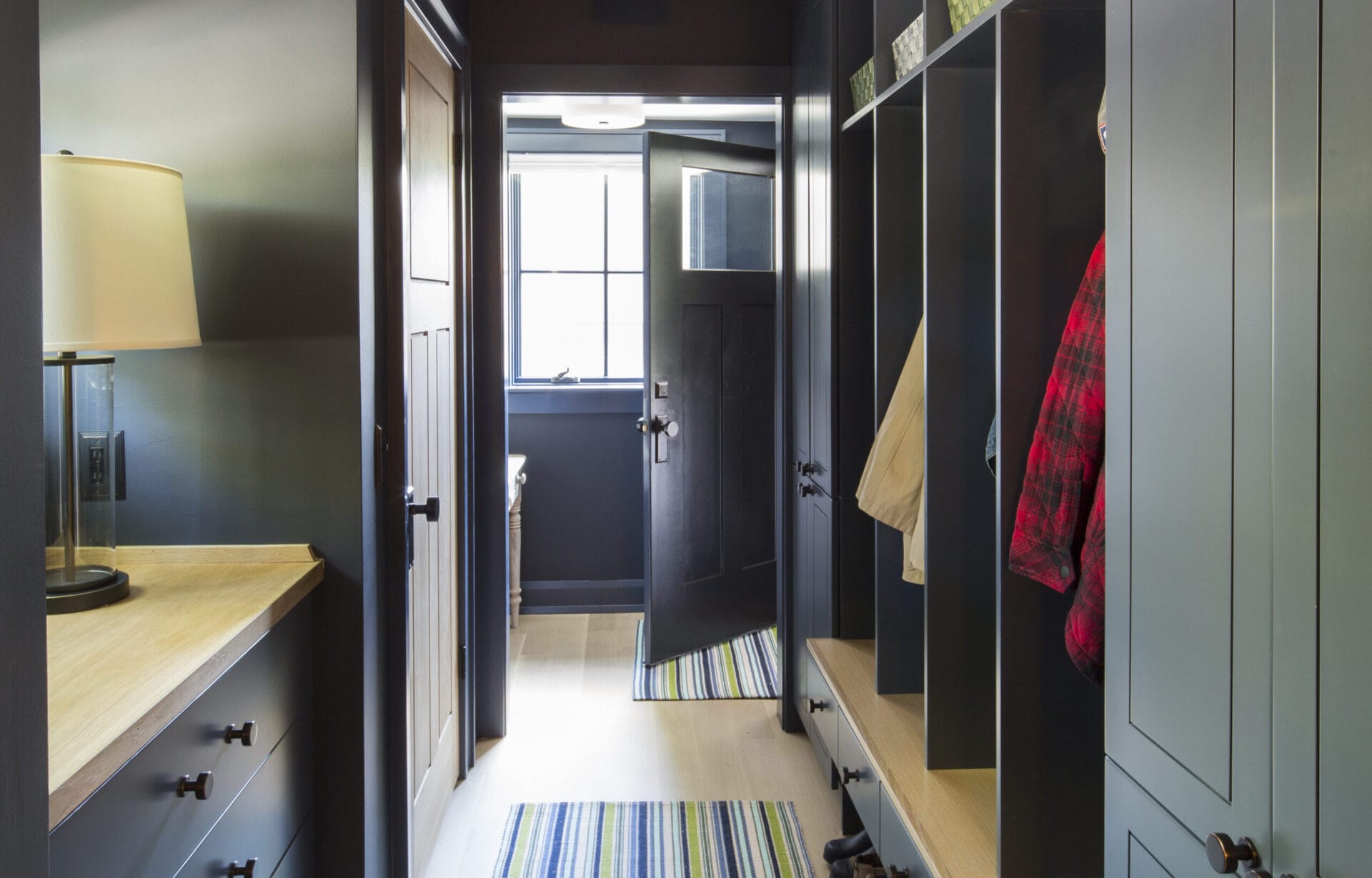
The Jamestown mudroom is compelling because it is not some giant fantasy room the size of a studio apartment. It is a narrow, hardworking corridor pressed into service. In the Jamestown house, the mudroom occupies a roughly 9-by-14-foot space that runs from the back door toward the powder room. Instead of fighting that hallway-like footprint, the design embraces it and turns the passage into a storage engine.
That decision alone is worth stealing. Too many mudroom conversations start with the assumption that you need a dedicated room with soaring ceilings, custom millwork, and enough square footage for a golden retriever to do laps. The Jamestown approach says otherwise. A mudroom does not need to be grand. It needs to be strategic.
One of the smartest moves in the space is material continuity. The homeowners began with the same flat-panel, Shaker-style quartersawn oak cabinets used in the kitchen, then customized them into cubbies, shelves, drawers, and hooks to squeeze function out of every inch. In other words, this is not a random utility closet wearing a nice paint color. It is part of the home’s larger design language.
Then comes the twist. While the kitchen cabinetry was left in a natural cerused oak finish, the mudroom cabinetry was painted a deep navy blue. That color choice gives the space its own personality without breaking the visual rhythm of the house. It feels connected, but not copied. Think of it as a sibling, not a clone.
There is also a psychological win built into the layout. The mudroom is tucked away from the main open-plan kitchen, so all the daily mess of coats, boots, hats, and bags can exist out of sight. That hidden quality is not glamorous on paper, but in practice it is gold. A home feels calmer when the first line of disorder has a place to live that is not center stage.
Why the Jamestown mudroom works so well
It gives every item a job description
The Jamestown mudroom succeeds because it is unapologetically specific. Shoes do not just “go somewhere.” They belong in a cubby, under a bench, or in a drawer. Coats get hooks. Seasonal extras get shelves or closed storage. Bags, hats, and grab-and-go items have obvious landing spots. This is one of the biggest lessons from strong mudroom design: vague storage always loses to assigned storage.
That is why built-ins matter so much here. Open cubbies let you spot frequently used items in seconds, while drawers and cabinets keep the visual noise under control. The room does not force one storage style to do everything. It mixes open and closed storage in a way that mirrors real household habits. Some stuff deserves to be displayed. Some stuff absolutely does not. Looking at you, neon soccer shin guards.
It balances beauty and utility
Many mudrooms lean too far in one direction. Some are so pretty you are afraid to put a damp coat anywhere near them. Others are so functional they feel like the receiving area behind a shipping warehouse. The Jamestown mudroom avoids both traps. It uses cabinetry, color, and proportion to make a practical zone feel intentional, but it never forgets the room’s mission: catch mess before the mess spreads.
The navy cabinetry is especially important in that balancing act. Deep color grounds the room, helps hide wear better than bright white, and gives the passageway a sense of depth and identity. Against the home’s lighter white-and-oak palette, the blue reads as confident rather than heavy. It is a reminder that a mudroom can absolutely be stylish, but style works best when it is attached to function.
It turns a transition space into a destination
Hallways often get treated like design flyover states. You pass through them, but nobody expects much. Jamestown takes the opposite view. This narrow corridor is not just circulation space; it is a working room with storage, rhythm, and purpose. That mindset is a game changer for renovation planning. The best mudrooms are often not added on. They are discovered inside space you already have.
Design lessons you can steal from the Jamestown mudroom
1. Start with the entry your family actually uses
A mudroom should live where real life enters the house, not where a magazine photographer imagines it enters. If your family comes in through the side door, garage, or back hall, that is where your drop zone belongs. The Jamestown mudroom works because it is aligned with movement. It meets people where they come in, while they are still carrying the evidence of weather, errands, and life.
2. Give each person a zone
If one shared hook is doing battle with five jackets, three tote bags, two umbrellas, and a rogue baseball cap, the hook has already lost. One of the smartest mudroom principles is assigning a cubby, locker, or section to each family member. This makes cleanup easier, makes morning exits faster, and cuts down on that timeless household phrase: “Has anyone seen my other shoe?”
Even in smaller homes, personal zones can be simple. One hook, one basket, and one shoe slot per person can be enough. The point is clarity, not luxury.
3. Use vertical space like you mean it
Hooks are the MVPs of mudroom design because they are inexpensive, easy to install, and incredibly effective. They get bags, jackets, hats, and leashes off the floor and into clear view. Add shelving or upper cubbies above them, and suddenly a slim wall becomes a full-service storage station. Vertical storage is especially helpful in narrow hallways, where floor space is precious and clutter multiplies like rabbits.
4. Pair a bench with shoe storage
A bench earns its keep in a mudroom. It gives people a place to sit while pulling on boots, creates a visual anchor, and opens up space below for shoes, baskets, or drawers. This is one of those features that sounds optional until you live without it. Then every shoe change becomes a one-legged balancing act worthy of a minor Olympic event.
5. Mix open storage and closed storage
Open shelves and hooks are convenient, but they can look chaotic fast. Closed cabinets hide the ugly stuff, but they can slow you down if everything is behind a door. The sweet spot is mixing both. Keep daily-use essentials accessible, and hide the clutter-prone or off-season items behind closed fronts. Jamestown nails this balance by combining cubbies and lockers with a more tailored built-in look.
6. Treat a mudroom like a kitchen
This may sound dramatic, but it is true: a mudroom is one of the hardest-working spaces in a house. It needs durable surfaces, easy-clean floors, and finishes that can take abuse without acting offended. If a material would panic at wet boots, sports gear, or a muddy dog, it probably does not belong in your mudroom. Durable cabinetry, stain-resistant counters, tough flooring, and wipeable paint are all part of the formula.
7. Consider dual-purpose design
Modern mudrooms often do double duty, and that is not a compromise. It is smart planning. A mudroom can blend with a laundry area, pet station, side-entry hall, or garage transition zone. If square footage is limited, combining uses can actually make the home work better. Instead of creating one more room to clean, you create one better room to use.
The style story: why the Jamestown mudroom feels so polished
The Jamestown mudroom has the kind of confidence that comes from restraint. It does not rely on twenty decorative signs, six baskets with inspirational labels, and a tray that says “Gather.” It works because the bones are strong. The cabinetry lines are clean. The storage is purposeful. The color is bold enough to matter, but not loud enough to scream for attention.
That is a useful lesson for anyone planning a mudroom renovation. Mudroom design is strongest when organization comes first and decoration follows. Once the layout works, even modest styling choices have more impact. A good runner, attractive hooks, warm wood, a useful mirror, or a handsome light fixture can elevate the room without turning it into a theme park for storage.
The best-looking mudrooms tend to share a few traits. They have symmetry or at least visual order. They repeat materials used elsewhere in the house. They make room for texture through baskets, rugs, or wood tones. And they remember that a utility space can still feel welcoming. That is where Jamestown lands so gracefully. It is practical, yes, but it also feels like part of a thoughtful home.
How to apply the Jamestown mudroom idea in a normal house
Do not have a dedicated mudroom? Join the club. Most people do not. But the Jamestown project proves that what matters is not the label on the floor plan. It is the function built into the space.
A narrow hallway can become a mudroom with shallow cabinetry, hooks, and a bench. A coat closet can be transformed into a mini drop zone with shelves, cubbies, and a seat. A side wall near the garage can handle a row of hooks, a shoe bench, and baskets. Even a large cabinet can serve as a hidden mudroom if it is fitted out correctly. If you think of a mudroom as a system rather than a room, the design possibilities open up fast.
And if your entryway is small, do not panic. Small mudrooms can actually be more disciplined than big ones because every inch has to work. Limit what lives there to daily essentials. Rotate out off-season gear. Add labels if your household needs visual reminders. Use decorative hooks so the storage feels intentional, not temporary. A compact drop zone that functions well is far better than a giant room that becomes a clutter museum.
Common mistakes the Jamestown mudroom avoids
First, it avoids underplanning. Too many mudrooms are built around vague hopes instead of actual household habits. Second, it avoids visual chaos by combining open storage with cabinetry. Third, it avoids disconnect from the rest of the home by using cabinetry language that echoes the kitchen. Fourth, it avoids the “all white everything” trap that can make a hardworking room feel precious and high-maintenance.
Most importantly, it avoids wasted transition space. That may be the greatest trick of all. The Jamestown mudroom does not demand a brand-new wing of the house. It simply asks a corridor to do more. And that, in renovation terms, is a very attractive kind of magic.
Final thoughts on the Jamestown mudroom
The Jamestown mudroom is memorable because it solves a universal problem in a refreshingly grown-up way. It accepts that families arrive home with stuff, mess, momentum, and weather attached to them. Then it responds with custom storage, durable finishes, thoughtful color, and a layout that respects how people actually move through a house.
In other words, it is not just a pretty mudroom. It is a well-behaved one.
For homeowners planning a mudroom design, entryway upgrade, or built-in drop zone, the Jamestown example offers a clear takeaway: start with your daily routine, use the architecture you already have, and build storage that is specific enough to guide behavior. Make it handsome, sure. But make it useful first. Beauty loves utility when utility knows how to dress well.
Life inside a Jamestown-style mudroom: the everyday experience
What makes a Jamestown-style mudroom especially appealing is not just how it photographs. It is how it changes the rhythm of a normal day. Imagine coming in through the back door with grocery bags cutting into your fingers, your shoes damp from the driveway, one kid looking for a snack, another looking for a charger, and the dog convinced this is the perfect moment to shake off half the outdoors. In a poorly planned house, that chaos spills straight into the kitchen. In a well-planned mudroom, it gets intercepted at the border.
That interception matters more than people realize. A good mudroom removes friction from ordinary routines. You are not hunting for a leash because it always hangs on the same hook. You are not tripping over six pairs of shoes because footwear has a dedicated home. You are not staring at a pile of coats on the dining chair and wondering how your house started looking like a bus station. Instead, the room quietly absorbs the mess and turns it into a sequence: hang, stash, sit, swap shoes, move on.
There is also a subtle emotional effect. When an entry space is organized, the whole house feels calmer. You walk in and feel like the day has somewhere to land. That sounds a little poetic for a room built to store boots, but it is true. The first few feet inside a home shape the mood of everything that follows. If the entrance is chaotic, the rest of the house feels like it is already losing. If the entrance is composed, the home feels one step ahead.
A Jamestown-style mudroom also earns extra points during seasonal change. In winter, it becomes the command center for coats, gloves, hats, and wet boots. In spring, it catches muddy sneakers and rain jackets. In summer, it shifts to beach towels, hats, sports gear, and flip-flops. In fall, it handles backpacks, light layers, and all the bits and pieces that seem to multiply when schedules get busy again. The room adapts because the storage is flexible, not overly precious.
And then there is the visual relief. That may be the most underrated part of all. Because the mudroom is tucked away from the home’s main living areas, the mess does not perform for guests. It exists, because of course it does, but it stays in the zone built to handle it. That separation lets the kitchen remain the kitchen, not a lost-and-found office with snacks. It lets the house breathe.
So yes, the Jamestown mudroom is a nice example of smart cabinetry and strong color. But the real story is the lived experience behind it. It makes departures smoother, arrivals less frantic, storage less random, and everyday life a little less noisy. That is the kind of design people feel long after they stop admiring the paint color. And honestly, for a room whose main job is dealing with wet shoes and scattered backpacks, that is a pretty heroic performance.