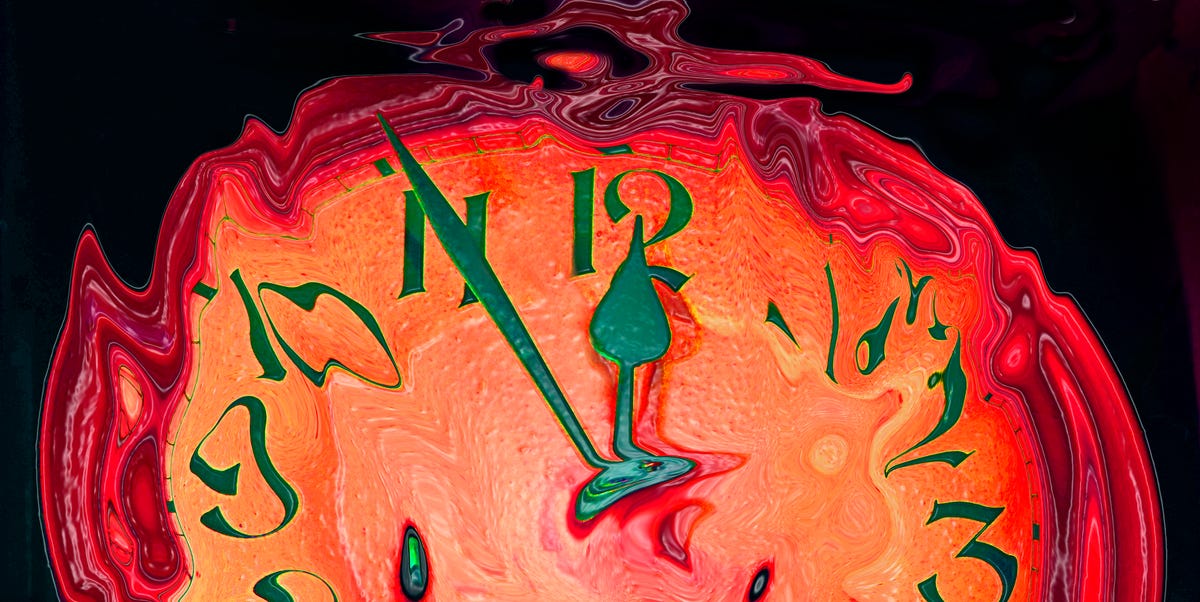
If you’ve ever wished the world came with a “low battery” warning, congratulations: we made one. It’s called the Doomsday Clock. And as of early 2026, it’s not just blinkingit’s basically screaming.
The Doomsday Clock is a symbolic timepiece maintained by the Bulletin of the Atomic Scientists to communicate how close humanity is to a man-made global catastrophe. “Midnight” is the metaphorical point of disaster; the fewer seconds to midnight, the bigger the danger signal. This isn’t a prophecy or a cosmic schedule. It’s a warning labelstuck on the outside of modern civilization.
What the Doomsday Clock Actually Means (and What It Doesn’t)
Let’s clear up the biggest misconception right away: the Doomsday Clock does not predict the end of the world at a specific time. If it did, the people setting it would be buying lottery tickets, not writing annual statements.
Instead, the Clock is a communication toolan annual judgment call by a science-focused board that looks at threats created by human choices: nuclear weapons, climate change, disruptive technologies (including AI), biological risks, and the ways politics and misinformation can make all of those worse.
Think of it like a smoke detector with strong opinions. It can’t tell you which room the fire is in, but if it’s going off, you should probably stop arguing about whose turn it is to take out the trash and start checking the kitchen.
Who sets it?
The Bulletin’s Science and Security Board sets the Clock each year in consultation with its Board of Sponsors, which includes Nobel laureates. They review global trends and decide whether the world has moved closer toor farther fromcatastrophe.
Why “seconds,” not “minutes,” now?
In recent years, the Clock shifted from minutes to seconds to reflect how compressed and interconnected modern risks have become. When multiple threats stacknuclear tension plus climate impacts plus runaway tech plus weakened cooperationsmall shifts feel enormous. Also, “85 seconds to midnight” is a lot harder to ignore than “a couple minutes.” (Marketing, but for survival.)
How Close Are We Right Now?
In January 2026, the Doomsday Clock was set to 85 seconds to midnightthe closest it has ever been in the Clock’s history. That move followed a near-midnight trend in recent years (including 90 seconds in 2023 and 2024, and 89 seconds in 2025).
A quick timeline for context
- 1947: The Clock debuts at 7 minutes to midnight.
- 1991: The farthest point from midnight17 minutesafter Cold War de-escalation.
- 2023–2024: Set at 90 seconds amid nuclear and geopolitical danger.
- 2025: 89 secondsdanger stays high and inches higher.
- 2026: 85 secondsnew record for “closest to midnight.”
If that makes your stomach drop, you’re not alone. But the point is not to freeze. The point is to focus. A warning is only useful if it nudges you toward action, not panic.
Why the Clock Moved Closer: The Big Risk Pile-Up
The Clock didn’t move because of one dramatic headline. It moved because of a pattern: major powers acting more aggressive and less cooperative, while the world’s most dangerous tools (nuclear, biological, digital, climatic) get more powerful and harder to govern.
1) Nuclear risk is risingagain
Nuclear danger isn’t just about big red buttons. It’s about miscalculation, escalation, and the slow erosion of guardrails. Arms control agreements and diplomatic channels are the boring parts of safetybut boring is good when the alternative is catastrophic.
A key example is the fragility of nuclear arms limits between the United States and Russia, including the looming end of major treaty constraints. When verification and limits weaken, suspicion grows, and an arms race becomes easier to start and harder to stop.
2) Climate change is no longer “future tense”
Climate risk isn’t just about warmer summers. It’s about cascading instabilityfood and water stress, displacement, economic shocks, infrastructure strain, and disaster recovery cycles that drain communities.
Recent climate indicators underline the direction of travel. NOAA’s global climate reporting for 2025 noted exceptionally high ocean heat content and continued record-level warmth in the modern era, while NASA’s temperature indicators show the last decade as the warmest on record. Even when individual years trade places, the long-term trend is unmistakable: the baseline is rising.
And climate change is not an “only-environment” issue. It’s a security issue, a health issue, a migration issue, and a governance issue. In other words: it multiplies other risksthe exact kind of “stacking” the Doomsday Clock is designed to highlight.
3) AI and the misinformation engine
AI didn’t invent propaganda, scams, or conspiracy theories. But it’s making them faster, cheaper, and more convincing. That matters because societies can’t solve complex problems without shared factsespecially problems like nuclear stability and climate response.
Another issue is speed: policy and safety practices often move slower than new tools. That’s why risk frameworks and standards matter. In the U.S., agencies like NIST have published voluntary guidance aimed at managing AI risks and improving trustworthiness. It’s a sign that governance is possiblebut also a sign we’re still building the seatbelt while the car is already on the highway.
4) Biological threats and high-consequence science
After COVID-19, it’s painfully clear how biological risks can ripple across society. Today’s concern isn’t only natural outbreaks, but also accidental release, misuse, or the combination of advanced biology with advanced computing.
The scary part is not that science existsit’s that safety norms, transparency, and international coordination can lag behind innovation. The safer we make research ecosystems (and the better we coordinate globally), the less we have to rely on luck.
5) The real multiplier: “failure of leadership”
Many Doomsday Clock statements return to the same point: the world’s biggest dangers require cooperation, verification, and long-term thinking. When nations slide into winner-take-all posturesmore nationalism, more distrust, fewer treaties, fewer shared commitmentsrisks rise across the board.
Put bluntly: the Clock moves forward when problems accelerate and solutions stall.
So… Are We Doomed?
The Doomsday Clock is dramatic by design. But it’s not meant to say “game over.” It’s meant to say, “You still have timeuse it.” The Bulletin has moved the Clock back before, including dramatically after major geopolitical shifts and arms reductions.
In other words, the Clock is not a countdown to fate. It’s a scoreboard for choices.
Why people criticize the Clock (and why it still matters)
Critics argue the Clock is subjective, hard to quantify, and sometimes feels like a yearly anxiety ritual with a press conference. That’s fair: it’s not a mathematical forecast.
But here’s what it does well: it translates complex, cross-disciplinary risk into a single image people remember. In a media environment where attention is scarce, a symbol can be a powerful toolespecially when it points at threats that are easy to ignore until they’re too big to manage.
What Moves the Clock Back? Practical Paths That Don’t Require a Cape
“Okay, cool,” you might be thinking, “but I’m not the Secretary-General of the United Nations.” Good news: you don’t need to be. Big risks need big policiesbut public pressure and cultural norms shape what leaders do.
Actions that matter at the national and global level
- Rebuild arms control and crisis communication: treaties, inspections, verification, and reliable hotlines reduce miscalculation.
- Accelerate climate mitigation and resilience: cut emissions, modernize grids, harden infrastructure, and prepare for extremes.
- Establish AI governance that’s real: safety testing, transparency, accountability, and limits where necessary (especially in military contexts).
- Strengthen biosecurity: safer lab practices, better surveillance, international norms for high-risk research, and rapid response capacity.
- Protect the information ecosystem: reduce disinformation incentives, improve platform accountability, and support trustworthy journalism.
What individuals can do without pretending it’s 1947
- Vote and participate: policy priorities follow organized citizens, not vibes.
- Practice media literacy: slow down, verify, and don’t share sensational claims just because they’re spicy.
- Support credible science and reporting: subscriptions, donations, and sharing high-quality sources actually help.
- Talk about risk calmly: panic spreads fast; constructive pressure spreads slower but lasts longer.
- Be useful locally: community resiliencemutual aid, disaster readiness, civic trustreduces harm when big systems strain.
None of this is glamorous. It’s closer to “maintenance” than “heroics.” But maintenance is how you keep the lights onliterally and figuratively.
FAQ: The Questions Everyone Asks After Googling “Doomsday Clock”
Does midnight mean the planet explodes?
No. Midnight is symbolic, representing an extreme global catastrophe. The Clock is about human-made existential risk, not a literal timer.
Why include AI with nukes and climate?
Because AI can amplify other threats: disinformation that destabilizes democracies, automation that accelerates conflict, or tools that make dangerous knowledge easier to misuse. It’s often a multiplier, not a standalone apocalypse button.
Why is the Clock so close now compared to the Cold War?
During the Cold War, the central danger was nuclear conflict between superpowers. Today, nuclear risk remains, but it’s layered with climate stress, technology-driven instability, and weakened international cooperation. Multiple overlapping threats can push the Clock closer.
Experiences: Living With a Clock That Won’t Stop Ticking (Extra )
The weirdest thing about the Doomsday Clock isn’t the number of secondsit’s how quickly people turn it into a feeling. You can watch it happen in real time: someone sees “85 seconds to midnight,” their eyebrows climb, and they do the modern ritual of doom-processing: a deep sigh, a scroll, and a group chat message that starts with “uhhhh…”
For teachers, the Clock often becomes a classroom lightning rod. A civics lesson turns into a debate about treaties and trust. A science unit becomes a discussion about why data can be solid while outcomes still feel uncertain. The most honest student question is usually the simplest: “If adults know this is bad, why don’t they fix it?” There’s no easy answeronly the uncomfortable reality that “knowing” isn’t the same as “doing,” especially when money, power, and short election cycles enter the chat.
In climate-impacted communities, “close to midnight” can feel less like metaphor and more like a calendar. People remember the year the smoke wouldn’t clear, the hurricane that rewrote the coastline, the heat wave that made ordinary errands risky. They don’t always use the phrase “global catastrophic risk,” but they understand compounding problems: insurance rates jump, repairs take months, jobs get disrupted, and the next season arrives before the last one fully ends. After a while, the anxiety isn’t just about disastersit’s about the grind of recovery.
In tech spaces, the Clock shows up as a running joke that isn’t fully a joke. Someone posts a meme“AI will save us!” and someone replies, “Cool, can it also stop misinformation and regulate itself?” Engineers who care about safety talk about guardrails the way drivers talk about brakes: you don’t notice them until you need them. The daily experience isn’t sci-fi drama; it’s meetings about policies, uncertainty about incentives, and the uneasy thought that speed has become a competitive advantage even when caution is the wiser move.
Meanwhile, plenty of regular people experience the Doomsday Clock the way they experience a thunderstorm warning: not as a guarantee, but as a reminder to check what matters. Families talk about valueswhat kind of world they want their kids to inherit. Friends argue about whether optimism is naïve or necessary. Some people channel the energy into volunteering or local politics. Others cope by tuning out, because constant alarm can be exhausting.
The most relatable “Clock experience” might be this: you’re living your normal lifeschool, work, errands, birthdays and then a headline taps you on the shoulder and reminds you the future is not on autopilot. The Doomsday Clock is that tap. Annoying, yes. Dramatic, absolutely. But sometimes the difference between “we saw it coming” and “we did something about it” starts with noticing the warning.