Note: This article is written in clean, publish-ready HTML and is based on current Stardew Valley gameplay information.
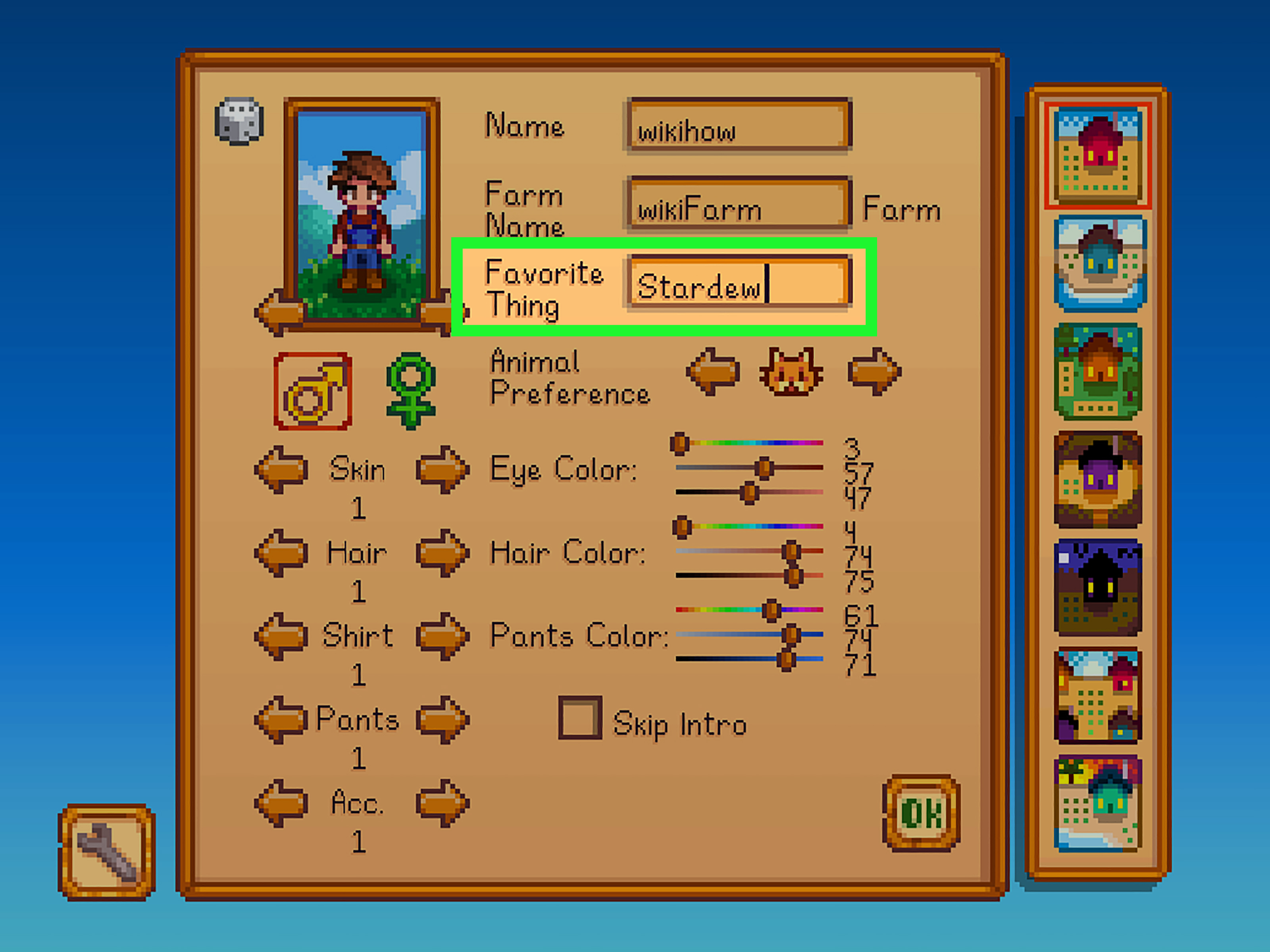
When you start a new farm in Stardew Valley, the game asks for the usual identity basics: your farmer’s name, farm name, appearance, animal preference, and then one oddly personal question that seems to arrive wearing a tiny wizard hat: “Favorite Thing.”
New players often pause here. Is this a gameplay choice? Will it affect gifts? Does Abigail suddenly like you more if you type “amethyst”? Will your crops grow faster if your favorite thing is “money”? Sadly, no. Pierre will not lower his prices because you typed “discounts,” and Mayor Lewis will not stop hiding questionable purple clothing because you typed “justice.”
The short answer is simple: your Favorite Thing in Stardew Valley appears in special dialogue when your farmer eats a Stardrop. It is mostly a personalization feature, not a stat-building system. But because Stardew Valley loves cozy little surprises, there are a couple of fun easter eggs and some practical details worth knowing before you type something deeply embarrassing and forget about it until Year 2.
What Is the “Favorite Thing” Field in Stardew Valley?
The “Favorite Thing” field appears during character creation. It is one of the custom text options you choose before stepping onto your overgrown farm and beginning your new life of watering parsnips, accidentally gifting people rocks, and discovering that fishing is either peaceful or a personal attack.
Unlike your farm type, which changes your map layout, or animal preference, which determines the pet Marnie brings you, your Favorite Thing does not shape your daily gameplay. It does not change your starting items, your friendship points, your luck, your crop quality, your romance options, or your character’s hidden personality score. Stardew Valley is not secretly judging your soul because you typed “pizza rolls.”
Instead, the game saves that phrase and uses it later when your farmer consumes a rare item called a Stardrop. That is the real purpose of the field: flavor text. Very magical flavor text, but flavor text all the same.
So, What Does Your Favorite Thing Actually Do?
Your Favorite Thing is referenced when you eat a Stardrop. A Stardrop is one of the most valuable special items in the game because it permanently increases your maximum energy. When your farmer consumes one, the game displays a short message that includes whatever you entered as your Favorite Thing.
For example, if your Favorite Thing is “coffee,” the Stardrop message may say that the taste reminds you of coffee, or that your mind is filled with thoughts of coffee. If your Favorite Thing is “cats,” congratulations: your farmer has achieved mystical cat enlightenment. If your Favorite Thing is “tax refunds,” your farmer may be the most relatable person in Pelican Town.
This is why so many players forget what they typed and then burst out laughing much later. The game asks the question quietly at the beginning, then waits until an important magical moment to throw your own answer back at you. It is charming, harmless, and occasionally dangerous if you chose the joke answer while someone else was watching.
Does Favorite Thing Affect Gameplay, Stats, or Relationships?
No. Your Favorite Thing does not affect core Stardew Valley gameplay. It does not change how much energy the Stardrop gives you, which villagers like you, which gifts work best, or how quickly you progress. It also does not influence your farm’s theme, your pet, your spouse, your children, your luck, or your Perfection score.
The Stardrop itself is powerful, but the Favorite Thing text attached to it is cosmetic. Every Stardrop gives the same permanent maximum energy increase regardless of whether your favorite thing is “strawberries,” “Sebastian,” “sleep,” “garlic bread,” or “not dying in Skull Cavern.” The game is flexible like that.
That makes the feature perfect for role-playing. If you are making a forest witch farmer, you might choose “moonlight,” “mushrooms,” or “black cats.” If you are playing a Joja-loving capitalist gremlin, “profit” might fit. If your farmer is a cozy cottagecore angel, try “tea,” “sunflowers,” or “rainy days.” The field is not strategic, but it can make your save file feel more personal.
How Stardrops Connect to Your Favorite Thing
To understand the Favorite Thing mechanic, you need to understand Stardrops. A Stardrop is a rare magical fruit that permanently raises your maximum energy by 34 points. That means more watering, chopping, mining, fishing, and sprinting around town because you forgot Robin closes earlier than your optimism predicted.
There are seven Stardrops available in a normal save. Finding all of them brings your farmer’s maximum energy from the starting value of 270 up to 508. That is a huge quality-of-life boost, especially if you enjoy mining, farming large crop fields, or doing “one more thing” until it is suddenly 1:50 a.m. and you are sprinting home like a raccoon with responsibilities.
When you obtain a Stardrop, you consume it immediately. You cannot normally store it in your backpack for later like a snack you are saving for a dramatic occasion. The game triggers the special moment right away, increases your maximum energy, and displays the text that references your Favorite Thing.
All Stardrop Sources in Stardew Valley
Because your Favorite Thing only appears when you eat Stardrops, you may see the message up to seven times in a complete save. Here are the main Stardrop sources players work toward:
- Stardew Valley Fair: Buy one for 2,000 Star Tokens during the Fall 16 fair.
- The Mines: Reach floor 100 and open the treasure chest.
- Marriage or roommate: Receive one from your spouse or roommate after reaching a high relationship level.
- Krobus: Purchase one from Krobus in the Sewers for 20,000g.
- Secret Woods: Give Old Master Cannoli a Sweet Gem Berry.
- Master Angler: Catch every fish and receive a Stardrop from Willy by mail.
- Museum: Donate all 95 Museum items to earn one as a reward.
Each Stardrop is a milestone. Some are easy to plan for, like saving tokens at the Fair. Others take patience, especially completing the Museum or catching every fish. The Favorite Thing text adds a tiny personal stamp to each of these moments, turning a stat upgrade into something that feels like your farmer’s inner monologue briefly escaped onto the screen.
Favorite Thing Easter Eggs
Most entries simply appear in the Stardrop message, but there are special cases. Stardew Valley includes a couple of easter eggs tied to specific Favorite Thing text.
If You Enter “ConcernedApe”
If your Favorite Thing is set to “ConcernedApe,” the game adds a special thank-you style message when you consume a Stardrop. ConcernedApe is the developer name of Eric Barone, the creator of Stardew Valley. It is a sweet little nod from the game, and it turns your mystical fruit moment into a tiny exchange between player and creator.
The capitalization matters. Use “ConcernedApe” with the capital C and A if you want the easter egg to work properly. Typing “concernedape,” “Concerned Ape,” or “that guy who made me care about pixel chickens” is funny, but it may not trigger the intended special text.
If You Enter Something Containing “Stardew”
Another easter egg appears if your Favorite Thing contains “Stardew” with a capital S. In that case, the Stardrop dialogue can include the line that you feel an unwavering connection to the valley itself. Very dramatic. Very mystical. Very appropriate for a farmer who has spent three years befriending forest spirits and carrying mayonnaise in their pocket.
Again, capitalization matters. “Stardew” is the version you want. The game is cozy, but it is still a computer program, and computer programs love being picky about letters.
Can You Change Your Favorite Thing Later?
Yes, you can change your Favorite Thing later in the game. You do not have to abandon a 90-hour farm because you misspelled “chocolate” as “choclate,” although honestly, that does sound like a Joja-brand dessert.
The in-game way to change it is through the Shrine of Illusions in the Wizard’s basement. To access the basement, you need at least four hearts of friendship with the Wizard, or access through the Witch’s Hut route later in the game. At the Shrine of Illusions, you can pay 500g to change your appearance, name, gender, and Favorite Thing.
This is useful if you want your farmer’s identity to evolve. Maybe your first Favorite Thing was “money,” but after marrying Elliott and turning your farm into a wine empire, your favorite thing becomes “poetry.” Maybe you started with “pizza,” but after completing the Community Center, your farmer has matured into “ancient fruit wine.” Growth comes in many forms.
What Should You Put as Your Favorite Thing?
The best answer is whatever will make you smile when it appears in a Stardrop message. Since the field does not affect stats, you are free to be sincere, silly, thematic, or chaotic.
Good Sincere Choices
If you want the Stardrop scene to feel warm and personal, choose something your farmer would genuinely love. Examples include “family,” “home,” “sunsets,” “coffee,” “rain,” “music,” “books,” “dogs,” “cats,” “strawberries,” or “adventure.” These choices make the Stardrop moment feel like a cozy character beat.
Good Funny Choices
If you want a laugh, choose something that sounds ridiculous when described as a magical fruit flavor or a profound thought. Try “tax evasion,” “cheese,” “naps,” “trash bread,” “Krobus,” “free samples,” “my bed,” or “not fishing.” Stardew Valley’s gentle tone makes silly answers even funnier because the game presents them with total sincerity.
Good Role-Play Choices
For role-playing, match your Favorite Thing to your farm theme. A beach farmer might choose “sea air.” A Meadowlands rancher might choose “blue grass.” A mining-focused farmer might choose “diamonds,” “lava eels,” or “survival.” A spooky forest farmer might choose “moss,” “moonlight,” or “void chickens.” The choice is small, but it helps define the mood of your save.
Common Myths About Favorite Thing
Myth one: It changes villager gifts. It does not. Villagers have their own gift preferences. Typing “pumpkins” will not make everyone love pumpkins more, though Abigail may still approve of your snack-adjacent worldview.
Myth two: It affects luck. It does not. Daily luck is separate. You cannot type “good luck” and expect treasure rooms to rain from the heavens in Skull Cavern.
Myth three: It changes Stardrop strength. It does not. Every Stardrop gives the same maximum energy increase.
Myth four: It is permanent forever. Not anymore. You can change it later using the Shrine of Illusions once you meet the access requirements.
Myth five: You should choose a food. You can, and food choices often make the text sound natural. But the game says “Favorite Thing,” not “Favorite Food,” so abstract choices, names, jokes, and vibes all work.
Why This Tiny Feature Is So Memorable
The Favorite Thing field works because Stardew Valley is built around personalization. The game lets you optimize crops, automate sprinklers, and plan artisan goods like a spreadsheet goblin, but it also makes room for tiny human moments. You name your animals. You decorate your house. You choose who to befriend. You decide whether your farm is a practical business or a pumpkin-scented dreamscape with 47 scarecrows.
Your Favorite Thing is part of that same design philosophy. It does not need to be mechanically important to matter. In fact, it is memorable because it is not mechanical. It is a little message from your past self, tucked inside a rare fruit and delivered hours later when you least expect it.
That delayed payoff is why so many players remember their first Stardrop. You may have forgotten what you typed. Then the screen says your mind is filled with thoughts of “garlic bread,” and suddenly your farmer has lore. Beautiful, buttery lore.
Experience Section: What It Feels Like to Discover Your Favorite Thing
The first time many players encounter the Favorite Thing message, it feels oddly personal. You are not expecting the game to remember that little box from character creation. At the beginning, you are too busy deciding between hairstyles, farm layouts, and whether your farmer should look like a peaceful herbalist or someone who definitely fights bats for fun. The Favorite Thing field seems harmless, so you type something quickly and move on.
Then, hours later, you earn a Stardrop. Maybe you bought it at the Stardew Valley Fair after grinding Star Tokens. Maybe you reached floor 100 in the Mines, exhausted, carrying too much stone, and wondering why you brought three pieces of algae as emergency food. The Stardrop appears, the music pauses in your brain, and the game serves you a line about your favorite thing. Suddenly, the choice matters emotionally, even though it does not matter mechanically.
This is where Stardew Valley’s humor sneaks in. If you typed something wholesome like “family,” the scene feels touching. If you typed “pizza,” it feels funny but still plausible. If you typed “sleep,” the game accidentally becomes a documentary about every tired farmer who stayed up until 1:40 a.m. processing cheese. But if you typed a joke, the Stardrop moment becomes comedy gold. A magical fruit reminding your farmer of “tax refunds” or filling their mind with “Krobus fan club” is exactly the kind of absurd sincerity Stardew does best.
From an experience perspective, the best Favorite Thing choices are the ones that age well. A joke can be hilarious once, but remember that you may see it several times across a long save. If you are playing with friends, consider whether you want your Stardrop dialogue to become group chat material forever. Multiplayer farms are wonderful, but they are also dangerous places to reveal that your farmer’s deepest love is “mayonnaise.”
On themed farms, the Favorite Thing can help keep the role-play alive. A wilderness farmer who loves “thunderstorms” feels different from a river farmer who loves “quiet mornings.” A rancher who loves “goats” has a simple charm. A perfection-focused farmer who loves “checklists” is terrifying but honest. Even though no villager reacts to this choice, it can guide how you imagine your farmer. It is a tiny creative anchor.
My favorite approach is to choose something that sounds good in both Stardrop messages. Before confirming the name, mentally test it: “The taste reminds you of…” and “Your mind is filled with thoughts of…” If both versions make you smile, you have a winner. “Coffee” works. “Home” works. “Stardew” works if you want the easter egg. “A responsible sleep schedule” also works, mostly because your farmer will never have one.
The beauty of the Favorite Thing mechanic is that it captures Stardew Valley’s larger magic. The game is full of systems, but it is loved because of the little personal touches between those systems. A single custom phrase can turn an energy upgrade into a memory. That is impressive design for one tiny text box.
Conclusion
Your “Favorite Thing” in Stardew Valley does one main thing: it appears in the dialogue when your farmer eats a Stardrop. It does not affect stats, relationships, gifts, luck, crops, marriage, or game difficulty. The Stardrop itself permanently increases your maximum energy, while your Favorite Thing simply adds a personal, funny, or sentimental touch to the moment.
There are also a few special easter eggs. Entering “ConcernedApe” can trigger a special creator-related message, while entering something containing “Stardew” with the correct capitalization can produce unique valley-themed text. And if you regret your original choice, you can change it later at the Shrine of Illusions for 500g after gaining access to the Wizard’s basement.
So choose something that fits your farmer, your humor, or your current emotional relationship with cheese. Stardew Valley will not punish you for being silly. It will simply wait patiently, hand you a magical fruit, and remind you exactly who you decided to be.