There are two kinds of fall bakers. The first group lights a candle, buys apples, and immediately makes pie. The second group wants a little more drama. Not scary drama. Cozy drama. The kind that makes the kitchen smell like cinnamon, toasted nuts, butter, and ambition. For that crowd, apple-cheddar strudel is the answer.
At first glance, this dessert sounds like it wandered into the kitchen wearing a tweed blazer and saying things like, “I prefer orchard views and flaky pastry.” But once you understand it, apple-cheddar strudel is wonderfully approachable. It delivers everything people love about fall baking: crisp pastry, tender apples, a little warm spice, and that irresistible sweet-savory contrast that makes you stop mid-bite and say, “Well, that’s ridiculously good.”
And yes, cheddar belongs here. Sharp cheddar has enough tang and depth to keep the apples from becoming one-note sweet. Instead of tasting like a confused grilled cheese dessert, the combination lands exactly where you want it to: rich, balanced, and deeply autumnal. Add in buttery layers of pastry, a few toasted walnuts, maybe a whisper of sage if you’re feeling fancy, and suddenly you have a baking project that feels both classic and unexpected.
If your usual fall rotation includes apple pie, apple crisp, and the annual “I bought too many apples again” panic, this is the recipe concept that shakes things up without becoming a culinary trust fall. Apple-cheddar strudel feels special, looks impressive, and still plays by the friendly rules of comfort food. It’s flaky, fragrant, and dramatic in the best possible way. In other words, it is exactly the kind of dessert worth turning on the oven for when the air gets cooler and your baking mood gets bolder.
Why Apple and Cheddar Work So Well Together
Some flavor pairings are obvious. Chocolate and peanut butter practically have a publicist. Apples and cheddar, though, still surprise people who have not grown up around the tradition. But once you taste the combination, it makes perfect sense. Apples bring brightness, juiciness, and sweetness. Sharp cheddar brings salt, tang, nuttiness, and richness. Together, they create contrast, and contrast is where flavor gets interesting.
This is also why apple-cheddar desserts feel more sophisticated than overly sweet pastries that taste like sugar wearing a cinnamon costume. The cheese gives the filling backbone. A good sharp cheddar does not overpower the fruit; it frames it. It turns the apples from “nice” into “memorable.” Think of it as the culinary equivalent of adding a great supporting actor to a movie. The star is still the apple, but the whole production gets better.
For the best result, skip anything rubbery or mild. A sharp or extra-sharp cheddar works best because it melts just enough to soften into the filling while still contributing real personality. White cheddar is especially lovely if you want a clean, rustic look, but orange cheddar works too. The important thing is flavor. This is not the time for cheese that tastes like polite silence.
When the apples bake down, their juices mingle with sugar, spice, and pastry, creating a filling that is soft but not sleepy. The cheddar cuts through that richness with a savory note that keeps every bite balanced. Add chopped toasted walnuts for crunch, and suddenly the strudel has texture in every direction: crisp layers outside, juicy fruit inside, and little bursts of nutty bite throughout. That balance is why this dessert feels so satisfying on a chilly afternoon.
Why Strudel Feels Like the Ultimate Fall Baking Project
Not every baking project needs to be difficult to feel rewarding. In fact, the smartest fall bakes often look elaborate while secretly relying on good ingredients and smart assembly. That is exactly where strudel shines. It has visual payoff. It has flaky layers. It has a golden, crackly top that makes people assume you spent the day in a European pastry shop apprenticeship. Meanwhile, you can absolutely build it with store-bought phyllo or prepared dough and still get a gorgeous result.
That is part of the magic. Apple-cheddar strudel gives you the feeling of making something elevated without requiring you to churn butter, laminate dough, or enter a technical challenge tent under emotional lighting. You are layering, filling, rolling, and baking. The process is hands-on enough to be fun, but forgiving enough to keep the mood festive.
Fall baking projects should invite you in, not bully you. Strudel does exactly that. It asks for attention, but not panic. Brush the pastry with butter. Keep the filling from getting too wet. Roll carefully. Bake until golden. That is manageable. And because the finished strudel looks dramatic on a cutting board or platter, it feels like a small event. Bring it to brunch, serve it at dessert, or slice it for an afternoon coffee break and suddenly everyone thinks you have your life together.
There is also something deeply seasonal about the whole ritual. Peeling apples. Toasting walnuts. Grating cheddar. Dusting the finished pastry with confectioners’ sugar. It is the kind of bake that fills a few hours in the nicest possible way. No one rushes a good fall baking day anyway. The point is not just dessert. The point is the process, the smell, the soundtrack, the extra cup of coffee, and the moment you pull a bronzed, flaky strudel from the oven and feel briefly superior to store-bought pastry.
How to Build the Best Apple-Cheddar Strudel
Start with the right apples
A great strudel begins with apples that can handle heat. You want fruit that stays tender without turning into beige mush. Tart, firm apples like Granny Smith are a classic choice, but the best filling often comes from combining tart and sweet varieties. A mix gives you better depth, more rounded flavor, and a more interesting texture. Honeycrisp, Pink Lady, Braeburn, Jonagold, and similar firm apples all bring something useful to the party.
Using a mix also keeps the filling from tasting flat. One apple variety might give you brightness, another honeyed sweetness, another good structure. The goal is not apple uniformity; it is apple harmony. Fall desserts are better when they taste layered, and apples are no exception.
Control the moisture like a pro
If there is one thing that separates a crisp strudel from a sad one, it is moisture management. Apples release juice. Cheese softens. Sugar draws out liquid. Pastry, meanwhile, would prefer not to swim. So your job is to keep the filling flavorful but not soggy.
That means slicing the apples evenly, draining excess liquid when needed, and using an ingredient that helps absorb moisture. Breadcrumbs are a classic trick because they soak up juices without making the filling heavy. A little flour or starch can help too, but breadcrumbs are especially helpful in strudel because they protect that precious flaky structure. This one small detail can mean the difference between crisp layers and the dreaded damp undercarriage.
Choose your cheddar wisely
Grate the cheddar rather than chunking it. Shredded cheese distributes more evenly through the filling and gives you little hits of savory richness instead of random molten cheese pockets that feel like they wandered in from another recipe. Delicious? Possibly. Balanced? Not always. Fine shreds or small shavings work best.
You do not need an overwhelming amount of cheese, either. This is an apple-forward dessert, not a cheese board in disguise. Enough cheddar to add tang and depth is perfect. Too much, and the filling can become heavy. The sweet spot is where someone tastes it and says, “Wait, what is that amazing flavor?” instead of, “Have I accidentally baked lunch?”
Build the layers with confidence
Phyllo has a reputation for being dramatic, but honestly, it is just delicate, not malicious. Keep it covered while you work so it does not dry out. Brush each sheet lightly with melted butter. Stack the layers. Add the filling in a neat line, leaving room at the edges. Fold in the sides, roll it up carefully, and place it seam-side down. That is the whole movie.
Do not overfill the pastry. This is a strudel, not a dare. Too much filling makes rolling harder and increases the odds of leaks. Aim for a generous but manageable log. Once baked, those thin layers turn golden and crisp, creating the shattery texture that makes strudel so satisfying to slice and eat.
Add the little upgrades
Want your apple-cheddar strudel to feel truly fall-worthy? Add toasted walnuts for nuttiness and crunch. Add fresh sage if you love a slightly savory herbal note. Add cinnamon, a touch of nutmeg, and perhaps a small squeeze of lemon to brighten the fruit. These details do not need to scream. They just need to quietly improve everything, like excellent background music at a dinner party.
You can even finish the baked strudel with a light dusting of powdered sugar or serve it with whipped cream, crème fraîche, or vanilla ice cream. The dessert does not need much adornment, but a cool creamy element next to warm flaky pastry is hard to argue with. And if anyone does argue, give them a bigger slice. That usually resolves things.
What Makes This Dessert Better Than Basic Apple Pie
Let us be respectful: apple pie is a legend. But apple-cheddar strudel has a few advantages when you want something a little fresher, flakier, and more conversation-worthy. First, the pastry-to-filling ratio is excellent. Every bite gives you crisp layers and soft fruit instead of a thick top crust that sometimes behaves like a delicious roof tile.
Second, the cheddar is integrated in a more playful way. In pie, cheddar often appears in the crust or on the side. In strudel, it becomes part of the whole experience. It mingles with the apples, melts into the filling, and contributes savory depth from the inside out. That makes the flavor feel more intentional and more modern, even though the pairing itself has plenty of tradition behind it.
Third, strudel simply has style. A sliced strudel looks elegant on a platter. It works for brunch, dessert, coffee hour, or a not-so-casual snack while standing in the kitchen pretending you are just checking the texture. It is versatile, visually appealing, and just unusual enough to feel like a discovery. People remember it. Nobody says, “Oh, another apple dessert.” They say, “Hold on, is there cheddar in this?” And then they reach for a second piece.
Serving, Storing, and Reheating for Maximum Joy
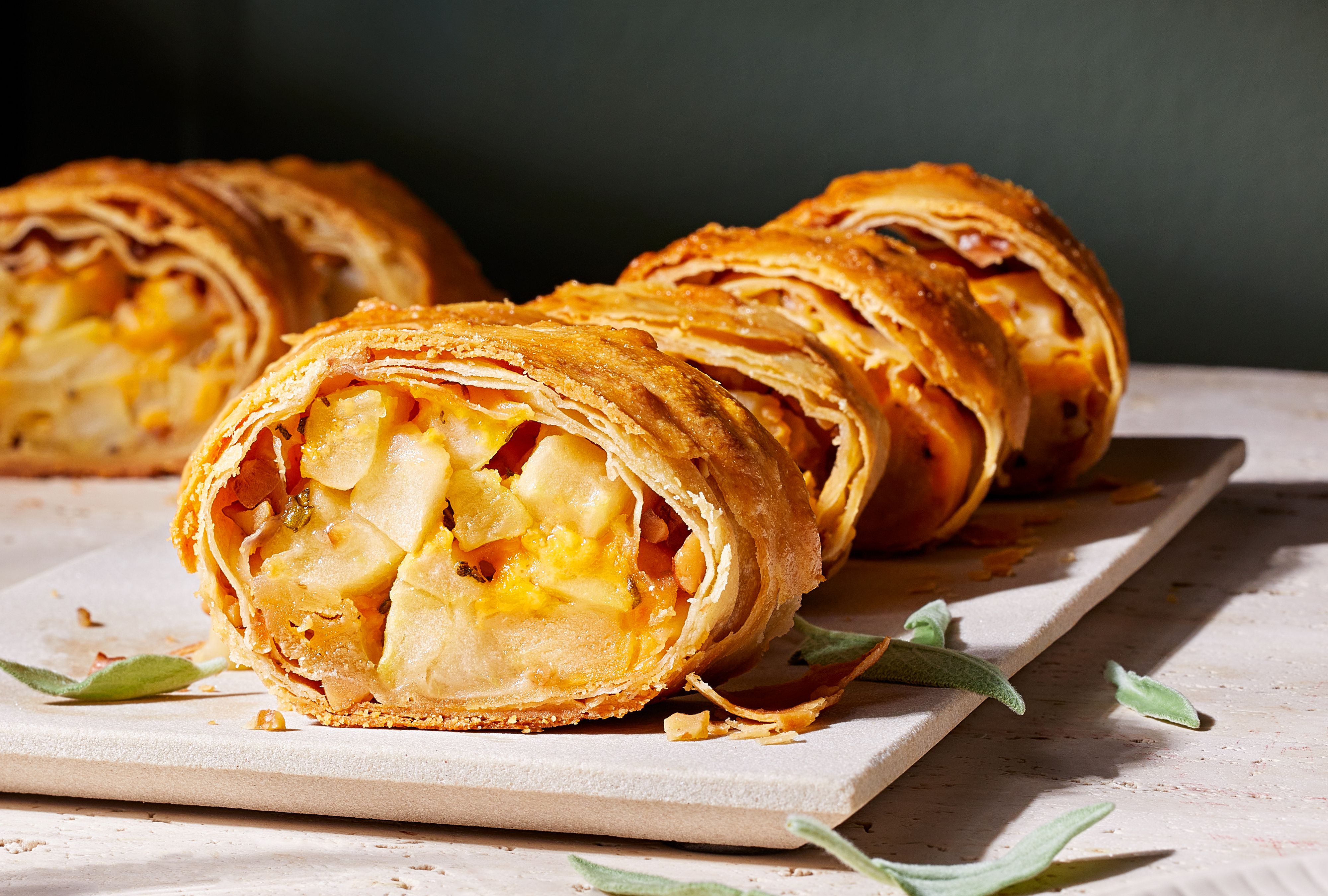
Serve apple-cheddar strudel slightly warm if you can. That is when the pastry is at its crispest, the apples are tender, and the cheddar still hums in the background. If you are hosting, let it cool just enough to slice neatly, then bring it to the table with coffee, tea, or hot cider. It looks especially charming on a wooden board with a little powdered sugar scattered over the top like you casually live inside a fall catalog.
Leftovers keep well, though the pastry is best the day it is baked. Reheat slices in the oven or toaster oven rather than the microwave if you want to revive the crispness. The microwave will warm it, sure, but it will also make the pastry sulk. A few minutes in the oven brings back much of the texture and gives yesterday’s slice a second chance at greatness.
If you are making this for a gathering, you can prep components ahead: grate the cheese, toast the nuts, and slice the apples just before assembly. That makes the actual bake feel easy and keeps the project enjoyable instead of chaotic. Fall baking should feel charming, not like a game show with consequences.
of Fall Baking Experience: Why This Strudel Feels So Good to Make
There is a specific kind of happiness that only shows up when you decide, on purpose, to make something a little more involved than necessary on a cool fall day. Apple-cheddar strudel lives in that exact happiness. It is not the kind of dessert you throw together because you forgot to bring something somewhere. It is the dessert you make when you want the afternoon itself to mean something.
You start with the apples, and that is already a mood. They hit the cutting board with that clean, crisp sound that basically announces the season. The kitchen smells fresh before it smells sweet. Then the cheddar comes in, sharp and nutty, and suddenly the whole thing feels more interesting than a standard fruit dessert. You know, even before the pastry appears, that this is not going to taste generic.
Then comes the quiet concentration of working with the dough. Buttering the sheets. Laying them down. Trying not to tear them. Tearing one anyway. Realizing it does not matter because the next layer covers everything like a supportive friend. That might be the best thing about strudel: it looks refined, but it allows you to be human. You do not need perfection. You need momentum.
By the time the filling is spooned on, the whole kitchen has changed. There is cinnamon in the air, maybe toasted walnut in the background, and that unmistakable buttery scent that tells everyone in the house to suddenly start wandering through the kitchen “for no reason.” Even people who claimed they were not hungry become very interested in what is happening. Strudel has that effect. It creates an audience.
The best moment might be the roll. It is oddly satisfying, like wrapping up all your effort into one neat golden promise. You tuck the edges, place it seam-side down, brush the top, and for one brief shining second you feel like a person in a baking commercial who definitely owns matching linen towels. Then it goes into the oven, and the waiting begins.
That waiting is part of the experience too. Fall baking is one of the few kitchen activities that improves the atmosphere before it improves the menu. The dessert is not done yet, but the room is already better. It smells warm. It smells calm. It smells like maybe the rest of the day should involve thick socks and a second cup of coffee. By the time the pastry turns deeply golden, you are not just ready to eat. You are ready to romantically narrate your own life.
And when you finally cut into it, the payoff is real. The crust crackles. The apples are soft but not collapsed. The cheddar does its little savory magic trick. It tastes balanced, thoughtful, cozy, and just adventurous enough to feel special. That is why apple-cheddar strudel is such a perfect fall baking project. It is delicious, yes. But more than that, it makes the whole afternoon feel well spent. Some desserts fill a plate. This one fills a season.
Conclusion
Apple-cheddar strudel is the kind of dessert that earns a permanent spot in your fall baking lineup. It takes the familiar comfort of baked apples and gives it more texture, more contrast, and more character. The pastry is crisp, the filling is warmly spiced, and the cheddar adds just enough savory depth to make the whole thing feel clever without trying too hard.
Best of all, it turns an ordinary baking day into an experience. You get the pleasure of a hands-on project, the reward of a bakery-worthy finish, and a dessert that tastes like autumn got dressed up for company. So the next time you want to bake something seasonal, satisfying, and just a little unexpected, skip the predictable route. Make the strudel. Your kitchen will smell incredible, your table will look better, and your guests will absolutely ask for the story behind it.