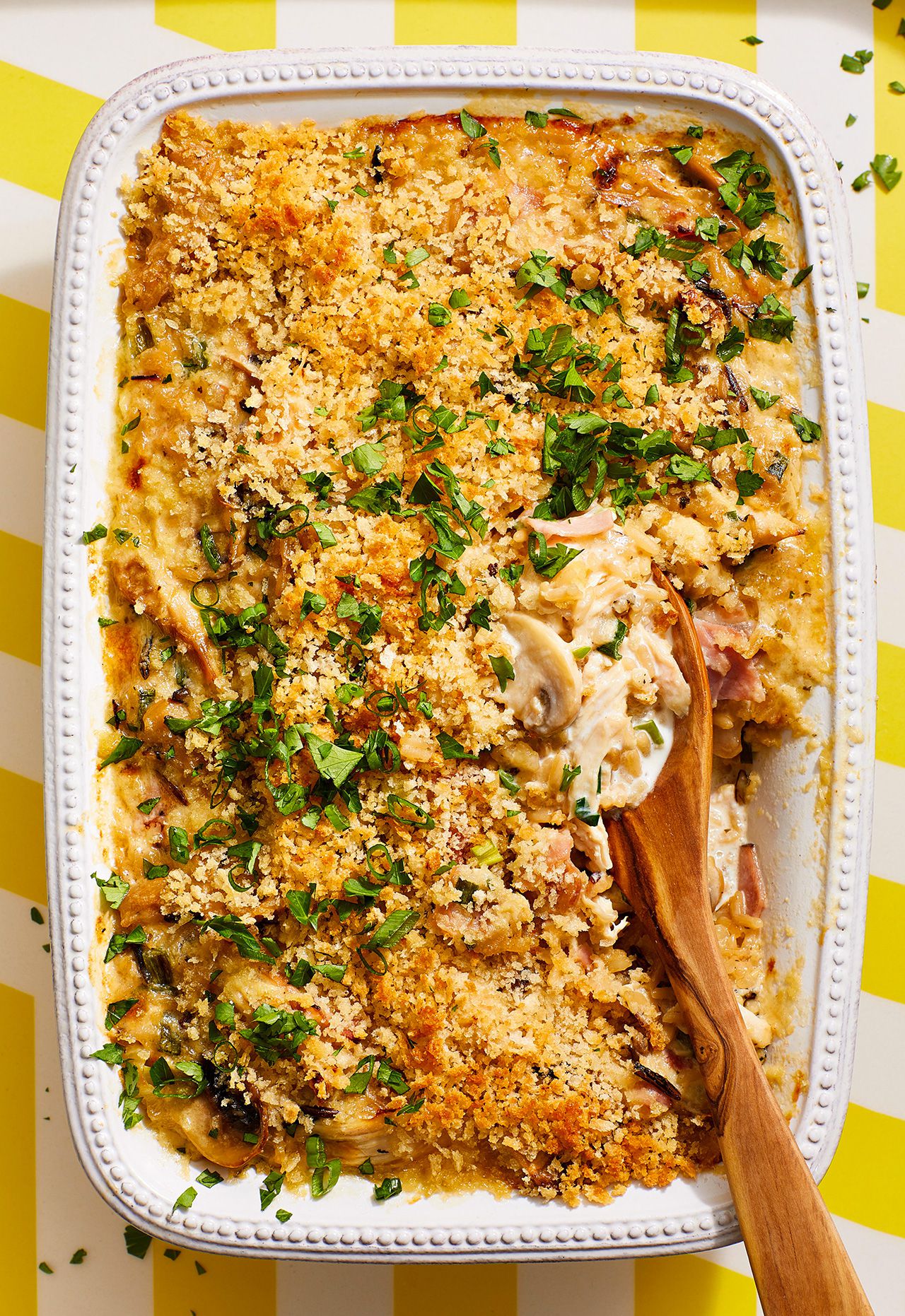
Casseroles have a reputation: big pan, big comfort, big “why are my jeans negotiating with me?” energy.
But the truth is, a casserole is just a methodprotein + veggies + a cozy sauce + a baked finish. That means it can
absolutely live in the “healthy dinner” category… even in the “400 calories or less” neighborhood.
This guide gives you nine lighter chicken casserole recipes that are high on flavor and low on calorie drama.
You’ll get smart swaps (without turning your dinner into a sad science project), quick build steps, and practical
tips for meal prep, leftovers, and keeping everything creamy without going full cream-cheese avalanche.
The 400-Calorie Casserole Playbook
Getting a chicken casserole to land at 400 calories or less isn’t magicit’s mostly “where did the calories hide?”
math. Here are the usual suspects and how to outsmart them without losing the comfort-food vibe.
1) Set your “serving math” before you cook
A casserole can be light or heavy depending on how it’s portioned. If you’re using a 9×13-inch dish, decide whether
it’s 6 servings (bigger portions) or 8 servings (more 400-friendly). The same ingredients can swing wildly just by
how you slice the pan.
2) Keep chicken generous, but choose lean
Chicken breast is a calorie-efficient way to keep the dish filling. Rotisserie chicken works toojust pull mostly
white meat and go easy on the skin to keep the fat (and calories) from creeping up.
3) Bulk with vegetables like it’s your job
The fastest way to lower calories per serving is to raise volume with vegetablesbroccoli, cauliflower, zucchini,
mushrooms, spinach, peppers, onions. You get a bigger plate for the same calorie budget, and suddenly “diet dinner”
feels like actual dinner.
4) Make the sauce creamy… strategically
Heavy cream and lots of full-fat cheese can blow the calorie cap fast. A better approach:
- Use a broth-based sauce thickened with a small amount of flour or cornstarch.
- Stir in Greek yogurt at the end for tangy creaminess (avoid boiling it hard so it doesn’t separate).
- Use reduced-fat cheese as a “flavor booster,” not the entire personality of the casserole.
5) Treat toppings like a “crunch budget”
Toppings are where casseroles quietly rack up calories (hello, buttered crackers). Choose one: a light sprinkle of
whole-wheat breadcrumbs, crushed whole-grain cereal, or a modest layer of cheese. If you do all three, you’re not
making a toppingyou’re making a roof.
Quick nutrition note: These recipes are designed to fit the “400 calories or less” goal using common
lighter ingredient choices and sensible portions. Your exact numbers will vary by brands and serving sizeso if you
track closely, plug your ingredients into your preferred nutrition calculator.
9 Healthy Chicken Casserole Recipes
1) Southwest Tortilla-Strip Chicken Bake
Think enchilada vibes, but the calories don’t show up uninvited. This one leans on salsa, spices, and fiber-rich
add-ins to keep it hearty without a blanket of cheese the thickness of a winter coat.
Key ingredients
- Shredded cooked chicken breast
- Black beans (rinsed) and corn
- Salsa + a little low-sodium broth
- Bell peppers, onions
- Light sprinkle of shredded cheese
- Baked tortilla strips (use a small amount for crunch)
How to make it
- Mix chicken, beans, veggies, salsa, and broth in a baking dish.
- Top with a modest cheese sprinkle and tortilla strips.
- Bake until bubbling; finish with cilantro and a squeeze of lime.
Why it stays light: Salsa does the sauce work; beans add staying power without heavy dairy overload.
2) Chicken & Broccoli “Divan” (Lightened-Up Classic)
Classic chicken-and-broccoli casserole, but updated: a creamy sauce built from broth, milk, and Greek yogurt, then
finished with a crisp, controlled crumb topping.
Key ingredients
- Cooked chicken breast (cubed or shredded)
- Broccoli florets (fresh or frozen)
- Broth + low-fat milk
- Greek yogurt (stir in after thickening)
- Reduced-fat cheddar (small amount)
- Whole-wheat breadcrumbs + Parmesan (light topping)
How to make it
- Steam or microwave broccoli until just tender-crisp.
- Make a quick white sauce: broth + milk thickened with a little flour; remove from heat and stir in yogurt.
- Combine with chicken and broccoli, top lightly, bake until golden.
Why it stays light: You get creaminess from technique, not a cup of cream.
3) Creamy Chicken & Cauliflower “Alfredo” Bake
If Alfredo and a gym membership had a baby, this would be it. Cauliflower rice (or finely chopped cauliflower)
replaces most of the pasta/rice volume, while a protein-forward sauce keeps it satisfying.
Key ingredients
- Cooked chicken breast
- Cauliflower rice (fresh or frozen)
- Garlic, onion, black pepper
- Broth + a splash of milk
- Greek yogurt or blended cottage cheese (for creamy body)
- Parmesan (small amount for flavor)
How to make it
- Sauté garlic/onion; add cauliflower rice to evaporate extra moisture.
- Stir in broth/milk; thicken slightly, then stir in yogurt off-heat.
- Add chicken, top with Parmesan, bake until bubbly.
Why it stays light: Cauliflower does the “bulk” job so your portion looks generous without the calorie load.
4) Garden Veggie Chicken Tortellini Bake (Portion-Smart)
Tortellini can absolutely fitif you treat it like an accent, not the entire plot. This bake is heavy on vegetables
and uses a modest amount of cheese-filled pasta for that “treat” feeling.
Key ingredients
- Cooked chicken (shredded)
- Refrigerated tortellini (use a smaller quantity than typical)
- Zucchini, spinach, cherry tomatoes, mushrooms
- Marinara (look for lower added sugar) + broth
- Mozzarella (light sprinkle)
How to make it
- Par-cook tortellini; mix with chicken, veggies, marinara, and broth.
- Top lightly with mozzarella; bake until the edges bubble and the top browns.
Why it stays light: Vegetables and marinara carry the dish; tortellini is the “bonus,” not the base.
5) Honey-Mustard Chicken & Brown Rice Casserole
Sweet, tangy, and surprisingly balanced. Brown rice brings fiber, chicken brings protein, and the sauce relies on
strong flavor so you don’t need heavy fat.
Key ingredients
- Chicken breast (cubed)
- Cooked brown rice (measured)
- Peas-and-carrots blend or mixed veggies
- Dijon mustard + a small drizzle of honey
- Greek yogurt (or light sour cream)
- Low-sodium broth
How to make it
- Mix sauce: Dijon + honey + broth; stir in yogurt.
- Combine chicken, rice, veggies, and sauce in a baking dish.
- Bake until chicken is cooked through and the center is hot.
Why it stays light: Big flavor from mustard means you can use less added fat and still feel “comfort-food satisfied.”
6) Chicken & Wild Rice Mushroom Bake (Cozy but Controlled)
This is the casserole you make when it’s cold out and you want dinner to hug you back. Mushrooms add deep savory
flavor, so the sauce can stay relatively light.
Key ingredients
- Cooked chicken breast
- Cooked wild rice blend (measured)
- Mushrooms, onions, celery
- Broth + a little milk
- Thickener (flour/cornstarch) + herbs (thyme, parsley)
How to make it
- Sauté aromatics and mushrooms until browned (don’t rushflavor lives here).
- Add broth/milk; thicken lightly; fold in chicken and wild rice.
- Bake until the top is set and the center is steaming.
Why it stays light: Mushroom umami gives “richness” without needing lots of cheese.
7) Chicken Parmesan-Style Casserole (Without the Frying)
All the saucy, cheesy Italian comfortminus the deep-fry detour. This version uses baked chicken, marinara, and a
crisp breadcrumb topping for that “parm” crunch.
Key ingredients
- Chicken breast (cubed or sliced)
- Marinara sauce
- Zucchini or eggplant slices (optional “veg layer”)
- Part-skim mozzarella + Parmesan (measured)
- Whole-wheat breadcrumbs (light)
How to make it
- Layer marinara, chicken, and optional veggies; top with measured cheese.
- Finish with breadcrumbs; bake until browned and bubbling.
Why it stays light: No breaded frying; cheese becomes a highlight, not a flood.
8) Chicken & Zucchini Greek-Yogurt Bake
Zucchini brings volume fast, which is greatuntil it brings water, too. The trick is salting and draining so your
casserole turns creamy, not soupy.
Key ingredients
- Cooked chicken (shredded)
- Zucchini (shredded or thin-sliced)
- Greek yogurt + garlic + lemon zest
- Reduced-fat cheese (optional, small amount)
- Whole-wheat crumbs or crushed whole-grain crackers (light topping)
How to make it
- Salt zucchini, let sit, then squeeze out moisture.
- Mix chicken with yogurt sauce and zucchini; spread into dish.
- Top lightly, bake until set and golden.
Why it stays light: Zucchini increases portion size with minimal caloriesif you manage moisture like a pro.
9) Buffalo Chicken & Cauliflower “Mac” Casserole
Buffalo chicken casseroles can go from “fun” to “whoa” quickly if they’re built on heavy cheese and pasta. This
version leans on cauliflower and a smart sauce to keep it bold but balanced.
Key ingredients
- Cooked shredded chicken breast
- Cauliflower florets or cauliflower rice
- Buffalo sauce (check sodium; you won’t need much)
- Greek yogurt (for creamy tang)
- Shredded cheddar (reduced-fat, modest amount)
- Green onions (for freshness)
How to make it
- Steam cauliflower until just tender; drain well.
- Mix chicken with Buffalo sauce and yogurt; fold in cauliflower.
- Top with measured cheese; bake until hot and lightly browned.
Why it stays light: Cauliflower replaces most of the pasta volume; Buffalo flavor keeps things exciting without extra fat.
Meal Prep, Storage, and Reheating
Healthy casseroles are basically meal-prep royalty: one pan, multiple dinners, and your future self texting you
“you’re a genius” (or at least “thanks for not making me cook”).
Make-ahead tips
- Assemble now, bake later: Most casseroles can be assembled, covered, and refrigerated overnight.
- Freeze smart: Many chicken casseroles freeze well; for best texture, add crunchy toppings right before baking.
- Moisture control: Drain frozen veggies and squeeze watery vegetables (zucchini, spinach) so the casserole doesn’t turn into soup.
Food safety basics
- Cook poultry to an internal temperature of 165°F.
- Refrigerate leftovers promptly and aim to use them within 3–4 days.
- Reheat leftovers until hot throughout (a food thermometer is your best friend for casseroles).
Translation: comfort food is greatfoodborne illness is not. Treat your casserole like the precious meal-prep asset
it is.
of Real-Life Casserole Experience (a.k.a. Lessons Learned the Creamy Way)
I used to think “healthy casserole” was an oxymoronlike “jumbo shrimp” or “quick group project.” Then I started
cooking for real life: busy weeks, hungry humans, and that very specific craving for something warm that doesn’t
leave you needing a nap and a new belt hole.
The first big lesson? Moisture is both friend and enemy. Vegetables are the cheat code for staying
under 400 calories, but they come with baggagemostly water. The first time I made a zucchini chicken bake, I
proudly pulled it from the oven… and it sloshed. Not “a little juicy.” More like “I could canoe across this.”
Now I salt zucchini, wait ten minutes, and squeeze it out like it owes me money. Frozen spinach? Same deal:
thaw, squeeze, repeat. That single habit took my casseroles from watery to creamy without adding a single extra
calorie.
Lesson two: casseroles reward patience in the skillet. If you rush the mushrooms or onions, you
miss the browned flavor that makes a light sauce taste rich. When you let mushrooms actually brown, you don’t need
to “fix” flavor with extra cheese. I call it “earning the umami.” It’s also the moment your kitchen starts
smelling like you know what you’re doingeven if you’re still googling “difference between simmer and boil.”
Lesson three: Greek yogurt is a superhero with a weakness. It’s fantastic for creamy texture and
protein, but if you boil it aggressively, it can separate. The fix is easy: thicken your sauce first, take it off
the heat, then stir yogurt in gently. It’s like introducing a shy friend at a partydon’t shove them into the
spotlight; ease them in.
Lesson four: toppings are a slippery slope. A little crunch is wonderful. But “a little” becomes
“half a sleeve of crackers” faster than anyone wants to admit. Now I pre-measure toppings in a tiny bowl before
they touch the casserole. If the bowl looks like it belongs in a snack stadium, I know I’ve lost the plot.
And honestly, the best surprise has been how social casseroles are. I’ve dropped off lightened-up chicken
bakes to friends with new babies, brought buffalo cauliflower chicken casserole to game nights, and watched people
go back for secondswhile still feeling good after dinner. That’s the real win: these recipes don’t feel like
punishment. They feel like comfort food that learned a few healthy boundaries.
Conclusion
A “400 calories or less” chicken casserole isn’t about removing joyit’s about building smarter. Pick lean chicken,
bulk with vegetables, use bold seasonings, and make creaminess a technique (broth + thickener + yogurt) instead of
a dairy free-for-all. Do that, and you get what casseroles are meant to be: warm, satisfying, and wildly
weeknight-friendly.
Try one recipe this week, then rotate through the rest based on your mood: spicy, cozy, cheesy, herby, or “I need
dinner to feel like a hug.” You can have comfort and a calorie budget. The casserole gods allow it.