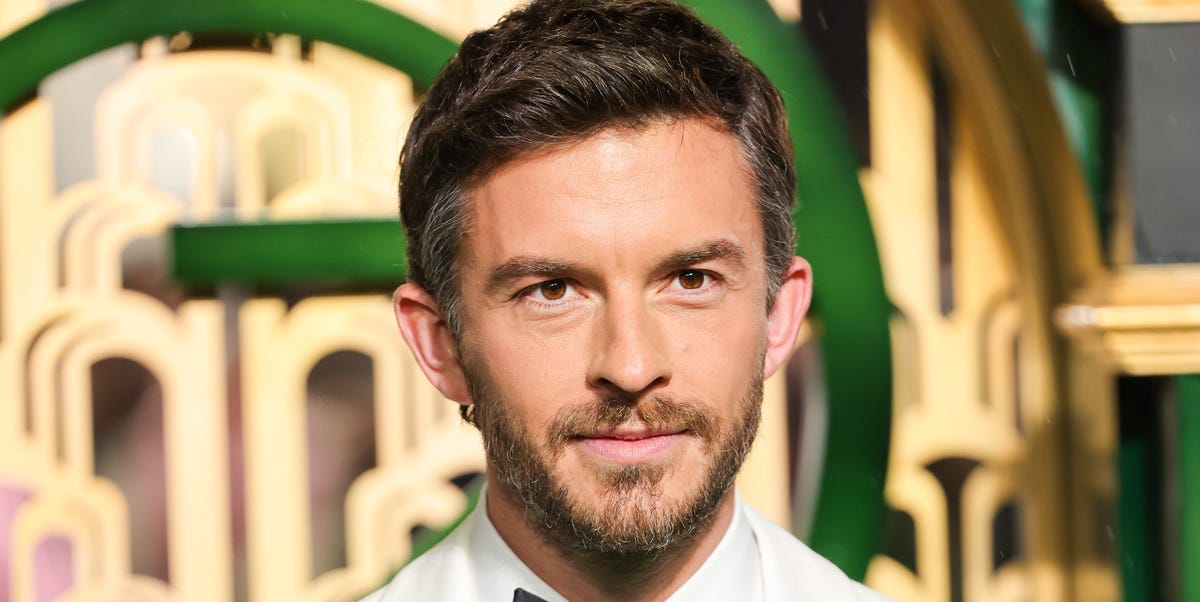
It’s March 2, 2025. The Oscars are glittering. The red carpet is practically emitting its own Wi-Fi signal.
Wicked is having a big night. And yet one very specific question keeps floating through group chats,
liveblogs, and the collective brain of musical-theater internet:
Where is Jonathan Bailey?
If you were hoping for a dramatic revealtrapdoor, fog machine, a perfectly timed “Dancing Through Life” reprisesorry.
The truth is both simpler and, in a very Jonathan Bailey way, more impressively nerdy.
Quick answer: he’s not in Hollywood
Jonathan Bailey is not at the 2025 Oscars in Los Angeles. While much of the Wicked cast showed up
at the Dolby Theatre, he skipped the ceremony because he was committed to a major stage project in London:
a run of Shakespeare’s Richard II at the Bridge Theatre.
In other words: while Oz was getting photographed, he was living his best “historical monarchy in crisis” life.
(No, that’s not a Wicked deleted scene. That’s Shakespeare.)
The real reason he skipped: a Shakespeare-sized commitment
Richard II, not red carpet
Bailey’s absence wasn’t a mystery feud, a scheduling accident, or a “he didn’t like the seat filler options” situation.
Multiple entertainment outlets reported the same core reason: he was in the middle of a London stage run of
Richard II, performing at the Bridge Theatre during that period.
The production ran across the spring, with performances scheduled throughout the week (evenings Monday through Saturday,
with additional matinees on select days). In theater terms, that’s not a “quick pop in” commitment. That’s a
“your life is now labeled in curtain calls” commitment.
Why that matters more than you’d think
People sometimes assume awards shows are like weddings: you RSVP, you show up, you eat shrimp, you leave with a tiny candle.
Theater schedules are not weddings. Theater schedules are ancient vows.
Stage work is built on repetition and presenceyour cast is a machine, your crew is a machine, and the lead actor
is a central bolt. Flying across the world for one night (even an iconic one) can wreck rest, rehearsal rhythm,
and performance stamina. And yes, stamina mattersbecause you cannot “fix it in post” when you’re live on stage.
But waitOscars night was a Sunday. Couldn’t he have hopped a plane?
In theory, sure. In reality, it’s a logistical trap disguised as an invitation.
Consider what the Oscars actually demands: travel time, fittings, press, rehearsal windows, red carpet call times,
and the simple fact that the ceremony is an all-night event in one time zone and a body-clock crime scene in another.
Add the long-haul flight between London and Los Angeles, and suddenly the “quick trip” becomes a multi-day disruption.
Even if a theater company is dark on Sundays, Monday is still coming. And Monday, in theater land, is not a vibe.
Monday is: “be ready to perform again.”
So when you see headlines framing it as “he’s on stage in England,” read it as shorthand for:
he was actively in a stage run and chose not to break that commitment for awards-season travel.
What was happening at the 2025 Oscars around him
While Bailey stayed in London, the Oscars itself was very much doing Oscars things: camera flashes, fashion analysis,
and enough emotional acceptance speeches to hydrate an entire county.
The ceremony basics (for context)
- Date: March 2, 2025
- Location: Dolby Theatre in Hollywood, Los Angeles
- Broadcast: ABC (with a live streaming option on Hulu)
- Host: Conan O’Brien
If you watched live, you probably felt the same thing everyone felt:
Oscars night is half awards show, half endurance sport, and half “wait, how is it already midnight?”
(Yes, that is three halves. Oscars math is special.)
How big was Wicked’s night in 2025?
Big. The film scored 10 Oscar nominations, which is the kind of number that makes the internet
start pre-writing “sweep” tweets with trembling fingers.
On the wins side, Wicked took home two Academy Awards:
- Best Costume Design (a historic win that drew plenty of headlines)
- Best Production Design (because, yes, Oz should look like Oz)
That matters for the Jonathan Bailey question because it explains why the absence felt so loud:
when a movie is nominated across major and craft categories, the cast presence becomes part of the event narrative.
And when one of the most beloved cast members doesn’t show, the audience notices.
So… where exactly was he, geographically speaking?
London, at the Bridge Theatre, working on Richard II. That’s the practical answer.
But if you want the poetic answer, it’s this:
while Hollywood celebrated a fantastical world of witches and wonder,
he was elbow-deep in Shakespearepower, identity, performance, collapse, crown, consequence.
Same themes, different costumes. (Although let’s be honest: Wicked has the stronger wardrobe budget.)
Why the “missing at the Oscars” story got traction
Celebrity absences become stories for three reasons:
-
Audience attachment: viewers don’t just watch movies anymore; they follow casts,
interviews, behind-the-scenes clips, and the emotional support dog of the hair-and-makeup trailer. -
Awards season is a narrative machine: the Oscars isn’t only about winnersit’s about moments.
And a missing familiar face reads like a missing puzzle piece. -
Theater vs. film is inherently dramatic: “He skipped the Oscars for Shakespeare” is a headline
with built-in romance and a faint whiff of “I’m too serious for your shiny statues,” even if that’s not the vibe at all.
The funniest part is that the actual reason is also the most wholesome:
the man simply had work. Live, in person, with a curtain time.
What his choice signals (and why it’s kind of a flex)
Skipping the Oscars isn’t a career requirement. Plenty of actors would go if they could.
But prioritizing a stage run in the middle of peak awards visibility sends a clear message:
theater isn’t a “before fame” era for himit’s part of the point.
That matters for fans because it suggests a long-term pattern:
even with blockbuster films on the résumé, he’s likely to keep doing live work when the opportunity is right.
It’s also why the “Where is he?” question has such a satisfying answer. It isn’t messy. It’s disciplined.
If you wanted the Jonathan Bailey Oscars moment, here’s what to watch instead
If your Oscars-night plan included “spot him reacting to a standing ovation,” you can still scratch the itchjust differently.
1) Follow the Wicked wins like a craft-category connoisseur
The two wins Wicked earned (costumes and production design) are the categories that define how a world feels.
If you love Oz, these are your categories. They’re the difference between “nice sets” and “I would move in immediately.”
2) Treat the London stage run as the parallel premiere
A Shakespeare production with a major screen star isn’t a side questit’s a headline in a different ecosystem.
Stage work doesn’t trend the same way film does, but it’s still culturally loud if you know where to listen.
3) Enjoy the wholesome logic of it
“He wasn’t there because he was working” is refreshingly un-cynical. In a celebrity cycle built on vague drama,
the most refreshing plot twist is professionalism.
FAQ: the most searched follow-ups
Was he boycotting the Oscars?
No credible reporting suggested a boycott. The consistent explanation was scheduling and commitment to a London stage production.
Did Wicked do well without him there?
Yes. The film had 10 nominations and won two Oscars (Best Costume Design and Best Production Design).
Will he be at future awards shows?
That depends on filming schedules, stage commitments, nominations, and whether the universe can align
“global travel,” “formalwear,” and “sleep” in the same week.
Conclusion: his Oscars location was a theater, not a seat number
On March 2, 2025, Jonathan Bailey wasn’t in Los Angeles posing on the red carpet with the rest of the Wicked team.
He was in London, committed to a Richard II stage runan old-school, high-skill, fully live kind of job that doesn’t
care about your awards-season calendar.
And honestly? That’s not an absence story. That’s a character story.
Experiences: what it feels like tracking a “missing” star on Oscars night (and why we all do it)
If you’ve ever watched the Oscars with a second screen opensocial feeds on one side, red carpet coverage on the otherthen you
already know the secret truth: awards night isn’t just a ceremony. It’s a scavenger hunt.
The modern Oscars experience has tiers. Tier one is “I’m here for Best Picture.” Tier two is “I’m here for the fashion.”
Tier three is “I’m here to see if my favorite actor is sitting behind someone tall.” And then there’s the tier that
turns a perfectly normal adult into a detective with Wi-Fi: “Where is the one cast member I expected to see?”
That’s what happened with Jonathan Bailey in 2025. Not because the show required him, but because fandom runs on completion.
When a film is nominated ten times, our brains start building a mental yearbook photo: the cast, the smiles, the “we made it”
energy. When one person isn’t there, the picture looks unfinishedlike someone got cropped out by the edge of the frame.
There’s also something uniquely theatrical about the way audiences care. Wicked isn’t just a movie title; it’s a
decades-long emotional investment for a lot of people. Musical fans are detail people. We know the songs. We know the lore.
We know which color combinations signal which character arc. So when Oscars night arrives, we don’t only watch for trophies.
We watch for moments: reactions, reunions, little backstage nods, the tiny facial expression that becomes a meme by
commercial break.
When someone isn’t there, the imagination fills the gap. Is he sick? Is he filming? Is he secretly rehearsing a surprise
performance? (Theater kids love a surprise performance the way dogs love the sound of a treat bag.) And because awards night
coverage arrives in fragmentsquotes here, a clip thereevery absence becomes a mini story that viewers can solve together.
It’s communal, weirdly sweet, and slightly unhinged in a harmless way.
Then comes the most satisfying part: the answer is normal. He’s doing a play. He’s on a stage. He’s working.
That lands differently than “scheduling conflict” because it feels specific and grounded. It also changes how you watch the
ceremony. Suddenly, the Oscars becomes a split-screen narrative in your head: Oz is winning costumes and production design,
while London is hearing Shakespeare echo off theater walls.
And if you’ve ever done theatereven a school production, even community theater, even the cursed experience of forgetting your
lines in front of a gym full of parentsyou get it on a cellular level. Stage work isn’t glamorous in the same way, but it’s
intimate, immediate, and real. So instead of feeling disappointed, a lot of fans felt something else: respect.
That’s the funny emotional alchemy of Oscars night in 2025. A missing star didn’t create drama; it created a narrative about
craft. Hollywood celebrates a film. Theater demands a performance. And somewhere in the middle, viewers get a reminder that
“show business” is still, at its core, a business of showing up.
So if you spent Oscars night refreshing coverage hoping he’d appear: congratulations. You participated in a grand tradition.
Not just watching the awards, but watching the story around the awards. And this time, the twist was surprisingly wholesome:
the star wasn’t missinghe was simply elsewhere, doing the work.