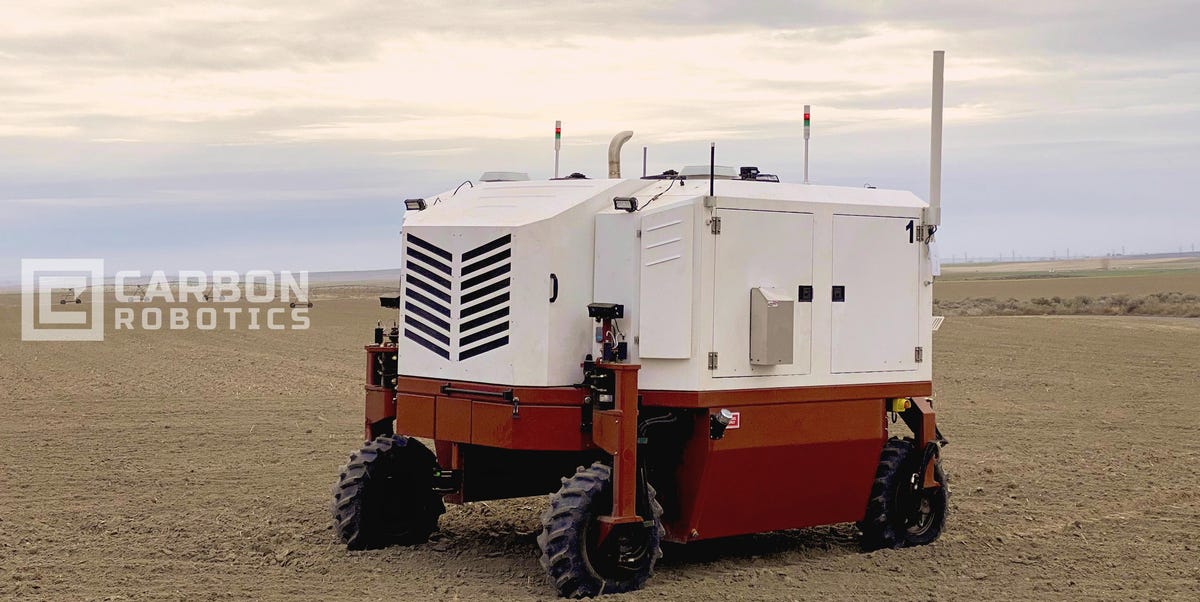
Somewhere between a sci-fi movie and a farmer’s wish list, a weed-killing robot has rolled into the field with one wildly satisfying promise: it can eliminate up to 100,000 weeds per hour. Yes, that is roughly the pace of a machine that seems to have looked at traditional weed control and said, “Respectfully, I brought lasers.”
But this story is bigger than a flashy headline. The rise of laser weeding robots says a lot about where farming is headed. Growers are dealing with rising labor costs, chronic labor shortages, herbicide resistance, tighter sustainability expectations, and pressure to protect yields without beating up the soil. In that context, a robot that spots weeds, ignores the crop, and zaps the intruder with pinpoint precision starts to sound less like a novelty and more like a very practical coworker.
This article looks at what the “100,000 weeds per hour” machine really is, how it works, why farmers are paying attention, where the benefits are real, and where the hype still needs to be separated from dirt-level reality. Spoiler: the future of farming may not wear overalls. It may come with cameras, AI models, and a laser safety label.
What Is the Farming Robot That Kills 100,000 Weeds Per Hour?
The machine most often connected to this headline is the early autonomous LaserWeeder platform developed by Carbon Robotics. The original version drew attention because it combined computer vision, high-resolution cameras, onboard processing, GPS-guided operation, and high-powered carbon dioxide lasers to identify and destroy weeds in real time. The big claim was simple and sticky: up to 100,000 weeds per hour.
That number helped the machine go viral, but the deeper story is what the robot represents. It was designed for specialty crop farms where weed control is often painfully labor-intensive. Think onions, lettuce, carrots, and leafy greens, where growers do not always have the luxury of easy blanket herbicide programs and where hand weeding can turn into a budget-devouring marathon.
In practical terms, the robot scans the bed, separates crop from weed using AI, then fires thermal energy at the weed’s growing point, or meristem. That matters because the goal is not to singe a leaf for dramatic effect. The goal is to stop regrowth. The crop stays in place, the soil stays undisturbed, and the weed gets a very bad day.
How Laser Weeding Actually Works
Step 1: See the field clearly
Laser weeding starts with vision. Cameras mounted on the machine capture detailed images of plants as the implement moves through the row. Bright onboard lighting helps the system operate day or night and under inconsistent field conditions. The AI is trained to distinguish the crop from the weed in a matter of milliseconds, which is a polite way of saying it makes split-second decisions faster than most people can find their gloves.
Step 2: Decide what lives and what gets zapped
This is where artificial intelligence earns its keep. The system is trained on huge sets of plant images so it can recognize crop shape, spacing, and growth habits. More recent generations of the technology have become even smarter, allowing faster recognition of new weed types and more flexible plant targeting. That is important in real agriculture, where fields are messy, weeds do not read manuals, and plants rarely pose for clean identification photos.
Step 3: Hit the weed at the meristem
Once a weed is identified, the laser delivers thermal energy directly to its growing point. Unlike tillage, which physically disturbs the soil, or blanket spraying, which treats a broader area, laser weeding is designed to act on the exact plant that needs removal. That precision is one reason it appeals to growers interested in reducing herbicide use or preserving soil structure in regenerative or organic systems.
Why Farmers Even Need Something Like This
Weeds are not just ugly freeloaders in a crop row. They compete with crops for sunlight, water, nutrients, and space. They can reduce yield, complicate harvest, and create a chain reaction of extra cost. Traditional weed control still depends heavily on herbicides, mechanical cultivation, and hand labor. Each of those methods works, but each comes with tradeoffs.
Herbicides remain common in American agriculture, but resistance is a growing issue. That means some weed populations no longer respond well to the same chemistry farmers have relied on for years. At the same time, no one in farming needs a reminder that labor is expensive, hard to find, and even harder to keep for repetitive hand-weeding tasks. For specialty crops in particular, this combination has turned weed control into one of the most frustrating line items on the farm budget.
That is why robotics has become more than a shiny tech side quest. USDA-backed research has emphasized that automation is increasingly important for labor-intensive specialty crops. University research has also shown that automated weeding systems can meaningfully reduce labor use without hurting yield in crops such as lettuce. In plain English, growers are not chasing robots because robots are cool. They are chasing them because payroll, timing, and weed pressure are all very real.
The Real Benefits of a Robot That Kills Weeds This Fast
1. It can slash hand-weeding pressure
The most obvious benefit is labor reduction. If one machine can handle work that would normally require a large hand crew, that changes the economics of the field. A job that once depended on dozens of people moving slowly through rows can become a more predictable equipment task. For growers struggling to find workers during tight seasonal windows, that predictability can be just as valuable as the actual speed.
2. It offers a chemical-free weed-control option
Laser weeding gives farmers another path besides herbicide-heavy programs. That does not mean herbicides disappear from agriculture tomorrow or that every farm can switch overnight. It does mean growers have a non-chemical tool for certain weeds and certain crops. For organic operations, this is especially attractive because effective weed control is often one of the hardest parts of staying profitable while meeting certification standards.
3. It reduces soil disturbance
Tillage can control weeds, but it also disturbs soil structure, can stimulate new weed emergence, and may conflict with no-till or reduced-till goals. Laser systems target weeds without cutting through the soil. That is one reason the technology gets attention from farmers who care about soil biology, moisture retention, and long-term field health.
4. It brings precision to a messy problem
Weed control has often involved treating a whole area to stop a smaller problem. Precision systems flip that model. Instead of blasting everything and hoping for the best, the robot identifies the exact target. That can improve efficiency and help farmers collect data on field conditions, weed pressure, and machine performance over time. Suddenly the weeding pass is not just a cleanup job. It is also a data-gathering event.
Where the Hype Needs a Little Mud on Its Boots
Now for the sensible part. A farming robot that kills 100,000 weeds per hour is impressive, but it is not magic. It does not erase every weed problem on every farm, and it does not mean farming becomes a push-button hobby conducted from a lawn chair.
First, cost matters. Advanced weeding robots are expensive capital purchases, and not every farm can justify them. Large vegetable operations or high-value specialty crop farms may see the economics more clearly than smaller or lower-margin operations.
Second, field conditions still matter. Mud, dust, crop spacing, residue, odd-shaped beds, and mixed weed populations can all challenge any machine. A robot may be fast, but agriculture has a nasty habit of humbling fast machines with one suspiciously placed rut.
Third, adoption is a systems question, not just a gadget question. Farmers need service, training, parts, software support, and confidence that the machine will keep working when weeds are peaking and timing is everything. A robot is only revolutionary if it shows up when the field needs it, not just when the demo video looks great.
Examples of Where This Technology Makes Sense
Onion and vegetable production
Specialty crops like onions are a natural fit because hand weeding is expensive and often unavoidable. A robot that can move through rows repeatedly and remove weeds early can reduce pressure before the problem snowballs into a labor crisis.
Organic farms
Organic growers often face a weed-control headache that conventional growers can partly manage with chemistry. That is why precision, chemical-free tools are so attractive. A laser weeder is not just a machine in that context. It is a strategy for making organic weed management less punishing.
Regenerative systems
Growers trying to limit soil disturbance while maintaining clean rows may also find laser-based weeding appealing. It aligns with the broader push toward tools that protect soil structure and reduce broad, repeated inputs.
From 100,000 Weeds Per Hour to the Bigger Future of Farm Robotics
Here is the sneaky important part of this story: the robot is not just about weeds. It is about agricultural automation becoming more plant-specific, data-rich, and adaptable. The same vision systems that identify weeds can help count plants, assess stand quality, track crop health, and guide additional decisions in the field.
That is part of why this category keeps evolving. Newer systems have expanded their camera arrays, laser counts, crop models, and operating flexibility. Some newer commercial machines have pushed far beyond the original 100,000-weeds-per-hour headline. The number is catchy, but the real trend is that the machines are getting smarter, broader, and more useful across more crops.
And that may be the most important takeaway of all. The real innovation is not just that a machine can kill weeds fast. It is that agriculture is moving toward systems that see individual plants, make rapid decisions, and act precisely. In other words, farming is becoming less blunt-force and more surgical.
Conclusion
The phrase “farming robot kills 100,000 weeds per hour” sounds like clickbait until you look under the hood and realize the technology is rooted in genuine agricultural pain points. Labor is tight. Herbicide resistance is real. Soil health matters. Specialty crop growers need new tools. Laser weeding sits at the intersection of all of that.
Is every farm about to trade hoes and herbicides for a laser-equipped robot? No. But the idea is no longer science fiction. It is a serious precision-ag tool with real commercial momentum, especially in high-value crops where weed pressure is costly and timing is unforgiving.
So yes, the robot is flashy. Yes, “100,000 weeds per hour” is a headline writer’s dream. But beneath the sizzle is a legitimate shift in how farms may handle one of their oldest enemies. The future of weed control may not smell like chemicals or sound like steel. It may hum quietly through the rows, thinking very hard about plants, and making weeds regret existing.
Field Experience and Practical Observations
Talk to people around modern agriculture and you notice something interesting: reactions to laser weeding robots usually begin with a grin and end with a calculator. The grin is for the obvious part. A robot that roams through fields and blasts weeds with lasers is objectively cool. The calculator comes out because farmers do not buy cool. They buy useful.
One of the strongest practical impressions surrounding this technology is how much growers value consistency. Human crews can do excellent work, but manual weeding is physically demanding, repetitive, and vulnerable to labor shortages, weather interruptions, and scheduling headaches. A machine does not solve every one of those issues, but it changes the conversation. Instead of asking, “Can I hire enough people in time?” the question becomes, “Can I keep this machine running efficiently through the weeding window?” That is a very different management problem.
There is also the psychological side. Farmers who want to reduce herbicide use often talk about wanting more control, not less. A targeted robot pass can feel more deliberate than broadcasting a treatment across a field. For growers working toward organic or regenerative systems, that sense of precision matters. It is easier to commit to a long-term soil strategy when the weed-control tool fits the philosophy instead of fighting it.
Still, no serious operator treats the robot like a miracle. Experienced growers know every field has quirks. Soil texture changes. Bed shapes drift. Weather throws tantrums. Some weeds emerge tiny, others bolt like they own the place. Any machine entering that environment has to prove itself in the boring, unglamorous category farmers care most about: reliability. If it works on Tuesday in a polished video but struggles on Thursday in a dusty, uneven field, confidence disappears fast.
That is why the most believable enthusiasm around these systems tends to be measured rather than breathless. Farmers like tools that save money, reduce headaches, and protect yield. If a robot can do that while also cutting chemical use and helping with labor pressure, it earns a serious place on the farm. If not, it becomes a very expensive conversation piece. In the end, the field decides. It always does.