Some recipes politely knock on the door of fall. Pumpkin bread kicks it open wearing a plaid scarf, carrying a cinnamon-scented candle, and asking why you haven’t brewed coffee yet. This pumpkin bread recipe is the kind of cozy, dependable bake that makes a weekend feel intentionaleven if your biggest plan is “wear socks and avoid emails.”
Moist, warmly spiced, tender, and deeply pumpkin-forward, this loaf is built for repeat baking. It uses canned pumpkin puree for consistency, oil for a soft crumb, brown sugar for caramel-like depth, and a balanced spice blend that tastes like autumn without shouting “holiday candle aisle.” Better yet, it comes together without a mixer, which means fewer dishes and more time to hover near the oven pretending you are “checking doneness” when you are really just smelling happiness.
This guide covers the full recipe, baking tips, storage advice, flavor variations, common mistakes, and the kind of real-life weekend experience that turns a simple loaf into a seasonal ritual. Grab a bowl, a whisk, and that can of pumpkin you bought “just in case.” Its moment has arrived.
Why This Pumpkin Bread Recipe Works
A great pumpkin bread should be moist but not gummy, sweet but not cloying, spiced but not dusty, and sturdy enough to slice without crumbling into a sad orange landslide. The secret is balance. Pumpkin puree brings moisture and earthy sweetness, but too much can make the loaf dense. Oil keeps the crumb plush for days, while eggs help structure the bread so each slice holds together beautifully.
Brown sugar plays an important role here. It adds a hint of molasses flavor that pairs naturally with cinnamon, ginger, nutmeg, and cloves. Granulated sugar keeps the loaf light enough that it does not taste like a brick wearing perfume. A little milk loosens the batter just enough, and vanilla rounds out the spices.
The method matters, too. This is a quick bread, which means it uses baking powder and baking soda instead of yeast. The batter should be mixed gently after the flour is added. Overmixing develops gluten, and gluten is wonderful in chewy bread but less charming in a tender pumpkin loaf. In other words, stir until the dry streaks disappear, then put the spoon down like a responsible adult.
The Best Ingredients for Moist Pumpkin Bread
Pure Pumpkin Puree
Use 100% pure pumpkin puree, not pumpkin pie filling. Pumpkin pie filling already contains sugar and spices, which makes it harder to control the final flavor. Pure puree gives the bread a rich pumpkin taste and allows the spice blend to stay balanced.
Neutral Oil
Vegetable oil, canola oil, or another neutral oil keeps pumpkin bread soft and moist. Butter tastes wonderful, but oil tends to create a softer loaf that stays tender longer. If you love buttery flavor, you can use half melted butter and half oil.
Brown Sugar and Granulated Sugar
Brown sugar adds warmth and subtle caramel notes, while granulated sugar gives sweetness without weighing the batter down. Together, they create a loaf that tastes rich but still feels breakfast-appropriate, which is good news for anyone who likes dessert before 10 a.m.
Warm Spices
Cinnamon is the star, but ginger, nutmeg, and cloves bring dimension. If you only have pumpkin pie spice, you can use it, but a homemade blend gives you more control. The goal is cozy, not “spice cabinet avalanche.”
All-Purpose Flour
All-purpose flour gives the loaf structure without making it heavy. Spoon the flour into the measuring cup and level it off instead of scooping directly from the bag. Too much flour is one of the fastest ways to turn soft pumpkin bread into a doorstop with ambition.
Ingredients
- 1 3/4 cups all-purpose flour
- 1 teaspoon baking soda
- 1/2 teaspoon baking powder
- 1 teaspoon fine salt
- 2 teaspoons ground cinnamon
- 1 teaspoon ground ginger
- 1/2 teaspoon ground nutmeg
- 1/4 teaspoon ground cloves
- 2 large eggs, at room temperature
- 1 cup pure pumpkin puree
- 1/2 cup neutral oil
- 1/2 cup light brown sugar, packed
- 1/2 cup granulated sugar
- 1/4 cup milk
- 1 teaspoon vanilla extract
- Optional: 1/2 cup chopped pecans, walnuts, chocolate chips, or pepitas
How to Make Pumpkin Bread
Step 1: Prepare the Pan
Preheat the oven to 350°F. Grease a 9×5-inch loaf pan and line it with parchment paper, leaving a little overhang on the sides. This makes lifting the loaf out easier later. Future you will be grateful, especially if future you is impatient and holding coffee.
Step 2: Mix the Dry Ingredients
In a medium bowl, whisk together the flour, baking soda, baking powder, salt, cinnamon, ginger, nutmeg, and cloves. Whisking helps distribute the leavening and spices evenly so you do not end up with one slice tasting like cinnamon heaven and another tasting like plain flour confusion.
Step 3: Mix the Wet Ingredients
In a large bowl, whisk the eggs, pumpkin puree, oil, brown sugar, granulated sugar, milk, and vanilla until smooth. The mixture should look glossy and thick. Do not worry if it smells so good that you briefly consider eating it with a spoon. Do not eat raw batter, though; flour and eggs need to be baked for safety.
Step 4: Combine Gently
Add the dry ingredients to the wet ingredients. Fold with a spatula until just combined. If you are adding nuts, chocolate chips, or pepitas, fold them in at the end. A few tiny lumps are fine. Overmixing is not.
Step 5: Bake
Pour the batter into the prepared loaf pan and smooth the top. Bake for 55 to 65 minutes, or until a toothpick inserted into the center comes out clean or with a few moist crumbs. If the top browns too quickly, loosely tent the loaf with foil during the last 15 minutes.
Step 6: Cool Before Slicing
Let the pumpkin bread cool in the pan for 15 minutes, then transfer it to a wire rack. For the cleanest slices, let it cool completely before cutting. Yes, this is the hardest step. Yes, slicing warm bread is emotionally understandable. But patience gives you prettier slices and better texture.
Pro Tips for the Best Pumpkin Bread
Measure Flour Correctly
Too much flour makes pumpkin bread dry. Spoon flour into your measuring cup, then level it with the back of a knife. If you have a kitchen scale, use it. Baking is part cozy ritual, part delicious math.
Use Room-Temperature Eggs
Room-temperature eggs blend more smoothly into the batter. If you forgot to take them out early, place them in a bowl of warm water for five minutes.
Do Not Overbake
Pumpkin bread continues to set as it cools. Pull it from the oven when the center is cooked and a tester comes out with a few moist crumbs. A completely dry tester can mean the loaf has gone too far.
Let the Flavor Develop
Pumpkin bread often tastes even better the next day. The spices settle, the crumb becomes more tender, and the loaf somehow becomes more persuasive. Wrap it well after cooling and enjoy it for breakfast, snack time, or a midnight kitchen visit that nobody needs to discuss.
Flavor Variations
Chocolate Chip Pumpkin Bread
Fold 1/2 cup of semi-sweet chocolate chips into the batter. Chocolate adds richness and makes the bread feel a little more dessert-like without requiring frosting, which is convenient because frosting usually leads to “accidentally” eating a corner with a spoon.
Pecan Crunch Pumpkin Bread
Add chopped pecans to the batter and sprinkle a few on top before baking. Pecans bring buttery crunch and make the loaf look bakery-worthy with almost no effort.
Maple Glazed Pumpkin Bread
Whisk together 1 cup powdered sugar, 1 to 2 tablespoons maple syrup, and a splash of milk. Drizzle over the cooled loaf. The glaze adds sweetness and a glossy finish that says, “I planned this,” even if your kitchen currently looks like a cinnamon crime scene.
Pumpkin Seed Topping
Sprinkle pepitas over the batter before baking. They toast in the oven and create a pretty, lightly crunchy top.
How to Store Pumpkin Bread
Cool the loaf completely before storing. Wrap it tightly in plastic wrap, foil, or reusable food wrap, then keep it in an airtight container at room temperature for up to three days. For longer storage, refrigerate it for up to one week, though refrigeration can make quick breads a little firmer.
To freeze pumpkin bread, wrap the whole loaf or individual slices tightly and place them in a freezer-safe bag. Freeze for up to three months. Thaw slices at room temperature or warm them gently in the microwave. A toasted slice with butter is extremely persuasive and may cause you to start using phrases like “just one more piece” with no legal definition of “one.”
What to Serve with Pumpkin Bread
Pumpkin bread is excellent on its own, but it also welcomes a few good friends. Try it with salted butter, cream cheese, maple butter, apple butter, or a spoonful of Greek yogurt. For drinks, pair it with coffee, chai, black tea, cold milk, or hot apple cider.
It also makes a lovely brunch addition. Serve thick slices with scrambled eggs, fresh fruit, and crispy bacon, or turn leftover slices into pumpkin bread French toast. The French toast route is especially useful when the loaf is a day or two old and you want to turn “leftovers” into “look what I made.”
Common Pumpkin Bread Mistakes to Avoid
Using Pumpkin Pie Filling
Pumpkin pie filling is already sweetened and spiced. It can throw off the recipe and make the loaf too sweet or oddly seasoned. Stick with pure pumpkin puree.
Overmixing the Batter
Once flour enters the bowl, gentle mixing is your friend. Stir only until combined. A tender loaf starts with restraint.
Cutting Too Soon
Warm pumpkin bread smells magical, but cutting too early can make the loaf crumble or seem underbaked. Letting it cool gives the crumb time to set.
Skipping the Salt
Salt does not make the bread salty; it makes the flavors taste complete. Without it, the loaf can taste flat, even with plenty of sugar and spice.
Weekend Experience: Why This Pumpkin Bread Becomes a Fall Ritual
There is something wonderfully low-pressure about baking pumpkin bread on a fall weekend. It is not as fussy as pie, not as delicate as cake, and not as demanding as cinnamon rolls, which seem to require both yeast knowledge and emotional maturity before breakfast. Pumpkin bread is simpler. You wake up, notice the air feels slightly cooler, and decide the house should smell like cinnamon by noon.
The best part is how naturally this recipe fits into real life. You can make it while still in pajamas. You can whisk the batter while coffee brews. You can slide the loaf into the oven and suddenly the entire kitchen feels warmer, even before the oven has done much actual heating. The scent moves through the house slowly at first, then all at once. Cinnamon arrives. Ginger follows. Pumpkin settles in like an old friend who brought snacks.
This is the kind of recipe that rewards routine. The first weekend, you make it plain and enjoy thick slices with butter. The second weekend, you add chocolate chips because the weather looks gloomy and you believe in practical solutions. The third weekend, you sprinkle pepitas on top and pretend you bought it from a charming bakery with exposed brick walls and a suspiciously tiny menu. By the fourth weekend, people in your house begin asking, “Are you making the pumpkin bread?” as if it is now a civic duty.
It is also a generous recipe. A loaf on the counter makes breakfast easier, snacks better, and afternoon coffee feel like an event. Wrapped slices travel well in lunchboxes. A warm piece can rescue a Monday morning. A toasted slice with cream cheese can make you feel like you have your life together, even when your laundry situation suggests otherwise.
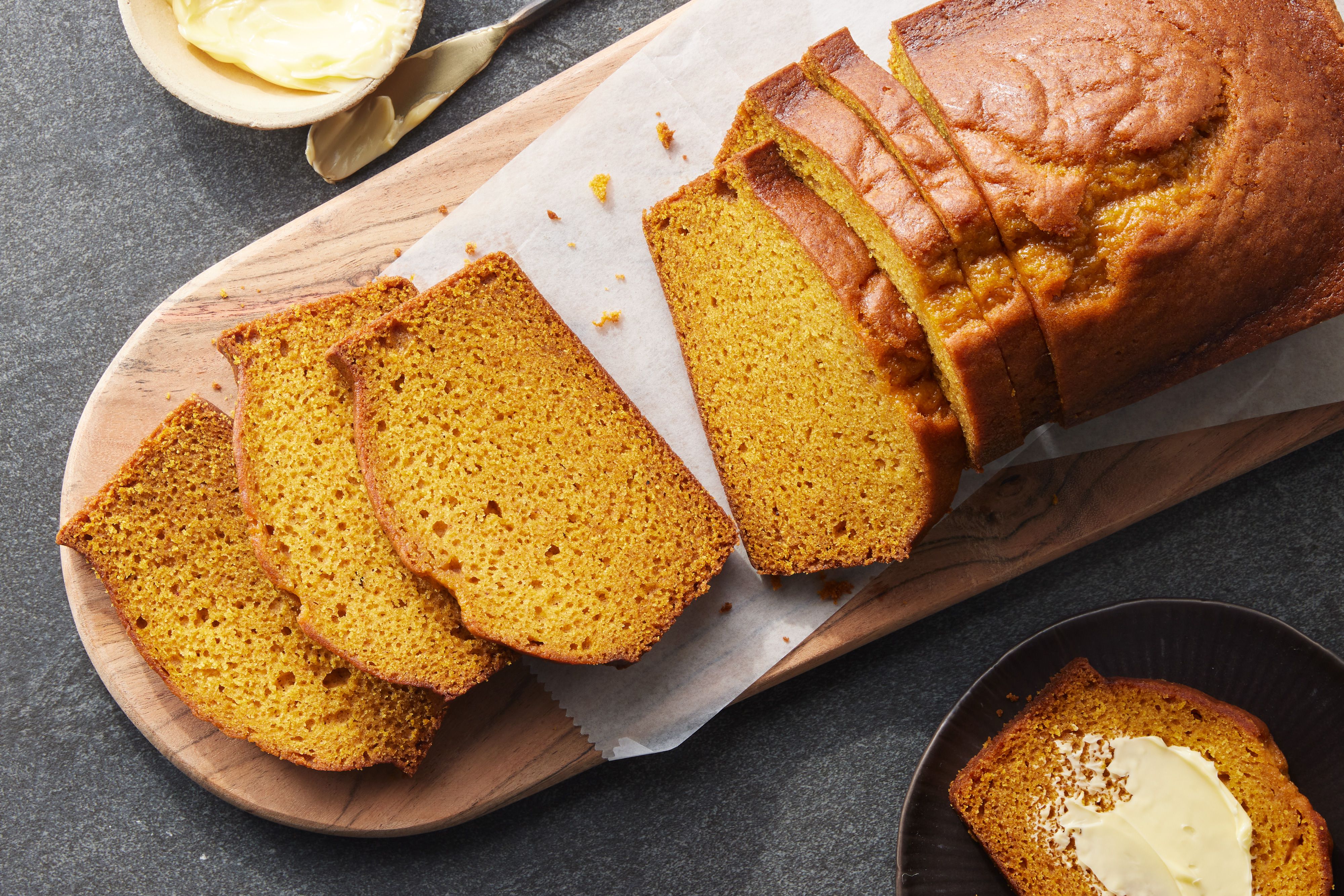
For gatherings, pumpkin bread has quiet confidence. It does not need a cake stand or dramatic decoration. Slice it thickly, arrange it on a platter, and let the color do the talking. The golden-orange crumb looks cheerful beside apples, pears, nuts, and mugs of cider. If guests ask for the recipe, you can act casual, but inside you will know: this loaf has power.
There is nostalgia baked into it, too. Pumpkin bread tastes like school bake sales, leaf piles, Thanksgiving countdowns, football Sundays, and the first time of the season when wearing a sweater feels exciting instead of necessary. It is humble, but it has range. It can be breakfast, dessert, snack, gift, brunch centerpiece, or emergency comfort food after a long week.
And unlike many seasonal treats, it does not ask for perfection. A crack down the center is charming. A slightly darker edge is delicious. A few uneven slices only prove that a human made it, probably while humming near the oven. That is the beauty of pumpkin bread: it is forgiving, fragrant, and deeply satisfying. Once you make it, you may find yourself keeping canned pumpkin in the pantry all fall, just in case the weekend needs saving.
Conclusion
This pumpkin bread recipe is everything a fall weekend bake should be: simple, fragrant, moist, warmly spiced, and reliable enough to make again and again. It uses everyday pantry ingredients, comes together without a mixer, and delivers a tender loaf that tastes just as good the next day. Whether you enjoy it plain, studded with chocolate chips, topped with pepitas, or finished with maple glaze, it is the kind of recipe that turns an ordinary weekend into something memorable.
Make it once for breakfast. Make it again for brunch. Make it a third time because the first two loaves disappeared under suspicious circumstances. Fall is short, pumpkin season is precious, and this bread knows exactly what it is doing.
Note: This article was written from synthesized baking and food-safety guidance from reputable U.S. cooking, nutrition, and government food-safety resources, including guidance on pure pumpkin puree, quick bread methods, raw batter safety, and proper storage practices.