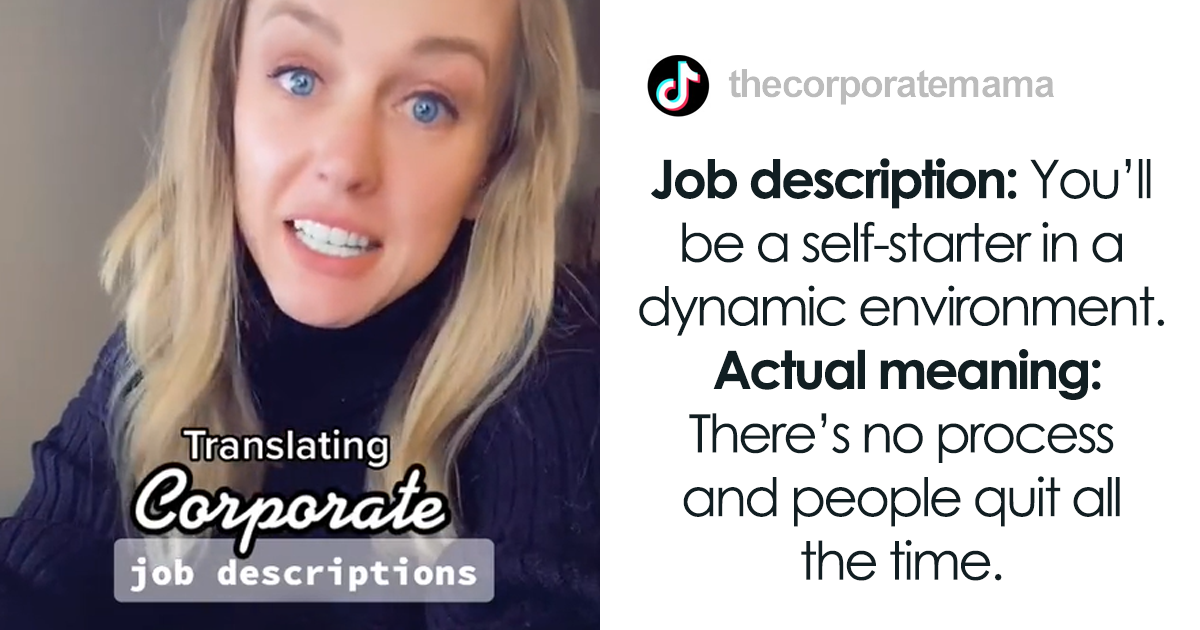
Corporate job descriptions have a special talent: they can make “answering emails and updating spreadsheets” sound like a heroic quest involving innovation, synergy, and possibly a cape. One woman’s viral translhat many job seekers quietly do in their heads: she converted polished business language into plain English.
Her videos turned phrases like “fast-paced environment” and “must wear many hats” into blunt, funny explanations of what applicants may actually encounter. The humor landed because it was familiar. Anyone who has read a job posting that asks for an “entrepreneurial self-starter with a passion for excellence” may have wondered whether the company is hiring a professional or trying to summon a productivity wizard.
Corporate job descriptions are not automatically dishonest. Plenty of companies use broad language because roles evolve, teams are small, or HR templates have been copied so many times that they now qualify for retirement benefits. Still, a job listing is often part recruitment tool, part legal document, part marketing brochure, and part mystery novel. Learning to translate corporate language can help candidates recognize opportunities, identify red flags, and ask smarter questions before accepting a job that turns out to be three jobs wearing a trench coat.
Why the Viral Corporate Job Description Translator Resonated
The woman behind the viral series, known online as The Corporate Mama, used her experience in marketing and corporate life to translate glossy job language into the kind of honest commentary workers often share privately with friends. Her premise was simple: companies may describe a role in upbeat, strategic terms, but applicants deserve to understand the daily reality behind the buzzwords.
That does not mean every phrase has a secret sinister definition. “Collaborative,” for example, can genuinely mean a team works well together. It can also mean your calendar will contain twelve meetings about a meeting that has not happened yet. Context matters.
The larger point is that job seekers should not treat corporate language as a puzzle they are expected to solve alone. A good job description should explain the purpose of the role, the primary responsibilities, the key skills needed, who the person reports to, and how success will be measured. When those details are missing, vague wording may be filling the space where useful information should have been.
That is why the translations feel so satisfying. They are not merely jokes about office culture. They are reminders that candidates have permission to ask what the job actually involves.
Why Corporate Job Descriptions Sound Like Another Language
Corporate language often exists because businesses want to sound ambitious, polished, and attractive. A company does not want to write, “We are understaffed, deadlines move constantly, and you may be asked to cover for two people who left last month.” That would be memorable, certainly, but it would not exactly inspire a stampede of applications.
Instead, job ads may lean on phrases such as “high-growth,” “dynamic,” “results-driven,” and “comfortable with ambiguity.” These phrases can communicate something real, but they are incomplete without specifics. A high-growth company may offer rapid learning and promotion opportunities. It may also be changing its priorities every other Tuesday.
The issue is not that companies use professional language. The issue is when polished language replaces clarity. A candidate should know whether they are applying for a focused role with defined responsibilities or a catch-all position where every new idea eventually lands on their desk like a confused pigeon.
In the best job descriptions, corporate language is supported by practical details. Instead of saying, “Drive strategic alignment across key stakeholders,” a clearer listing might say, “Lead weekly planning meetings with product, sales, and customer-support teams; create project timelines; and report progress to the director of operations.” Suddenly, the candidate knows what their Tuesday might look like.
Corporate Job Description Translations: What Common Phrases May Really Mean
“Fast-Paced Environment”
Possible translation: Priorities move quickly, deadlines may be tight, and you will need to make decisions before every detail is perfect.
This phrase is not automatically a red flag. Some industries truly move fast, including media, hospitality, health care, retail, technology, and event planning. The important question is whether the pace is organized or chaotic. A busy workplace can be exciting. A workplace where every task is labeled urgent is simply a fire drill with a coffee machine.
“Must Wear Many Hats”
Possible translation: The role may include responsibilities outside the job title, especially in a lean team or growing company.
Sometimes this means variety and valuable experience. A marketing coordinator may get to help with social media, events, email campaigns, and analytics. Other times, it means one person is expected to be a marketer, receptionist, designer, project manager, customer-service representative, office mechanic, and unofficial birthday-cake planner.
Ask which responsibilities are permanent, which are temporary, and which tasks take up the most time. Variety is great. Unlimited role expansion is less charming.
“Self-Starter”
Possible translation: You will be expected to work independently and may receive limited direction.
A healthy version of this phrase means the company trusts employees to manage their work. An unhealthy version means nobody has time to train you, answer questions, or explain why the project folder contains fourteen files named “FINAL_final_use_this_one.”
During the interview, ask how onboarding works, who provides feedback, and what the first 90 days look like. Independence is much easier when you are not independently reinventing the company’s entire process.
“Comfortable With Ambiguity”
Possible translation: The company may still be figuring out its systems, goals, reporting lines, or priorities.
This can be exciting for people who enjoy building from scratch. It can be exhausting for people who need a clear structure to do their best work. Neither preference is wrong. The key is to determine whether ambiguity is temporary and manageable or whether it is the company’s permanent operating system.
“Cross-Functional Collaboration”
Possible translation: You will work with people from several departments, each with different priorities and enough calendar conflicts to power a small city.
Cross-functional work can be a major career advantage because it builds communication skills and exposes employees to how the business operates. Still, candidates should ask who makes final decisions when teams disagree. Collaboration is wonderful. Endless approval loops are not.
“Passion for the Mission”
Possible translation: The company wants someone who cares about the work, the customers, or the industry.
That is reasonable. But passion should not become a substitute for fair pay, reasonable staffing, benefits, or healthy boundaries. You can care deeply about a mission and still expect compensation that covers rent, groceries, and the occasional impulse purchase that makes adulthood tolerable.
“Competitive Salary”
Possible translation: The company has not listed the pay range, so you will need to ask.
“Competitive” is one of the most flexible words in business language. It might mean the salary is strong for the market. It might mean the company is competing very hard to keep the number confidential. Candidates should ask for the salary range early enough to avoid spending weeks in interviews only to discover that the compensation does not fit their needs.
“Rock Star,” “Ninja,” or “Unicorn”
Possible translation: The company is looking for someone unusually skilled, versatile, and possibly capable of solving problems before they exist.
Colorful titles can make a posting feel casual, but they may also hide unrealistic expectations. A “marketing rock star” could mean a talented marketer. It could also mean the company wants one person to create strategy, write copy, design graphics, run paid ads, manage influencers, analyze data, and perform a guitar solo at the holiday party.
“Other Duties as Assigned”
Possible translation: The job may change as business needs change.
This phrase is common and not inherently alarming. It becomes more important when the main responsibilities are already unusually broad. Ask for examples of the kinds of additional duties employees in the role have handled in the past.
How to Read a Job Description Like a Career Detective
The trick is not to assume the worst. It is to trade guesswork for questions. Think of a job description as the trailer for a movie. It can tell you the genre, the main characters, and the general mood, but you still need to find out whether the full feature is a thoughtful drama or two hours of paperwork exploding in slow motion.
Look for the Work, Not Just the Adjectives
Pay close attention to the verbs. Words such as create, manage, analyze, negotiate, supervise, design, report, coordinate, and sell often reveal more than phrases such as innovative, dynamic, mission-driven, or collaborative.
A useful job listing should make it possible to picture a normal week. What projects will you own? Which tools will you use? Who will review your work? What decisions can you make independently? What percentage of time will go toward each major responsibility?
Notice What Is Missing
Missing details can matter as much as included details. Does the post identify the manager? Is there a pay range? Does it explain whether the role is remote, hybrid, or on-site? Does it mention travel, evening work, weekend expectations, or performance metrics?
A vague listing does not always mean a bad employer. Small businesses and newer teams may genuinely be working out the details. But a company should be able to explain the job clearly during the interview process.
Ask Specific Questions in the Interview
Instead of asking, “What is the culture like?” try questions that invite useful answers:
- What are the three most important outcomes for this role in the first six months?
- Which responsibilities take up the largest share of the week?
- What caused this position to become available?
- How is performance measured?
- What resources, budget, software, or support staff will be available?
- When priorities conflict, who decides what comes first?
- What does the team do when workloads become unsustainable?
Listen not only to the answers but also to how easily the interviewer gives them. Clear answers suggest the company has thought about the role. Long, foggy answers that drift into phrases like “We are all just very entrepreneurial here” may require a follow-up question or three.
What Employers Can Learn From the Viral Job Description Translations
The popularity of corporate job-description translations should be useful feedback for employers. Candidates are not asking for poetry. They are asking for honesty.
Companies can create stronger job postings by explaining the role’s purpose, prioritizing the most important responsibilities, separating required qualifications from nice-to-have skills, and sharing practical information about compensation, location, schedule, management, and growth opportunities.
Clear language also improves the candidate experience. When applicants understand what success looks like, they can decide whether the role fits their skills and goals before anyone spends hours on applications and interviews. That saves time for the company, the recruiter, the hiring manager, and the candidate who has already rewritten their resume six times while questioning every life decision since middle school.
Transparency does not make a company look weak. It makes the company look organized. A business that can clearly explain a job is more likely to attract applicants who genuinely want that job rather than applicants who were lured in by a cloud of adjectives.
Real-World Experiences: When the Job Translation Becomes Personal
The funniest corporate job-description translations often become memorable because people recognize their own experiences in them. Many workers have accepted a role that sounded focused and strategic, only to discover that the real job involved a much wider collection of duties. The following examples are representative scenarios based on common workplace experiences, not accounts of one specific person.
Consider the employee hired as a social media coordinator. The job post promised creative content, community engagement, and support for brand growth. Those are reasonable responsibilities. Within a few months, however, the employee was also expected to photograph products, edit videos, answer customer complaints, organize influencer shipments, write email campaigns, cover weekend events, and explain why one post did not “go viral.” The title stayed the same. The workload did not.
Another common experience involves the phrase “self-starter.” A candidate may see that wording and imagine freedom, trust, and room to take initiative. Then they arrive on day one, receive a laptop, a login that does not work, and a cheerful message saying, “Feel free to dig in!” There is no training plan, no documented process, and no clear owner for the projects. The employee eventually becomes self-starting because there is no other available starter.
“Fast-paced” can create a similar split-screen experience. In one company, it means the team has ambitious goals, makes decisions quickly, and gives employees enough support to keep moving. In another, it means every task is urgent, every deadline was apparently created by a time traveler, and the organization treats planning like an optional streaming subscription.
Workers also learn that “wearing many hats” can be either a gift or a warning. In a healthy small company, an employee may gain skills outside their original role, build a strong portfolio, and become more valuable in future job searches. In an unhealthy company, the phrase can become a permanent excuse for under-hiring. The difference is whether the extra work comes with support, recognition, authority, and compensation.
Perhaps the most useful lesson is that candidates do not need to decode every phrase perfectly before applying. They simply need to notice the phrases that deserve clarification. A job description is an invitation to start a conversation, not a contract written by an oracle. Ask what the role looks like on an average Tuesday. Ask what success looks like after six months. Ask what the previous employee found most challenging. Ask what would make someone fail in the role.
Those questions do more than expose red flags. They help job seekers find good employers, too. A thoughtful hiring manager will usually welcome practical questions because strong candidates care about doing strong work. The right job should not require you to become a corporate-language detective forever. It should give you enough clarity to decide whether you want to join the team before the first calendar invitation titled “Quick Sync” quietly consumes your afternoon.
Conclusion: Translate the Buzzwords, Then Trust the Details
The viral corporate job-description translations are funny because they reveal a familiar workplace truth: business language can sometimes make ordinary work sound mysterious, glamorous, or suspiciously unlimited. But job seekers do not need to become cynical. They need to become curious.
Read corporate job descriptions with an open mind and a sharp pencil. Appreciate the mission, the growth potential, and the exciting language, but look for the concrete details underneath. Ask about responsibilities, decision-making, workload, compensation, training, and success metrics. A great job should still make sense after the buzzwords are removed.
Note: Corporate phrases are clues, not convictions. One “fast-paced environment” may be a fulfilling challenge; another may be an office-wide emergency with branded tote bags. The interview is where the translation becomes clear.