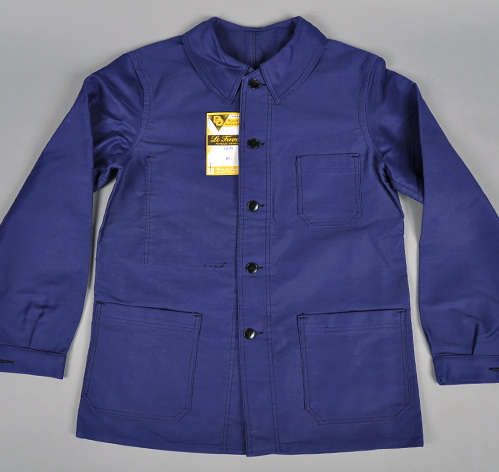
The Bleu de Travail French Work Jacket – Blue is one of those rare garments that looks as if it has a passport, a tool belt, and a very firm opinion about good bread. It began as practical clothing for laborers, farmers, railway workers, mechanics, artisans, and anyone else whose day involved more than “reply all.” Today, it has become a wardrobe classic: simple, durable, unfussy, and stylish without performing a tap dance for attention.
Translated literally, bleu de travail means “work blue.” The phrase refers not only to the color but also to an entire tradition of French workwear: sturdy cotton jackets, chore coats, overalls, and trousers built for long days, dirty hands, and repeated washing. The blue French work jacket is the most famous member of the family. It is usually cut straight, buttoned at the front, finished with patch pockets, and made from cotton twill, cotton drill, canvas, or moleskin. It is the kind of jacket that says, “I can hold your notebook, your phone, your keys, and your emergency croissant.”
What Is a Bleu de Travail French Work Jacket?
A Bleu de Travail jacket is a French chore coat traditionally designed as protective outerwear for manual work. Unlike a tailored blazer, it does not try to reshape your body into a corporate triangle. Unlike a technical shell, it does not come with 47 zippers and a label explaining its relationship with mountains. Its genius is simpler: roomy fit, tough cloth, useful pockets, and an easy button front.
The classic blue version is especially iconic. Historically, the blue dye helped disguise stains from grease, dust, soil, and machine work. The color also gave French workwear its visual identity, much like denim blue became associated with American labor clothing. Over time, the blue work jacket moved from workshops and fields into cafés, studios, offices, galleries, and city sidewalks. Somehow, it still looks like it could fix a chair, paint a room, or critique a gallery opening.
Key Features of the Classic Blue Work Jacket
The traditional Bleu de Travail French work jacket usually includes a few recognizable details: a straight or slightly boxy cut, a flat collar, a button-front closure, large lower patch pockets, and often a chest pocket. Many versions are unlined, making them breathable and easy to layer. Some are made from smooth cotton twill, while others use dense cotton moleskin, a fabric that feels soft on the surface but wears like it has been emotionally trained by a blacksmith.
These features are not decoration pretending to be useful. The pockets were made for tools, pencils, nails, small notebooks, cigarettes, lunch items, and whatever else workers needed close at hand. In modern life, those same pockets now carry phones, wallets, earbuds, receipts, sunglasses, and the mysterious object you pick up at home and forget why you are holding.
A Brief History: From French Workshops to Global Style
The French work jacket emerged in the late nineteenth and early twentieth centuries, when industrial work, railway labor, farming, and skilled trades required practical clothing that could protect the wearer’s everyday garments. It was inexpensive, strong, washable, and easy to repair. A rip was not a tragedy; it was simply an invitation for a patch. That attitude is part of the jacket’s lasting charm.
Heritage makers helped preserve the design. French labels such as Le Mont St Michel and Vetra became closely associated with the chore jacket tradition. Their versions kept the essential formula intact: durable fabric, blue workwear color, honest construction, and little interest in fashion gimmicks. The result is a garment that feels both historical and oddly current, like a century-old idea that never needed a software update.
The jacket’s popularity outside France grew through vintage workwear collectors, menswear enthusiasts, designers, and cultural figures. Street-style photographer Bill Cunningham famously wore a bright blue French work jacket while cycling through New York City documenting fashion. His uniform helped introduce the jacket to a broader audience: practical, humble, instantly recognizable, and more stylish than half the runway looks he was photographing.
Why Blue Matters
The blue in a Bleu de Travail jacket is not just a color choice; it is the whole mood. Traditional shades range from bright French blue to deep indigo and dark navy. Some jackets start bold and electric, then fade softly with sun, washing, and wear. Others begin darker and slowly develop lighter seams, softened elbows, and pocket edges that tell the story of use.
This aging process is one reason vintage French work jackets are so desirable. A new jacket can look crisp and clean, but an old one carries marks of movement. Faded cotton, softened cuffs, repaired pockets, and sun-washed shoulders create character that cannot be faked convincingly. Fashion brands may try, bless their distressed little hearts, but real wear has a different personality.
Fabric: Cotton Twill, Drill, Canvas, and Moleskin
The fabric determines how the jacket feels, drapes, and ages. Cotton twill is common because it balances durability and comfort. Cotton drill is similarly strong, with a diagonal weave that resists wear. Canvas gives a more rugged, structured feel, especially in heavier weights. Moleskin, despite its name, does not involve actual moles nervously calling their lawyers. It is a dense cotton cloth with a brushed surface, known for softness, warmth, and durability.
A lighter cotton twill Bleu de Travail works well for spring, early fall, cool summer evenings, and indoor layering. A heavier moleskin or canvas version behaves more like outerwear and can handle crisp weather. The best choice depends on climate, personal style, and whether you want the jacket to feel like a relaxed overshirt or a serious chore coat.
Fit: How a French Work Jacket Should Wear
A Bleu de Travail jacket should not fit like a slim suit jacket. It was designed for movement, layering, and work. The shoulders may sit naturally or slightly relaxed. The body is usually straight, not aggressively tapered. The sleeves should allow you to bend, reach, and generally live your life without looking like you are being hugged by a determined sausage casing.
For a classic fit, choose a size that lets you wear a T-shirt, Oxford shirt, light sweater, or sweatshirt underneath. The hem often falls around the hip or upper thigh, depending on the maker. If you want a cleaner city look, avoid going too oversized. If you want a vintage, painterly, relaxed look, a little extra room is part of the charm.
Modern Fit Tips
If you are between sizes, think about how you will wear it most often. For warm-weather use over T-shirts, a trimmer fit may feel better. For layering over knitwear, size up or choose a roomier cut. The jacket should button comfortably without pulling across the chest. The pockets should sit flat. The collar should lie naturally. If the sleeves are slightly long, rolling the cuffs is not a defect; it is basically part of the uniform.
How to Style the Blue French Work Jacket
The beautiful thing about the blue French work jacket is that it plays well with almost everything. It is casual, but not sloppy. Rugged, but not theatrical. Interesting, but not the kind of interesting that makes strangers wonder if you are on your way to perform experimental accordion jazz.
With Denim
Pairing a blue chore jacket with jeans is easy, but the trick is contrast. If the jacket is bright blue, try dark indigo jeans, faded black denim, ecru denim, or olive pants. If the jacket is dark navy, lighter jeans can work beautifully. A white T-shirt and leather boots make the outfit simple and strong. Add a cap if you want to look like you know where to find the best coffee within a six-block radius.
With Chinos or Work Pants
Khaki chinos, fatigue pants, painter pants, and relaxed cotton trousers all suit the jacket. Beige, tan, olive, cream, brown, and charcoal are especially friendly partners. The blue jacket becomes the focal point without shouting. This is one of the easiest ways to wear workwear in a modern American wardrobe: practical shapes, natural colors, and enough structure to look intentional.
With Tailored Pieces
The Bleu de Travail can also replace a blazer in casual settings. Wear it over an Oxford shirt with wool trousers and loafers, and you have a look that says “creative professional” rather than “forgot my suit jacket in a rideshare.” The key is balance. Choose a clean jacket with minimal distressing, keep the shirt crisp, and avoid overly bulky pants. The contrast between utility and tailoring is what makes the outfit interesting.
For Women’s Styling
The French work jacket is not limited to menswear. It looks excellent over a striped Breton shirt, straight-leg jeans, wide-leg trousers, simple dresses, linen skirts, or high-waisted pants. The boxy shape adds ease and structure. A bright blue jacket over a white dress or cream trousers feels fresh, relaxed, and very “I packed perfectly for a weekend in Normandy,” even if the weekend is actually errands and a grocery run.
Why the Bleu de Travail Still Works Today
The modern appeal of the blue French work jacket comes from its rare combination of function and personality. It has enough history to feel meaningful, enough simplicity to be versatile, and enough pocket space to be useful. It is also refreshingly free of logos. In a world where clothing often wants to become a billboard, the Bleu de Travail prefers to be a good jacket. Radical behavior.
It also fits into the growing interest in slow fashion and durable clothing. A well-made cotton work jacket can last for years. It can be repaired, washed, faded, patched, and worn into softness. Instead of becoming obsolete when trends change, it becomes more personal. That is the opposite of disposable fashion, and it is one reason people keep returning to authentic workwear designs.
How to Choose the Right Blue French Work Jacket
When shopping for a Bleu de Travail French Work Jacket – Blue, start with fabric. Lightweight cotton twill is ideal if you want a breathable layer. Heavy cotton drill, canvas, or moleskin is better if you want structure and warmth. Next, check pocket placement. Traditional patch pockets should be large enough to use, not decorative little postage stamps pretending to help.
Look at the buttons and stitching. Strong seams, reinforced stress points, and sturdy buttons matter because this jacket is supposed to be worn often. Also consider the shade of blue. A bright French blue makes a stronger statement and develops beautiful fading. A dark blue or navy version is subtler and easier to dress up. Both are correct; it depends whether you want “artist in a sunlit studio” or “quietly competent person with excellent taste.”
Vintage vs. New
A vintage French work jacket offers instant character. It may come with fading, repairs, worn labels, and a softness that only time can create. However, vintage sizing can be unpredictable, and condition varies widely. Check for weak fabric around the collar, cuffs, armpits, and pocket corners. A few repairs are charming; fabric that is one handshake away from retirement is less charming.
A new jacket gives you more control over size, condition, and fabric weight. Heritage makers and modern workwear brands offer versions inspired by the original, some made in France and others adapted for contemporary wardrobes. If you want daily reliability, a new jacket may be the safer choice. If you want personality and do not mind hunting, vintage can be magic.
Care and Maintenance
Caring for a blue French work jacket is refreshingly simple. Wash it only when needed, especially if you want natural fading over time. Use cold water, mild detergent, and hang dry when possible. Hot dryers can shrink cotton and accelerate wear. If the jacket is raw, heavily dyed, or very dark, wash it separately at first unless you want your white socks to begin a new life as pale blue socks.
Small repairs should be welcomed. Patch a tear. Reinforce a pocket. Sew on a button. The jacket was born in a culture of usefulness, not perfection. A neat repair adds character and extends life. In fact, a spotless chore jacket can look slightly nervous, as if it has not yet been assigned a purpose.
Common Mistakes to Avoid
The first mistake is buying it too tight. A French work jacket should move. The second is treating it like formalwear. Yes, it can be dressed up, but it should still feel relaxed. The third mistake is over-styling it with too many heritage pieces at once. Chore jacket, raw denim, engineer boots, bandana, suspenders, watch cap, and a dramatic stare into the distance may be a bit much unless you are auditioning for a documentary called The Handsome Carpenter Who Never Carpentered.
Let the jacket breathe. Pair it with simple basics. Allow the blue to do its job. The best outfits usually look natural, not assembled with tweezers and anxiety.
Who Should Wear a Bleu de Travail French Work Jacket?
Almost anyone can wear one. It suits people who like practical clothing, vintage style, minimalist wardrobes, workwear, casual tailoring, French design, and garments that improve with age. It is especially useful for people who want a lightweight jacket that is more interesting than a hoodie but less formal than a blazer.
It works for students, designers, writers, photographers, gardeners, teachers, travelers, weekend market wanderers, and people who simply enjoy having pockets that can hold more than a single breath mint. The blue French work jacket is not precious. That is the point. It is meant to be lived in.
Experience Notes: Living With a Blue French Work Jacket
Wearing a Bleu de Travail French Work Jacket – Blue is a small daily pleasure because it quickly stops feeling like an outfit choice and starts feeling like a habit. The first time you put one on, it may seem almost too plain. There is no flashy lining, no dramatic hardware, no secret tactical panel designed for surviving a luxury camping trip. Then you wear it for a full day and realize the plainness is the luxury.
The pockets change everything. On a morning walk, the lower pockets hold keys, phone, and sunglasses without creating awkward bulges. At a coffee shop, the chest pocket becomes the perfect place for a pen or receipt. During travel, the jacket works like a soft command center. Boarding pass? Pocket. Earbuds? Pocket. Tiny snack you bought because airport food prices made you question civilization? Also pocket.
The blue color also earns its keep. A bright workwear blue adds life to basic outfits, especially white tees, gray sweatshirts, tan chinos, and black jeans. It photographs well without looking vain. In sunlight, the blue feels cheerful and practical. Indoors, it reads as creative and relaxed. It is the rare color that can look both humble and stylish, which is probably why it has survived so many changes in fashion.
The jacket becomes better after it stops being perfect. The cuffs soften first. Then the elbows relax. The collar begins to sit naturally. The fabric loses its factory stiffness and gains the shape of your movements. After a few months, it no longer feels like “a jacket.” It feels like “my jacket.” That emotional promotion is important. Many clothes are bought; only a few are adopted.
One of the best experiences is discovering how many settings it handles. It works on a casual Friday with chinos and a button-down shirt. It works on a weekend with sneakers and a T-shirt. It works over a sweater on a chilly evening. It even works when you are doing actual chores, which is a bold full-circle moment for a garment that has been borrowed by fashion people, museum people, coffee people, and people who own expensive notebooks.
The Bleu de Travail is also forgiving. Wrinkles look natural. Fading looks good. A scuff does not ruin it. A repair improves it. This is clothing with a sense of humor about real life. You do not need to protect it from the world; you let the world write on it a little. That may be the most stylish thing about it.
After living with one, the appeal becomes obvious: it reduces decision fatigue. When the weather is mild and the outfit feels unfinished, the blue French work jacket is the answer. It adds shape without stiffness, color without loudness, and function without fuss. It makes a simple outfit look considered. It makes a practical outfit look charming. And if someone compliments it, you can say “bleu de travail” with just enough French pronunciation to feel sophisticated, but not so much that your friends abandon you.
Conclusion
The Bleu de Travail French Work Jacket – Blue remains timeless because it was never designed to chase time in the first place. It was built to work, protect, carry, move, and last. That honest purpose is exactly why it still feels relevant in modern wardrobes. Whether you choose a crisp new jacket or a faded vintage piece, the blue French work jacket brings history, utility, and effortless style into everyday dressing.
It is simple, but not boring. Practical, but not plain. Stylish, but not desperate for applause. In short, it is the rare jacket that can hold your phone, improve your outfit, and make you look like you might know how to repair a wooden chair. Even if you do not, the pockets are big enough to hold the instruction manual.