Note: This article is written from real public information about transformation makeup, beauty creators, character artistry, theatrical makeup, and cosmetic safety guidance, with source links intentionally omitted for clean web publishing.
Some people use makeup to cover a sleepy Monday face. Others use it to become Mariah Carey, Maleficent, Moana, Meghan Markle, Ed Sheeran, a Bratz doll, or a cartoon character with eyes large enough to legally require their own ZIP code. That is the delightful, slightly mind-bending world of transformation makeup, where a talented artist can turn her own face into a living canvas and make the internet collectively ask, “Wait… how is that the same person?”
One of the most impressive names associated with this art is Promise Tamang, a Los Angeles-based makeup artist widely known online as a “human chameleon.” Her work became popular because it does not stop at regular beauty makeup. Instead, she studies a celebrity’s bone structure, a character’s exaggerated features, the exact angle of a cartoon smile, and even the mood behind a face. Then she recreates the illusion using cosmetics, wigs, props, contouring, shading, highlight, patience, and what appears to be a small amount of wizardry.
Her transformations into famous characters and celebrities are impressive because they sit at the intersection of beauty, portrait painting, cosplay, special effects, and performance. A regular makeup look says, “I found my good side.” A Promise Tamang-style transformation says, “I found twelve new faces and they all pay rent.”
Why Transformation Makeup Fascinates Millions
Celebrity makeup transformations are satisfying for the same reason magic tricks are satisfying: viewers know there is a method, but the final reveal still feels impossible. A makeup artist starts with an ordinary bare face, then builds an illusion layer by layer. Foundation evens the canvas. Contour changes the apparent shape of the nose, jaw, cheeks, forehead, and lips. Highlight pushes certain areas forward. Shadows pull other areas back. Eyeliner can stretch, shrink, lift, or completely redraw the eyes. Brows can make a face look innocent, villainous, glamorous, stern, animated, or suspiciously like someone who has just stolen a kingdom.
What makes the best transformations stand out is accuracy. Anyone can put on red lipstick and call it “Hollywood glam.” But to become a recognizable celebrity or character, the artist must capture the tiny details people associate with that face. For Mariah Carey, it might be soft glam, luminous skin, sculpted cheeks, and a certain diva-level polish. For Maleficent, it is the sharp cheekbones, dramatic eyes, deep lips, and powerful villain energy. For Moana, warmth, youthful expression, and animated brightness matter more than heavy glam. For Darla from Finding Nemo, the challenge becomes comedic exaggeration: the braces, the big grin, the mischievous childlike chaos. In other words, transformation makeup is not only about looking pretty. It is about becoming readable.
The Artist Behind The Illusion
Promise Tamang’s rise reflects how the beauty world changed when YouTube, Instagram, and short-form video turned makeup artists into self-publishing entertainers. Instead of waiting for a film studio, magazine, or runway team to approve her creativity, an artist could create a look at home, film the process, post it, and instantly reach people across the world. That accessibility helped transformation makeup become a popular online genre.
Tamang’s work has included celebrities, Disney-inspired characters, animated icons, fantasy figures, and pop-culture faces. Her appeal comes from more than technical skill. She often makes the process feel playful and approachable, even when the result is clearly advanced. Viewers watch because they want to see the final face, but they stay because the journey is mesmerizing: the first contour line looks strange, the halfway stage looks alarming, and then suddenly the whole face clicks into place. It is like watching a portrait paint itself, except the portrait occasionally blinks.
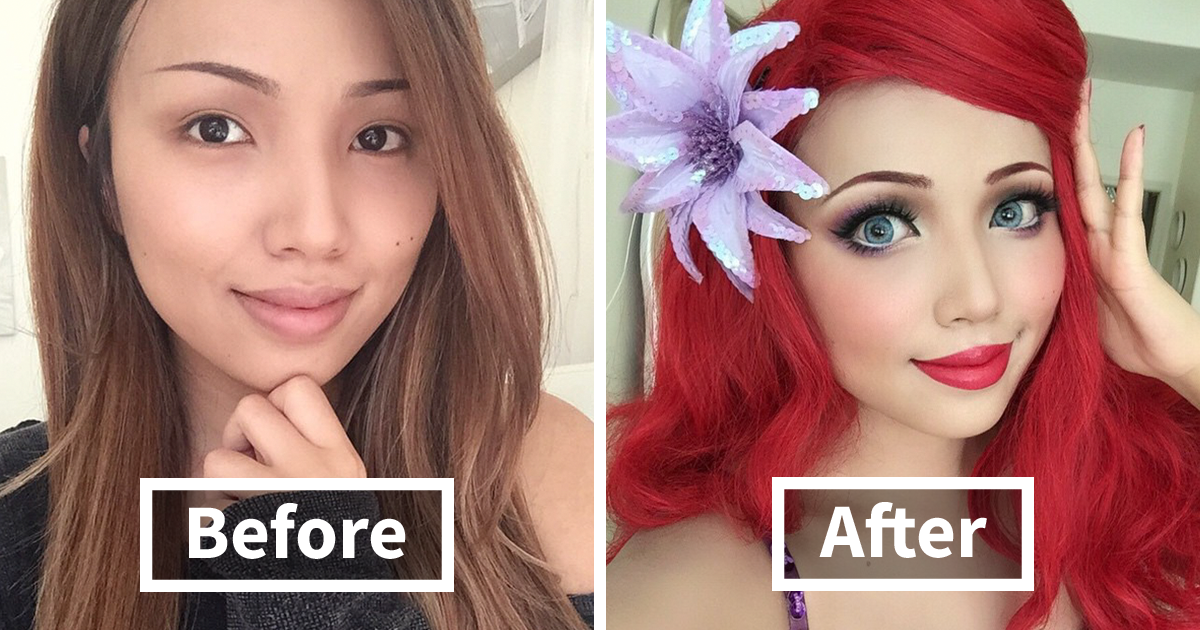
That “before and after” drama is a major reason transformation videos work so well online. The human brain loves contrast. When the beginning and ending look dramatically different, people feel compelled to share, comment, rewatch, and ask for the next character. Makeup becomes a visual story with a built-in plot twist.
How Makeup Can Change A Face Without Changing The Person
At the heart of celebrity makeup transformation is the clever manipulation of light and shadow. Professional makeup artists understand that the face is three-dimensional, but cameras flatten it. By placing darker shades under cheekbones, along the sides of the nose, near the hairline, or beneath the lower lip, an artist can make those areas appear deeper. By adding lighter tones to the bridge of the nose, center of the forehead, tops of cheekbones, or cupid’s bow, she can make those features appear more prominent.
This is why contouring is so powerful in transformation makeup. It can make a rounder face appear sharper, a shorter nose appear longer, a softer jaw appear more angular, or a small mouth appear fuller. When used lightly, it enhances. When used dramatically, it creates a new character. The difference between everyday contour and transformation contour is the difference between “I slept eight hours” and “I have become a Disney villain with excellent bone structure.”
Eye makeup is just as important. A celebrity’s eye shape is often one of the quickest recognition clues. Winged liner can create lift. White pencil on the waterline can make eyes appear larger. Dark shadow under the lower lash line can change the expression. False lashes can turn a soft look into a glamorous one, while drawn-on lashes can help mimic cartoon proportions. Brows are equally powerful. Thin, arched brows suggest one era or character; thick straight brows suggest another. Change the brows, and the whole face starts speaking a different language.
From Beauty Makeup To Character Design
Transformation makeup borrows from several creative fields. From beauty makeup, it takes blending, color theory, skin preparation, and product knowledge. From portrait painting, it takes observation, proportion, and shading. From cosplay, it takes commitment to costume, hair, props, and character accuracy. From special effects makeup, it sometimes takes prosthetics, wax, adhesives, fake scars, face paint, and texture work.
That blend explains why these looks feel so impressive. They are not simply “makeup tutorials.” They are miniature productions. A complete character look may involve planning reference images, sketching the face map, choosing products, applying base makeup, layering creams and powders, adjusting with paint, styling a wig, changing lighting, adding accessories, and filming or photographing the final reveal. The finished image may last only long enough for a video, but the preparation can take hours.
In that sense, a transformation artist is part painter, part performer, part editor, part photographer, and part very patient person who somehow does not sneeze while applying black eyeliner. This deserves applause.
Why Famous Characters Are Harder Than They Look
Turning into a celebrity is difficult, but turning into a famous fictional character can be even harder. Celebrities have real human proportions. Cartoon characters do not always respect the laws of anatomy. Their eyes may be enormous, their noses tiny, their mouths exaggerated, and their expressions permanently locked into joy, rage, innocence, or theatrical doom.
To recreate characters like Sailor Moon, Moana, Maleficent, Betty Boop, or a Bratz doll, the artist must translate animation into a human face. That means deciding which features to exaggerate and which to soften. Too little exaggeration, and the character is not recognizable. Too much, and the look can become costume-store chaos. The best transformation artists find the sweet spot where the face still moves naturally but the illusion is clear.
For example, a Bratz-inspired look may require oversized eyes, glossy lips, a tiny nose effect, dramatic lashes, and doll-like smoothness. A Maleficent look may require sculptural cheekbones, sharp brows, red lips, and a colder, more commanding expression. A Moana-inspired transformation may depend on warmth, hair, natural tones, and the character’s energetic personality. Great transformation makeup does not simply copy colors. It captures identity.
The Role Of Wigs, Props, And Expression
Makeup does the heavy lifting, but hair and styling often seal the deal. A celebrity transformation without the correct hairstyle can look like a very glamorous cousin. Add the right wig, part, curls, accessories, or costume detail, and the resemblance becomes much stronger. This is why transformation artists often use wigs, hats, veils, jewelry, colored contacts, clothing, and props.
Expression also matters. A face is not just features; it is attitude. A celebrity known for sultry confidence requires a different camera presence than a cheerful animated heroine. A villain needs intensity. A princess needs softness. A pop star needs polish. A comic character needs exaggeration. Promise Tamang and other skilled creators understand that makeup alone is not the final step. The final step is acting with the face.
That performance element makes transformation makeup especially fun. The artist is not just showing a finished look. She is briefly becoming the character, giving viewers a tiny performance without needing a full movie set. Honestly, Hollywood has spent more money for less convincing reveals.
Why Social Media Made This Art Form Explode
Transformation makeup is almost perfectly designed for social media. It has a strong visual hook, a dramatic process, a recognizable subject, and a satisfying reveal. Platforms like YouTube, Instagram, TikTok, and Facebook reward content that makes viewers stop scrolling. A split-screen image of one person becoming a famous celebrity or character has instant curiosity built in.
These looks also invite interaction. Followers suggest the next character. Fans debate which transformation is most accurate. Beauty lovers ask for product lists. Cosplayers study the techniques. Beginners wonder if they could try a simpler version for Halloween, a themed party, or a convention. The comment section becomes part of the creative cycle.
Another reason the genre works online is that it feels surprisingly democratic. Viewers know they may not have access to a movie studio makeup department, but they can recognize products like foundation, concealer, eyeliner, contour palettes, face paint, lashes, and setting powder. The tools feel familiar even when the result is extraordinary. That gap between ordinary tools and unbelievable outcome is exactly where the magic lives.
Makeup Transformation As Modern Portrait Art
It is easy to dismiss viral makeup as entertainment, but transformation work deserves a more serious look. A detailed celebrity transformation is essentially portrait art painted on a living, moving surface. Traditional portrait artists use canvas. Makeup artists use skin. The challenge is enormous because skin has texture, curves, pores, oil, movement, and expressions. A line that looks perfect when the face is relaxed may shift when the artist smiles. A shadow that looks realistic in bathroom lighting may vanish under a ring light. Every decision must account for both anatomy and camera.
This is also why transformation makeup teaches viewers about perception. We often think we recognize people by their entire face, but we actually rely on specific signals: eye shape, brows, nose bridge, lip proportions, hairline, facial angles, smile style, and even posture. When an artist recreates enough of those signals, the viewer’s brain completes the illusion. The result can feel uncanny because the viewer knows it is makeup, yet the resemblance still works.
Safety Still Matters: The Less Glamorous But Very Important Part
As impressive as transformation makeup can be, safety should never be treated like the boring friend at the party. Face paints, theatrical makeup, adhesives, pigments, glitter, and prosthetic products must be used correctly. Products meant for the body may not be safe near the eyes. Some bright pigments that look amazing in photos may carry warnings about use around the immediate eye area. Cosmetic waxes and adhesives should be patch-tested when possible, removed gently, and used according to instructions.
Clean tools matter too. Brushes, sponges, and liners can collect bacteria, especially when used repeatedly. Anyone recreating transformation looks should avoid sharing eye products, clean brushes regularly, check expiration dates, and remove heavy makeup thoroughly before bed. A dramatic character reveal is wonderful. A dramatic eye infection is not the sequel anyone requested.
What Beginners Can Learn From Professional Transformations
Even if most people are not ready to become a full-scale celebrity duplicate, transformation makeup offers practical lessons. First, reference images are essential. Professionals do not guess. They study. Second, structure matters more than product price. A skilled artist can create an impressive illusion with basic products because placement is more important than owning every new palette released before breakfast.
Third, blending is powerful, but not every line should disappear. In beauty makeup, harsh lines are often softened. In transformation makeup, some lines must remain sharp to mimic bone structure, wrinkles, cartoon outlines, or character details. Fourth, the camera changes everything. A look that seems too dramatic in the mirror may appear perfect on video or in photos. That is why many transformation artists test their work through the camera while creating it.
Finally, patience is the secret product nobody sells. Transformations take time. The first attempt may look less like a celebrity and more like a haunted passport photo, and that is perfectly normal. Skill grows through observation, practice, and the willingness to wash everything off and try again.
The Cultural Power Of Becoming Someone Else
There is something deeply human about wanting to try on another identity. Costumes, masks, theater, and face painting have existed across cultures for centuries. Today’s celebrity makeup transformations are a digital-age version of that old impulse. They allow people to explore fantasy, admiration, humor, nostalgia, and creativity through the face.
When a makeup artist transforms herself into famous characters and celebrities, she is not only showing technical talent. She is showing how flexible identity can appear on the surface. One face can become many faces. One person can move from princess to pop star, villain to cartoon child, royal bride to fantasy icon. That flexibility is part of the fascination. Makeup becomes a reminder that appearance is powerful, but also playful.
Why Promise Tamang’s Work Still Feels Impressive
Promise Tamang’s transformations continue to stand out because they combine detail, humor, accessibility, and surprise. She can lean glamorous, strange, cute, spooky, or completely unexpected. Her work reminds viewers that makeup is not limited to hiding flaws or following trends. It can create stories. It can revive childhood characters. It can celebrate celebrities. It can make a person laugh, gasp, or immediately send the video to a friend with the message, “You need to see this.”
The best part is that her work encourages creativity rather than perfection. Yes, the results are polished. But the spirit behind them feels experimental. What would happen if a face became a cartoon? What would happen if contour became architecture? What would happen if a beauty routine turned into a one-person movie? These questions make the art exciting.
Experience Section: What It Feels Like To Watch And Try Transformation Makeup
The first time you watch a serious makeup transformation, it can feel like your eyes are being politely tricked. At the beginning, the artist looks like herself. A few minutes later, there are random brown lines across the nose, white patches under the eyes, a suspicious amount of powder, and brows that seem to be applying for a new job. At this stage, beginners may panic. Do not panic. This is the “trust the process” phase, also known as the “I promise this is not a mistake” phase.
Then the features begin to shift. The nose looks narrower. The cheeks lift. The eyes become larger or sharper. The lips change shape. Suddenly, the face starts resembling the reference image. It is a strange and wonderful moment because nothing permanent has happened, yet the identity on screen feels different. That is the addictive part of transformation makeup: the reveal is not only visual, it is emotional.
Trying transformation makeup yourself is both fun and humbling. You may begin with great confidence, three reference photos, and a clean brush. Thirty minutes later, you may discover that drawing symmetrical eyeliner is less a beauty skill and more an Olympic event. Contouring a celebrity nose onto your own nose can feel like architectural engineering. Creating cartoon eyes may require more patience than assembling flat-pack furniture without instructions.
But the process teaches you to look closely. You notice that one celebrity’s brows angle upward at the tail. Another has a fuller lower lip. A character’s cheeks are rounder than you thought. A villain’s expression depends on the brow shape more than the lipstick. You start seeing faces as shapes, colors, shadows, and signals. That awareness can improve everyday makeup too, because you understand your own features better.
There is also joy in imperfection. Not every attempt needs to look professionally viral. Sometimes your “famous celebrity” transformation may look like that celebrity’s distant aunt who runs a candle business. That is still a victory if you learned something. Makeup is washable, which makes it one of the friendliest art forms. If the look fails, you can remove it. If it succeeds, you can take 200 photos and pretend you only took three.
For Halloween, cosplay events, themed parties, or content creation, transformation makeup offers a creative challenge that does not require expensive costumes at first. A black liner, a contour shade, a light concealer, lipstick, and a few reference photos can go surprisingly far. Add a wig or prop, and the illusion becomes stronger. Add confidence, and suddenly you are not merely wearing makeup; you are presenting a character.
Watching artists like Promise Tamang also builds appreciation for behind-the-scenes beauty labor. A finished transformation may appear effortless in a short video, but the work includes planning, product testing, lighting, filming, editing, cleanup, and skin care afterward. The final image is the glamorous part. The makeup wipe mountain afterward is the truth. Still, the result is worth it because transformation makeup celebrates imagination in a way few beauty trends can.
In a world full of filters and digital edits, handmade transformation makeup feels refreshing. It uses real products, real technique, and real patience. The illusion may be temporary, but the skill is not. That is why seeing a makeup artist transform herself into famous characters and celebrities remains so impressive. It proves that a face can be more than a face. It can be a canvas, a costume, a performance, a joke, a tribute, and occasionally, a very convincing pop star.
Conclusion
Makeup transformations are impressive because they combine beauty skill with storytelling. Artists like Promise Tamang show that cosmetics can do far more than enhance natural features. In the right hands, foundation, contour, eyeliner, wigs, and props can create a convincing celebrity, a beloved animated character, or a fantasy figure pulled straight from pop culture. The magic is not just in the final photo; it is in the careful study, patience, technique, humor, and imagination behind every brushstroke.
Whether viewers come for the celebrity resemblance, the character nostalgia, the tutorial value, or the sheer “how did she do that?” factor, transformation makeup continues to capture attention because it turns the familiar human face into something surprising. It reminds us that creativity does not always need a giant studio. Sometimes it needs a mirror, a makeup kit, a camera, and an artist brave enough to ask, “Who should I become today?”