In 2021, the startup world had the energy of a toddler who found espresso. Capital was cheap, valuations were generous, growth was worshipped, and “burning money” was not a red flag so much as a lifestyle choice. Venture-backed startups hired aggressively, paid aggressively, expanded aggressively, and sometimes described unit economics with the same confidence people use when saying they will “definitely start going to the gym Monday.”
Then the market changed. Interest rates rose, public SaaS multiples compressed, IPO windows narrowed, and investors stopped rewarding growth at any cost. The new commandments became efficiency, runway, retention, profitability, and capital discipline. In other words: build a real business, not a very expensive fireworks show.
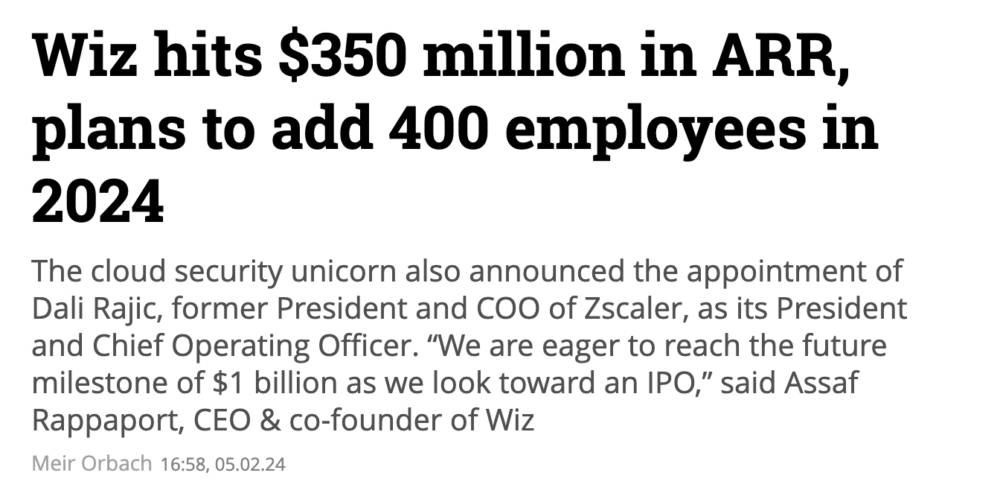
And yet, here we are in 2025, and the weird truth is this: maybe 10%-15% of venture-backed startups are still running the 2021 playbook. Not because they missed the memo. Not because their CFO is trapped under a filing cabinet. But because a small group of outlier companiesespecially in AI, cybersecurity, cloud infrastructure, and mission-critical enterprise softwarestill have the growth, market pull, and investor demand to justify it.
The problem is that many other startups look at those exceptions and mistake them for the rule. That is where the trouble starts.
What Was the 2021 Startup Playbook?
The 2021 playbook was simple, thrilling, and occasionally hazardous to long-term financial health: raise a lot of venture capital, hire before demand fully arrived, chase market share, pay premium salaries, build big teams, spend heavily on sales and marketing, and assume another round would appear when needed.
For a while, it worked. Low interest rates pushed investors toward riskier assets. Venture funds had abundant capital. Software adoption accelerated during the pandemic. Buyers were rapidly digitizing, budgets were loose, and many executives were willing to test new tools because the world had already become a giant remote-work experiment. If a startup had a decent product, a sharp pitch, and a TAM slide large enough to be visible from space, it could often raise money.
The 2021 playbook was not entirely irrational. In winner-take-most markets, speed matters. If a company has genuine product-market fit and a massive category opening, underinvesting can be the bigger mistake. The issue is that, in 2021, many startups acted like they were category winners before the category had voted.
Why the 2025 Market Is Different
The 2025 venture market is not dead. That lazy take belongs in the same drawer as “email is dead,” “SEO is dead,” and “this meeting will only take five minutes.” Capital is still available, and in some areas, it is flowing at stunning levels. AI has become the main gravitational force in venture capital, pulling huge checks toward foundation models, infrastructure, developer tools, vertical AI applications, cybersecurity, and automation.
But the market is also more selective. The gap between elite startups and everyone else has widened. Some companies can raise giant rounds at premium valuations. Others are extending seed rounds, accepting bridge financing, cutting burn, or delaying priced rounds until metrics improve. That means the average founder is no longer operating in a “growth covers all sins” environment.
In 2025, investors ask harder questions. What is your gross margin? How much revenue does each employee produce? How long is your runway? What is your burn multiple? Are customers expanding or quietly ghosting you like a bad first date? Can AI reduce your cost structure? Can your go-to-market motion survive without a giant paid acquisition machine?
The old answer“We are growing fast, and someone will fund the next round”is no longer enough. The new answer must sound more like: “We are growing efficiently, retaining customers, expanding accounts, and becoming more durable every quarter.” Less confetti cannon, more operating discipline.
Why Some Startups Can Still Run the 2021 Playbook
Here is the nuance: the 2021 playbook is not dead for everyone. It is dead for companies without exceptional momentum.
A small percentage of venture-backed startups can still spend aggressively because they are showing rare performance. They may be growing from $1 million to $20 million in annual recurring revenue at shocking speed. They may have customers pulling the product into their organizations faster than sales can keep up. They may sit inside a category where enterprises feel real urgency, such as AI productivity, cloud security, data infrastructure, or automation.
These companies can still hire elite talent, pay top-tier compensation, open new offices, sponsor major events, and run hard at the market. Investors will tolerate high burn when growth is explosive, retention is strong, and the company appears to be building a category-defining position. In those cases, spending is not waste. It is strategic acceleration.
But this is a dangerous club to imitate from the outside. A startup growing 200% with intense customer demand is not the same as a startup growing 25% while pretending the pipeline is “just delayed.” One is pouring gasoline on a fire. The other is pouring gasoline on a damp napkin.
The AI Boom Makes the Picture More Confusing
AI has made the 2025 startup environment both exciting and strange. On one hand, AI-native companies are setting new benchmarks for speed. Some reach meaningful revenue far faster than traditional SaaS companies did. Teams can ship faster, automate support, create content, generate code, analyze data, and test ideas with fewer employees.
On the other hand, AI has also increased competition. Products can be copied faster. A feature that once might have created a three-year lead can now inspire four competitors, two open-source projects, and a suspiciously similar demo from a giant platform company before the end of the month. Moats are not gone, but they are harder to defend with surface-level features.
This is why the 2021 playbook can be seductive in AI. Founders see huge rounds, fast revenue ramps, and aggressive hiring. They assume the market has returned to the old days. But the better interpretation is more precise: capital is abundant for companies that look like future infrastructure, not for everyone with “AI-powered” sprinkled on the homepage like parsley.
The New 2025 Playbook: Growth, But With Receipts
The best 2025 startup playbook is not “growth at all costs.” It is also not “cut everything until the company becomes a spreadsheet with a login page.” The smarter approach is disciplined aggression.
Disciplined aggression means founders still move fast, but they measure what matters. They hire when a role has a clear revenue, product, or customer impact. They spend on marketing, but they know which channels convert. They invest in sales, but they expect account executives to understand the product deeply. They use AI tools, but they do not expect an AI SDR to magically fix weak messaging, bad targeting, or a product nobody urgently wants.
In 2025, the best startup operators are not simply cutting costs. They are reallocating energy. They are moving budget from bloated programs into higher-performing channels. They are replacing generic outbound with highly personalized campaigns. They are turning customer success into expansion. They are using product data to identify accounts likely to grow. They are building community, content, partnerships, and events with real substance instead of another “thought leadership” webinar where the main thought is that everyone should check their email.
Where the 2021 Playbook Breaks Down
The 2021 playbook breaks when a startup confuses funding with product-market fit. Raising money is a milestone, not a business model. A large round can hide weak retention, poor sales efficiency, unclear positioning, or a product that customers like but do not need badly enough to pay for at scale.
It also breaks when teams overhire. In 2021, many startups hired ahead of growth. In 2025, that is far riskier. Bigger teams create coordination drag, higher burn, slower decisions, and painful layoffs if revenue does not catch up. The modern advantage is often a smaller team with sharper tools, clearer ownership, and better execution.
The playbook also fails when founders assume every growth channel will behave like it did during the pandemic. Inbound may be harder. SEO is more competitive. Paid acquisition is expensive. Buyers are more cautious. Procurement is stricter. CFOs are involved earlier. A demo request is no longer a signed contract wearing a tiny hat.
Specific Examples of the Split Market
Consider two hypothetical venture-backed SaaS companies in 2025.
Startup A sells an AI workflow product to enterprise legal teams. It has urgent demand, high retention, strong expansion, and customers who deploy the product across departments. Its sales cycles are shortening because buyers already have budget for AI transformation. The company grows from $3 million to $15 million ARR in a year. For Startup A, aggressive hiring may be rational. If it does not capture the category now, someone else will.
Startup B sells a nice-to-have productivity dashboard to other startups. Growth has slowed, churn is elevated, and half the pipeline depends on customers raising their own funding first. It wants to hire 20 sales reps because “that is what the winners are doing.” For Startup B, the 2021 playbook is not bold. It is financial karaoke: loud, emotional, and unlikely to impress the audience.
The difference is not ambition. It is evidence. Startup A has market pull. Startup B has market hope. Hope is important, but it should not have admin access to the budget.
How Founders Should Decide Which Playbook They Deserve
Founders should ask several uncomfortable questions before deciding to spend like it is 2021.
1. Are Customers Pulling the Product Into the Market?
If customers are expanding usage, referring peers, pushing procurement forward, and asking for faster deployment, that is a strong signal. If the sales team has to drag every deal across the finish line like a reluctant golden retriever, aggressive scaling may be premature.
2. Is Retention Strong Enough to Support Growth?
New revenue looks wonderful until churn starts eating it for breakfast. Strong gross retention and net revenue retention show that customers are not only staying but expanding. In 2025, retention is not a back-office metric. It is a fundraising metric, a valuation metric, and a survival metric.
3. Can the Company Grow Without Hiring in a Straight Line?
AI and automation should allow many startups to increase output without increasing headcount at the same pace. If revenue doubles only when headcount doubles, the company may be building a services business in SaaS clothing.
4. Is the Category Hot, or Is the Company Hot?
A hot category can help with fundraising and customer curiosity, but it does not guarantee success. In AI, many categories are crowded. Founders need proof that their specific product is winning, not just that investors like the general theme.
5. Would the Plan Still Make Sense If the Next Round Took 24 Months?
This question clears the room quickly. If the plan only works with an easy fundraise in 12 months, it may not be a plan. It may be a vibes-based financial instrument.
What Investors Want in 2025
Investors in 2025 still want big outcomes. Venture capital has not become a sleepy dividend strategy. VCs need companies that can return funds, create new markets, and scale dramatically. But they want more proof earlier.
They want to see speed, but not chaos. They want AI leverage, but not AI theater. They want efficient growth, not frozen growth. They want founders who can explain why every dollar of burn creates enterprise value. They want a team that understands go-to-market, product velocity, customer retention, and competitive dynamics.
Most of all, they want founders who know which market they are actually in. Are you one of the rare companies that should sprint with maximum force? Or are you a solid company that needs to preserve options, improve efficiency, and earn the right to accelerate later?
The Talent Problem: Outliers Still Distort the Market
One reason the 2021 playbook still matters is talent. The best-funded outliers can still pay extremely well. They can offer big equity packages, ambitious missions, fast growth, and the thrill of building at the edge of a major platform shift. That makes hiring harder for more disciplined startups.
A founder running a careful 2025 operating plan may still compete against an AI rocket ship offering 2021-style compensation. This does not mean the careful founder should copy the spend. It means they need a sharper talent pitch: more ownership, better culture, clearer impact, stronger learning, and a realistic path to meaningful equity value.
Not every great employee wants to join the loudest rocket ship. Some want a company with focus, sanity, and a calendar that does not look like it was assembled by a raccoon. Use that.
Experience-Based Lessons: What This Feels Like on the Ground
The most practical way to understand the 2021-versus-2025 startup divide is to imagine sitting inside a leadership meeting at a venture-backed company today. The CEO wants growth. The CFO wants runway. The VP of Sales wants more reps. The Head of Marketing wants more budget. Product wants more engineers. Customer Success wants better onboarding resources. Everyone is right, which is deeply inconvenient.
In 2021, the answer was often: hire them all, fund them all, and let the next round sort it out. In 2025, that answer can sink a company. The better leadership teams force trade-offs. They ask which hires create measurable leverage. They ask which campaigns produce pipeline that closes. They ask whether sales needs more people or better enablement. They ask whether churn is caused by customer quality, product gaps, weak onboarding, or unrealistic promises made during the sales process.
One common experience for founders in 2025 is realizing that “more” is not always the growth unlock. More leads do not help if the leads are low intent. More reps do not help if messaging is unclear. More product features do not help if customers cannot activate. More AI tools do not help if nobody owns the workflow. A startup can become very busy while not becoming much better.
Another lived reality is that buyers are more skeptical. In 2021, a buyer might adopt a new SaaS tool because it sounded innovative. In 2025, the same buyer often asks: Does this reduce cost? Does it increase revenue? Does it replace existing software? Does it create measurable productivity? Is it secure? Will the CFO approve it? Will legal take six weeks to review it while everyone pretends this is normal? Founders must sell outcomes, not excitement.
There is also a morale challenge. Teams that raised during the boom may still remember the old energy: splashy announcements, hiring sprees, big offsites, and constant growth talk. Moving into a disciplined operating mode can feel like defeat if leaders communicate poorly. It should not. Efficiency is not a punishment. It is a strategy. The companies that survive resets often emerge stronger because they learn what actually works.
The best founders make this shift without killing ambition. They do not say, “We are small now, so dream smaller.” They say, “We are focused now, so the dream has a better chance.” That distinction matters. People can rally around discipline when it is connected to winning. They resist it when it feels like fear in spreadsheet form.
From an operator’s perspective, the smartest 2025 move is to build a company that can accelerate when evidence supports acceleration. Keep the burn low enough to survive surprises. Keep the team strong enough to capture opportunity. Keep the product moving fast enough to matter. Keep customers close enough to know what they will pay for next. And when the market truly pulls, do not be timid. The lesson is not “never run the 2021 playbook.” The lesson is “earn the right to run it.”
Conclusion: The 2021 Playbook Is Now a Privilege, Not a Strategy
The startup market in 2025 is not one market. It is two markets wearing the same hoodie. In one market, elite AI and cloud companies can still raise aggressively, hire aggressively, and spend aggressively because their growth supports it. In the other market, most venture-backed startups must operate with more discipline, prove efficiency, and build durable revenue before acting like capital will always be available.
Maybe 10%-15% of venture-backed startups are still running the 2021 playbook. For them, it may be rational. For everyone else, copying it is like wearing a Formula 1 helmet to parallel park. Stylish? Maybe. Necessary? Absolutely not.
The winners in 2025 will not be the startups that blindly cut or blindly spend. They will be the companies that know their own evidence. They will understand when to conserve, when to invest, when to hire, when to automate, when to partner, and when to push harder. The new playbook is not boring. It is simply less forgiving.
Growth still matters. Ambition still matters. Speed still matters. But in 2025, the market wants receipts. Bring them.