Note: This article is written for web publishing and synthesizes real information about tween development, ethical portrait photography, girlhood, identity, and youth voice.
There is a tiny, thunderous age between childhood and adolescence when a girl may still love stuffed animals, suddenly hate every pair of jeans she owns, and possess stronger opinions about justice than most city councils. That ageroughly between 10 and 12is often called “tween,” a word that sounds as if marketing executives invented it while standing in a mall near a glittery backpack display. But behind the label are real people: thoughtful, funny, anxious, brave, contradictory, and deeply observant girls who are already forming their ideas about beauty, friendship, confidence, family, fear, and the future.
That is why a portrait series of girls between 10 and 12 can feel so powerful. It slows down a stage of life adults often rush past. Instead of asking girls to perform cuteness, maturity, confidence, or perfection, the camera can simply say: “Here you are. You are worth looking at. You are worth listening to.” And when portraits are paired with questions about their lives, the project becomes more than photography. It becomes a record of becoming.
Why Girls Ages 10 To 12 Deserve Their Own Portrait Series
Girls in this age range are standing at a complicated doorway. They are not little children anymore, but they are not teenagers either. Their friendships are becoming more important. Their bodies may be changing. Their sense of self is still flexible, like clay that has not decided whether it wants to be a bowl, a dragon, or a future Supreme Court justice. They may care deeply about peer approval while also wanting to be recognized as independent individuals.
Adults sometimes describe this phase with unhelpful words like “awkward,” “dramatic,” or “difficult.” Translation: adults have forgotten what it feels like to be 11 and suddenly realize the world has mirrors everywhere. A thoughtful portrait project can challenge those lazy descriptions. It can show girls not as a demographic, not as consumers, and not as “future women,” but as complete people in the present tense.
The Idea Behind The Portraits
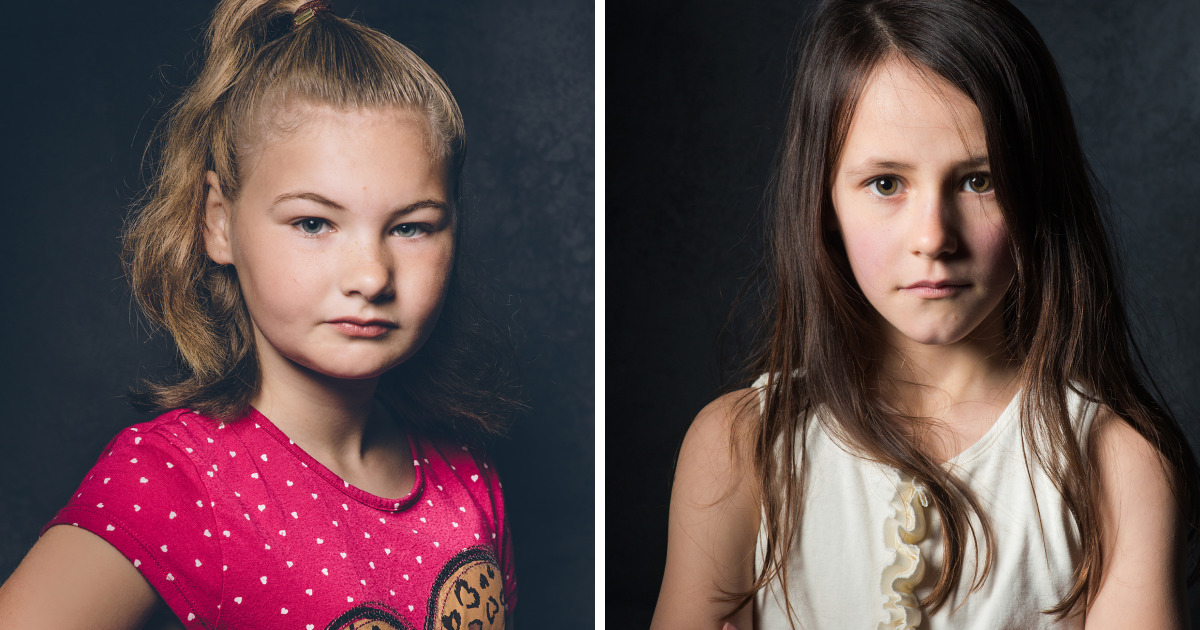
The strongest portrait projects begin with respect. In this kind of series, the girls are not styled into someone else’s fantasy of childhood. They choose their own clothes. They decide how they want to arrive. One might wear a party dress. Another might wear sneakers and a hoodie. Another might wear something wonderfully specific, the kind of outfit that says, “I have a sword, a plan, and no interest in your beige cardigan.”
That choice matters. Clothing is one of the first public languages young people use to say who they areor who they are trying on for the afternoon. At 10 to 12, identity is not a fixed address. It is more like a group chat: active, confusing, occasionally dramatic, and full of surprises. Letting each girl choose how she presents herself gives her some control in a world that often tells girls how to look before it asks what they think.
Portraits As A Form Of Listening
A portrait is not just a face. It is a conversation between the subject, the photographer, the viewer, and the culture around them. When the sitter is a young girl, that conversation carries extra responsibility. The goal is not to make her look older, prettier, more polished, or more marketable. The goal is to preserve the truth of the moment: the hesitant smile, the direct stare, the crossed arms, the glitter shoes, the seriousness, the silliness, the “please do not embarrass me” energy that could power a small town.
Adding interviews deepens the work. Asking the same set of questionsabout hopes, fears, dreams, school, friendship, family, confidence, and the futurecreates a structure that treats every girl as equally important. Their answers can be funny one second and profound the next. That is the magic of this age. A girl might say she wants a pet wolf, then explain with startling clarity why adults should listen more carefully to children.
What Questions Reveal That Pictures Alone Cannot
Photography captures presence. Questions capture perspective. Together, they create a fuller portrait. A face can show confidence, but a question can reveal whether that confidence feels real, borrowed, performed, or only available on Tuesdays after snacks. A pose can look calm, while an answer may reveal worries about fitting in, changing schools, being judged, or growing up too quickly.
Good questions for girls between 10 and 12 should be open, respectful, and age-appropriate. They should not push for trauma, gossip, or private family details. They should invite reflection. For example: What makes you happy? What do adults misunderstand about girls your age? What are you proud of? What scares you? What do you want to be when you are older? What advice would you give another girl starting middle school?
The answers often show that girls are paying attention to far more than adults assume. They notice unfairness. They notice beauty standards. They notice friendship politics with the precision of seasoned diplomats. They notice when adults are distracted. They notice when they are being underestimated. And yes, they notice when someone says, “You’ll understand when you’re older,” which is adult language for “I have misplaced my explanation.”
The Pressure Of Growing Up In A Highly Visible World
Today’s girls are growing up in a world where images are everywhere. Even before they are old enough for many social platforms, they are surrounded by filtered faces, curated bedrooms, beauty routines, dance trends, influencer culture, and the quiet pressure to become a brand before finishing math homework. For tweens, this visual world can be inspiring, creative, and connectingbut it can also be exhausting.
That is why portraiture can be a gentle rebellion. A slow portrait says the opposite of the scroll. It does not demand instant reaction. It does not ask the girl to be optimized, edited, ranked, liked, or transformed into content confetti. It allows her to exist without a caption shouting, “Glow-up!” or “Must-have routine!” Sometimes the most radical thing a photograph can do is hold still.
From “Tween Market” To Individual Voice
The word “tween” often reduces girls to a shopping category: skincare, accessories, apps, fashion, toys that are not quite toys, and grown-up products shrink-wrapped in pastel packaging. But girls between 10 and 12 are not merely waiting rooms for teenage consumer culture. They are individuals with ideas, humor, values, contradictions, and private worlds.
A portrait series can push back against the flattening effect of labels. Instead of one generic image of “girls this age,” it offers many girls, many faces, many answers. One girl may be fearless in front of the camera. Another may be quiet but sharply observant. One may love sports. One may love books. One may dream of being a scientist, artist, veterinarian, activist, baker, game designer, or professional owner of many dogs. All of them deserve to be seen without being squeezed into a single storyline.
Ethical Portrait Photography With Children
Photographing children is not just an artistic act. It is an ethical responsibility wearing a camera strap. Any project involving minors should be built on informed consent, guardian permission, clear communication, and respect for the child’s comfort. The child should understand, in age-appropriate language, what the project is, where the images may appear, and that she is allowed to ask questions.
The most respectful photographers avoid staging children into false stories. They do not pressure a child to reveal personal pain. They do not use vulnerability as decoration. They do not treat a nervous expression as “authentic” simply because it looks artistic. The photographer’s job is not to extract. It is to collaborate.
Consent Is Not A Checkbox
Consent with children should be ongoing. A parent or guardian may approve the session, but the girl’s own comfort still matters. If she does not want to answer a question, she should not have to. If she wants a break, she should get one. If she changes her mind about a pose, that matters too. The best portrait sessions feel less like a test and more like a respectful visit.
This approach also improves the art. A child who feels safe is more likely to offer a real expression, not a frozen “school picture day” smile that says, “Please release me back to the cafeteria.” Trust creates better portraits than pressure ever could.
What The Series Says About Girlhood
Girlhood at 10 to 12 is full of opposites. Girls can be shy and bold, playful and serious, independent and still deeply in need of reassurance. They may want privacy but also want adults to notice when something is wrong. They may reject help while secretly hoping someone will offer it again in a less annoying voice.
That complexity is exactly what makes the portraits meaningful. They refuse to simplify girls into sweetness or struggle. They show that girlhood is not one mood. It is a weather system. There is sunshine, thunder, glitter, fog, and occasionally a tornado named “middle school group project.”
Confidence, Self-Image, And The Middle School Mirror
Between 10 and 12, self-image can become sharper. A girl may begin comparing herself to friends, classmates, celebrities, older siblings, online personalities, or impossible beauty standards invented by people with ring lights and suspiciously smooth foreheads. A portrait project can offer a different kind of mirrorone that does not ask her to improve before being worthy of attention.
When girls see portraits of others their age who look different, dress differently, and answer honestly, they may feel less alone. Representation does not solve every problem, but it can widen the room. It says there is no single correct way to be a girl. You can be funny, quiet, loud, serious, sporty, dreamy, stylish, messy, careful, wild, bookish, dramatic, practical, or all of the above before lunch.
Why Adults Should Listen More Carefully
One of the most valuable parts of asking girls about their lives is discovering how much adults miss when they only talk at them. Girls this age often have nuanced opinions about friendship, fairness, school pressure, climate worries, family expectations, and the future. They may not use adult vocabulary, but they often understand emotional truth with laser accuracy.
Listening does not mean turning every child into a tiny life coach. It means taking their inner worlds seriously. It means asking questions without immediately correcting the answer. It means resisting the urge to turn every conversation into a lesson, lecture, or inspirational poster. Sometimes the best adult response is simply: “Tell me more.” Revolutionary, yes. Also free.
How Portraits Build Empathy
Portraits ask viewers to pause. In a culture trained to swipe, that pause is powerful. A viewer looks at a girl’s face and then reads her words. Suddenly, the subject is not abstract. She is not “kids today.” She is someone with a favorite memory, a fear, a joke, an ambition, a family, a voice.
This is especially important for girls in the in-between years because they are often either infantilized or rushed into adolescence. A good portrait refuses both mistakes. It does not say, “Stay little forever,” and it does not say, “Grow up faster.” It says, “This moment matters too.”
Creative Lessons From Making A Portrait Series
For photographers, writers, educators, and parents, a project like this offers several creative lessons. First, structure helps. Asking the same questions and using a consistent photographic approach creates fairness and comparison without forcing sameness. Second, choice matters. Letting girls choose their clothes and presentation adds authenticity. Third, patience is not optional. Children can sense when an adult is rushing, and they respond accordinglyusually by becoming as expressive as a locked filing cabinet.
Fourth, the environment matters. A calm setting helps the subject relax. So does clear communication. Explain the process. Keep the mood warm. Allow silence. Some of the best answers come after the first answer, when the child realizes she does not have to perform perfection.
What Makes A Portrait Feel Honest?
An honest portrait does not have to be serious. It can include humor, costume, color, awkwardness, or joy. Honesty comes from alignment: the subject is not being forced into someone else’s idea of who she should be. A girl wearing a cape may be more truthful than a girl placed in a perfect dress she hates. A half-smile may say more than a polished grin. A direct stare can feel like a small manifesto.
In this sense, portrait photography is less about capturing beauty and more about making space. The camera becomes a witness, not a judge.
Experiences Related To Creating A Portrait Series Of Girls Between 10 And 12
The experience of creating a portrait series like this begins before the camera comes out. It begins with remembering. Many adults can recall being 10, 11, or 12 with almost physical clarity: the classroom smell of pencil shavings, the terror of being laughed at, the thrill of being chosen by a friend, the sudden suspicion that everyone else received a manual for growing up and you were absent that day. That memory is useful. It keeps the photographer humble.
During a session, the first challenge is usually not lighting or composition. It is trust. Some girls walk in ready to command the room. Others arrive guarded, shoulders slightly raised, eyes scanning for the nearest exit or snack table. Both responses are normal. The photographer has to create a space where neither confidence nor shyness is treated as a problem. A quiet girl should not be pushed to “come out of her shell” as if she is a reluctant turtle. A bold girl should not be toned down because adults find confidence more charming when it is smaller.
One of the most revealing moments often happens when a girl explains her outfit. Adults may see a jacket, dress, boots, or T-shirt. She may see armor, memory, rebellion, comfort, fandom, or proof that she is not who people think she is. A pair of sneakers might mean she is ready to run. A sparkly skirt might mean she wanted to feel brave. A hoodie might mean safety. Clothes become biography, but only if adults are patient enough to ask.
The interview portion can be equally surprising. Ask a simple question like “What makes you happy?” and the answers may range from “my dog” to “when people stop fighting” to “being alone in my room drawing.” Ask what adults misunderstand, and you may hear that adults assume girls are being dramatic when they are actually overwhelmed. Ask what advice they would give other girls, and the answer is often some version of: be yourself, choose kind friends, ignore mean comments, and do not let anyone make you feel weird for liking what you like. Frankly, this advice would improve most office meetings.
There is also an emotional responsibility after the session. The photographer must edit with care. The goal is not to choose the image where the girl looks most conventionally pretty, but the one where she seems most present. That may mean choosing a photograph with a serious expression, a crooked smile, or a gaze that does not try to please anyone. Editing becomes another act of listening.
What stays with you after creating a series like this is how vivid each girl is. Not as a symbol. Not as a “future woman.” Not as a lesson for adults. As herself. The project becomes a reminder that the in-between years are not empty space between two more important stages. They are rich, strange, funny, tender, and full of becoming. If childhood is a garden and adolescence is a forest, ages 10 to 12 are the footpath between themmuddy in places, full of unexpected flowers, and absolutely worth documenting.
Conclusion: Seeing Girls As They Are
A portrait series of girls between 10 and 12 is not just about photography. It is about attention. It asks adults to look again at an age too often misunderstood, marketed to, or dismissed. It reminds us that girls in this stage are not unfinished versions of someone else. They are already thinkers, dreamers, comedians, critics, artists, friends, daughters, sisters, students, and citizens of their own complicated worlds.
When girls are invited to choose how they appear and speak about their lives in their own words, the result is more than a gallery of faces. It is a chorus. Some voices are shy. Some are bold. Some are hilarious. Some are worried. All of them matter. And maybe that is the quiet power of the project: it gives the in-between years a frame, a voice, and the dignity of being seen without being rushed.