The underwater dolphin stroke, often called the underwater dolphin kick or “the fifth stroke,” looks smooth when elite swimmers do it and suspiciously like a confused noodle when beginners try it for the first time. Good news: the noodle stage is temporary. With the right streamline, core rhythm, kick size, and safety habits, you can learn how to move underwater with more speed, less drag, and far less dramatic splashing.
This guide breaks the skill into nine practical steps. You will learn how to push off the wall, hold a clean body line, create a wave from your chest and core, snap through the hips, knees, ankles, and toes, and rise into a smooth breakout. Whether you swim for fitness, racing, triathlon training, or because you simply want to feel like a very athletic dolphin on your lunch break, these steps will help you build a stronger underwater dolphin stroke.
Important safety note: Practice underwater skills only in a supervised pool. Do not hyperventilate before swimming underwater, do not compete in breath-holding games, and stop if you feel dizzy, panicked, or unusually short of breath. Speed is fun; blacking out underwater is very much not fun.
What Is the Underwater Dolphin Stroke?
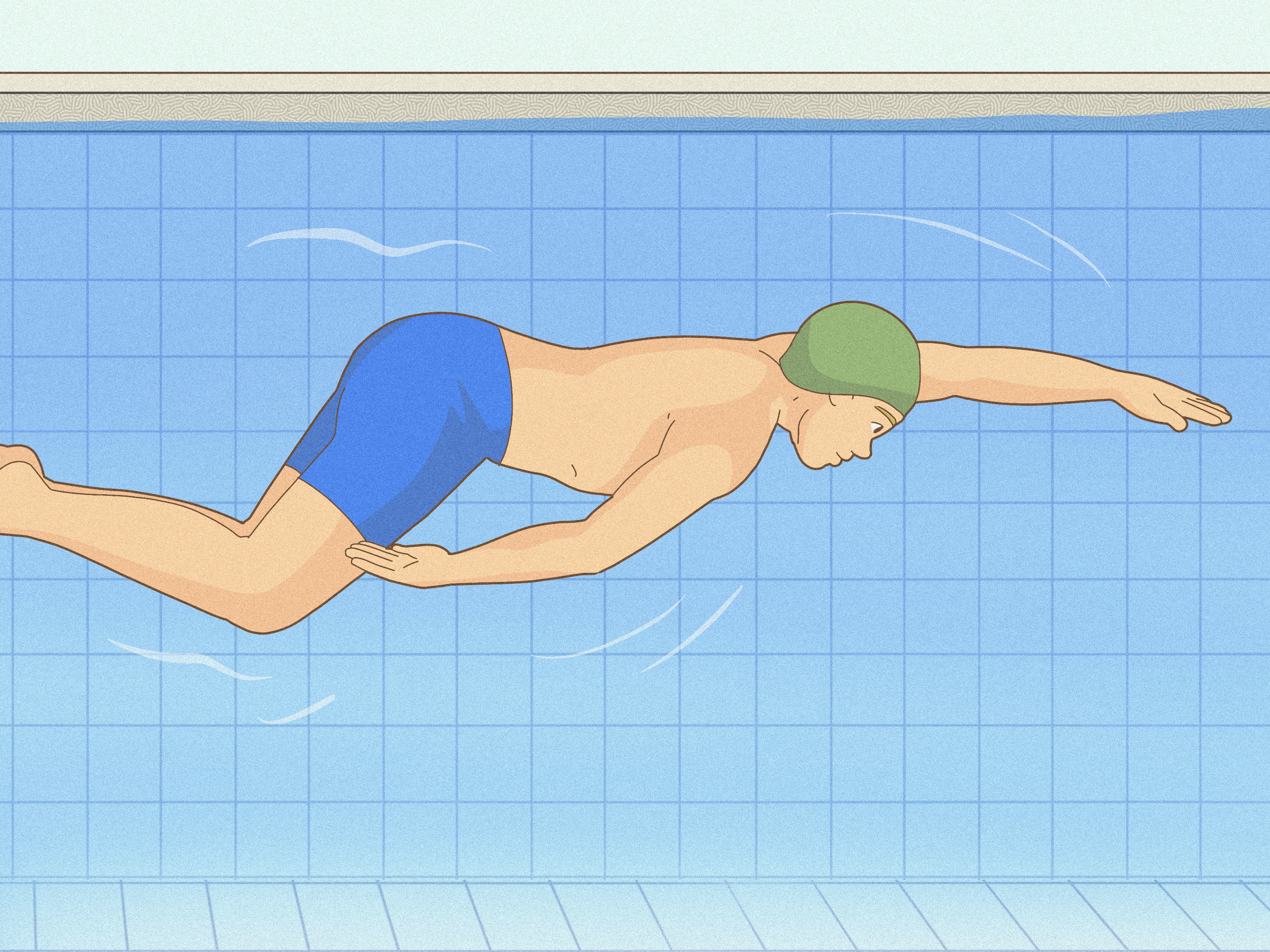
The underwater dolphin stroke is a streamlined, full-body kicking movement used after starts and turns in butterfly, backstroke, and freestyle. Unlike surface swimming, your arms usually stay locked in a streamline above your head while your body creates a wave-like motion. The movement begins around the chest, ribs, and core, then travels through the hips, thighs, knees, ankles, and toes. Think “whip,” not “bicycle.” If your knees are doing all the talking, your core has probably left the meeting.
In competitive swimming, underwater dolphin kicking is valuable because it can reduce drag and preserve the speed you gain from a dive or wall push-off. For recreational swimmers, it builds body control, core strength, ankle flexibility, water feel, and confidence underwater. The goal is not to stay down forever. The goal is to travel efficiently, safely, and smoothly.
How to Do the Dolphin Stroke Underwater: 9 Steps
Step 1: Start With a Tight Streamline
Your streamline is the foundation of the underwater dolphin stroke. Push your arms straight overhead, stack one hand over the other, squeeze your ears with your upper arms, and point your fingers in the direction you want to travel. Your head should stay neutral, not lifted like you are trying to spot a poolside snack bar.
Keep your body long from fingertips to toes. Tighten your stomach, squeeze your glutes lightly, and point your toes. A loose streamline creates drag, and drag is basically water’s way of saying, “Not so fast, my friend.” Before adding power, practice simply pushing off the wall and gliding in a straight line. If you drift upward, downward, or sideways, adjust your head and core position until your body feels balanced.
Step 2: Push Off the Wall With Purpose
The best underwater dolphin stroke begins with speed. Place both feet on the wall, bend your knees, and push off firmly. Your body should leave the wall like an arrow, not like a shopping cart with one bad wheel. Keep your streamline locked and avoid lifting your head as you push.
After the push-off, allow a brief glide, but do not fall asleep down there. Beginners often glide too long and lose momentum before kicking. Advanced swimmers usually begin the first kick soon enough to maintain speed. A good cue is: push, hold your line, then begin the wave before your body noticeably slows. The kick should add to the speed you already have, not rescue a dead glide from the bottom of the pool.
Step 3: Begin the Wave From Your Chest and Core
The underwater dolphin stroke is not a leg-only movement. The wave starts higher in the body. Gently press your chest forward and slightly downward, then let that motion travel through your ribs and core. Your hips will respond by moving in the opposite direction, creating the beginning of the undulation.
A useful image is cracking a whip. The handle moves first, then the energy travels outward until the tip snaps. In your body, the “handle” is your stable upper body and core. The “tip” is your feet. If you start by bending your knees sharply, you break the chain and create extra drag. Keep your chest and core engaged, and let the legs follow the wave instead of forcing the entire movement from the knees.
Step 4: Let the Hips Drive the Kick
Once the wave starts, your hips become the engine. Drive the hips up and down in a controlled rhythm. The movement should feel powerful but compact. If your hips are frozen, your legs will flap behind you like decorative pool noodles. If your hips move too wildly, your body will travel in a big wavy path instead of moving forward.
The best dolphin kick has enough amplitude to push water but not so much that it turns your body into a sea serpent. Keep the hips active, the core firm, and the spine flexible. Your body should move like one connected system. When the hips lead, the thighs follow naturally, the knees bend slightly, and the feet snap with more force.
Step 5: Bend the Knees Slightly, Not Dramatically
Some knee bend is normal. Too much knee bend is a speed thief wearing swim goggles. When your knees bend excessively, they drop out of the body line and increase frontal drag. Instead, allow the knees to soften as the wave passes through the legs. They should bend because the hips and thighs have started the motion, not because you are trying to kick like you are riding an invisible underwater bicycle.
Keep your knees close together and your legs moving simultaneously. The dolphin stroke uses both legs at the same time. Avoid scissor kicks, flutter kicks, or one leg wandering off to start its own side project. A simple cue is: hips first, knees second, feet last. Repeat that sequence until it feels automatic.
Step 6: Snap Through the Ankles and Toes
Your feet are the final propulsive surface in the underwater dolphin stroke. Point your toes, relax your ankles, and let the feet whip at the end of each kick. Flexible ankles help create a larger surface to press water backward. Stiff ankles make the kick feel like pushing water with two wooden spoons. Technically possible, emotionally disappointing.
Focus on both directions of the kick. Many swimmers put all their effort into the downkick and ignore the upkick. A balanced kick keeps pressure on the water in both phases. On your stomach, the downkick usually feels stronger. On your back, the upkick becomes easier to notice. Practicing in both positions teaches your feet to stay connected to the water instead of pausing at the end of each motion.
Step 7: Keep the Kick Compact and Fast
Bigger is not always better. A giant dolphin kick may feel powerful, but it can make you travel farther up and down than forward. A tiny kick may feel quick, but it may not move enough water to create useful propulsion. Your job is to find the sweet spot: compact, rhythmic, and strong.
Try this test: push off in streamline and do five small kicks, then five medium kicks, then five large kicks. Notice which size moves you forward with the least effort. Most swimmers discover that a medium, snappy kick works better than a slow, dramatic one. Save the theatrical whale impression for documentaries. In the pool, you want efficient dolphin energy.
Step 8: Plan Your Breakout
The breakout is the transition from underwater dolphin stroke to surface swimming. Do not wait until you are completely out of speed before surfacing. Begin rising while you still have forward momentum. Angle your body slightly upward, continue your final kick, and start your first stroke as your head breaks the surface.
For freestyle, the first stroke should connect naturally to your last underwater kick. For butterfly, the breakout should support the first arm pull without causing a pause. For backstroke, maintain body alignment and avoid lifting the head. In races, swimmers must surface within the legal underwater distance, and in training, you should focus on safety and control rather than seeing how long you can stay submerged.
Step 9: Practice With Smart Drills
Technique improves faster when you use drills instead of simply repeating mistakes at higher volume. Start with dolphin kick on your back, arms at your sides. This position helps you feel the body wave and toe flick without worrying about your face being underwater. Next, try vertical dolphin kick in deep water. Keep your head above the surface and kick from your core while your hands rest across your chest.
Once you feel the rhythm, practice streamlined underwater dolphin kick for short distances. Use fins occasionally to feel speed and ankle flow, but do not rely on them every time. You can also do “big to small” kicking: begin with an exaggerated wave, then gradually reduce the motion until you find an efficient size. Another helpful drill is kicking while holding a small object in streamline; if the object wobbles all over the place, your upper body may be too loose.
Common Mistakes to Avoid
Kicking From the Knees
This is the classic beginner mistake. If your knees lead the movement, your thighs create drag and your feet lose snap. Start the wave from the chest and core, then let the hips drive the legs.
Looking Forward
Lifting your head breaks streamline and sends your hips downward. Keep your eyes neutral and your head tucked between your arms. Your destination is forward, not up at the ceiling lights.
Holding the Breath Too Long
Underwater dolphin stroke is a swimming skill, not a breath-holding contest. Practice short, controlled repetitions with plenty of rest. Never hyperventilate before going underwater.
Using a Kick That Is Too Big
A huge kick creates resistance. Your body should move forward in a narrow tunnel. If your hips and knees are swinging wildly, reduce the size and increase the rhythm.
Ignoring the Upkick
Good dolphin kicking is not only about pressing down. Keep your feet active through the entire cycle. A strong upkick sets up a stronger downkick and helps maintain rhythm.
Simple Beginner Workout for the Underwater Dolphin Stroke
Try this short set after warming up. Rest fully between repetitions and keep everything controlled:
- 4 x wall push-off glides in streamline, no kick
- 4 x 5 dolphin kicks on your back, arms at sides
- 4 x 5 dolphin kicks in streamline, easy effort
- 4 x 10 seconds vertical dolphin kick in deep water
- 4 x 25 yards or meters easy swim, adding 2 to 4 dolphin kicks off each wall
The goal is quality, not exhaustion. If your streamline falls apart or your kick turns into frantic spaghetti, stop, breathe, reset, and continue with fewer kicks.
Experience Section: What Learning the Underwater Dolphin Stroke Feels Like
The first time many swimmers try the underwater dolphin stroke, they expect magic. They push off the wall, attempt two heroic kicks, and somehow move three inches while producing enough bubbles to concern nearby lifeguards. This is normal. The movement is unfamiliar because it asks your whole body to coordinate in a way daily life almost never requires. Unless your commute involves wiggling through water at high speed, your nervous system needs practice.
One of the biggest breakthroughs comes when you stop thinking of the skill as “kicking harder” and start thinking of it as “sending a wave.” A swimmer may spend weeks trying to muscle the water with bent knees, then suddenly feel one clean kick travel from the ribs to the toes. That moment is addictive. The body feels longer, the water feels smoother, and the swimmer realizes the pool was not personally against them after all.
Another common experience is discovering that streamline matters more than expected. Many swimmers assume the kick is the whole skill. Then they tighten their arms, hide the head, firm the core, and instantly travel farther with less effort. It feels almost unfair, like finding a secret shortcut in a video game. The water rewards clean shapes. The better your line, the less energy you waste fighting resistance.
Practicing on the back is often the friendliest entry point. With your face out of the water, you can relax and notice the rhythm. You feel whether the wave begins at the trunk or whether the knees are taking over. You can watch your toes flick at the surface and adjust the size of your kick. It is also humbling, because a sloppy kick on the back tends to announce itself immediately. The legs sink, the hips stall, and your body politely informs you that technique still needs a committee meeting.
Using fins can be helpful, especially in the early stages. Fins exaggerate the feeling of pressure on the feet and help swimmers understand how the ankles should move. However, fins can also make a swimmer feel faster than their actual technique allows. The best approach is to use fins as a teacher, not a crutch. Swim a few repetitions with fins, then remove them and try to recreate the same wave with your natural kick.
Many swimmers also notice that underwater dolphin stroke improves other parts of swimming. Butterfly feels more connected. Freestyle turns become sharper. Backstroke starts feel more controlled. Even posture in the water improves because the skill teaches body awareness. You begin to understand where your hips are, what your head is doing, and whether your feet are helping or simply decorating the lane.
Progress is usually gradual. One week you may manage two decent kicks. Later, four kicks feel smooth. Eventually, you can add them off each wall without panic or drama. The best swimmers do not treat underwater dolphin kicking as a party trick. They practice it in small doses, consistently, with attention to safety and form. That is the real secret: not one heroic underwater attempt, but many calm, smart repetitions.
And yes, there will be awkward moments. You may surface facing the lane rope. You may kick too big and feel like a folding lawn chair. You may inhale a tiny splash at the exact moment you were feeling majestic. That is part of the process. Keep your sense of humor, keep your repetitions safe, and keep refining the wave. The underwater dolphin stroke is a skill that rewards patience. Learn the line, learn the rhythm, and soon your “confused noodle” phase will become a much sleeker aquatic situation.
Conclusion
Learning how to do the dolphin stroke underwater is about combining streamline, rhythm, power, and control. Start with a tight body line, push off with purpose, initiate the wave from your chest and core, drive from the hips, keep the knees soft, snap through the ankles, and practice a smooth breakout. Add smart drills, avoid breath-holding risks, and focus on efficient movement rather than brute force.
The underwater dolphin stroke may look advanced, but it becomes manageable when you break it into clear steps. Practice patiently, stay safe, and remember: the goal is not to become a literal dolphin. The goal is to borrow just enough dolphin energy to move through the water faster, cleaner, and with slightly more style than yesterday.