“`
Imagine stepping onto a subway after a long day, trying not to make eye contact with anyone, and suddenly noticing a Renaissance angel slumped beside the window like it just finished a double shift. Or picture a mythological goddess waiting at a bus stop, glowing with old-master lighting while everyone else scrolls through their phones. That is the strange, funny, and oddly beautiful world created by Ukrainian artist Alexey Kondakov, whose digital collage series places people from classical paintings into modern life with results that feel less like a visual joke and more like a secret truth finally revealed.
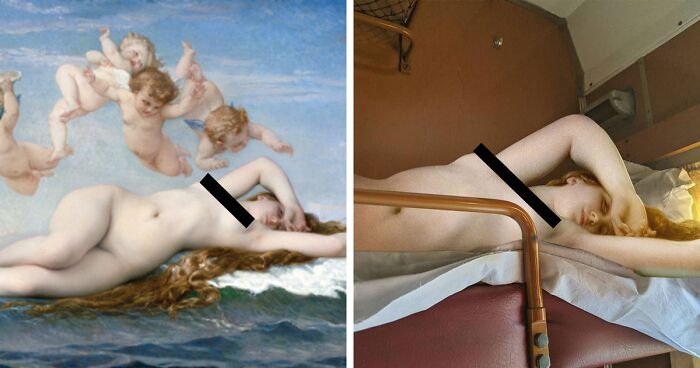
The project is often known through his ongoing series, Art History in Contemporary Life. Kondakov takes figures from classical, Renaissance, Baroque, Neoclassical, and Romantic paintings and digitally inserts them into everyday urban settings: buses, markets, bedrooms, convenience stores, nightclubs, cars, train platforms, apartment stairwells, and city sidewalks. The concept sounds like it should be chaotic. A cherub in a metro car? A half-dressed nymph in a grocery aisle? A saintly-looking figure in a smoky kitchen? Yet the final images are surprisingly fitting. They work because the people in classical paintings were never as distant from us as museum walls make them seem.
These 27 new pictures remind viewers that art history is not a dusty attic of gold frames and polite whispers. It is full of boredom, romance, exhaustion, gossip, longing, awkward posture, dramatic lighting, questionable outfit choices, and people making intense facial expressions for reasons only they understand. In other words, it is basically modern life with better drapery.
Who Is Alexey Kondakov?
Alexey Kondakov is a Ukrainian artist and art director known for merging classical painting figures with contemporary photography. His work became widely recognized online because it hits a rare sweet spot: instantly understandable, visually clever, technically polished, and emotionally open-ended. You do not need an art history degree to enjoy it, but if you happen to know your Bouguereau from your Caravaggio, the images become even more rewarding.
Kondakov’s style depends on a deceptively simple idea: remove a figure from an old painting and place it somewhere completely ordinary. But the success of the work is not simply the cut-and-paste concept. Anyone can drop a famous painting into a street photo. Kondakov makes the collision believable. He pays attention to light direction, color temperature, scale, shadow, texture, perspective, and emotional tone. The inserted figures do not float on top of the picture like stickers. They appear to belong there, as if the city has always had a few Greek gods waiting for the last tram home.
Why Classical Paintings Look So Natural in Modern Settings
The biggest surprise in Kondakov’s collages is not that classical figures look strange in the modern world. It is that they often do not look strange enough. A reclining nude from an old painting may seem dramatic in a museum, but place that same figure on a tired sofa in a small apartment and suddenly the mood becomes familiar. The person is not “Venus” anymore. She is someone avoiding responsibilities on a Tuesday afternoon.
This happens because classical art has always been deeply human. Renaissance artists studied anatomy, movement, beauty, proportion, and emotion with astonishing seriousness. Baroque painters pushed drama, contrast, and gesture to theatrical heights. Romantic painters leaned into longing, danger, and psychological intensity. These traditions may look grand, but they were built from ordinary human experiences: desire, grief, embarrassment, fatigue, devotion, and the tiny tragedy of waiting for transportation in bad lighting.
When Kondakov places these figures into subways, cafés, stairwells, and markets, he removes the historical distance. Suddenly, the viewer is not standing in front of “important art.” The viewer is standing beside people. That shift is the magic trick.
The Humor Works Because It Is Gentle
Many internet art mashups rely on shock value. Kondakov’s images are different. The humor is usually quiet, observational, and affectionate. A mythological figure in a nightclub is funny, yes, but not because the old painting is being mocked. The joke is that the dramatic body language of classical art already resembles modern life when people are tired, in love, annoyed, or slightly over-caffeinated.
A Renaissance angel sitting in public transportation may look absurd for half a second. Then the viewer remembers seeing commuters with the same collapsed posture at 7:45 in the morning. A goddess standing in a supermarket aisle may seem out of place until you realize that fluorescent lighting has tested the dignity of everyone equally. Kondakov’s images do not laugh at classical art. They invite it to hang out with the rest of us.
Specific Examples That Make the Concept Click
Some of Kondakov’s most memorable works feature classical figures riding public transportation. This setting is especially effective because subways and buses are already miniature theaters. Strangers sit close together, perform privacy in public, and stare into the middle distance like philosophers who forgot their headphones. Add a cluster of painted angels or a mythological couple, and the scene becomes both ridiculous and believable.
Markets and street scenes also work beautifully. Classical paintings often show rich fabrics, fruit, baskets, bodies, and gestures. A city market has the same visual energy, just with plastic bags and price tags. When Kondakov places an old-master figure among fruit stalls or crowded sidewalks, the result feels like a bridge between the sensory worlds of the past and present. The colors, textures, and human interactions rhyme across centuries.
Cars, apartments, bars, and nightclubs create a different effect. They make the figures feel like characters from a story that started long before the viewer arrived. Why is this saint-looking man in the back seat? Why does this goddess look so comfortable at a house party? Why are those cherubs behaving like they know the Wi-Fi password? The viewer becomes part detective, part art critic, and part nosy neighbor.
Digital Collage as a Modern Art Language
Kondakov’s work belongs to the long history of collage, but it speaks in the language of the digital age. Traditional collage involves cutting, layering, assembling, and recontextualizing images. Digital collage does the same thing with software, photography, scanning, masking, color grading, and compositing. The tools have changed, but the artistic question remains: what happens when two visual worlds collide?
In this case, the collision is between museum culture and street culture. Old paintings often arrive with a sense of authority. They are preserved, labeled, studied, insured, and guarded. Modern urban photos feel immediate and unpolished. They contain cracked walls, cheap upholstery, harsh lighting, wet pavement, metal rails, clutter, and all the practical mess of daily life. Kondakov’s collages give both worlds equal importance. A worn subway seat can become as visually important as a mythological body. A scratched car door can hold its own against the glow of painted skin.
Why the Images Feel So Shareable
Part of the project’s popularity comes from its instant readability. The viewer understands the concept in seconds: old painting figure, modern setting, unexpected harmony. That clarity makes the images perfect for social media, where a picture has to stop the scroll before the thumb escapes. But the best images last longer than a quick visual gag. They invite repeat viewing because the details reward attention.
The viewer may first notice the contrast between a classical body and a modern room. Then the eye catches the lighting. Then the posture. Then the background characters. Then the subtle emotional connection between the inserted figure and the surrounding environment. A good Kondakov collage can feel like a still from a film you want to watch, even though the film does not exist.
Art History Becomes Less Intimidating
One reason this project resonates is that it lowers the emotional barrier around classical art. Many people feel that old paintings require permission to enjoy. Museums can sometimes make viewers feel as though they should already know the names, dates, movements, and mythological references before they are allowed to have an opinion. Kondakov’s work rejects that pressure. It says: start with the feeling. Start with the weirdness. Start with the laugh.
From there, curiosity can grow naturally. A viewer might wonder where a figure came from, which painting was used, who painted it, or what story originally surrounded it. This is an excellent gateway into art history because it begins with pleasure rather than homework. Nobody wants to be trapped in a lecture before coffee. But show someone a Renaissance figure riding the bus, and suddenly they may be ready to learn about composition, symbolism, and the old masters.
The Emotional Side of the Modern-Classical Mashup
Although the images are funny, they are not only funny. Many of them carry a quiet melancholy. Classical figures often have expressive faces and elegant gestures, but in modern settings, those emotions can feel more vulnerable. A painted woman looking away from the viewer becomes someone lost in thought in a lonely room. A group of angels becomes a tired little crowd under artificial light. A mythological body in a public place becomes less divine and more exposed.
This emotional complexity is what keeps the work from becoming a one-note meme. The images ask viewers to think about how little human experience has changed. People still wait, desire, sulk, flirt, perform, collapse, dream, and try to look composed in places where composure is almost impossible. The outfits change. The lighting changes. The furniture becomes cheaper. The feelings remain stubbornly familiar.
Why “Surprisingly Fitting” Is the Perfect Description
The title phrase “surprisingly fitting” captures the appeal perfectly. Kondakov’s images are surprising because they create an impossible meeting of eras. They are fitting because the visual and emotional logic holds together. The classical figures do not simply invade the modern world. They reveal something already theatrical about it.
Think about a subway platform: bright lights, waiting bodies, dramatic entrances, sudden exits, and everyone pretending not to watch everyone else. That is practically a stage. Think about a late-night convenience store: strange colors, lonely customers, small rituals of survival, and snacks glowing like sacred offerings. Place a Baroque figure there, and the scene does not break. It intensifies.
Modern life is not less dramatic than classical painting. It is just worse at admitting it.
What These 27 New Pics Say About Today’s Visual Culture
In a world crowded with images, Kondakov’s work stands out because it uses recognition as a doorway. Viewers recognize the modern spaces immediately. They may also recognize the old painting style, even if they cannot name the original artwork. That double recognition creates pleasure. It makes the brain say, “I know this,” and “I have never seen this before,” at the same time.
The project also reflects how people experience culture today. We remix. We screenshot. We quote. We reference. We turn old things into new things and new things into jokes about old things. Kondakov’s collages fit this culture without feeling disposable because they are crafted with care. The images are playful, but they respect the visual intelligence of both the source material and the viewer.
Experience: Seeing Classical Art After Seeing Kondakov’s Collages
After spending time with works like these, it becomes difficult to look at classical paintings in the old way. The museum frame no longer feels like a wall. It feels like a window. You start imagining where the figures might go if they stepped out. The serious man in a dark robe could be waiting in line at a pharmacy. The lounging goddess might be scrolling on a cracked phone screen. A saint with dramatic hands could absolutely be explaining a parking situation to a deeply unimpressed officer.
This shift changes the viewing experience in a useful way. Classical art becomes more alive, less frozen. Instead of seeing old paintings as distant achievements, you begin to notice the body language. You notice who looks bored, who looks suspicious, who is clearly about to make a bad romantic decision. The past becomes less polished and more human.
There is also a strange comfort in the idea that people from centuries-old paintings fit so well into modern life. We often imagine our age as uniquely chaotic, uniquely tired, uniquely awkward, uniquely addicted to strange public behavior. Then an artist places a Renaissance figure in a subway car, and the illusion collapses. Humans have always been dramatic little creatures. We just invented better transportation and worse overhead lighting.
The experience of viewing these images can also make everyday spaces feel richer. A bus stop becomes a possible scene. A laundromat becomes a stage. A grocery aisle becomes a still life with fluorescent anxiety. The world starts looking more composed, more painterly, more full of accidental art. That may be the best gift of Kondakov’s project: it does not only bring classical paintings into the modern world. It teaches the modern world how to look back.
Additional Reflections: Personal Experiences Connected to the Topic
One of the most enjoyable experiences related to this topic is the little mental game it creates after you have seen enough of Kondakov’s work. You walk into an ordinary place, and suddenly your imagination starts misbehaving in the best possible way. A tired man leaning against a train door begins to look like a figure from a Caravaggio scene. A woman balancing grocery bags in the rain has the posture of a tragic heroine. A group of friends outside a late-night diner could be mistaken for a chaotic mythological council if someone added enough golden light and flowing fabric.
This kind of viewing turns daily life into a soft, private museum. Not a silent museum with alarms and marble floors, but a living one filled with honking cars, coffee cups, receipts, cracked phone screens, and people trying to remember where they parked. Kondakov’s collages encourage that habit of seeing. They remind us that art is not only something hanging far away under perfect lighting. Art can be a way of noticing how people arrange themselves in space, how light falls across a face, how a dull location can become meaningful when emotion enters the frame.
There is also something refreshing about seeing classical beauty removed from perfection. In museums, old figures can seem untouchable. Their skin is luminous, their gestures are graceful, and even their suffering looks carefully composed. But in a modern street or apartment, their beauty becomes less intimidating. A goddess in a messy room is still beautiful, but now she also seems relatable. A winged figure in a subway car may still carry the glow of another century, but now that glow has to compete with plastic seats and public transportation schedules. Somehow, that makes the figure more interesting, not less.
The project can also inspire people who create content, design visuals, write stories, or work in digital media. Kondakov’s idea proves that originality does not always mean inventing from nothing. Sometimes originality comes from combining existing worlds in a way that reveals something new about both. Classical painting provides the drama. Contemporary photography provides the context. The artist’s eye provides the bridge.
For writers, these images are especially useful because each one feels like a story prompt. Who are these people? Why are they here? Did the angel miss the last train? Is the mythological couple arguing about rent? Is that noble-looking man in the bar waiting for a friend or avoiding one? The images do not answer these questions, and that is their charm. They leave enough space for the viewer to become a storyteller.
In the end, the experience of looking at classical figures in modern life is funny, yes, but also oddly generous. It gives the past permission to be casual and the present permission to be beautiful. It suggests that the gap between a painted myth and a tired commuter may be much smaller than we think. Maybe the old masters were not creating distant icons after all. Maybe they were simply painting human beings with better lighting, stronger cheekbones, and a serious commitment to fabric.
Conclusion
Alexey Kondakov’s modern-classical collages work because they do more than create clever visual contrasts. They collapse centuries of distance and reveal the shared humanity inside both old paintings and ordinary city life. His figures may come from museums, but once they appear in subways, markets, cars, apartments, and nightclubs, they feel strangely at home. The result is humorous, poetic, and visually memorable.
These 27 new pics show why the concept continues to fascinate audiences. They make art history approachable without making it shallow. They make modern life look theatrical without making it fake. Most importantly, they remind us that beauty does not disappear when it leaves the museum. Sometimes it just needs to catch the bus.