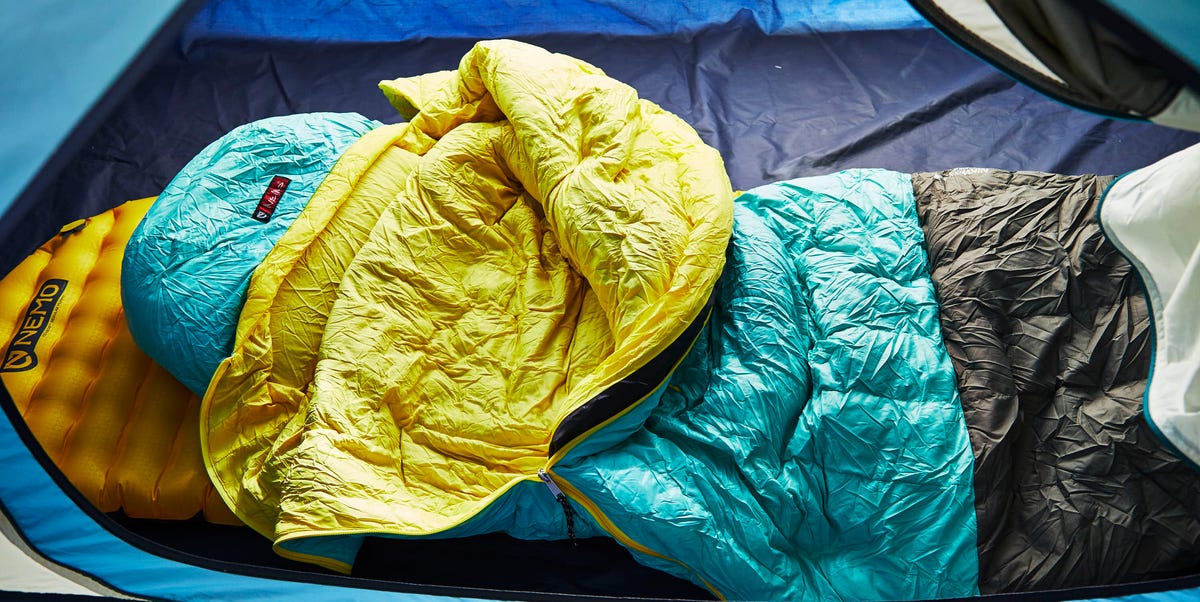
The NEMO Rave 30 is the kind of sleeping bag that quietly admits what many campers already know: not everyone wants to sleep like a frozen burrito. Traditional mummy bags are efficient, warm, and wonderfully packable, but they can feel like a nylon straightjacket if you are a side sleeper, knee-bender, midnight roller, or someone who simply enjoys having blood circulation below the waist. The Rave 30 was built for that camper.
This women’s-specific 30-degree down sleeping bag combines NEMO’s signature Spoon shape, 650-fill hydrophobic down, Thermo Gills ventilation, a Blanket Fold draft collar, and a waterproof/breathable footbox. In plain English, it is designed to be warmer and more weather-resistant than a bargain summer bag, roomier than a classic mummy, and more trail-friendly than the giant rectangular sleeping bag you may have dragged to sleepovers in middle school.
Although the NEMO Rave 30 is now often found as a closeout or discontinued model, it remains relevant for backpackers, campers, and deal hunters looking for a comfortable three-season sleeping bag. This NEMO Rave 30 review breaks down its warmth, comfort, packability, durability, best uses, drawbacks, and whether it still makes sense to buy if you find one on sale.
What Is the NEMO Rave 30?
The NEMO Rave 30 is a women’s down sleeping bag rated for 30°F. It was designed for backpacking and camping in mild to cool three-season conditions. The bag uses 650-fill Nikwax hydrophobic down, which helps the insulation resist moisture better than untreated down. That matters because down is famous for its warmth-to-weight ratio, but famously dramatic when wet. Think of it as the diva of insulation: brilliant when conditions are right, less charming when soaked.
The Rave 30 uses NEMO’s Spoon-shaped profile, which gives extra space around the elbows and knees. Instead of tapering aggressively like many mummy bags, it allows sleepers to shift positions, curl a leg, or sleep on their side without feeling trapped. It also includes NEMO’s Thermo Gills, which are zippered vents that allow heat to escape without opening the main zipper and inviting a cold draft. Add the Blanket Fold collar and waterproof/breathable footbox, and the result is a sleeping bag built around real human sleep habits, not just spreadsheet weight targets.
NEMO Rave 30 Specs at a Glance
- Temperature rating: 30°F
- Best use: Backpacking, camping, three-season trips
- Insulation: 650-fill hydrophobic down
- Shape: NEMO Spoon shape
- Regular fit: Up to about 5 feet 6 inches
- Long fit: Up to about 6 feet
- Weight: Around 2 pounds 7 ounces for regular; about 2 pounds 10 ounces for long, depending on listing
- Key features: Thermo Gills, Blanket Fold, pillow pocket, stash pocket, draft tube, waterproof/breathable footbox
- Included: Stuff sack and storage sack on many listings
Specs can vary slightly by production year and retailer, so if you are buying a used or closeout NEMO Rave 30, check the exact listing. Still, the overall identity of the bag is clear: roomy, comfortable, water-resistant down warmth for three-season backpacking and camping.
Design and Comfort: The Spoon Shape Is the Star
The biggest reason to consider the NEMO Rave 30 is comfort. Many sleeping bags win the scale test but lose the “Can I sleep like a normal mammal?” test. The Rave 30 performs well because the Spoon shape gives you more room where movement matters most: shoulders, elbows, hips, and knees.
If you sleep flat on your back all night like a museum statue, a slimmer mummy bag may be more efficient. But if you roll from side to side, pull one knee up, or wake up tangled in your bag like you fought a small nylon dragon, the Rave 30 feels liberating. It is not as wide as a rectangular car-camping bag, but it offers noticeably more freedom than a narrow mummy.
The liner fabric also feels soft enough for repeated use. It does not have the crinkly, plastic-bag sensation found in some budget sleeping bags. That may sound like a small detail until you are lying in a tent at 2:17 a.m. listening to every rustle of your own gear and wondering whether raccoons understand zippers.
Warmth: Is the NEMO Rave 30 Really Good to 30°F?
The Rave 30 is rated for 30°F, making it suitable for cool summer nights, mild fall trips, and shoulder-season camping in moderate climates. However, sleeping bag temperature ratings are not magic force fields. Your actual comfort depends on your sleeping pad’s R-value, tent setup, clothing, wind exposure, humidity, metabolism, and whether you are a warm or cold sleeper.
For many users, the Rave 30 is best treated as a comfortable bag for nights in the mid-30s to 50s Fahrenheit. If the forecast is truly hovering around freezing, cold sleepers may want a warmer bag, a high-R-value sleeping pad, dry base layers, wool socks, and a hat. A 30-degree sleeping bag paired with a thin summer sleeping pad can feel disappointing because the ground will steal heat like it has unpaid bills.
The women’s-specific design helps with warmth by reducing excessive empty space and placing insulation where many women tend to need it most. Still, the Rave 30 is not a winter bag. It is a versatile three-season sleeping bag, not a ticket to casually nap through a snowstorm.
Thermo Gills: Smart Ventilation Without the Draft Drama
One of the best features on the NEMO Rave 30 is the Thermo Gills system. These zippered vents sit on top of the bag and allow excess heat to escape without requiring you to unzip the entire side. That makes the bag more adaptable across changing temperatures.
On warmer nights, you can open the gills and let the bag breathe. On colder nights, zip them shut and keep heat trapped inside. The design is especially useful for shoulder-season trips, when evening temperatures might feel pleasant at bedtime but drop sharply before sunrise. It also helps people who run warm at the start of the night and cold near morning, which is basically the entire emotional journey of camping.
The Thermo Gills do not turn the bag into an air-conditioned hotel room, but they offer more control than a standard mummy bag. That flexibility is a real advantage if you want one sleeping bag for a wide range of three-season conditions.
Blanket Fold: A Small Feature That Feels Surprisingly Cozy
The Blanket Fold is NEMO’s built-in draft collar near the top opening of the bag. You can tuck it around your neck and chest to seal in warmth, or fold it outward when you want more airflow. It sounds simple, but it makes the Rave 30 feel more like a real bed blanket and less like technical equipment you accidentally wore to sleep.
For side sleepers, the Blanket Fold adds a cozy, tucked-in feeling without forcing the hood tight around your face. It also helps reduce heat loss through the opening of the bag, which is one of the areas where warmth often escapes. When combined with the Thermo Gills, the Rave 30 gives you a nice balance: vent heat when you need to, seal warmth when you do not.
Water Resistance and the Footbox
Down insulation and moisture have a complicated relationship. Down is light, warm, and compressible, but when it gets wet, it can clump and lose loft. The Rave 30 helps reduce that problem with hydrophobic down and a durable water-repellent shell treatment. It is not waterproof in the way a rain jacket is waterproof, but it is better prepared for damp tent environments than untreated down.
The waterproof/breathable footbox is another thoughtful feature. In many tents, the foot end of a sleeping bag can brush against walls where condensation forms overnight. A reinforced footbox helps protect the insulation from that moisture. This is especially useful for smaller tents, single-wall shelters, and campers who are tall enough that their feet constantly introduce themselves to the tent wall.
Of course, water-resistant does not mean careless. You should still use a dry bag or pack liner in wet weather, avoid letting the bag touch soaking tent walls, and dry it thoroughly after trips. Treat the Rave 30 well and it should reward you with many comfortable nights.
Weight and Packability: Comfortable, Not Ultralight
The NEMO Rave 30 is not the lightest 30-degree down sleeping bag on the market. At roughly two and a half pounds, it lands in the comfortable-backpacking category rather than the gram-counting ultralight category. If your idea of luxury is cutting a toothbrush in half, the Rave 30 may look heavy. If your idea of luxury is sleeping without feeling shrink-wrapped, the weight may be worth it.
The 650-fill down is warm and reasonably compressible, but it does not pack as small as higher-fill-power down, such as 800- or 900-fill options. Those premium bags can be lighter and more compact, but they often cost much more and may feel more restrictive. The Rave 30 chooses comfort and feature richness over absolute minimalism.
For weekend backpacking, casual thru-hike sections, car camping, canoe camping, and travel where comfort matters, the packed size is manageable. For serious ultralight backpackers trying to reduce every ounce, a quilt or slimmer mummy bag may be a better match.
Durability and Build Quality
NEMO has a strong reputation for building clever, comfort-focused outdoor gear, and the Rave 30 reflects that approach. The materials feel trail-ready without being overly delicate. The zippers, draft tube, stash pocket, pillow pocket, and footbox all show the brand’s tendency to design around common camping annoyances.
The zipper can occasionally require patience, as with many sleeping bags. Using two hands and avoiding rushed midnight wrestling matches helps. The shell fabric should hold up well with normal backpacking use, but it is still a down sleeping bag, not a canvas tarp. Keep it away from sparks, sharp branches, muddy boots, and pets who believe all soft objects are chew toys.
For long-term care, store the bag loose in its storage sack, not compressed in the stuff sack. Wash it only when needed with down-specific cleaner, and dry it fully according to care instructions. Proper down care will keep the insulation lofty and warm for years.
NEMO Rave 30 vs. NEMO Disco 30
Because the Rave 30 is commonly seen as a discontinued or closeout model, many shoppers compare it with the current NEMO Disco 30. Both are comfort-focused down sleeping bags with Spoon-style geometry, hydrophobic down, Thermo Gills, a Blanket Fold-style draft collar, and a condensation-resistant footbox.
The Disco line is easier to find new today and has been updated in recent versions, including more sustainability-focused materials in the Endless Promise models. The Rave 30, meanwhile, can be attractive if you find it at a strong discount. If the price is close, the newer Disco 30 may be the smarter purchase because it is current, easier to warranty, and more widely available. If the Rave 30 is heavily discounted and in good condition, it can still be an excellent buy.
Who Should Buy the NEMO Rave 30?
The NEMO Rave 30 is a great choice for campers who prioritize sleep quality over shaving every last ounce. It is especially appealing for women, side sleepers, active sleepers, and backpackers who dislike narrow mummy bags. It also makes sense for people who want one versatile sleeping bag for summer mountain trips, mild spring and fall weekends, and general three-season camping.
Buy the Rave 30 if you want a roomy down sleeping bag, appreciate ventilation features, and often camp in temperatures above freezing. It is also a smart option if you find it on closeout at a price lower than newer NEMO models.
Who Should Skip It?
Skip the Rave 30 if you are an ultralight backpacker who wants the smallest and lightest possible sleep system. Also skip it if you regularly camp below freezing, sleep very cold, or need a bag for winter conditions. A 15-degree bag or a warmer sleep system would be safer and more comfortable in those cases.
You may also want to skip it if you prefer a fully rectangular sleeping bag for car camping. The Rave 30 is roomy for a backpacking bag, but it is still shaped for warmth and packability. It is not a queen-size comforter with a zipper, no matter how much your tent dreams demand one.
Pros and Cons
Pros
- Excellent comfort for side sleepers and active sleepers
- Spoon shape provides more knee and elbow room than a narrow mummy bag
- 650-fill hydrophobic down balances warmth, weight, and moisture resistance
- Thermo Gills improve temperature regulation
- Blanket Fold adds cozy, adjustable warmth near the neck and chest
- Waterproof/breathable footbox helps protect against tent condensation
- Good value if found on closeout or lightly used
Cons
- Not an ultralight sleeping bag
- Bulkier than premium high-fill-power down bags
- May not be warm enough for cold sleepers near 30°F
- Discontinued status can make sizing and warranty details harder to confirm
- Closeout or used models require careful condition checks
Real-World Buying Advice
If you are shopping for a NEMO Rave 30 today, pay attention to condition and price. Because it is not always available as a current retail model, many listings may be closeout, resale, or older inventory. Check for down loft, zipper function, stains, odors, shell damage, and whether the storage sack is included.
A good used Rave 30 should loft evenly, smell neutral, and compress without feeling lumpy or flat. If the down has obvious clumps, the bag may have been stored wet or compressed for too long. That does not always mean it is ruined, but it does mean you should proceed carefully. A cheap sleeping bag is not a bargain if it turns your first mountain night into a personal weather documentary.
Also consider your sleeping pad. A warm sleeping bag cannot perform well on a poor pad in cold conditions. For three-season use, pair the Rave 30 with a sleeping pad that has enough insulation for the temperatures you expect. This one pairing decision can make the difference between “cozy alpine morning” and “why are my hips negotiating with the earth?”
Final Verdict: Is the NEMO Rave 30 Worth It?
The NEMO Rave 30 is worth it for campers who value comfort, movement, and clever temperature control. It is not the lightest 30-degree bag, and it is not the warmest choice for cold sleepers pushing into freezing conditions. But as a roomy, feature-rich women’s down sleeping bag for three-season use, it remains a very appealing option.
Its Spoon shape makes it far more livable than many mummy bags, while the Thermo Gills and Blanket Fold give it a level of temperature control that feels genuinely useful. The hydrophobic down and reinforced footbox add confidence in damp tent environments, and the overall design shows that NEMO understands how people actually sleep outdoors.
If you find the Rave 30 at a good closeout price, it can be a fantastic value. If you are buying new at full price and comparing it with current NEMO models, look closely at the Disco 30 as well. Either way, the Rave 30 proves that backpacking gear can be technical without treating comfort like a luxury crime.
Additional Experience Notes: Living With the NEMO Rave 30
The best way to understand the NEMO Rave 30 is to imagine a typical three-season trip where the temperature is unpredictable. You hike into camp in the late afternoon, the sun is warm, and everyone is confidently saying things like, “I think it’ll be pretty mild tonight.” This is usually the outdoor equivalent of tempting fate. By midnight, the temperature drops, condensation gathers on the tent, and the person who packed only a fleece blanket begins making quiet life choices.
In that kind of setting, the Rave 30 feels practical. At bedtime, if the tent is still warm, opening the Thermo Gills helps prevent overheating. You can lie inside the bag without immediately feeling like you have entered a portable sauna. Later, when the temperature falls, you zip the vents closed, tuck the Blanket Fold around your chest, and settle into a much warmer setup. This adjustability is what makes the bag feel more versatile than a simple zipper-only design.
The Spoon shape becomes more valuable the longer you use it. On paper, extra knee and elbow room may sound like a luxury feature. In real life, it can be the difference between sleeping and performing a frustrated dance inside your bag at 3 a.m. Side sleepers especially benefit because they can bend a leg naturally instead of forcing the entire bag to rotate with them. That means fewer twisted zippers, fewer cold gaps, and fewer moments where you wake up facing the wrong direction and questioning the architecture of your sleep system.
For car camping, the Rave 30 feels almost plush compared with narrower backpacking bags. It is warm enough for cool evenings, comfortable enough for relaxed camping, and easier to manage than oversized rectangular bags. For backpacking, it asks you to accept a little extra weight in exchange for better sleep. That is a fair trade for many hikers. After all, saving six ounces is nice, but sleeping badly can make the next day’s climb feel like it was designed by someone with a grudge.
The pillow pocket is another small but useful touch. Stuffing a jacket into the hood area keeps your improvised pillow from sliding away during the night. It is not as luxurious as a real camping pillow, but it works well enough and reduces the number of items floating around your tent. The stash pocket is handy for small essentials such as earplugs, a headlamp, or lip balm. Nobody wants to search for lip balm in a dark tent while making the emotional sounds of a raccoon trapped in a grocery bag.
The Rave 30 is also a good reminder that sleeping bags should match personality, not just temperature charts. Some people sleep still and warm. Others sleep cold, shift constantly, and need room to move. If you are in the second group, the Rave 30’s comfort-first design makes a lot of sense. It may not win every ultralight comparison, but it wins points where they matter most: actual rest, practical warmth, and a design that does not punish you for sleeping like a human being.
Overall, the experience of using the NEMO Rave 30 is less about one flashy feature and more about how the features work together. The roomier shape, venting system, draft control, hydrophobic down, and protected footbox create a sleeping bag that feels thoughtfully built for real camping conditions. It is not perfect, and it is not for every backpacker, but for the right sleeper, it can turn a cold, restless night into the kind of morning where you wake up, stretch, and almost forgive the instant coffee.