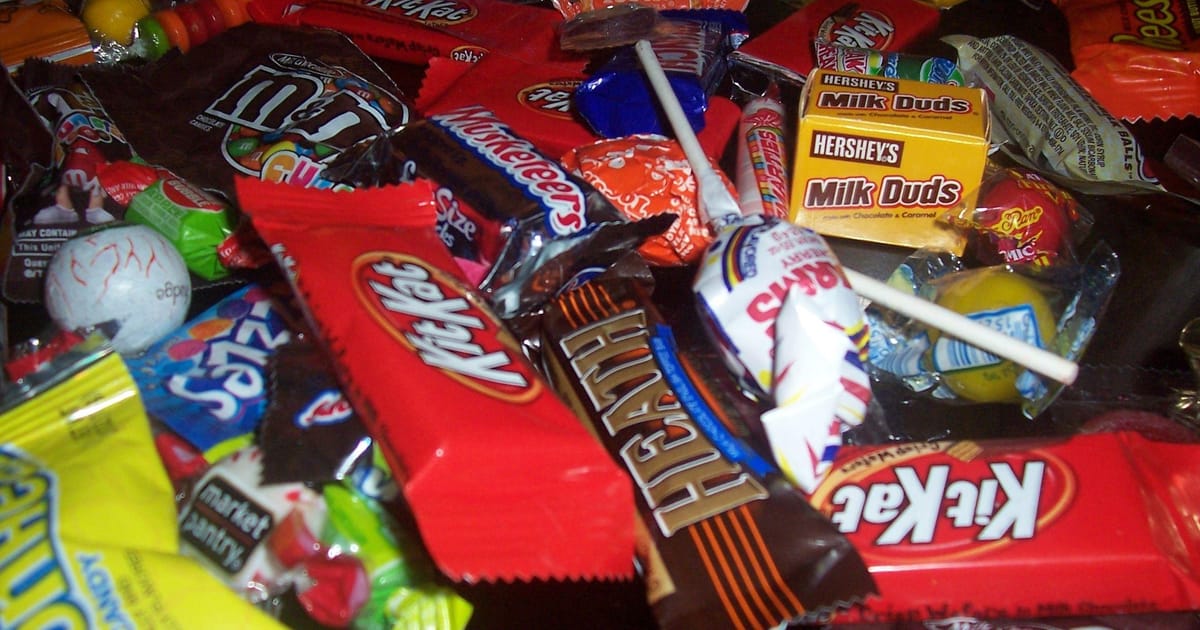
Every October, the same spooky question haunts parents far more than any plastic skeleton on the porch:
“Has anyone ever really put razor blades, poison, or other dangerous objects in Halloween candy?”
The short answer: yes, there have been a few real cases of Halloween candy tampering. The longer answer:
they’re much rarer, stranger, and more complicated than the urban legends suggest. In fact, the
biggest Halloween threat to kids is usually traffic, not chocolate. But that doesn’t mean the occasional
bad actor or attention-seeking prankster hasn’t tried to turn trick-or-treating into something darker.
In this in-depth look, we’ll walk through the
real cases of razor blades, poison, and other objects found in Halloween candy,
what actually happened, and what modern parents really need to worry about (and what they can probably
stop losing sleep over). Think of it as a true-crime episode mixed with a practical Halloween safety guide.
How The Fear Of Poisoned Halloween Candy Began
The idea that a stranger might secretly lace candy with drugs, needles, or cyanide taps into two powerful
parental fears: danger to children and contaminated food. Folklorists and sociologists sometimes call this
phenomenon “Halloween sadism”the belief that anonymous villains are targeting kids
one mini Snickers at a time.
Beginning in the 1950s and 1960s, newspapers and TV news started to highlight rumored incidents of
contaminated treats. By the 1970s and 1980s, the story had become a seasonal ritual: reporters warning
parents to check every candy bar and apple, advice columnists declaring the end of “safe” trick-or-treating,
and hospitals offering to X-ray candy bags “just in case.”
But when sociologist Joel Best sifted through decades of newspaper coverage, he found something surprising:
nearly all of the alleged cases turned out to be hoaxes, misunderstandings, or events unrelated
to strangers. Many reports collapsed under investigation; others were traced back to children
or adults staging incidents for attention, sympathy, or legal/financial leverage.
That doesn’t mean there were no real cases. It just means the true stories look very different from the
classic “random stranger handing out poisoned candy” myth.
Real Poisoning Cases Linked To Halloween Candy
Let’s start with the small but important set of incidents where someone actually distributed harmful
substances to kids on or around Halloween. These are rare, and in most cases, no one diedbut they helped
fuel the fears that still circulate today.
1959: The California Dentist Who Handed Out Laxatives
One of the earliest documented cases of Halloween candy tampering involves a California dentist
named Dr. William Shyne. Instead of handing out chocolate or lollipops in 1959,
he gave some trick-or-treaters white, heart-shaped “candies” that looked harmless enough in a bag of treats.
The problem? They were actually candy-coated laxatives.
Around 30 children later developed vomiting, diarrhea, and stomach cramps. As far as records show,
none were seriously or permanently harmed, but this was still a deliberate act of tampering with
kids’ Halloween loot. The dentist was charged with unlawful dispensing of drugs and “outrage of public
decency,” and his dental license was suspended.
While this isn’t the razor-blade-in-the-apple story people imagine, it is a clear case of a
trusted adult turning Halloween into an experiment in very poor judgment.
1964: The Long Island “Poison Packages” Case
A few years later, in Long Island, New York, a housewife named Helen Pfeil decided she’d
had enough of older teenagers coming to her door for free candy. Instead of simply turning off the porch
light like the rest of us, she went full villain origin story.
For some teens, she handed out small foil-wrapped packages labeled with skull-and-crossbones and the word
“POISON.” Inside were things like dog biscuits, steel wool pads, and ant-killer “buttons” containing
arsenic. Thankfully, no one actually ate themkids or parents recognized the danger and turned
them over to authorities.
Pfeil insisted it was meant as a “joke” and that she intended to target only kids she felt were too old
to be trick-or-treating. The justice system did not laugh. She was prosecuted for endangering children
and sent for psychiatric evaluation.
Again, this case wasn’t a random sadist trying to kill strangers’ children at scalebut it was a very real,
very reckless example of dangerous objects mixed into Halloween loot.
1970: A Heroin Death Wrongly Blamed On Halloween Candy
In another widely cited case, five-year-old Kevin Toston in the Detroit area died in 1970
after ingesting heroin. At first, investigators believed he had eaten tainted Halloween candy, because
heroin was found sprinkled on his treat bag.
The truth was far more tragic and far less “urban legend” material. Investigators later found that Kevin
had actually gotten into his uncle’s heroin stash. In an attempt to cover up the source of the drugs,
family members sprinkled heroin onto his Halloween candy to make it look like a stranger had poisoned him.
This case is often wrongly repeated as “proof” that Halloween candy is deadly, when in reality it shows
how the myth can be used to distract from what’s happening inside a child’s own home.
1974: The “Candy Man” Who Killed His Own Son With Cyanide
The most infamous Halloween candy case of all is the one that truly earned the holiday its “your candy
might kill you” reputation.
On Halloween night in 1974 in Texas, Ronald Clark O’Bryan took his children and a
neighbor’s kids trick-or-treating. Later, he handed out giant Pixy Stix to five children, including his
eight-year-old son Timothy.
When Timothy asked for a piece of candy before bed, O’Bryan encouraged him to eat the Pixy Stix. The powder
tasted bitter; minutes later, Timothy was vomiting and convulsing. He died less than an hour after eating it.
An autopsy revealed that the Pixy Stix had been laced with a fatal dose of potassium cyanide.
Police recovered the other four Pixy Stix from the remaining children before they were opened. Investigators
couldn’t find any neighbor who had given out that candy. Instead, they learned O’Bryan was deeply in debt and
had recently taken out life insurance policies on his children.
O’Bryan was convicted of capital murder and executed in 1984. He’s often nicknamed
“The Candy Man” or “The Man Who Killed Halloween.”
Importantly, this case did not involve a random stranger. It was a calculated murder by a parent
using Halloween candy as coverhorrifying, yes, but not the anonymous candy-tampering boogeyman most parents
imagine when they dump their kids’ buckets onto the floor.
Razor Blades, Needles, And Other Sharp Objects In Halloween Candy
Now let’s talk about the classic horror image: a razor blade hidden inside a chocolate bar, or a pin in
a caramel apple. Has that actually happened?
The answer is “yes, but not nearly as oftenor as lethallyas the rumors suggest.”
Reviews of police reports and news stories suggest there have been several dozen incidents of
pins, needles, or razor blades found in Halloween treats since the late 1950s.
However, most fall into one of three categories:
- Hoaxes – children or adults placing objects in their own candy to get attention or support a story.
- Minor-injury pranks – a malicious “joke” that results in tiny cuts or no injury at all.
- Unclear origin – cases where an object is found but no perpetrator is identified and no pattern emerges.
In one widely cited case from Minnesota in 2000, a man named James Joseph Smith placed needles into Snickers
bars, and a teen was pricked in the mouthan awful stunt, but not a mass poisoning. More recently, there have
been scattered reports of needles in candy bars handed out at parades or local events. In most of these,
no one is seriously hurt, and police never find evidence of a broader plot.
For example, investigators in Texas have warned families after sewing needles were found in candy handed out
at a school homecoming parade. In California, a teenager recently reported biting into a snack-size candy bar
and discovering a razor blade embedded in the nougat, causing a minor cut but no lasting harm.
In other places, police have later learned that the “tampering” was staged by a child who had heard the
stories and decided to recreate them.
These cases are disturbingand they absolutely justify the “look before you bite” rule. But they also show
something important:
documented incidents tend to be isolated, local, and rarely life-threatening. They are far
from the nationwide wave of strangers sabotaging candy that parents picture.
So Is Halloween Candy Tampering Mostly Myth?
When researchers step back and look at the big picture, a clear pattern emerges:
the legend of Halloween candy tampering is far bigger than the reality.
Consider these key points often highlighted by experts:
- No confirmed case exists of a random stranger killing a child with Halloween candy.
- Real poisoning cases are extremely rare and usually involve family members or acquaintances, not anonymous neighbors.
- Most reports of needles, pins, or razor blades result in no injury or only minor cuts.
- Many “tampering” stories collapse under investigation and turn out to be hoaxes or cover stories.
Meanwhile, other Halloween risks are much more serious. Pediatric and public health organizations point out
that kids are far more likely to be injured as pedestrianscrossing streets in the dark,
wearing dark costumes, or running between parked carsthan from anything hidden in their candy bags.
That doesn’t mean you should toss safety out the window and let your child eat mysterious unwrapped fudge
from a stranger’s basement. It does mean we can dial down the panic and focus on realistic,
evidence-based precautions.
Smart, Evidence-Based Halloween Candy Safety Tips
So what should parents actually do on Halloween night to keep kids safe without turning the whole event into
a forensic investigation?
1. Do A Quick Visual Inspection
Agencies like the U.S. Food and Drug Administration and state health departments consistently give the same
advice: inspect commercially wrapped treats before kids dig in.
- Look for tears, holes, or loose wrapping.
- Check for discoloration, strange odors, or sticky residue.
- Toss anything that looks tampered with or “off.” When in doubt, throw it out.
This doesn’t require a crime-lab setupjust a couple of minutes at the kitchen table with the lights on.
2. Be Careful With Homemade Treats
Homemade goodies can be delightful… when you know the baker. Public health experts generally recommend
avoiding homemade treats from strangers. That includes cookies, popcorn balls, or caramel
apples from houses you don’t recognize.
A simple rule: if you wouldn’t accept an unlabelled food item from that person on a random Tuesday,
don’t make Halloween the exception.
3. Watch Out For Choking Hazards And Allergens
For younger children, the more realistic danger in Halloween candy is choking, not poison.
- Avoid hard candies, gum, gummy candies, and small round sweets for toddlers and preschoolers.
- Be careful with nuts and chewy caramels for kids who are still mastering chewing and swallowing.
For kids with food allergies, Halloween can be a minefield. Read labels when possible, and consider sorting
out candies that contain common allergens like peanuts, tree nuts, milk, soy, or wheat. Some families use
the “Teal Pumpkin Project” approachtrading unsafe candy for non-food treats like stickers or small toys.
4. Set Reasonable Candy Rules
Poison may not be the problem, but sugar overload can feel pretty terrifying, too. To keep things sane:
- Let kids choose a set number of pieces to eat on Halloween night.
- Store the rest out of reach and turn it into a “dessert bank” for the next week or two.
- Consider letting them trade candy for a small toy, activity, or cash “buy-back.”
This keeps Halloween candy fun without turning November into a month-long sugar festival.
5. Don’t Forget The Bigger Safety Picture
While we love to obsess over razor blades in chocolate, experts repeatedly point out that the
most serious Halloween risks are outside the candy bowl:
- Make sure kids are visible: reflective tape, glow sticks, or flashlights.
- Choose costumes that don’t obstruct vision or create tripping hazards.
- Cross streets at corners and crosswalks, not between parked cars.
- Accompany younger children, and set boundaries for older kids’ routes and curfews.
Think of candy checks as one part of a broader safety plannot the whole story.
Experiences And Reflections: What These Cases Teach Us
If you talk to adults who grew up in the 1980s and 1990s in the United States, many will remember
post-trick-or-treating candy inspections as a ritual almost as big as ringing doorbells.
Parents spread everything out on the dining table, poking and prodding each piece like rookie detectives.
Some communities even had hospitals or police stations offering to X-ray candy bags.
Behind that ritual sits a fascinating tension: the fear of random poisoned candy was
almost universal, even though the evidence for widespread stranger tampering was virtually
nonexistent. What families experienced every year was less about actual crime and more about cultural anxiety.
The Long Island and California laxative cases, and especially the O’Bryan “Candy Man” murder, became
powerful reference points. Even people who don’t remember the details of those stories often inherited
the lesson: “You never know what someone might put in your candy.” Parents passed that message down not
with academic citations, but with firm rules: “Don’t eat anything until I look at it.”
Communities responded in creative ways. Some neighborhoods organized block parties or “trunk-or-treat” events
in church or school parking lots, where candy came from known families instead of mystery houses. Others
leaned on simple, low-tech safety: walking in large groups, sticking to well-lit streets, and saving the
candy feast for when everyone was home and comfortable.
One subtle but important experience shared by many parents is how Halloween safety talks have evolved.
A generation ago, the focus was on strangers tampering with candy. Today, many health and safety messages
emphasize a broader mix of issues:
- Making sure kids can be seen by drivers.
- Managing food allergies and choking hazards.
- Recognizing edible cannabis products or look-alike packaging.
- Teaching kids to listen to their instincts about people and situations, not just candy wrappers.
Modern parents also tend to be more skeptical. With easy access to fact-checking sites and expert opinion,
many have learned that the “razor blade in the candy bar” story is more urban legend than daily
threat. That doesn’t mean they stop checking candy; it just means they understand that inspection
as a quick precaution rather than a desperate attempt to avoid certain doom.
Perhaps the biggest takeaway from these real cases is that
trust and supervision matter more than fear of strangers. The very few lethal or near-lethal
incidents linked to Halloween candy have almost always involved someone the child already knewusually within
their own family or communityand often connected to larger problems: financial desperation, mental illness,
addiction, or neglect.
For families, the healthiest approach may be a kind of “calm vigilance”. Yes, glance over the
candy. Yes, toss anything that seems opened, odd, or sketchy. Yes, teach kids that it’s okay to bring you
something if it looks weird. But also let Halloween stay what it is for most children:
a night of delight, costumes, and far too many mini candy bars, not a real-life horror story.
In other words: check the candy, hold their hand when crossing the street, and then relax enough to steal
one of the good chocolate bars from their stash. You’ve earned it.
Conclusion: Real Risks, Real Myths, Real-World Balance
Real cases of razor blades, poison, and other objects found in Halloween candy do existbut
they are far outnumbered by myths, misunderstandings, and copycat scares. A California dentist really
did hand out laxatives. A Long Island housewife really did mix ant poison tablets into Halloween bags.
A Texas father really did murder his son with cyanide-laced Pixy Stix. And scattered incidents of needles or
blades have turned up in candy bars over the years.
At the same time, decades of research show that
anonymous strangers randomly poisoning Halloween candy is not a documented pattern. The dangers
we worry about most are not always the ones most likely to harm children. That’s why the smartest Halloween
strategy is not panic, but perspective.
Inspect the candy. Set limits. Talk to your kids. And then let Halloween be what it’s supposed to be:
mildly chaotic, sugar-fueled, and memorablefor all the right reasons.