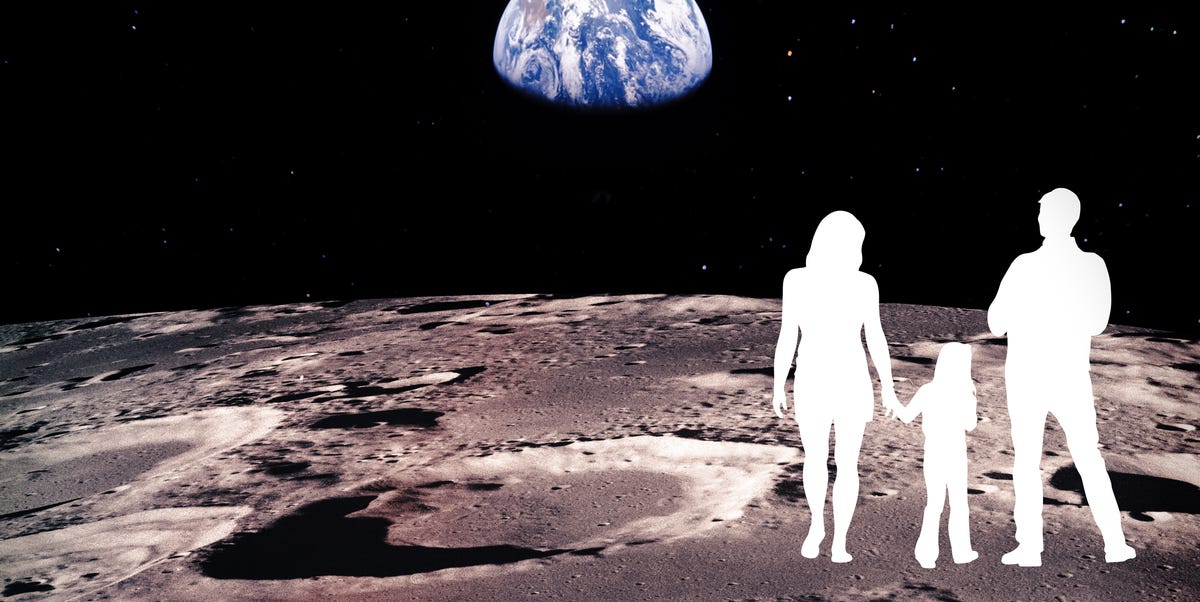
For most of human history, the Moon has been our favorite night-light, calendar, romance prop, and occasional werewolf excuse. But in the coming decades, it may become something far more practical: a place where people live and work for weeks, months, and eventually longer. Not in glass domes with hotel robes and moon margaritasat least not right awaybut in pressurized habitats, shielded work zones, carefully managed life-support systems, and dusty little outposts that make Antarctica look like a beach resort.
Learning how we’ll live on the Moon is not just science fiction with better helmets. NASA’s Artemis program, commercial lunar landers, new spacesuit designs, in-situ resource utilization, robotic construction, lunar agriculture experiments, and deep-space food research are all pieces of a very real puzzle. The goal is not simply to visit the Moon again, plant a flag, take a few heroic photos, and leave. This time, the plan is to build a sustainable human presence on and around the Moonone that can teach us how to survive farther from Earth, including on Mars.
So what will daily life actually look like on the lunar surface? Spoiler: it will involve less floating and more maintenance than movies suggest. Living on the Moon means solving problems that Earth usually handles for freeair, water, food, gravity, temperature, radiation protection, waste recycling, transportation, communication, and the emotional challenge of staring at home from 238,000 miles away.
Why the Moon Is the Next Big Step for Human Habitation
The Moon is close enough to reach in a few days, yet difficult enough to test nearly every system needed for deep-space living. That makes it the ultimate training ground. A lunar base can help engineers learn how habitats behave in low gravity, how astronauts perform under partial gravity, how equipment survives abrasive dust, and how crews cope with isolation beyond Earth orbit.
The Moon also offers scientific treasures. Its surface preserves billions of years of solar system history. Its far side is shielded from much of Earth’s radio noise, making it attractive for future radio astronomy. Its polar regions may contain water ice trapped in permanently shadowed craters. That ice could become drinking water, breathable oxygen, and possibly rocket fuel if extraction and processing systems mature enough.
In short, the Moon is not just a destination. It is a laboratory, a construction site, a fuel depot candidate, a science platform, and a practice arena for becoming a multi-planet species. No pressure, Moon. Just everything.
Where Will Humans Live on the Moon?
The Lunar South Pole Is the Prime Neighborhood
Future lunar habitats are expected to focus heavily on the Moon’s south polar region. This area is attractive because some crater floors remain in permanent shadow, where water ice may survive, while nearby high ridges may receive long periods of sunlight. That combination matters enormously. Sunlight can power solar panels, and ice can support life and industry.
Of course, “good lunar real estate” is a very different concept from “good Earth real estate.” On Earth, people want ocean views, walkable cafés, and reasonable Wi-Fi. On the Moon, the dream property has access to sunlight, possible water ice, stable landing zones, useful terrain, and enough distance from rocket exhaust so your home does not get sandblasted by a spacecraft arriving next door.
Habitats May Start Small and Grow Like a Space Camp
The first lunar homes will likely be compact modules delivered from Earth. These habitats will be pressurized, insulated, and packed with life-support equipment. Early crews may live in structures that feel more like submarines, research stations, or high-tech campers than houses. Every square foot will matter. Every tool will have a place. Every misplaced snack wrapper may become a minor engineering event.
Over time, lunar settlements could expand through connected modules, inflatable habitats, buried shelters, robotic construction, and 3D-printed protective structures. A future lunar base might include living quarters, laboratories, medical areas, power stations, rover garages, landing pads, communication towers, storage units, greenhouses, and maintenance workshops.
How Lunar Homes Will Protect Astronauts
Radiation Shielding Will Be Essential
Earth protects us with a thick atmosphere and magnetic field. The Moon offers neither. Astronauts on the lunar surface must deal with cosmic rays, solar particle events, and long-term radiation exposure. That means lunar homes cannot simply be shiny tin cans sitting politely on gray soil.
Habitats may be covered with lunar regoliththe loose, dusty, rocky material covering the Moon. Regolith can act as a radiation shield and help protect against tiny micrometeoroids. Engineers are studying ways to pile it over structures, pack it into shielding walls, or use it as feedstock for construction materials. Future bases may look less like science-fiction domes and more like bunkers wearing moon dirt coats.
Temperature Control Will Be a Constant Battle
The Moon experiences extreme temperature swings. Without an atmosphere to move heat around, sunlit surfaces can become brutally hot, while shadowed regions can become unimaginably cold. Habitats must maintain a livable indoor environment despite this chaos outside.
Insulation, heat pumps, radiators, thermal coatings, buried structures, and careful site planning will all play a role. Astronauts will not casually open a window for fresh air because there is no fresh air, no window screen, and no forgiving breezejust vacuum waiting with bad intentions.
Moon Dust May Be the Sneaky Villain
Lunar dust is not the soft powdery stuff hiding under your couch. It is sharp, abrasive, electrostatically clingy, and capable of damaging seals, joints, filters, instruments, spacesuits, and lungs if it gets inside. Apollo astronauts quickly learned that Moon dust gets everywhere. Future lunar residents will need serious dust-control systems, including airlocks, suitports, electrostatic cleaning, protective coatings, and strict maintenance routines.
The best Moon house may not be the one with the prettiest view. It may be the one with the cleanest seals.
How We’ll Breathe, Drink, and Stay Alive
Life Support Will Recycle Almost Everything
Living on the Moon means taking Earth’s invisible comforts and turning them into machines. Air pressure, oxygen, carbon dioxide removal, humidity control, water recovery, fire detection, waste management, and ventilation must be actively managed every moment.
NASA’s experience with environmental control and life-support systems on the International Space Station gives future lunar missions a head start. Water can be recovered from humidity, hygiene systems, and even urine. Oxygen can be generated from water through electrolysis. Carbon dioxide can be scrubbed from cabin air. The more a lunar base recycles, the less it must ship from Earth, and shipping from Earth is extremely expensive. A gallon of water on the Moon is not just a gallon of waterit is a logistics bill wearing a spacesuit.
Water Ice Could Change Everything
If accessible water ice can be mined and purified, it would be one of the most valuable resources on the Moon. Water supports astronauts directly, but it can also be split into hydrogen and oxygen. Oxygen supports breathing, and hydrogen and oxygen can be used as rocket propellant. This is why lunar ice is often described as a key to sustainable exploration.
Still, finding ice is easier than building a reliable lunar water industry. Engineers must identify deposits, excavate material in extreme cold, separate water from regolith, purify it, store it, and distribute it. None of that is simple in vacuum, low gravity, abrasive dust, and temperatures that make your freezer look tropical.
What Will People Eat on the Moon?
Early Lunar Meals Will Be Packaged and Practical
The first long-duration lunar crews will rely heavily on food sent from Earth. These meals must be shelf-stable, nutritious, lightweight, compact, and easy to prepare. Think less “farm-to-table” and more “vacuum-sealed dinner with heroic vitamin accounting.” Taste will matter, too. Food is not only fuel; it supports morale, routine, and psychological health.
Future lunar menus will need enough variety to prevent menu fatigue. Eating the same bland meal repeatedly in a small habitat while surrounded by gray dust and mission checklists is not exactly a recipe for joy. Good food may become one of the most underrated technologies in space settlement.
Growing Plants on the Moon Is Possiblebut Hard
Researchers have shown that plants can grow in lunar regolith, although not as robustly as in Earth soil or lunar simulants. That result is encouraging, but it does not mean astronauts will immediately plant tomatoes outside next to a crater. Lunar regolith lacks organic matter, has unusual chemistry, and may stress plants. Any serious lunar farming will require controlled growth chambers, water recycling, artificial lighting or carefully managed sunlight, nutrients, and protection from radiation and temperature extremes.
Small greenhouses may first grow leafy greens, herbs, microgreens, or experimental crops. Beyond calories, plants can provide freshness, oxygen support, water recycling benefits, and psychological comfort. A tiny basil plant in a Moon habitat might not sound dramatic, but after weeks of packaged meals, it could feel like a luxury spa with leaves.
How We’ll Build on the Moon
Robots Will Arrive Before the Moving Truck
Before humans live comfortably on the Moon, robots will do much of the dirty work. Robotic landers, rovers, excavators, scouts, and construction systems can map terrain, test resources, prepare landing pads, move cargo, inspect equipment, and build protective berms. This reduces risk for astronauts and allows infrastructure to be waiting when crews arrive.
Commercial lunar delivery programs are already helping send science instruments and technology demonstrations to the Moon. These early payloads may seem small compared with a full lunar city, but they are vital stepping stones. Before anyone builds a base, someoneor somethinghas to prove where to land, how to move, what the soil is like, and whether equipment can survive.
3D Printing Could Turn Moon Dirt into Infrastructure
One of the most exciting ideas for lunar living is using local material for construction. Instead of launching every brick, wall panel, and landing pad from Earth, future systems may process lunar regolith into building components. Large-scale 3D printing or sintering could create landing pads, roads, radiation shields, storage walls, and habitat covers.
This approach is called in-situ resource utilization, or ISRU. In plain English, it means “use what is already there because shipping is painful.” ISRU could reduce costs and make lunar settlement more sustainable. The challenge is that lunar construction must work with local material in vacuum, partial gravity, extreme temperatures, and constant dust exposure. It is constructionbut with fewer hardware stores and more existential consequences.
How Astronauts Will Work on the Moon
Spacesuits Will Be Personal Spacecraft
A lunar spacesuit is not clothing. It is a wearable spacecraft. It must provide pressure, oxygen, cooling, communication, mobility, radiation protection, dust resistance, and emergency support. New Artemis-era suits are being designed to offer better flexibility, fit more body types, and support longer surface activities than Apollo-era suits.
Future astronauts may spend hours collecting samples, setting up instruments, repairing systems, testing rovers, inspecting solar arrays, and exploring terrain. Every moonwalk will be carefully planned because movement in a suit is tiring, time is limited, and mistakes can become serious quickly.
Rovers Will Be the Lunar Family Car
Walking on the Moon is iconic, but driving will be essential. Lunar terrain vehicles can help crews travel farther, carry equipment, transport samples, and explore more scientifically valuable sites. Pressurized rovers may eventually allow astronauts to travel for days without returning to the main habitat. Think RV road trip, except the campground is a crater and the roadside assistance number is Earth.
Power, Communication, and Daily Operations
Solar Power Will Lead, but Storage Is Critical
Solar energy will likely be a primary power source for lunar bases, especially near polar regions with extended sunlight. However, power systems must also survive darkness, dust accumulation, extreme cold, and equipment failures. Batteries, fuel cells, nuclear power systems, and power distribution networks may all become part of the lunar energy mix.
A stable power grid is not optional. Life support, communications, heaters, computers, science instruments, water systems, and habitat pressure all depend on it. On Earth, a power outage is annoying. On the Moon, it is a plot twist nobody wants.
Communication With Earth Will Shape Lunar Life
Crews will stay connected to Earth through communication relays, satellites, antennas, and mission control networks. Time delays are short compared with Mars, but the psychological distance is enormous. Astronauts will speak with family, scientists, doctors, engineers, and mission teams while living in one of the most remote human environments ever attempted.
High-speed communication will also support telemedicine, remote troubleshooting, scientific data transfer, robotic operations, and possibly entertainment. Yes, future Moon residents may stream moviesthough buffering during a space emergency would be deeply rude.
Health and Human Life in Lunar Gravity
The Moon has about one-sixth of Earth’s gravity. That means astronauts can hop higher and move heavy objects more easily, but it also raises health questions. Long stays in reduced gravity may affect muscles, bones, balance, cardiovascular function, and coordination. Exercise equipment will be a daily necessity, not a lifestyle choice.
Medical care must also be self-reliant. A lunar crew cannot rush to a hospital. Habitats will need medical supplies, diagnostic tools, emergency procedures, telemedicine support, and crew members trained to handle injuries or illness. Prevention will matter as much as treatment. When the nearest emergency room is on another world, “walk it off” is not a medical plan.
What Daily Life Might Feel Like
A typical day on the Moon may begin with health checks, system reports, exercise, breakfast, and a schedule review. Crew members might split into teams: one group conducts science outside, another repairs equipment, another monitors life support, and another prepares samples for return to Earth. Meals would be communal when possible. Private time would be precious. Sleep schedules would be carefully managed because the lunar day-night cycle does not match Earth’s 24-hour rhythm.
Inside the habitat, life will be orderly by necessity. Loose items float less than they do in microgravity, but reduced gravity still changes movement. Every object must be secured. Every system must be checked. Every repair must be documented. The Moon will reward discipline and punish casual chaos.
Yet lunar life may also be profoundly beautiful. Imagine looking out at Earth hanging in black sky, glowing blue and white above a silent gray horizon. No birds, no weather, no traffic, no ocean wavesjust the hum of machines keeping you alive and the knowledge that humanity has built a tiny island of air on another world.
The Biggest Challenges to Living on the Moon
Cost and Logistics
Everything needed on the Moon must either be launched from Earth or made locally. Launching mass remains expensive and complex. That is why reusable landers, commercial cargo delivery, ISRU, robotic preparation, and modular design are so important. Sustainable lunar living depends on reducing dependence on Earth shipments.
Reliability
Lunar systems must be tough, repairable, and redundant. A broken pump, stuck rover wheel, clogged filter, or damaged seal can threaten a mission. Future lunar bases will need spare parts, diagnostic software, repair robots, and astronauts trained like engineers, doctors, scientists, mechanics, and very calm plumbers.
Psychological Stress
Isolation, confinement, danger, workload, and distance from Earth will test crews emotionally. Habitability will matter: lighting, privacy, sound control, food quality, recreation, exercise, communication, and meaningful routines can all help astronauts stay healthy. A Moon base is not just machinery. It is a home, and homes need more than oxygen and bolts.
500-Word Experience Section: Imagining Life Inside a Lunar Habitat
Picture waking up in a small crew cabin on the Moon. Your bed is more like a personal sleep pod, with soft restraints to keep you comfortable in low gravity. The room is quiet except for the steady ventilation fan. That sound is not background noise anymore; it is reassurance. It means the habitat is breathing with you.
You unzip your sleep area, push gently with one hand, and move with a strange, graceful lightness. You are not floating like an astronaut on the International Space Station, but you are not walking like you would on Earth either. Every step has bounce. Every movement requires a little recalibration. The first few days, you bump into things. By week two, you move like you have lived there for years. By week three, returning to Earth gravity sounds personally insulting.
Breakfast is practical: rehydrated eggs, a tortilla, fruit from a sealed pouch, and coffee that tastes better because everyone has agreed not to complain about it. If the greenhouse experiment is going well, someone snips a few leaves of fresh greens and adds them to the meal. The whole crew reacts as if a five-star chef has entered the habitat. Fresh food on the Moon is not garnish; it is a morale event.
After breakfast, you check the daily schedule. Your job today is to help inspect a solar power unit and collect regolith samples near a ridge. Before going outside, you spend an hour preparing. Moonwalks are not spontaneous strolls. The suit must be checked, oxygen levels confirmed, cooling systems tested, communications verified, tools secured, route plans reviewed, and emergency procedures repeated. On Earth, forgetting your keys is annoying. On the Moon, forgetting a tool can waste half a day and several million dollars of collective patience.
You step through the suitport and onto the surface. The view hits you every time. The horizon is close. Shadows are sharp. The sky is black even when the ground is bright. Earth hangs above the landscape like a living painting, impossibly colorful in a world of gray. You want to stare, but mission control is already asking for a status update.
The work is slow but satisfying. You move carefully to avoid kicking dust onto equipment. The dust still finds a way, because Moon dust has the personality of glitter and the manners of sandpaper. You inspect panels, photograph cable connections, collect samples, and help your crewmate test a small rover. Every task is science, maintenance, survival practice, and future planning all at once.
Back inside, dust-control procedures begin immediately. Tools are cleaned. Suit joints are inspected. Filters are checked. Samples are sealed. The habitat smells faintly metallic and recycled, but also familiar now. This place, strange as it is, has become home.
Evening brings exercise, data review, dinner, and a short call with family on Earth. Your loved ones appear on a screen, framed by kitchens, pets, houseplants, and weatherordinary miracles. You tell them the Moon is beautiful, difficult, dusty, and completely worth it. Later, before sleep, you look through the small window again. Earth is still there. The base hums around you. Outside is vacuum. Inside is humanity’s stubborn little bubble of air.
That may be the real experience of living on the Moon: not luxury, not fantasy, but the daily act of making an impossible place livable. It will be uncomfortable, technical, dangerous, and occasionally ridiculous. Someone will absolutely lose a spoon. Someone will name a rover. Someone will complain about the coffee. And somehow, through checklists, courage, engineering, and humor, people will turn the Moon from a destination into an address.
Conclusion: The Moon Will Be Hard to Live Onand That’s Why It Matters
Living on the Moon will not begin with cities under glass domes. It will begin with careful engineering, small crews, robotic helpers, recycled water, protected habitats, dusty boots, and a lot of troubleshooting. The first lunar residents will be explorers, scientists, builders, mechanics, doctors, and problem-solvers rolled into one. They will live inside machines that must work perfectly in an environment that forgives almost nothing.
But the Moon offers something extraordinary: a nearby world where humanity can learn how to live beyond Earth. Every oxygen generator, dust seal, greenhouse tray, rover wheel, radiation shield, and 3D-printed landing pad will teach lessons that shape the future of exploration. The Moon will not be easy. That is exactly why it is useful. If we can learn to live there, we can learn to go farther.
Note: This article is written in original standard American English and synthesized from current real-world lunar exploration research, including NASA Artemis planning, lunar habitat development, life-support systems, Moon dust studies, in-situ resource utilization, commercial lunar delivery concepts, spacesuit development, food-system research, and lunar agriculture experiments.