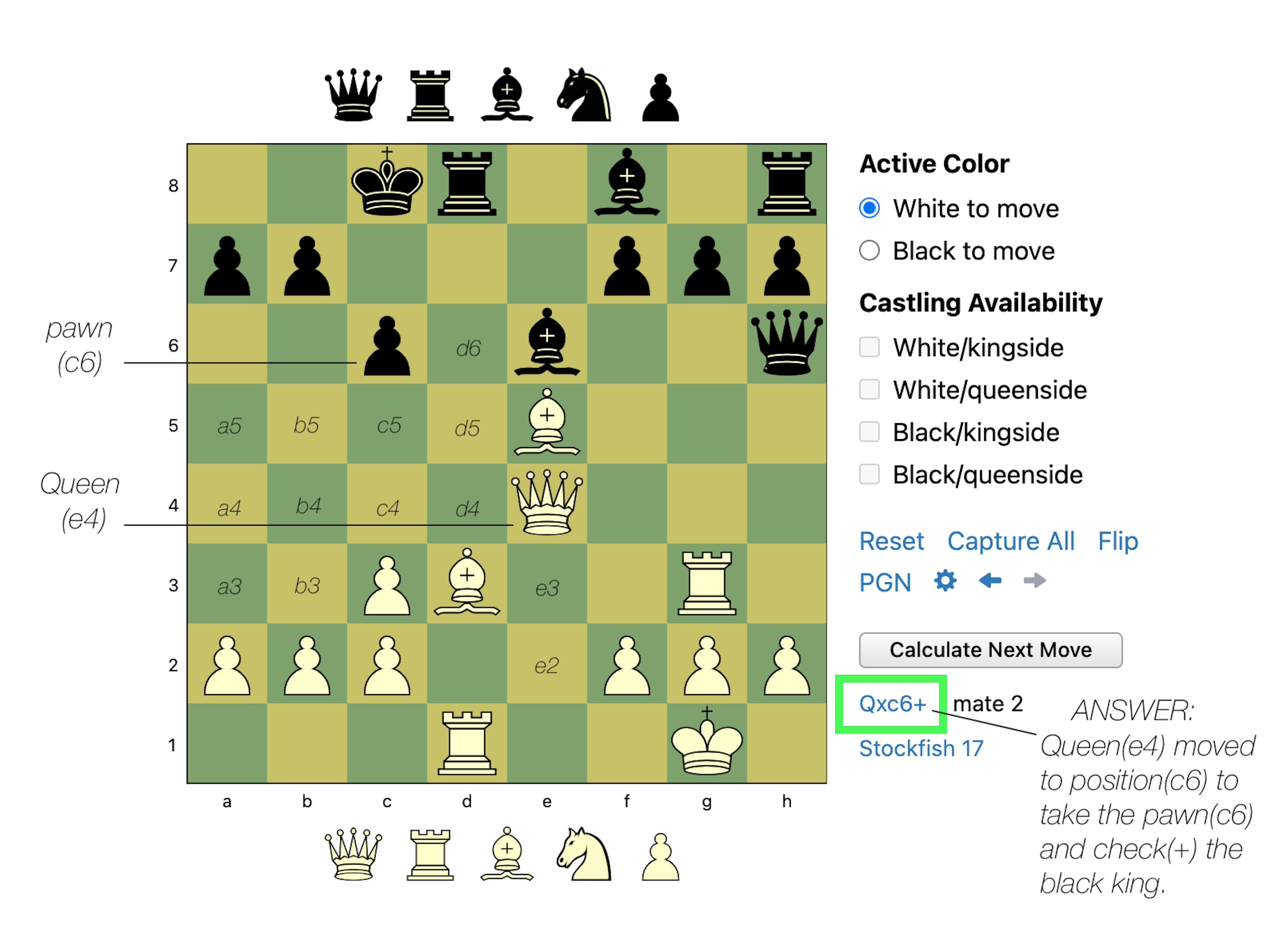
Note: Rule 16 in The Password Game is one of those moments where a silly browser puzzle suddenly turns into a tiny chess exam wearing a fake mustache. The rule asks you to include the best move in algebraic chess notation, and because the board can change from one attempt to another, there is no universal answer that works every time. The trick is learning how to find the right move quickly, write it correctly, and avoid breaking the other rules already living inside your password like chaotic roommates.
What Is Rule 16 in The Password Game?
Rule 16 says your password must include the best move in algebraic chess notation. In plain English, the game shows you a chess position, tells you whose turn it is, and expects you to type the strongest legal move into your password. That move might look simple, such as Qh5, or slightly more dramatic, such as Rxe7+. The plus sign means check. The “x” means capture. The letters identify chess pieces. The square tells you where the piece moves.
This is why Rule 16 feels like the game suddenly changed genres. One minute you are juggling vowels, Roman numerals, moon phases, and sponsor names. The next minute you are being asked to think like a chess engine. It is funny, frustrating, and weirdly educational, which is basically the entire personality of The Password Game.
Why Rule 16 Is So Confusing
The biggest mistake players make is assuming Rule 16 has one fixed answer. It does not. Your board may be different from someone else’s board, and the best move depends completely on the exact position. That means copying a random answer from a forum may work once in a blue moon, but most of the time it will fail faster than a password that is just “password123.”
Rule 16 is confusing for three main reasons. First, many players do not know chess notation. Second, the game expects the correct notation, not just the correct idea. Third, other password rules are already active, so adding a chess move can accidentally change your Roman numeral math, your element symbols, or your password length. Rule 16 is not just a chess puzzle; it is a chess puzzle inside a password-shaped obstacle course.
The Easy Way: Use a Chess Analysis Tool
The easiest way to beat Rule 16 is to recreate the board in a chess analysis tool and let an engine suggest the best move. This is not the noble knight-on-horseback method. This is the “I have a browser tab and I am not afraid to use it” method. It works because modern chess engines can evaluate a position instantly and recommend the strongest move.
Step 1: Check Whose Turn It Is
Before touching anything, look carefully at the Rule 16 board. Does it say White to move or Black to move? This detail matters more than your morning coffee. If you enter the best move for White when the position says Black to move, the answer will be wrong even if the move looks brilliant.
Step 2: Rebuild the Board
Open a chess analysis board or board editor. Recreate the position exactly as it appears in The Password Game. Put every piece on the correct square. Make sure the board is facing the right direction. In standard chess coordinates, White’s back rank starts on rank 1, and Black’s back rank starts on rank 8. The files run from a to h.
This is where patience pays off. One misplaced bishop can change the answer. One missing pawn can transform a checkmate into a blunder. Think of the chessboard like a pizza order: if you accidentally add pineapple, someone will notice.
Step 3: Let the Engine Analyze
Once the board is set, turn on analysis. Most chess tools will show a recommended move. The top engine move is usually the one The Password Game wants. If the tool gives several options, choose the strongest first line, especially if it is a forcing move such as a check, capture, or checkmate.
Step 4: Convert the Move to Algebraic Notation
Now comes the important part: enter the move in algebraic chess notation. If the engine gives you a long move like e2e4, that may be coordinate notation, not the format the game wants. Rule 16 usually wants standard algebraic notation, such as e4, Nf3, Bxe6, Qh5+, or Rxe8#.
Algebraic Chess Notation Made Simple
Algebraic notation is the standard way to write chess moves. It looks intimidating at first, but the basics are friendly enough once you stop expecting actual algebra. Nobody is asking you to solve for x. Although, to be fair, sometimes there is literally an “x” in the move.
Piece Letters
In English algebraic notation, the main pieces use capital letters:
- K = King
- Q = Queen
- R = Rook
- B = Bishop
- N = Knight
Pawns are the odd little overachievers. They do not use a starting letter in normal algebraic notation. A pawn moving to e4 is simply written as e4, not Pe4. If you type the P, the game may reject it.
Board Squares
Every square has a coordinate. The file is a letter from a to h, and the rank is a number from 1 to 8. So e4 means the e-file and fourth rank. If a knight moves to f6, the notation is Nf6. If a bishop moves to g5, it is Bg5.
Captures, Checks, and Checkmates
If a piece captures something, add x before the destination square. For example, Qxe5 means the queen captures on e5. If the move gives check, add +. If it is checkmate, add #. So Qxf7# means the queen captures on f7 and delivers checkmate. Very stylish. Very chess villain.
The Hard Way: Solve Rule 16 Yourself
The hard way is to solve the chess position manually. This is slower, but it can be satisfying if you enjoy puzzles or want to understand what the engine is doing. The goal is to identify the best legal move by looking for immediate threats, checks, captures, and tactics.
Start With Checks
Checks are forcing moves because the opponent must respond. Look at every move that attacks the enemy king. Can the queen give check? Can a rook slide down an open file? Can a bishop cut across a diagonal? Can a knight fork the king and queen? Rule 16 positions often reward tactical moves, and checks are the first place to look.
Look for Captures
Next, examine captures. Not all captures are good, but many best moves involve taking a valuable piece or removing a defender. A queen capturing a loose rook may be obvious. A bishop sacrifice that opens a mating attack may be less obvious but still correct.
Search for Threats
If there is no obvious check or capture, look for threats. Can you attack the queen? Can you promote a pawn soon? Can you trap the king? The best move is not always flashy. Sometimes it is a quiet move that wins material or prevents disaster.
Watch for Legal-Move Problems
A move can look wonderful and still be illegal. Maybe the king is in check and must respond. Maybe a piece is pinned and cannot move. Maybe the path is blocked. When Rule 16 rejects a move, do not immediately assume the game is broken. First, check whether the move is legal, whether it belongs to the correct side, and whether the notation includes the right symbols.
Common Rule 16 Mistakes
The first common mistake is forgetting the “x” in captures. If the best move is Bxe6, typing Be6 may fail because it describes a non-capturing bishop move. The second mistake is leaving out check or checkmate symbols when the game expects them. If the correct notation is Qh5+, entering Qh5 may not satisfy the rule.
The third mistake is using the wrong notation style. Some chess tools display moves in coordinate format, such as g1f3. Rule 16 usually wants algebraic notation, such as Nf3. The fourth mistake is copying a move from someone else’s board. Since your board may be different, their answer may be completely unrelated to your position.
The fifth mistake is accidentally breaking earlier password rules. For example, adding Qxf7+ might introduce a Roman numeral X or change your character count. The password is a living ecosystem, and Rule 16 throws a chess piece into the pond.
Easy Way vs. Hard Way: Which Should You Choose?
If your goal is to win quickly, use the easy way. Recreate the board, run analysis, copy the algebraic move, and continue. There is no shame in using a tool for a puzzle that is already trying to make you feed a chicken emoji and satisfy twenty other demands at once.
If your goal is to enjoy the puzzle, try the hard way first. Spend a minute checking for tactics. Look for checks, captures, and mate threats. Then confirm your answer with an engine. This gives you the best of both worlds: the satisfaction of solving and the safety net of verification.
Example: How a Rule 16 Answer Might Look
Imagine the best move is a rook capturing a piece on e7 and giving check. The notation would likely be Rxe7+. Here is the breakdown:
- R means rook.
- x means the rook captures something.
- e7 is the destination square.
- + means the move gives check.
If the move were checkmate instead, it might be written as Rxe7#. If a pawn captures on d5 from the e-file, it might be written as exd5. If a knight moves to g5 with check, it becomes Ng5+. Once you understand the pattern, the notation stops looking like a secret code from a wizard who plays blitz chess.
How to Add the Rule 16 Move Without Ruining Your Password
After you find the move, do not paste it randomly. Place it somewhere in your password where it will do the least damage. If previous rules involve numbers, Roman numerals, chemical symbols, or special character counts, inserting a chess move in the wrong location can create a new problem.
A good strategy is to keep your password organized in sections. Put the chess move near other rule-specific chunks, then check which rules turn red. If something breaks, adjust carefully. For example, if the move contains an X, it may affect Roman numeral calculations. If it contains a number, it may affect digit-based rules. If it contains a plus sign, it may count as a special character. Rule 16 is not isolated; it is part of the password circus.
Quick Troubleshooting Checklist
If Rule 16 keeps rejecting your answer, run through this checklist:
- Did you choose the move for the correct side, White or Black?
- Did you recreate the board exactly?
- Did you use algebraic notation instead of coordinate notation?
- Did you include x for a capture?
- Did you include + for check or # for checkmate?
- Did you avoid adding a pawn letter like P?
- Did the new move break an older rule in your password?
Most Rule 16 problems come from one of these details. The answer is usually not “the game hates me,” although emotionally, that is a very understandable conclusion.
Personal Experience: What Rule 16 Teaches You the Hard Way
Rule 16 feels like a prank until you realize it is actually teaching a valuable lesson about precision. The first time many players reach it, they search for “Password Game Rule 16 answer” and expect a simple copy-paste solution. That approach seems reasonable because earlier rules often have predictable answers. But Rule 16 is different. It forces you to look at the exact board in front of you.
In practice, the experience usually goes like this: you stare at the chessboard, pretend you understand it, make a confident guess, and immediately get humbled. Then you try another move. Still wrong. Then you notice it says Black to move, not White. Ah. Character development.
The easy method becomes a lifesaver because it changes the task from “be good at chess right now” to “accurately copy a board.” That is still a skill, but it is much more manageable. You learn to slow down, verify the side to move, and translate the engine’s recommendation into the notation the game wants. The moment the rule turns green feels surprisingly rewarding, like you just negotiated peace between a chess grandmaster and a password manager.
The hard method gives a different kind of satisfaction. When you solve the move yourself, even partially, Rule 16 becomes less annoying and more like a mini chess lesson. You start recognizing why checks matter. You notice that captures are not automatically best. You learn that a knight can jump in ways that make the board feel personally attacked. You also learn that notation is strict because chess needs a clear record of exactly what happened.
The funniest part is that Rule 16 is not even the end of the chaos. After beating it, you still have more rules waiting, and some of them are even stranger. That makes Rule 16 a turning point. It is where the game stops being merely silly and becomes a test of patience, organization, and emotional resilience. In other words, it is the moment your password starts needing project management.
My best practical experience-based advice is to treat your password like a workspace, not a sentence. Keep chunks separated in your mind. Add the chess move carefully. Recheck previous rules after every change. Do not panic when one green rule turns red. That is normal. The Password Game is basically a tower of plates, and Rule 16 asks you to balance a chessboard on top.
If you want the smoothest path, use a chess engine and focus on correct notation. If you want the most satisfying path, try solving the tactic first, then confirm it. Either way, Rule 16 becomes much easier once you stop looking for a universal answer and start using a repeatable process. The easy way gets you through. The hard way teaches you something. The best way might be a little of both.
Conclusion
To beat Rule 16 in The Password Game, remember this simple formula: identify the side to move, recreate the board accurately, find the best move, and enter it in proper algebraic chess notation. The easy way is to use a chess analysis tool. The hard way is to solve the position yourself by checking forcing moves, captures, threats, and legal details. Both methods work, but the easy way is faster and far less likely to make you question every life decision that led you to a password puzzle.
Rule 16 is difficult because it combines chess knowledge with exact formatting. But once you understand notation basics, it becomes manageable. Look for piece letters, destination squares, capture symbols, and check or checkmate marks. Then add the move carefully to your password without breaking earlier rules. Do that, and you can move on to the next absurd challenge with your dignity mostly intact.