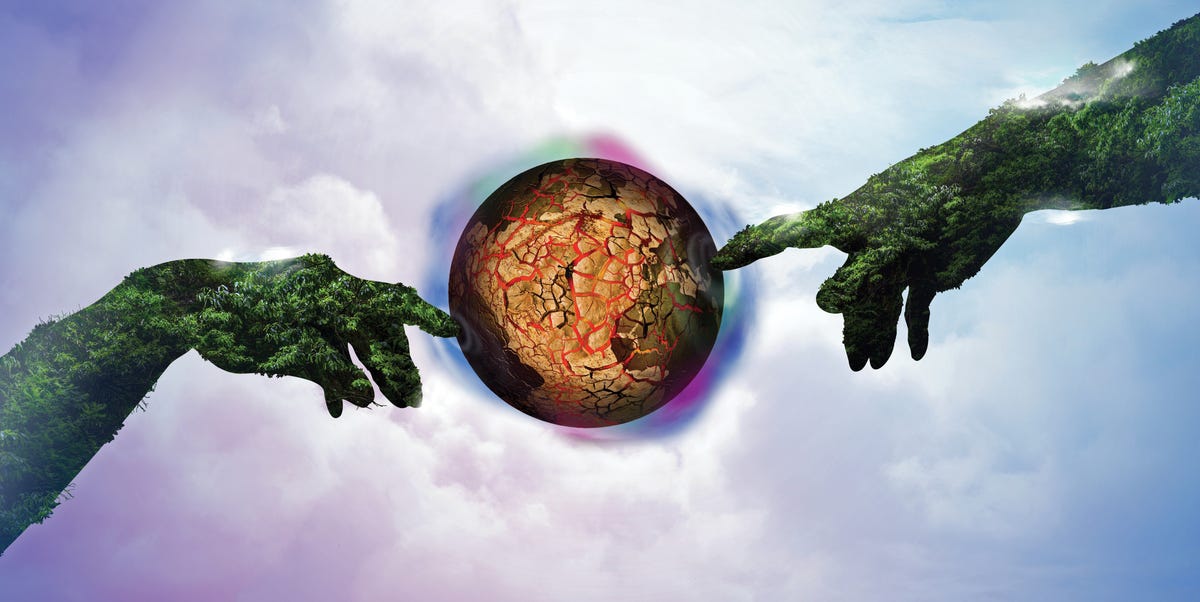
Take a deep breath. Congratulations: you have just participated in a family tradition nearly as old as Earth itself. Not your grandmother’s casserole recipe, not your uncle’s questionable dance moves at weddings, but something much biggerthe shared biological inheritance of every living thing on this planet.
Scientists call this ancient source of modern life LUCA, short for the Last Universal Common Ancestor. LUCA was not a person, not a dinosaur, not a monkey, and definitely not a tiny bearded elder sitting on a microbial throne. It was most likely a population of simple cells that lived billions of years ago, before animals, plants, fungi, and even oxygen-rich air as we know it.
Yet from that ancient biological starting point came bacteria in hot springs, redwood trees touching the fog, mushrooms minding their mysterious business, blue whales, houseplants, yeast, mosquitoes, golden retrievers, and youcurrently reading about your very old family reunion.
What Is LUCA?
LUCA stands for Last Universal Common Ancestor. It refers to the most recent ancestral population from which all known modern cellular life descends. That includes the three major domains of life: Bacteria, Archaea, and Eukarya. Humans belong to Eukarya, along with animals, plants, fungi, and many single-celled organisms.
LUCA was not the first living thing. This is an important distinction. Life may have existed before LUCA, and there were likely many early lineages that vanished without leaving living descendants. LUCA is simply the branch point that connects every organism alive today. Think of it as the oldest confirmed “great-great-great-great” ancestor in the family treenot the first baby picture ever taken.
Modern evidence suggests LUCA lived roughly 4 billion years ago, and a 2024 study placed it around 4.2 billion years ago. That is astonishingly early, considering Earth itself formed about 4.5 billion years ago. In cosmic terms, life did not wait politely for the planet to finish redecorating. It showed up while Earth was still hot, volcanic, and frankly not ready for guests.
How Do Scientists Know All Life Shares One Ancestor?
No one found LUCA’s tiny fossilized selfie. Cells from that era were microscopic, fragile, and unlikely to fossilize clearly. Instead, scientists reconstruct LUCA by comparing what all living organisms share today. The evidence is not based on one clue; it is based on a whole crime-scene board of biology, minus the dramatic detective music.
1. The Universal Genetic Code
Nearly all life uses DNA and RNA to store and express genetic information. The genetic code translates sequences of nucleotides into amino acids, which are used to build proteins. This code is remarkably similar across bacteria, plants, fungi, animals, and humans.
That shared code is one of the strongest signs of common ancestry. If life had started independently many times and survived in separate forms, we might expect wildly different genetic systems. Instead, living things speak a molecular language so similar that bacteria can be engineered to produce human proteins. Biology is basically running on ancient software with countless updates, patches, and a few bugs nobody asked for.
2. Ribosomes: The Ancient Protein Factories
All known cellular life uses ribosomes to build proteins. Ribosomes read genetic instructions and assemble amino acids into proteins, which then do the heavy lifting of life: structure, movement, metabolism, repair, signaling, and more.
Because ribosomes are so central and so ancient, scientists use ribosomal RNA to compare life forms across deep time. Carl Woese and his colleagues famously used molecular comparisons involving ribosomal RNA to reveal that life is divided into three domains, including Archaea, a group that had long been mistaken for ordinary bacteria.
3. ATP: Life’s Energy Currency
Cells need energy, and across life, a molecule called ATP acts like a universal energy token. Whether you are a tree making sugars, a bacterium living in soil, or a student sprinting because the school bus arrived early, ATP is part of the energy story.
The widespread use of ATP suggests that core energy systems were already established very early in life’s history. LUCA likely had a metabolism capable of capturing and using energy from its environment. It may not have had the glamour of a cheetah or the charisma of a dolphin, but chemically speaking, LUCA had skills.
What Did LUCA Look Like?
If you are imagining a little green blob with eyes, please gently escort that image out of your brain. LUCA was probably a microscopic, single-celled organismor more accurately, a population of related cells. It had no face, no bones, no opinions about pizza toppings, and no interest in becoming famous.
Scientists infer that LUCA had genes, proteins, cell-like boundaries, and metabolic pathways. Recent research suggests it may have had a genome encoding thousands of proteins, making it more complex than the phrase “primitive life” might suggest. “Primitive” can sound like “barely doing anything,” but early microbes were biochemical survival artists.
LUCA probably lived in an environment without oxygen. Oxygen was not abundant in Earth’s atmosphere until much later, after photosynthetic organisms changed the planet. Early life had to make a living using other chemical sources, possibly hydrogen, carbon dioxide, nitrogen compounds, metals, sulfur chemistry, or other geochemical ingredients available in ancient environments.
Where Might LUCA Have Lived?
Scientists debate LUCA’s exact habitat. Some hypotheses point to hydrothermal vents, where mineral-rich fluids rise from Earth’s crust into the ocean. These environments provide heat, chemical gradients, and minerals that could support early metabolism. Other ideas include warm ponds, shallow waters, volcanic settings, or other chemically active environments.
The exact location remains uncertain because the evidence is indirect. What researchers can say is that early Earth was not gentle. It had intense volcanism, frequent impacts, unstable surfaces, and an atmosphere unlike today’s. If LUCA survived there, it deserves respect. Modern humans complain when the Wi-Fi drops; LUCA handled a young planet with lava issues.
LUCA Was Not Alone
One common misunderstanding is that LUCA was the only organism alive at the time. More likely, LUCA lived among other early microbial lineages. Some may have exchanged genes, competed for resources, or formed primitive ecological relationships. Many of those lineages eventually disappeared, leaving no modern descendants.
This matters because the tree of life may have looked less like a neat oak tree in its earliest stages and more like a tangled microbial neighborhood. Microbes can exchange genes horizontally, meaning genetic material can move between lineages rather than only from parent to offspring. This makes the deepest parts of evolutionary history beautifully complicated, which is scientist-speak for “bring coffee.”
From LUCA to the Three Domains of Life
After LUCA, life diversified into major branches. The deepest living branches are usually discussed as Bacteria, Archaea, and Eukarya.
Bacteria
Bacteria are everywhere: soil, oceans, skin, hot springs, deep rocks, and your digestive system. Some cause disease, but many are harmless or essential. They cycle nutrients, help digest food, support ecosystems, and quietly run much of the planet while humans argue about parking spaces.
Archaea
Archaea often resemble bacteria under a microscope, but genetically and biochemically they are distinct. Many archaea thrive in extreme environments such as hot springs, salty lakes, and deep-sea vents. Others live in ordinary places, including soils, oceans, and even the human body.
Eukarya
Eukarya includes organisms with complex cells containing nuclei and internal structures. Animals, plants, fungi, algae, and many protists belong here. Humans are eukaryotes, which means our cells are more like tiny organized cities than simple bags of chemistry.
How Humans Fit Into the Tree of Life
Humans are not separate from nature; we are one twig on a vast tree. Our closest living relatives are chimpanzees and bonobos, but our deeper relatives include all mammals, reptiles, birds, fish, insects, plants, fungi, archaea, and bacteria. Go far enough back, and every family tree becomes the same family tree.
This does not mean humans descended from modern bacteria or modern apes. It means humans and those organisms share older ancestors. A cousin is not your grandparent. A bacterium alive today is not LUCA. It is another modern descendant of ancient life, just as you are. It simply took a very different evolutionary road, probably with fewer shoes.
Why LUCA Matters
LUCA matters because it connects biology into one story. Evolution is not a random collection of unrelated creatures appearing independently. It is a branching process shaped by inheritance, mutation, natural selection, genetic drift, symbiosis, extinction, and environmental change.
Understanding LUCA also helps scientists explore the origin of life. LUCA itself was already complex, which means even earlier stages must have existed before it. Researchers studying early life ask how chemistry became biology: how molecules began copying information, forming compartments, using energy, and evolving.
LUCA also matters for astrobiology. If life emerged relatively early on Earth once conditions became suitable, scientists naturally wonder whether life could emerge elsewhere: Mars in its wetter past, icy moons like Europa and Enceladus, or distant exoplanets orbiting other stars. LUCA does not prove alien life exists, but it gives researchers a real example of how life can take root on a young planet.
Common Myths About the Last Universal Common Ancestor
Myth 1: LUCA Was the First Life
LUCA was likely not the first life. It was the last shared ancestor of all modern cellular life. Earlier life forms may have existed and gone extinct, leaving LUCA’s descendants as the winners of the ultimate biological relay race.
Myth 2: LUCA Was One Individual Cell
Scientists often use “LUCA” as shorthand, but it may have been a population rather than one single cell. Evolution works through populations over time. So when we say “one ancestor,” we are usually talking about an ancestral lineage, not one lonely microbe waving from a rock.
Myth 3: Evolution Is a Straight Line Toward Humans
Evolution is not a ladder with humans at the top wearing a crown. It is a branching tree. Bacteria are not “less evolved” than humans; they have been evolving for just as long. In many ways, bacteria are wildly successful. They occupy more environments, reproduce faster, and do not need motivational podcasts.
Specific Examples of Shared Ancestry in Everyday Life
Shared ancestry is not just a textbook idea. It shows up in ordinary life.
When you eat bread, yeast cells ferment sugars and produce carbon dioxide, making dough rise. Yeast is a fungus, and although it looks nothing like you, it is a eukaryote. Its cells share deep similarities with yours, including nuclei and many basic molecular systems.
When you walk through a forest, trees use DNA, RNA, proteins, membranes, and energy systems linked to the same ancient biological toolkit. A redwood and a human are not close relatives in the everyday sense, but both are descendants of the same deep origin.
When doctors use bacteria to make medicines, they rely on the fact that cellular machinery is shared enough to be useful across species. The unity of life is not poetic decoration; it is practical biotechnology.
The Humbling Beauty of Being Related to Everything
The idea that one ancient ancestor gave rise to all known life can make a person feel tiny. But it can also make the world feel more connected. A mossy rock, a mushroom, a whale, a hummingbird, and your own reflection are all part of one continuous biological story.
That does not erase the differences among organisms. A cactus is not a cat. A bacterium is not a ballerina. But beneath the differences, life shares a deep molecular foundation. The diversity is real, and so is the unity.
Experiences and Reflections: Living With the Idea That Everything Is Related
Once you understand the idea of LUCA, everyday life starts to feel slightly different. You can walk through a park and suddenly realize the grass under your shoes is not just background scenery. It is a distant relative. The oak tree dropping leaves on your car is not being rude; it is participating in an ancient family habit called survival. Even the bacteria in the soil are not random invisible extras. They are part of the same long-running biological drama.
One powerful experience connected to this topic is looking at your own hand. At first, it seems ordinary: fingers, skin, nails, maybe a tiny scar from a childhood accident or a heroic battle with a kitchen drawer. But that hand is made of cells, and each cell carries genetic information written in a molecular language shared across life. The same basic logic that helps your cells make proteins also appears in microbes, plants, fungi, and animals. Your hand is not just human; it is history with knuckles.
Another memorable way to feel this connection is through food. A slice of bread involves wheat, yeast, bacteria in soil, sunlight, water, and human culture. The yeast that helps bread rise is a living organism with cells that share deep similarities with ours. Eating toast may not sound like a spiritual event, especially if it is burned, but biologically it is a meeting of relatives separated by enormous evolutionary time.
Gardening offers another experience that makes LUCA feel real. When you plant seeds, you witness life continuing a process that began billions of years ago: storing information, using energy, responding to the environment, and reproducing. A sprout pushing through soil is not just cute; it is ancient chemistry still improvising. The plant does not know about LUCA, of course. Plants are famously quiet in science discussions. But their cells carry the evidence.
Even illness can reveal shared ancestry in an uncomfortable way. Viruses and bacteria interact with human cells because life’s molecular systems have common features. That does not make germs charming dinner guests, but it shows how connected biology is. Medicine works partly because scientists understand these shared systems and can target them carefully.
The biggest emotional shift is humility. Humans often act as if we arrived separately, floating above nature with smartphones and opinions. LUCA reminds us that we are not outside the living world. We are one branch among many. Our intelligence is impressive, but so is bacterial survival, fungal networking, plant photosynthesis, and the ability of tiny organisms to reshape entire planets.
Thinking about LUCA can also make environmental care feel more personal. Protecting ecosystems is not only about saving “other” life. It is about respecting the living web that made us possible. Every forest, reef, wetland, and patch of soil contains relativesnot sentimental relatives who send birthday cards, but biological relatives connected through deep time.
So the next time you see a mushroom after rain, a bird on a fence, algae in a pond, or a stubborn weed growing through concrete, remember this: life is not a collection of strangers. It is one enormous, branching family story. And somehow, after billions of years of planetary chaos, microbial experiments, extinctions, mutations, and lucky breaks, that story includes you.
Conclusion
The story of LUCA is the story of life’s shared beginningnot the first spark of life, but the ancestral root from which all modern cellular organisms descend. From a microscopic ancient population came bacteria, archaea, plants, fungi, animals, and humans. The evidence lives inside cells: DNA, RNA, ribosomes, proteins, energy systems, and the genetic code.
LUCA reminds us that evolution is not just about the past. It is written into every breath, every heartbeat, every forest, every drop of pond water, and every living cell. You are not separate from the tree of life. You are one of its newest leaves, attached to a branch that reaches back nearly to the beginning of Earth itself.