Some inventions arrive wearing lab coats. Others arrive wearing a strip of masking tape and a smirk. The humble sticky label belongs to the second group. It is not glamorous. It does not need a subscription plan, a firmware update, a proprietary cartridge, or a tiny chip whispering, “Are you authorized to write the word ‘flour’ today?” It just needs a surface, a marker, and a person who is tired of opening six mystery boxes before finding the one with the extension cords.
The title “All The Sticky Labels You Could Ever Need: No DRM, Just Masking Tape” sounds like a joke, but it points to a very real frustration: labeling has become strangely complicated. There are thermal label printers, laminated label makers, waterproof label sheets, removable pantry stickers, barcode rolls, shipping labels, smart label apps, and printer ecosystems that would very much prefer you buy the “official” consumables forever. Meanwhile, masking tape is sitting in the drawer, quietly prepared to solve 80 percent of your daily labeling problems for the cost of pocket lint.
This article explores why masking tape labels are still brilliant, where they beat fancy label systems, where they fall short, and how a DIY mindset can turn a basic roll of tape into a flexible, low-cost labeling system for kitchens, workshops, classrooms, offices, moving boxes, craft bins, food containers, and general household chaos. No digital rights management. No locked media. No dramatic printer tantrums. Just sticky paper doing honest sticky-paper work.
Why Sticky Labels Matter More Than They Get Credit For
Labels are tiny pieces of communication infrastructure. That sounds overly serious, but think about it: a good label prevents confusion, saves time, reduces waste, and keeps people from asking, “Is this powdered sugar or drywall compound?” That question is funny only once.
In a home, labels turn clutter into categories. In a kitchen, they help track leftovers, pantry staples, expiration dates, spice jars, freezer bags, lunch containers, and mystery sauces that may or may not have been born during a previous presidential administration. In a garage or workshop, labels keep screws, wires, bits, solvents, fasteners, tools, and spare parts from becoming a modern art installation called “Where Did I Put That Thing?”
For businesses, labeling is even more important. Retail shops need price tags and shelf labels. Makers need product identifiers. Offices need file labels, equipment tags, archive boxes, supply bins, cable labels, and mailroom markers. Restaurants use date labels to support food rotation. Schools label supplies so glue sticks do not migrate like tiny plastic geese.
That is why label makers became popular. They produce clean, readable, uniform labels. They can look professional. They are useful. But they are not always necessary. Sometimes the best label is not the prettiest one. It is the one you actually make in ten seconds before your brain forgets what is inside the container.
The Problem With Over-Engineered Labeling
Modern label systems can be excellent, but they can also be oddly restrictive. A desktop label printer may need specific rolls. A handheld label maker may use proprietary tape cartridges. A thermal printer might work beautifully until you run out of the correct size label at 10:47 p.m., which is exactly when you finally decide to organize the garage like a responsible adult.
The bigger concern is lock-in. When a printer recognizes only certain supplies, the user loses flexibility. A device that could have been a simple tool becomes an ecosystem. Instead of asking, “What do I need to label?” you end up asking, “Which roll does this machine accept, how much does it cost, and why does my label printer have stronger opinions than my cat?”
This is where the “no DRM, just masking tape” philosophy feels refreshing. The idea is not that everyone should throw away every label maker. It is that simple labeling should remain simple. If you can write on tape, tear it by hand, stick it to a bin, and remove it later, you already have a useful labeling platform. The roll does not need to report its identity to a printer. It does not need a cloud account. It does not need to know your Wi-Fi password. It just needs to stick long enough to be helpful.
Masking Tape: The Labeling Tool Hiding in Plain Sight
Masking tape was designed for temporary adhesion, especially painting and surface protection. That temporary nature is exactly why it makes such a good everyday label. Unlike many permanent stickers, masking tape is usually easy to remove from smooth surfaces, especially when used for short-term or medium-term labeling. It is also writable, inexpensive, widely available, easy to cut or tear, and flexible enough to wrap around odd shapes.
That combination is powerful. A label sheet is useful only if you have a printer nearby. A thermal printer is useful only if the correct roll is loaded. A pre-designed pantry sticker is useful only if the thing you are labeling happens to be one of the words included in the package. Masking tape does not care. It can become “brown rice,” “USB-C cables,” “tax papers 2024,” “bike parts,” “paint samples,” “leftovers Tuesday,” or “do not eat, science project.”
It also encourages action. This matters more than people admit. Organization systems fail when they require too many steps. If labeling a bin requires opening software, choosing a template, loading a cartridge, aligning a print, peeling a backing, and trimming the edge, many people will skip it. If labeling a bin requires pulling tape and writing three words, the system survives real life.
The DIY Plotter Idea: When Masking Tape Gets Fancy
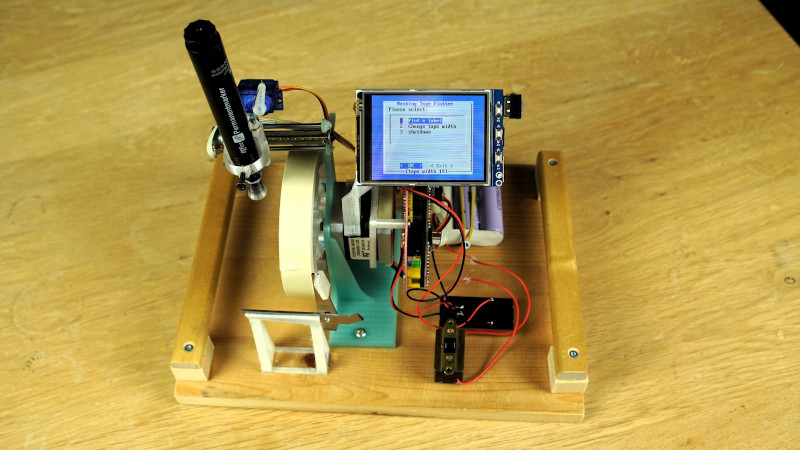
The most charming version of this idea is the masking tape plotter: a small machine that writes labels directly onto ordinary masking tape. Instead of printing on proprietary sticky rolls, it uses a pen and motion control to draw text on a tape roll. It is part label maker, part tiny robot, part “because I can” engineering poetry.
The beauty of the concept is not only cost savings. It is independence. A pen plotter can write on a material that is cheap, replaceable, and easy to find. If the pen dries out, change the pen. If the tape runs out, buy more tape. If you want bigger labels, use wider tape. If you want a different look, change the marker. Suddenly the label is no longer trapped inside a single manufacturer’s cartridge system.
For most people, building a tape plotter is not necessary. A marker works fine. But the project makes a bigger point: labeling does not have to be locked down to be useful. Sometimes the most resilient tools are the ones built from common materials. A roll of masking tape is not elegant in the luxury sense. It is elegant in the engineering sense: minimal, understandable, adaptable, and easy to repair or replace.
Masking Tape vs. Label Makers: Which One Should You Use?
The answer depends on the job. A label maker is great when you need polished, durable, consistent labels. Masking tape is great when you need speed, flexibility, and low cost. The smartest organizing system uses both.
Use masking tape when labels are temporary
Masking tape shines for temporary labels. Moving boxes, leftovers, freezer bags, project bins, school supplies, storage totes, paint cans, craft materials, workshop parts, and seasonal decorations are perfect examples. If the label may change soon, do not overthink it. Tape it, write it, move on with your life like a person who owns both containers and inner peace.
Use printed labels when labels are long-term
Printed labels are better for permanent categories such as office files, pantry jars that always hold the same item, inventory shelves, product packaging, electrical panels, and business storage systems. They look neater and often last longer. Laminated labels can resist moisture and handling better than handwritten paper tape.
Use specialty labels when conditions are tough
If a label will face water, sunlight, oil, abrasion, outdoor weather, refrigeration, or frequent washing, choose materials designed for those conditions. Waterproof polyester labels, laminated tape, or industrial tags may be worth the cost. Masking tape is clever, but it is not magic. It should not be expected to survive a dishwasher, a rainy loading dock, or the inside of a cooler forever.
The Best Places to Use Masking Tape Labels
Once you start labeling with masking tape, you may experience a dangerous side effect: the desire to label everything. This is normal. Stay hydrated.
1. Pantry containers and dry goods
Masking tape works well on jars, bins, canisters, and shelf edges. Use it for flour, sugar, oats, rice, pasta, lentils, snacks, baking powder, cocoa, tea, and spices. For dry goods that rotate often, add the purchase date or refill date. You do not need calligraphy. You need information that prevents you from buying a fourth bag of quinoa because the first three were hiding behind cereal.
2. Refrigerator and freezer storage
For leftovers, masking tape can be a sanity saver. Label containers with the item and date: “chili, May 20,” “roasted chicken,” “soup base,” or “do not microwave lid.” On freezer bags, tape can help identify contents that otherwise become indistinguishable frozen rectangles. A labeled freezer is the difference between meal prep and archaeological excavation.
3. Moving boxes
Masking tape labels are excellent for moving because the information changes from box to box. Use large strips on multiple sides of each box. Write the room, contents, and priority level: “Kitchen plates open first” or “Office cables not urgent.” For fragile items, use bold writing and repeat the message. Future you will appreciate present you, which is basically time travel with cardboard.
4. Workshop drawers and hardware bins
Screws, nails, washers, drill bits, sandpaper grits, zip ties, fuses, adapters, and cable types love to disappear into unlabeled drawers. Masking tape makes workshop labeling fast and forgiving. When a drawer changes from “misc bolts” to “cabinet hinges,” peel off the old strip and write a new one.
5. Cables and electronics
Cable labels are a small act of mercy. Wrap a small strip around one end of a cord and fold it back on itself like a flag. Write “monitor,” “router,” “printer,” “lamp,” or “do not unplug unless you enjoy chaos.” This is especially useful behind desks, TV stands, charging stations, and server-like piles of consumer electronics that look important but may only power a decorative clock.
6. Classroom and craft supplies
Markers, beads, scissors, glue, yarn, paper scraps, paintbrushes, stickers, and clay tools are easier to manage when every bin has a home label. Masking tape is perfect because classrooms and craft rooms change constantly. Today’s “fall leaves” bin may become tomorrow’s “robot eyes.” No problem. Peel, relabel, continue.
7. Office files and temporary projects
For active projects, masking tape can label folders, trays, notebooks, and document boxes without committing to permanent file architecture. Use short names and dates: “Client drafts,” “tax receipts,” “Q2 ideas,” “contracts to scan,” or “needs review.” This reduces paper piles and the emotional burden of the mystery stack.
How to Make Masking Tape Labels Look Better
A masking tape label does not have to look like a ransom note from a kitchen drawer. With a few simple habits, it can look clean, intentional, and surprisingly stylish.
Choose the right width
Thin tape is good for jars, cords, and small containers. Wider tape is better for moving boxes, storage totes, shelf labels, and workshop bins. If the label needs to be read from across the room, go wider. Tiny writing on tiny tape is how organization turns into squinting.
Use the right pen
A permanent marker is the classic choice, but different tapes accept ink differently. Test first. Some pens feather, smear, or fade. For dark painter’s tape, use a white paint marker or metallic marker. For beige masking tape, black marker usually offers strong contrast.
Cut clean edges
Torn tape is fast, but cut edges look neater. Keep scissors near your labeling station if appearance matters. For a pantry or office, clean rectangles can make tape labels look deliberate rather than desperate.
Write big and simple
A label is not a novel. Use short words, block letters, and high contrast. “PASTA” is better than “various Italian-inspired carbohydrate cylinders.” Specific is good; tiny essays are not.
Place labels consistently
Put labels in the same position on similar containers. Front center on bins. Top right on folders. Upper edge on shelves. Consistency helps the eye scan quickly. A labeling system should feel boring in the best possible way.
When Masking Tape Is Not Enough
Masking tape is useful, but it has limits. It can dry out, curl, discolor, lose adhesion, or leave residue if forgotten too long on certain surfaces. Heat, humidity, sunlight, dust, grease, and textured materials can reduce performance. In other words, masking tape is a reliable assistant, not an immortal wizard.
For long-term labeling on valuable surfaces, test a small hidden area first. This matters for painted furniture, delicate paper, antiques, leather, unfinished wood, and electronics with soft-touch coatings. Some surfaces react badly to adhesives over time. If the item is expensive, sentimental, or difficult to clean, use caution.
For outdoor use, waterproof labels or tags are usually better. For washable containers, consider removable waterproof labels or write directly on a reusable label area. For business packaging, use professional labels that match your brand and product requirements. For safety-critical labels, such as electrical warnings or chemical identification, use durable labels designed for that purpose.
The Anti-DRM Appeal: Why People Love Simple Tools
The phrase “no DRM” hits a nerve because many people are tired of ordinary tools becoming controlled platforms. Digital rights management may make sense in some software contexts, but when the conversation shifts to paper rolls, ink, toner, labels, and other consumables, consumers often feel boxed in. The frustration is not just about price. It is about ownership.
A simple tool respects the user. A roll of masking tape does not ask where it came from. A marker does not check whether the tape is licensed. A handwritten label does not stop working because a cartridge chip is missing. That simplicity feels almost rebellious in a world where even basic office supplies can become part of a locked system.
This does not mean every proprietary product is bad. Many branded labels are high quality. Many label makers are genuinely useful. But there is a difference between paying for quality and being forced into a narrow supply chain for a task as basic as printing a name on a sticky rectangle. Masking tape reminds us that not every problem needs a platform. Some problems need a strip of tape and reasonably legible handwriting.
Masking Tape Labeling Systems for Different People
The best labeling system is the one that matches your habits. Here are a few practical setups.
For the minimalist
Keep one roll of beige masking tape and one black permanent marker in a kitchen drawer. Label only what causes confusion: leftovers, freezer bags, moving boxes, storage bins, and temporary projects. Do not label the spoon drawer unless your spoons are staging a rebellion.
For the serious organizer
Create a labeling station with masking tape, painter’s tape, removable labels, a label maker, scissors, markers, and a small ruler. Use masking tape for temporary labels and printed labels for permanent categories. This hybrid system gives you speed and polish.
For the workshop person
Use wider tape and bold markers. Label shelves, drawers, bins, cable coils, tool cases, parts containers, and project boxes. Add dates to paints, adhesives, batteries, and supplies that degrade over time. A workshop label should be readable while you are holding a drill, wearing gloves, and wondering why there are three sizes of the same screw.
For families
Use labels as instructions, not decorations. “Snacks,” “school lunch,” “sports gear,” “return to library,” “donations,” and “clean masks” are more helpful than vague categories. Put labels where kids and adults can see them. The goal is not perfection. The goal is fewer people yelling, “Where does this go?” from another room.
Experience Notes: What Masking Tape Teaches You After Real Use
After using masking tape labels in kitchens, offices, closets, storage rooms, and messy project areas, one lesson becomes obvious: the best label is the one that appears at the exact moment confusion begins. Fancy labels often happen after an organizing project is complete. Masking tape labels happen during the project, while decisions are still being made. That timing is powerful.
For example, when sorting a pantry, permanent labels can be premature. You may think one jar will always hold almonds, then discover your household eats almonds at the speed of a small forest animal and the jar is better used for oats. A masking tape label lets the system evolve. You can test categories for a week, adjust shelf zones, combine duplicates, and only later decide which labels deserve a permanent upgrade.
The same is true for moving. Printed labels are lovely, but moving is a sport played under stress. Masking tape wins because it is fast and visible. A large strip on a box can say “bathroom open first medicine cabinet.” That is far more useful than a beautiful tiny sticker that simply says “bath.” During a move, information beats aesthetics every time. You are not trying to impress the boxes. The boxes have no taste.
In a workshop, masking tape becomes a memory extension. You can label a half-finished project with the next step: “sand before paint,” “needs M4 screws,” “test voltage,” or “left hinge sticks.” These labels are not meant to last forever. They are little notes from current you to future you. Future you is usually grateful, because future you has forgotten everything except that coffee exists.
Masking tape is also great for experiments. If you are testing storage layouts, cable routes, drawer categories, or product prototypes, temporary labels keep the process fluid. You can mark “Version A,” “try wider spacing,” “sample batch,” or “not final.” This makes the workspace more forgiving. Nothing feels overcommitted. You can change your mind without scraping off a glossy sticker that suddenly feels like a legal contract.
One underrated trick is using tape labels as behavior prompts. A bin labeled “donations” near the closet encourages decluttering. A shelf labeled “use first” in the pantry helps reduce waste. A freezer container labeled with both name and date makes leftovers less mysterious. A charging cable labeled “camera” reduces family-level detective work. These tiny prompts remove friction. They make the right action easier than the wrong one.
There are disappointments too. Cheap masking tape can curl. Old tape can leave residue. Some markers smear. Tape applied to dusty plastic may fall off with the confidence of a fainting goat. The fix is simple: use decent tape, apply it to clean dry surfaces, test your pen, and avoid pretending that temporary tape is a museum-grade archival label. It is not. It is a practical tool, and practical tools work best when used honestly.
The most enjoyable part is that masking tape labeling feels low pressure. You do not need a perfect font, a matching color palette, or a weekend makeover plan. You can start with one drawer, one box, one shelf, one freezer bag. The system grows naturally. Before long, the house feels easier to navigate. Not perfect. Just less annoying. And sometimes “less annoying” is the most realistic and beautiful design goal of all.
Conclusion: The Best Label Is the One You Actually Use
Masking tape will not replace every label maker, and it should not. There are times when printed, laminated, waterproof, or professionally designed labels are the right choice. But for daily life, temporary organization, fast sorting, household systems, workshop notes, moving boxes, leftovers, and experimental setups, masking tape is hard to beat.
It is cheap. It is flexible. It is readable. It is easy to remove. It works without software, cartridges, chips, subscriptions, or brand-approved rolls. It brings labeling back to its simplest purpose: telling people what something is, where it goes, when it was made, or why they should not unplug it.
In a world where even basic tools sometimes arrive with artificial restrictions, masking tape feels refreshingly human. It is not perfect, but it is useful in exactly the way good tools should be. Pull, write, stick, done. No DRM. No drama. Just a label that knows its job.