Note: This article is a commentary-style synthesis based on a public online family dispute and reputable parenting, blended-family, teen-development, and financial-literacy guidance. No direct source links are embedded by request.
Few household debates can turn a normal Tuesday into a full-blown courtroom drama faster than candy. Not rent. Not politics. Not even who left the cereal box open like a raccoon with a grudge. Candy. In this viral family conflict, a stepmother found herself under heavy online criticism after making her 17-year-old stepson share candy he had bought with his own money with his 8-year-old half-sister.
On the surface, the situation sounds tiny: a teenager, a bag of snacks, a younger sibling with big eyes, and one exhausted adult who wanted the noise to stop. But the internet did what the internet does best: it turned a handful of sweets into a debate about boundaries, teen independence, blended family parenting, personal property, and whether “sharing is caring” should still apply when the person doing the sharing never volunteered.
The story struck a nerve because it was not really about candy. It was about a 17-year-old who had a part-time job, earned his own money, and wanted to enjoy something he bought for himself. It was also about a little girl learning that asking nicely does not guarantee a yes. And, perhaps most importantly, it was about a stepmother stepping into a discipline role in a blended family where trust, fairness, and emotional timing matter more than any fun-size chocolate bar ever could.
The Candy Conflict: What Happened?
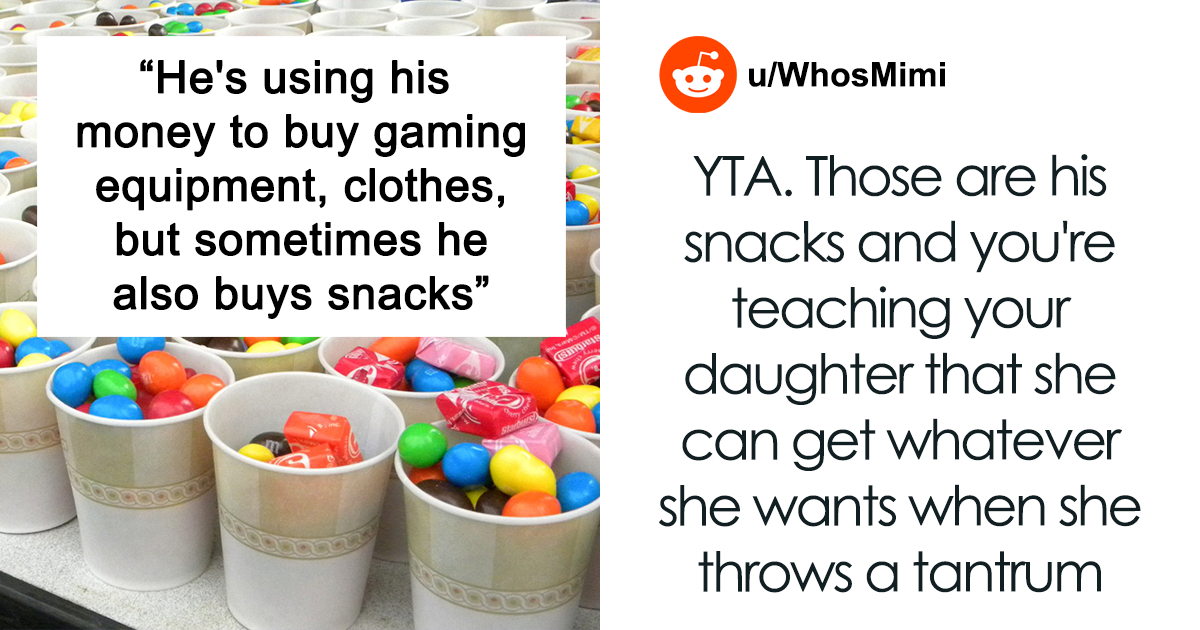
According to the widely discussed story, the teen had recently started working part-time and used some of his earnings to buy things he personally enjoyed, including gaming gear, clothes, and snacks. One day, he came home with a stash of candy and other treats. His younger half-sister noticed the candy and asked for some.
The teen said no. Not “maybe later.” Not “after dinner.” Just no. He explained that he bought the candy for himself with his own money. His half-sister kept asking, became upset, and ran to her mother. The stepmother, already dealing with a baby and apparently craving peace more than oxygen, told the teen to share. When he refused again, she argued that parents buy groceries with their own money and still share food with him. Eventually, she threatened to ground him unless he gave some candy to his sister.
He gave in, but he was upset. Later, his father confronted the stepmother and said she had treated his son like a small child. Online commenters overwhelmingly sided with the teen, arguing that the candy belonged to him and that forcing him to share taught the younger child the wrong lesson.
Why So Many People Sided With The Teen
The public reaction was sharp because the situation touched several parenting pressure points at once. People were not simply defending a teenager’s right to hoard sugar like a dragon guarding treasure. They were defending a principle: when a teen earns money and buys something personal, that item should not automatically become family property.
He Bought It With His Own Money
At 17, a teenager is standing in the doorway between childhood and adulthood. He is still a minor, yes, but he is also learning work habits, budgeting, self-control, and the strange adult skill of looking at a paycheck and wondering where it went. When a teen works for money, even if the job is part-time, that money becomes a learning tool.
Parents can guide a teen’s spending. They can encourage saving, budgeting, charitable giving, and smarter choices than buying three pounds of candy and calling it “meal prep.” But guidance is not the same as confiscation. If every personal purchase can be redistributed because someone else wants it, the lesson becomes muddy. Instead of learning generosity, the teen may learn that earning money does not really give him any control over his own choices.
Forced Sharing Is Not The Same As Kindness
Sharing is a valuable social skill. Children need to learn generosity, turn-taking, empathy, and cooperation. But experts in child development often warn that forced sharing can backfire, especially when it makes a child feel that their belongings are not respected. A child who is pressured to give something away may become less generous later, not more.
Real sharing has a voluntary element. It includes choice. A child who offers a sibling a piece of candy out of kindness is practicing generosity. A teen who hands over candy because he has been threatened with punishment is practicing compliance. Those are not the same thing, even if the little sister ends up with the same chocolate-covered victory prize.
The Younger Child Also Needed A Lesson
The 8-year-old in the story was not a villain. She was being eight. Children ask for things. Children get disappointed. Children cry when the answer is no, especially when the object of desire is candy and not, say, a reasonably priced salad. But childhood disappointment is not automatically an emergency.
In fact, this could have been a useful teaching moment for her. She could have learned that people are allowed to say no. She could have learned to ask once, accept the answer, and move on. She could have learned that another person’s treat does not become hers because she wants it badly enough.
Instead, the stepmother’s response risked teaching the opposite: if someone says no, escalate until an adult makes them say yes. That is not empathy. That is customer service training for future entitlement, and nobody wants to raise a tiny manager demanding to speak to the CEO of Skittles.
The Blended Family Layer Makes Everything More Complicated
If this had been a biological mother ordering two full siblings to split candy, people might still have debated it. But the blended family dynamic changed the emotional temperature. The adult enforcing the rule was the teen’s stepmother. The child receiving the candy was her biological daughter and his half-sister. That combination made the decision look, to many readers, less like a lesson in sharing and more like favoritism.
Blended families are common in the United States. Recent family research shows that a significant share of American children live in households that include stepparents, stepsiblings, or half siblings. These homes can be loving, stable, and deeply meaningful, but they also require careful emotional navigation. A child or teen may already be sensitive to questions of belonging, fairness, loyalty, and whether the “new” family structure has pushed them into second place.
That is why small conflicts can carry big symbolism. A piece of candy is not just a piece of candy when it becomes evidence in the teen’s internal case titled, “My stepmom cares more about her kid than me.” Whether or not that is what the stepmother intended, the optics were not great. The internet noticed, put on reading glasses, and began cross-examination immediately.
Stepparent Discipline Requires Extra Care
Parenting guidance for blended families often emphasizes that stepparents should focus first on building trust and connection, especially before taking on a heavy discipline role. This does not mean a stepparent has no authority in the home. It means the authority works best when it is predictable, fair, and supported by the biological parent.
In this situation, the father later disagreed with the punishment threat. That matters. If parents in a blended home are not aligned, the child may feel caught in a power struggle. The stepmother may feel undermined, the father may feel protective, and the teen may feel like a guest in his own family. Congratulations, everyone: the candy has now filed for emotional damages.
The Grocery Argument Did Not Land
One of the stepmother’s arguments was that she and the teen’s father buy groceries with their own money and still share food with him. On paper, it sounds logical. In reality, it compares two very different categories: parental responsibility and personal discretionary spending.
Parents are responsible for feeding their children. Groceries are part of household care. A teenager’s private snack purchase from his own paycheck is different. He was not refusing to let his sister eat dinner. He was not guarding the refrigerator with a pool noodle. He was saying no to sharing a personal treat he bought for himself.
A better household rule would separate essentials from extras. Family groceries are communal unless labeled otherwise. Personal purchases belong to the person who bought them. Shared snacks can be bought for everyone. Special treats can be requested, traded, or offered, but not demanded. This is not cold-hearted; it is clarity. Families run better when the rules are not invented mid-tantrum.
What The Stepmother Could Have Done Instead
To be fair, the stepmother was probably not sitting in a chair stroking a villain cat and plotting candy injustice. She was tired. She had a baby. Her daughter was crying. The teen was irritated. The house was loud. Many parents have made imperfect decisions under less pressure than that. Exhaustion is not a personality flaw; it is a fog machine for bad judgment.
Still, there were better options.
She Could Have Backed The Teen’s Boundary
The simplest response would have been: “He bought that with his own money, so it is his choice. You may ask once, but if he says no, you need to accept it.” That sentence teaches respect, ownership, and emotional regulation all at once. It also prevents the teen from feeling like the villain for having a boundary.
She Could Have Offered A Separate Treat
If the younger child was genuinely upset, the stepmother could have said, “We can look for a snack from the pantry,” or “Maybe we can buy a treat for you later.” That does not reward whining if handled calmly. It simply redirects the child without taking from someone else.
She Could Have Asked, Not Ordered
There is nothing wrong with encouraging generosity. She could have asked the teen privately, “Would you be willing to share one piece? It is okay if not, but it would be kind.” The key phrase is “it is okay if not.” Without permission to say no, it is not a request. It is a command wearing a fake mustache.
She Could Have Saved The Bigger Conversation For Later
If she felt the teen was developing a habit of never sharing, that could be discussed later with his father. A calm family conversation about kindness, household expectations, and personal purchases would have been more productive than a standoff in the heat of the moment.
What The Teen Could Learn, Too
While most people sided with the teen, that does not mean he has nothing to learn. Saying no is allowed. Saying no kindly is even better. If his little sister asked politely, he could have responded with something like, “Not this time, but maybe next time I’ll grab something we can all share.” That keeps the boundary without turning the room into a courtroom drama starring Sour Patch Kids.
Teenagers also benefit from learning that generosity builds relationships. If he sometimes brings home a small treat for his sister or offers to share when he feels like it, that may strengthen their bond. The difference is that generosity should be invited and modeled, not squeezed out through punishment.
Why Online Parenting Debates Get So Heated
Stories like this explode online because almost everyone has personal history with unfairness. Some readers were older siblings forced to give up everything to younger siblings. Some were stepchildren who felt less protected than biological children. Some were parents who have been trapped between a crying child, an annoyed teen, and a baby who finally fell asleep after behaving like a tiny unpaid opera singer.
Online commenters can be harsh, but the emotional reaction often comes from recognition. Many people saw the teen’s frustration as familiar. They remembered being told to “be the bigger person” when what adults really meant was “make this easier for me.” They remembered personal items being treated as public property. They remembered being blamed for a younger child’s disappointment.
That is why the phrase “he was upset” mattered. Of course he was. His work, his money, his purchase, and his no were all overridden. Even if the candy itself was small, the message felt big.
Experience-Based Reflections: The Real-Life Lessons Behind The Candy
Many families have lived some version of this story, even if candy was not involved. Maybe it was a hoodie, a gaming controller, a birthday gift, a bedroom, a phone charger, or the last slice of pizza that had clearly been claimed by destiny. The object changes, but the emotional pattern stays the same: one child has something, another child wants it, and the adult has to decide whether to protect ownership or force peace.
From real-life parenting experience, the fastest solution is not always the best solution. Forcing the older child to share may stop the younger child’s tears in the moment, but it can create resentment that lasts much longer. The younger child feels rewarded for pushing. The older child feels punished for having something. The parent gets five minutes of quiet but buys it on emotional credit with a terrible interest rate.
A better approach is to teach both children different lessons at the same time. The younger child learns: “You can ask, but you cannot demand.” The older child learns: “Your boundaries matter, and kindness is still valuable.” The adult learns: “I do not have to solve every disappointment by taking from one child to satisfy another.” That last lesson may be the hardest one, because parents are wired to stop crying quickly. Unfortunately, children also need practice surviving small disappointments. A denied piece of candy is a safe, low-stakes place to learn.
In blended families, the need for fairness becomes even stronger. A teen who already feels like an outsider may watch every decision for signs of favoritism. That does not mean the teen is dramatic or manipulative. It means family structure has emotional history. Adults should not walk on eggshells, but they should pay attention to patterns. If the biological child’s tears always win and the stepchild’s boundaries always lose, the family is not building unity. It is building a scoreboard.
One useful family habit is creating clear rules before conflict happens. For example: “Snacks bought for the household are shared. Snacks bought with your own money are yours. You may choose to share, but nobody can force you. If you want a special treat, we can plan for it.” This kind of rule removes guesswork. It also keeps parents from making emotional decisions while tired, hungry, or one toddler meltdown away from joining the circus.
Another helpful practice is repairing mistakes openly. If a parent overreacts, a simple apology can do more than a lecture. The stepmother could say, “I was overwhelmed and I handled that badly. I should not have threatened to ground you over candy you bought. Next time, I will respect your no. I still hope we can all practice kindness, but I should have approached it differently.” That apology would not weaken her authority. It would strengthen trust.
Finally, families should remember that generosity grows best in a safe environment. A teen who feels respected is more likely to share willingly. A younger sibling who learns to accept no is more likely to become considerate. A stepparent who builds connection before control is more likely to be heard. Candy may be sweet, but fairness is what keeps a blended family from turning bitter.
Conclusion: The Candy Was Small, But The Boundary Was Big
This viral stepmother story became popular because it captured a surprisingly common family dilemma: should children be forced to share personal belongings to keep the peace? In this case, most people believed the answer was no. The teen bought the candy himself. His half-sister wanted some, but wanting something does not create ownership. The stepmother may have been tired and well-intentioned, but threatening punishment crossed a line for many readers.
The better lesson is not “never share.” It is “sharing should come from choice, not pressure.” Families can encourage generosity while still respecting personal property. Parents can comfort disappointed children without making someone else pay the price. And blended families, especially, can benefit from rules that make every child feel equally protected.
In the end, the candy was just candy. The real issue was whether a teenager’s boundary mattered. Online, the answer was loud, clear, and probably typed by several people eating snacks they had no intention of sharing.